
- Home
- Categories
- Bio Fertilizer Plant Growth Promoter Beneficial Bacteria Aids Biological Nitrogen fixation Agricultural Products
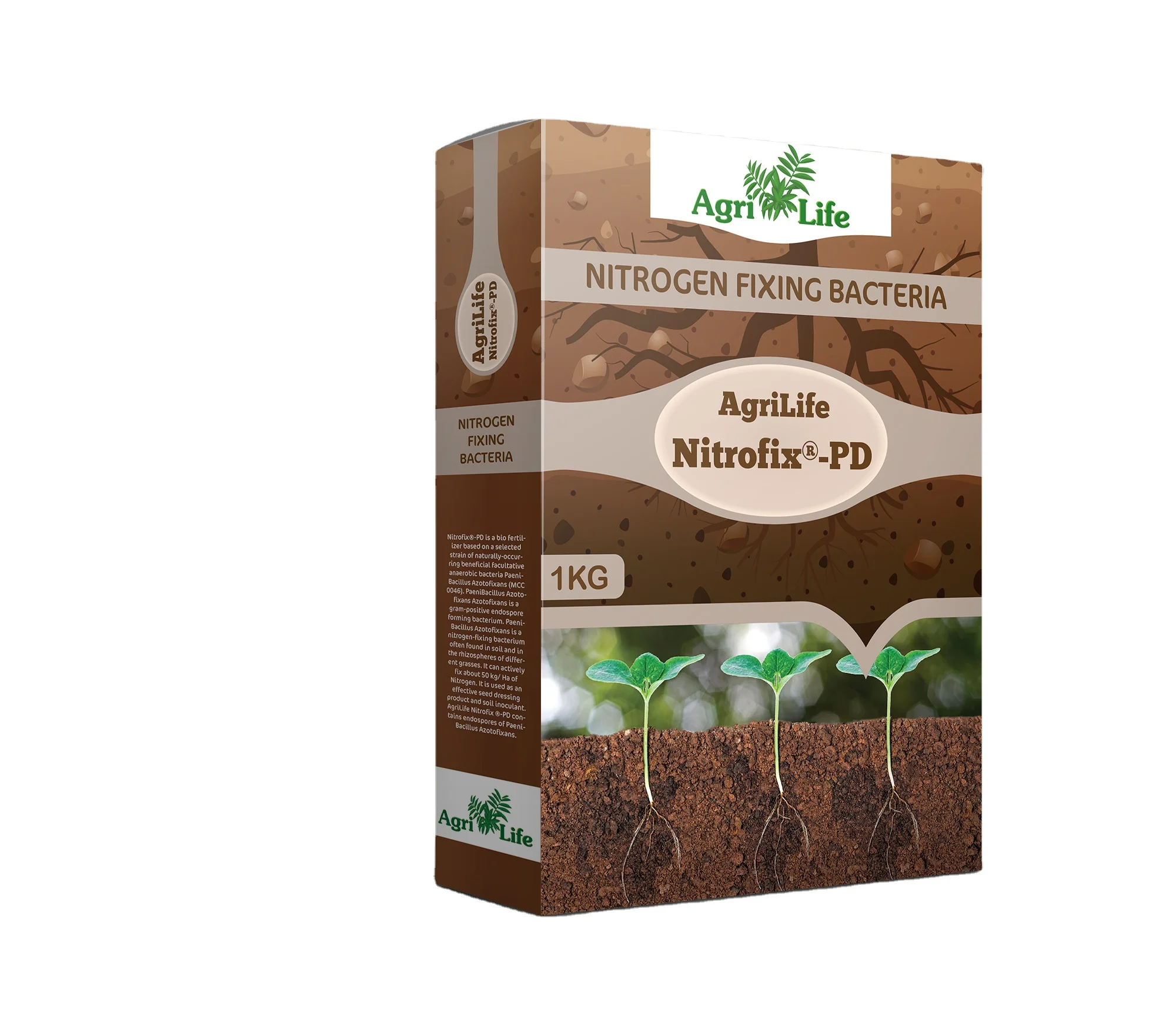
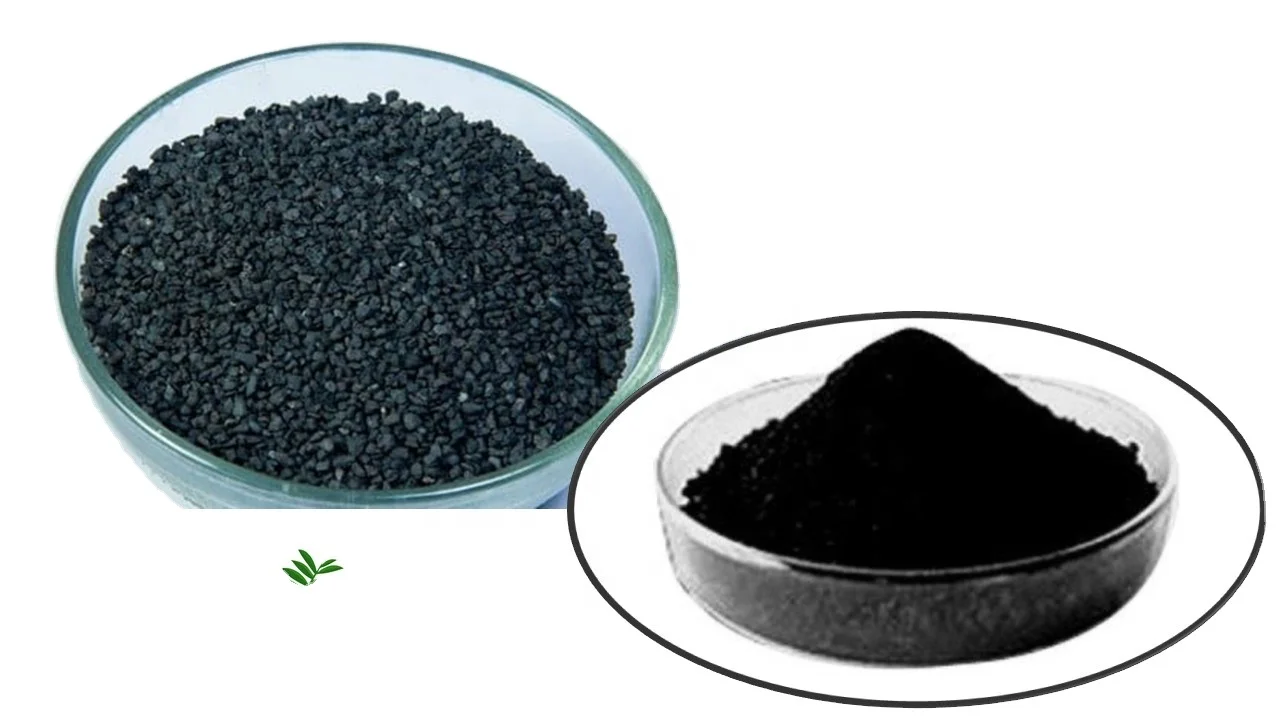

Bio Fertilizer Plant Growth Promoter Beneficial Bacteria Aids Biological Nitrogen fixation Agricultural Products
- Category: >>>
- Supplier: SOM PHYTOPHARMA (INDIA) LIMITED [India]SOM
Share on (10000001711094):
Product Overview
Description
Product Description
Benefits
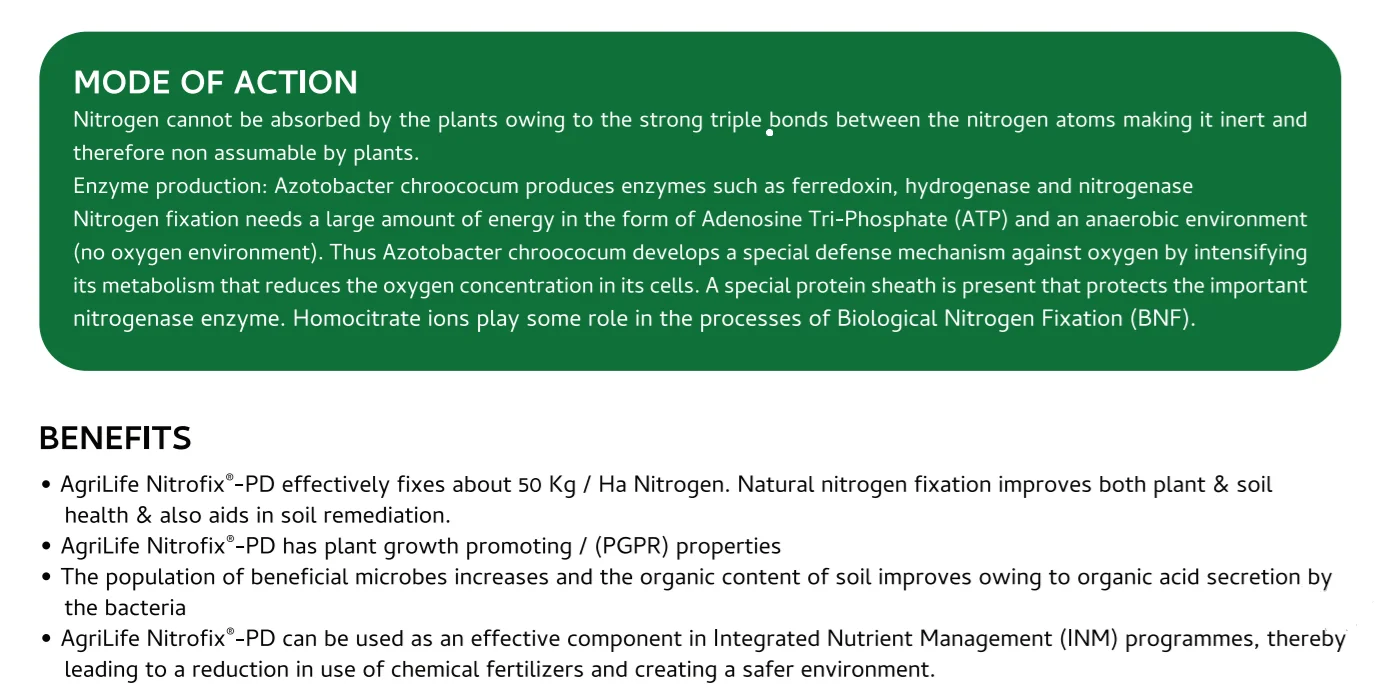
Application method
-
Seed dressing
Mix AgriLife Nitrofix®-PD with crude sugar in sufficient water to make a slurry and coat seeds and dry in shade and sow / broadcast / dibble in the field. Do not store treated / coated seeds more than 24 hrs
Soil application
AgriLife Nitrofix®-PD can be used as under:
1. Mix at recommended doses with compost and apply at early life stages of crop along with other biofertilizers
2. Mix AgriLife Nitrofix®-PD at recommended doses in sufficient water and drench soil at early leaf stage/ 2-4 leaf stage / early crop life cycle
3. Drip Irrigation: If there are insoluble particles, filter the solution and add to drip tank.
4. Long duration crops / Perennial / Orchard crops: Dissolve AgriLife Nitrofix®-PD at recommended doses in sufficient water and apply as a drenching spray near root zone twice a year. It is recommended to have first application before the onset of the main monsoon / rainfall/ spring season and second application after the main monsoon / rainfall / autumn/ fall season.
Note:
Do not store AgriLife Nitrofix®-PD solution for more than 24 hours after mixing in water.
A fraction of the product may not be soluble in water. It is advisable to filter and discard undissolved residue and use filtered liquid for spraying or feeding through drip irrigation.
 Mode of Action
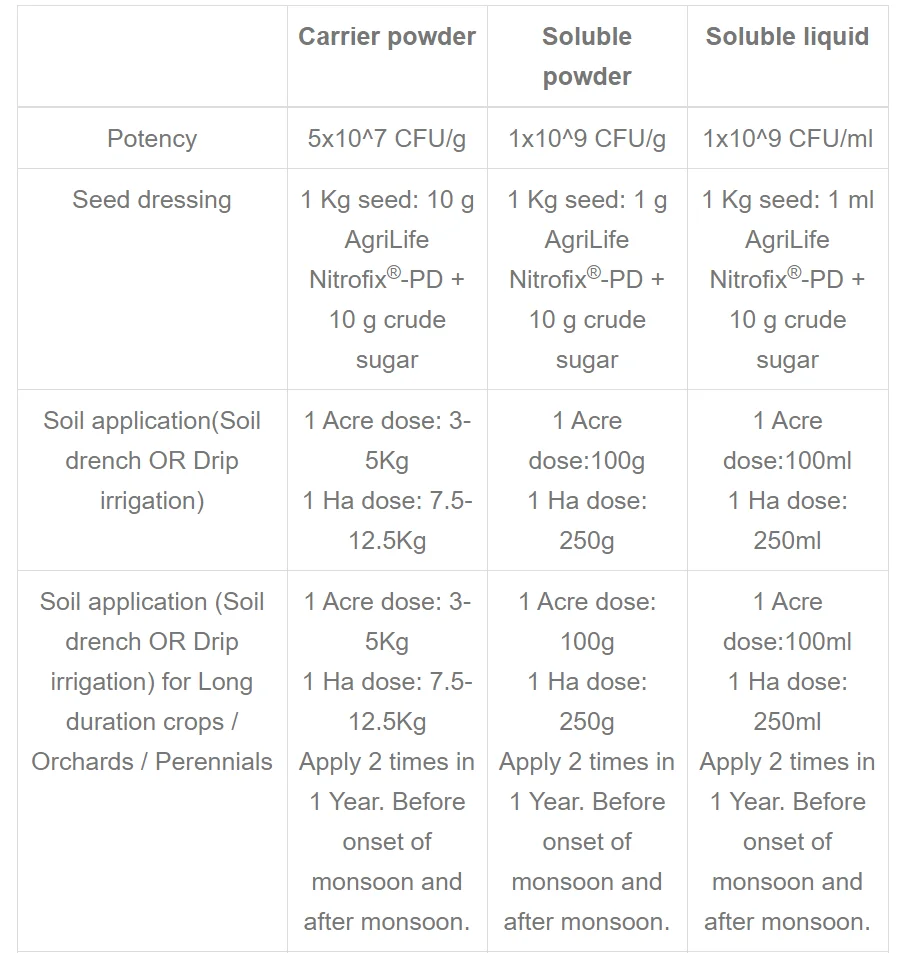
Nitrogen cannot be absorbed by the plants owing to the strong triple bonds between the nitrogen atoms making it inert and therefore non assimable by plants.
Enzyme production: Azotobacter vinelandii produces enzymes such as ferredoxin, hydrogenase and nitrogenase
Nitrogen fixation needs a large amount of energy in the form of Adenosine Tri-Phosphate (ATP) and an anaerobic environment (no oxygen environment). Thus Azotobacter vinelandii develops a special defence mechanism against oxygen by intensifying its metabolism that reduces the oxygen concentration in its cells. A special protein sheath is present that protects the important nitrogenase enzyme. Homocitrate ions play some role in the processes of Biological Nitrogen Fixation (BNF).
Nitrogenase action: This is an important enzyme used to convert atmospheric nitrogen into ammonium / nitrate ions which get fixed in soil and can be absorbed by the plants. The basic type is molybdenum-iron nitrogenase.
Bio active compound synthesis: Azotobacter vinelandii synthesizes some biologically active substances including some phytohormones such as auxins thereby stimulating plant growth. They also facilitate the mobility of heavy metals in the soil and thus enhance bioremediation of soil from heavy metals, such as cadmium, mercury and lead.
Packaging & Shipping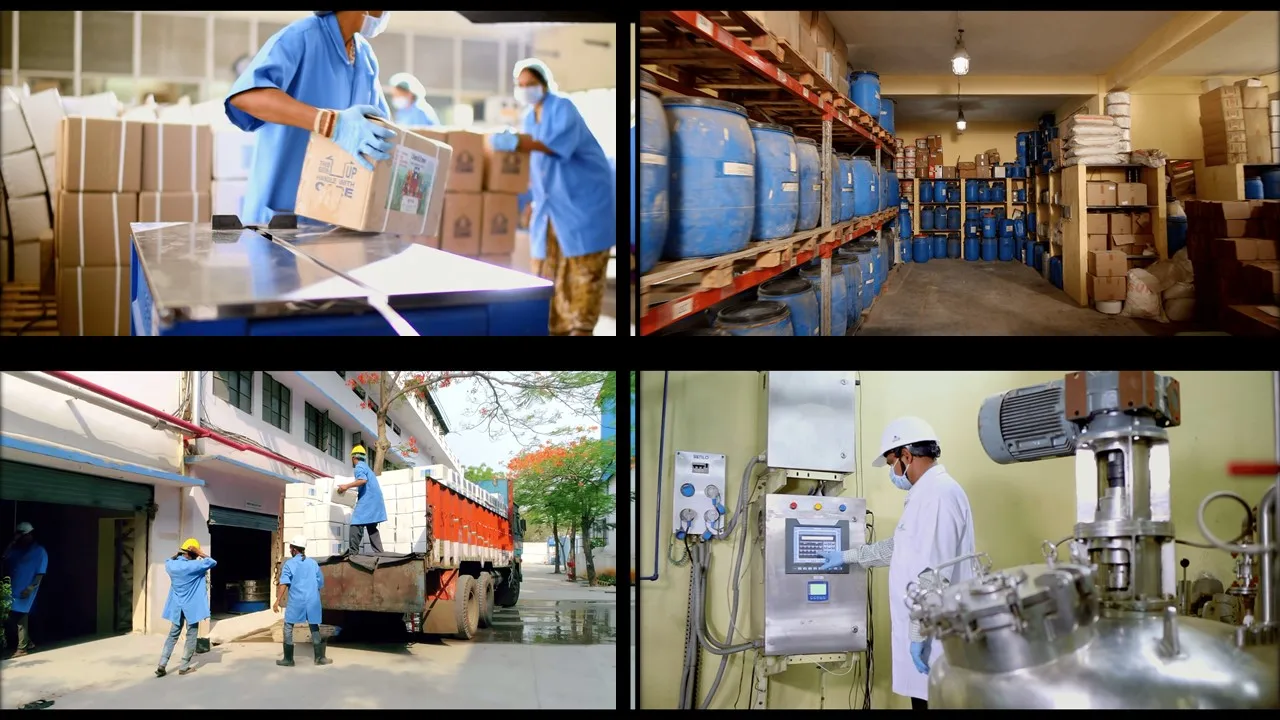 Our Services
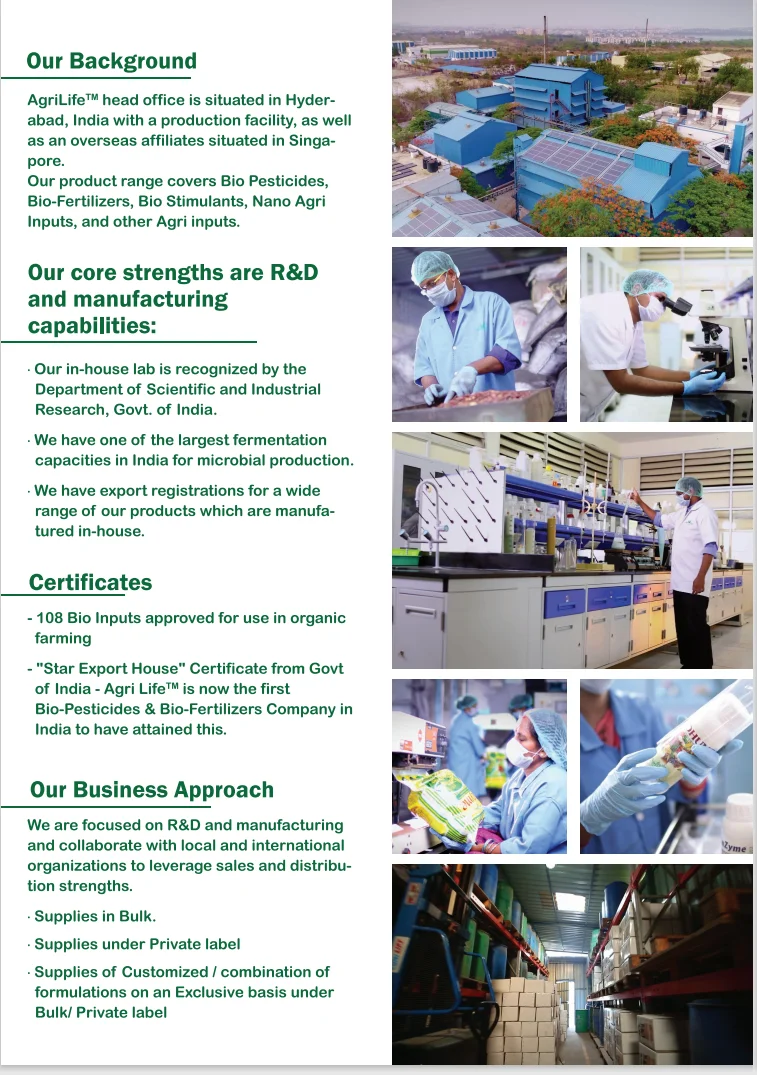 Company Information
We Recommend
New Arrivals
New products from manufacturers at wholesale prices