Карбоксиметилцеллюлоза, PK 1 для бетонных смесей высокопроизводительная машина для бетонной смеси
- Category: Concrete Admixtures & Mortar Admixtures >>>
- Supplier: Fort Ltd
Share on (10000002108579):
Product Overview
Description
Why You Should Choose "Fort" Ltd
The company "Fort" is one of the main and experienced players in the Russian market of concrete additives.
Since 2004, Fort has been developing, testing, manufacturing, and selling high-quality products. Many developments are carried out with the participation of specialists from construction and transport institutes (NIIZHB G.Moscow, PGUPS g.St. Petersburg, etc.).
The production is carried out on modern automated equipment by specialists with a high degree of training.
Deep knowledge of the market, many years of experience in creating and developing production, multiplied by the scientific potential of Russian scientists, allowing us to successfully solve the problem of producing products that are in demand by the huge construction industry.
The production is carried out on modern automated equipment by specialists with a high degree of training.
Deep knowledge of the market, many years of experience in creating and developing production, multiplied by the scientific potential of Russian scientists, allowing us to successfully solve the problem of producing products that are in demand by the huge construction industry.

About Our Products | Product Sales And Customer Service |
- are used by the variety of areas; | - a well-thought-out sales and supplier policy; |
- simple, safe, and easy to use; | - a wide coverage of the regions of Russia and the CIS; |
- have an acceptable price (not to the detriment of the quality and efficiency of their use); | - a guaranteed delivery of Fort products to end consumers with minimal costs; |
- the properties of the components have been studied and confirmed by many decades of application practice on construction sites of the USSR and the CIS, as well as other countries; | - the priority value in the company's development strategy is occupied by attentive work with each client: - selection of the necessary additives - further technical support by our specialists. |
- our company cooperates with some of these countries during the development of chemical additive compositions. |
Product Description
[General Information]
Carboxyl PK-1 is a chemical modifier of multifunctional action for concrete mixtures.
[Application] | ||
Carboxyl PK-1 is used for: | Carboxyl PK-1 will allow: | |
- manufacturing of commercial concrete mixes, concrete and w/concrete elements and structures; | - to obtain highly mobile mixtures with an increased mobility retention time and a subsequent normal strength set; - improvement of the pumpability of the mixture due to high water-reducing property, good workability and self-sealing; | |
- manufacturing of products at reinforced concrete plants, including those with restressed reinforcement, monolithic housing construction; | - to save cement while reducing the water-cement ratio; - increasing the mobility of the concrete mixture to P5, spreading the cone to 60 cm depending on the fraction of a large aggregate; | |
- the production of thick-reinforced and thin-walled products; | - reducing the time or completely abandoning the vibration compaction of the mixture (allows you to make self-compacting concrete); - significant reduction of water consumption in the mixture; | |
- the production of paving elements, small architectural forms. | - increasing the compaction coefficient of the concrete mixture; - the possibility of saving up to 18-25% of cement while reducing the water-cement ratio of the mixture; - increase of frost resistance and water resistance of products. | |
Recommendations For Use
Name of the additive | Hyperplasticizer Carboxyl PK-1 |
Description of the additive | Carboxyl PK-1 is a superplasticizing and super water-reducing additive. It is a ready-to-use product. The additive consists of polycarboxylate polymers and surfactants. Despite the polymer base, it works equally well with all types and brands of cement. It is available only in liquid form. |
Documentation | TU 5745-008-13453677-2015, The products comply with sanitary standards: Sanitary and epidemiological conclusion No. 1-T-36pr dated May 25, 2015 The products are not subject to mandatory certification. |
Compliance with the norms | GOST 24211-08 (Table 1, Section 1, sub-paragraphs 1.1.1, 1.2.1, 1.3 and 1.4. Section 2, sub-paragraphs 2.1.2 and 2.5) |
Recommended dosages | The dosage of the additive is carried out according to the liquid substance, it is not necessary to transfer it to the amount of dry additive! The range of recommended dosages: 0.3-1.2% by weight of cement. Other dosages are possible. The optimal dosage is determined by checking the effectiveness of its administration in accordance with GOST 30459. |
Application | The additive is recommended to be added into the concrete mixture together with water (with the last part of it) or pre-mixed with mixing water. Do not add to the dry mixture. Ensure sufficient mixing time for an even distribution of the additive in the mixture. The mixing time is also selected by the consumer based on the conditions of the technology, but not less than 1 minute. The effectiveness of the additive for concrete directly depends on the chemical composition of cement and aggregates. When changing the inert or binder of the concrete mixture, it is recommended to adjust the composition of the mixture in the laboratory. The effectiveness of the application of the Carboxyl PK-1 additive is evaluated depending on the purpose of its application: increasing the mobility and workability of the mixture, saving cement while reducing the water-cement ratio, increasing the strength and durability of products with a constant amount of cement and reducing the water-cement ratio. |
Requirements for materials | For the preparation of concretes with an additive, it is recommended to use additive-free cements and cements of groups 1 and 2 as well as sulfate-resistant and pozzolan cements and other special cements according to the current technical conditions. When using plasticized cements, additional laboratory tests must be performed. Hot cements (with a temperature above 40 °C) should not be used because of their increased water demand, overspending of cement and rapid loss of mobility of the concrete (mortar) mixture. As large aggregates for heavy concrete, materials should be used. Aggregates for concrete should not contain inclusions of reactive silica (opal, chalcedony, etc.) more than 50 mmol/L in order to avoid their interaction with the alkalis of Portland cement clinker in order to prevent the development of alkaline corrosion of concrete. For light concrete, materials should be used as large aggregates. As fine aggregates for heavy concrete, it is recommended to use sands. |
Additive density | 1,11 g / cm3 ± 0.05 |
Appearance | The liquid is dark brown in color. |
The tolerance of the draft, no more than | 1% |
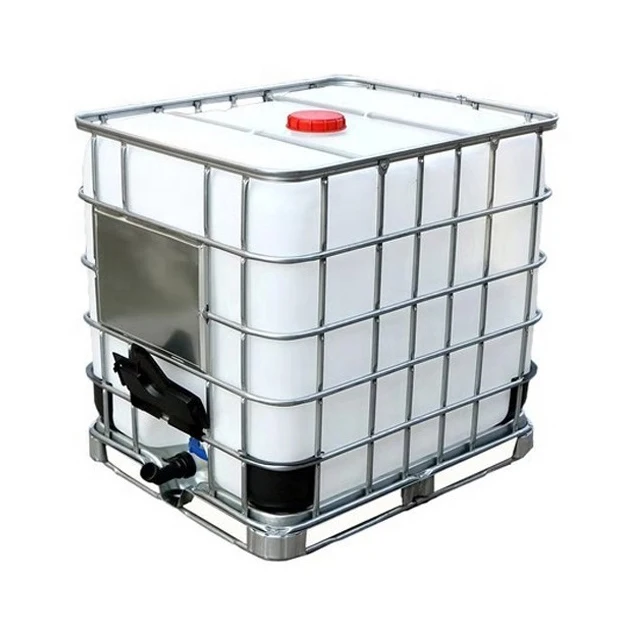
Packaging | Cans, barrels, eurocubes 1000 litres |
Guaranteed storage period | The product belongs to the 4th hazard class (low-hazard substance). Non-flammable and non-toxic product. Store in unopened original packaging, protecting from direct sunlight at a temperature of +5 °C to +35 °C. It does not emit harmful substances or vapors during storage. The shelf life is at least 12 months. from the date of manufacture (see the date in the quality certificate). |
Regulations and manuals recommended for familiarization when working with the additive | - "Manual on the use of chemical additives in the production of prefabricated railway structures and products" (to SNiP 3.09.01-85) - "Guidelines for the use of chemical additives" (Moscow, Stroyizdat, 1981) - SNiP 2.03.01-85 "Concrete and railway structures" - GOST 24211-2008 " Additives for concrete and mortar. General technical conditions" - GOST 30459-2008 " Additives for concrete and mortar. Methods for determining the effectiveness" |
Technical Indicators

FAQ
1. Can I get samples?
- Sending chemical samples internationally is a very complex process. In fact, it is necessary to draw up a full-fledged contract. Therefore, the minimum batch is 1000kg or 1000l.
2. Can I have my own customized product?
- Everything is possible, except for changing the packaging itself. Changing the packaging is possible hgb orders from 200 tons per month.
3. How long does it take to calculate the shipping cost?
- Three days
We Recommend

The most effective manufacturing wood cellulose fiber
US $1000-$1500


concrete admixture Polycarboxylate Mother Solution
US $700.00-$900.00

New Arrivals
New products from manufacturers at wholesale prices