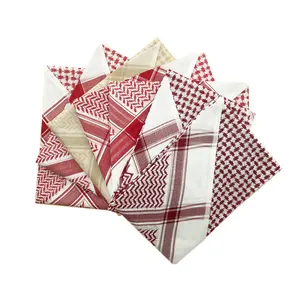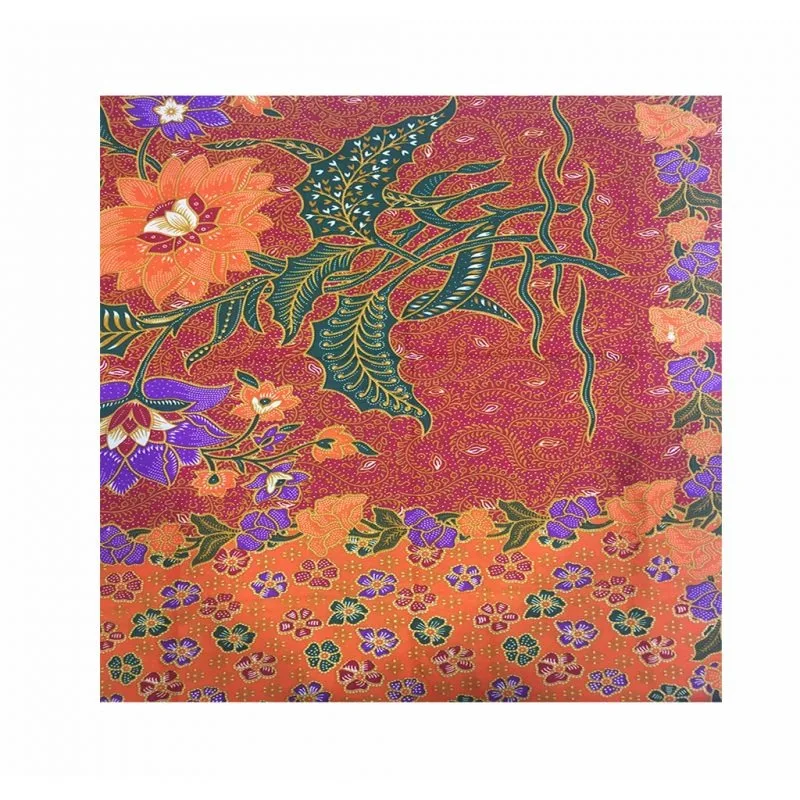
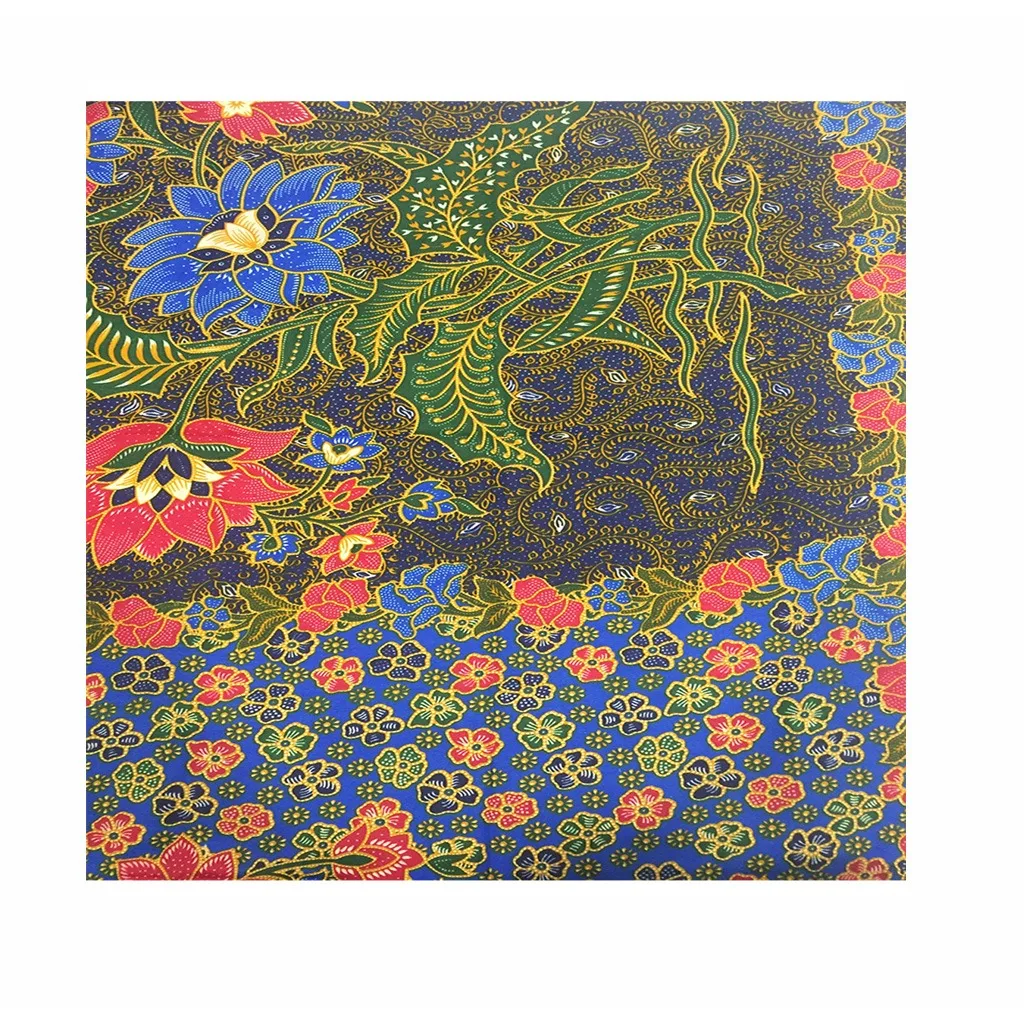
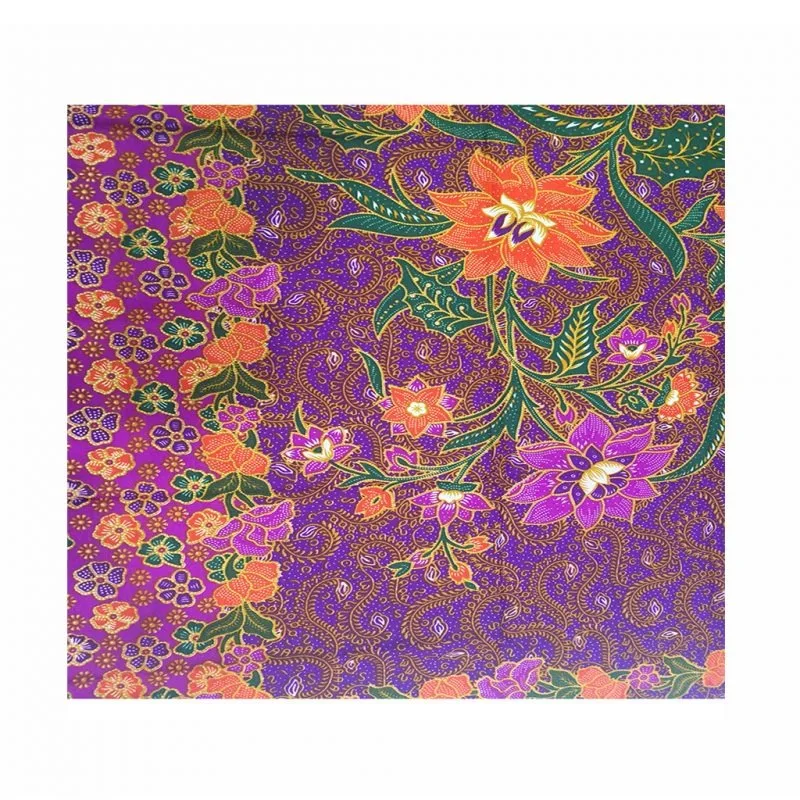
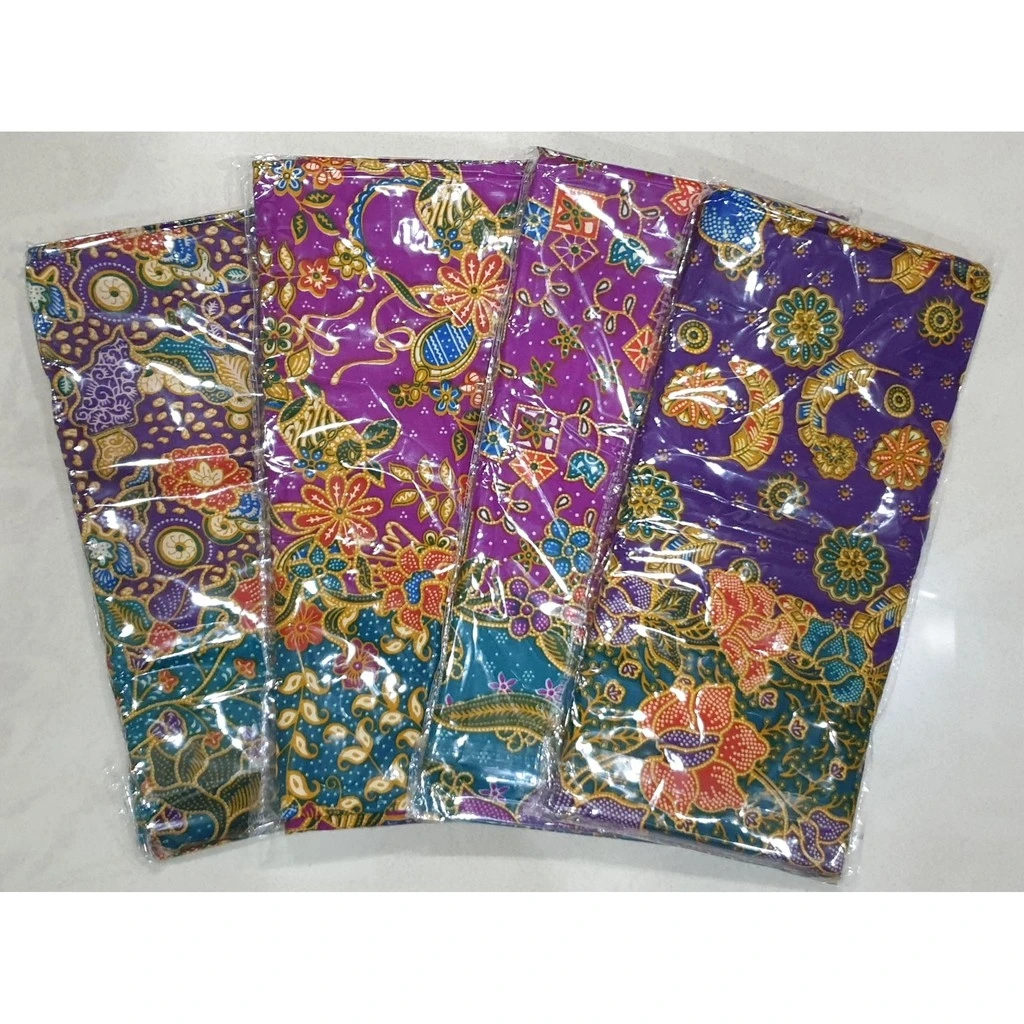
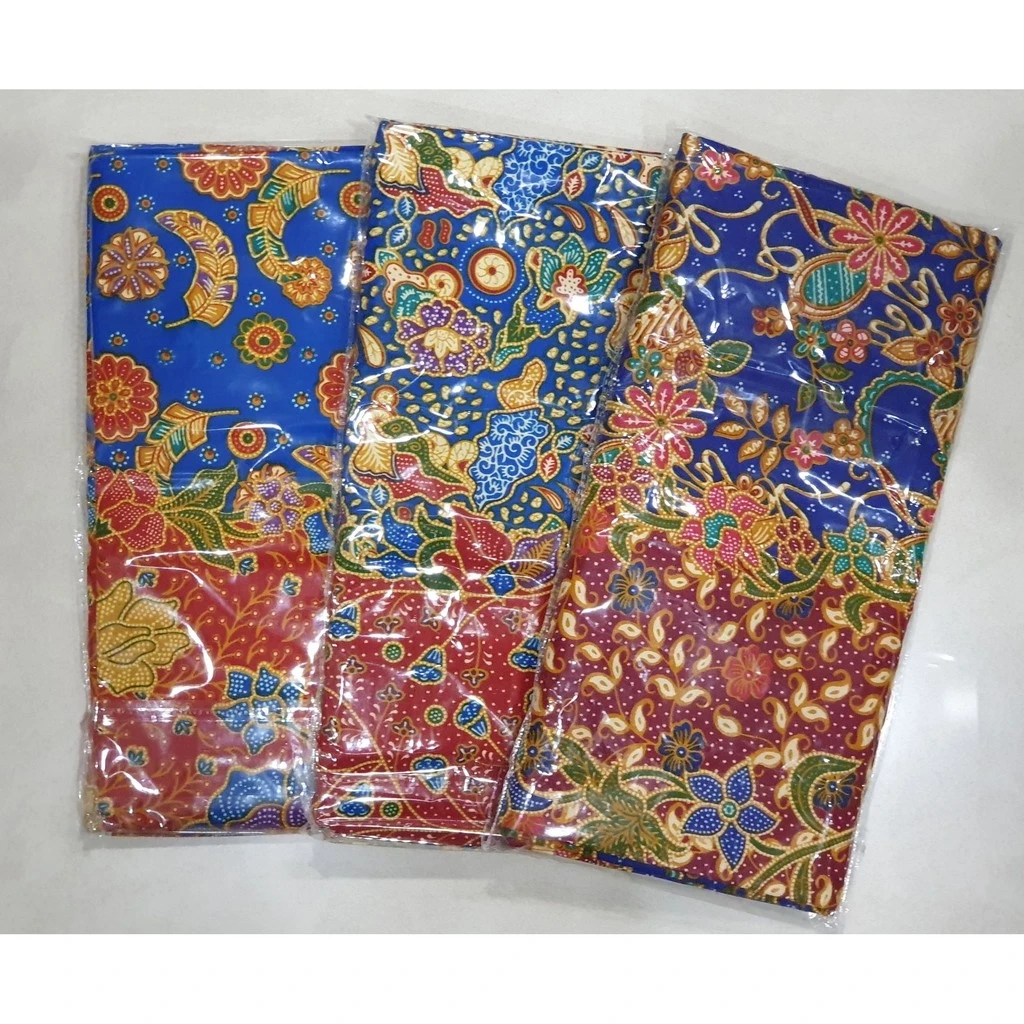
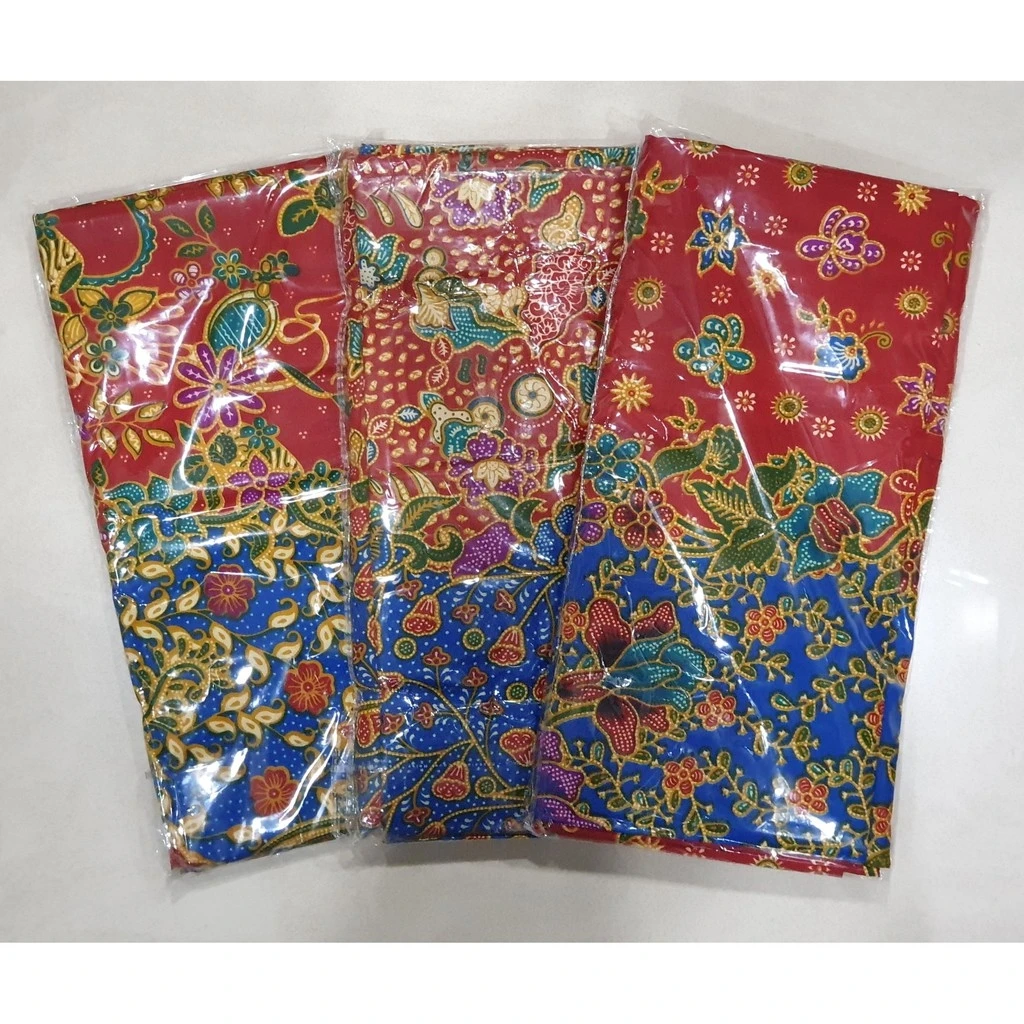
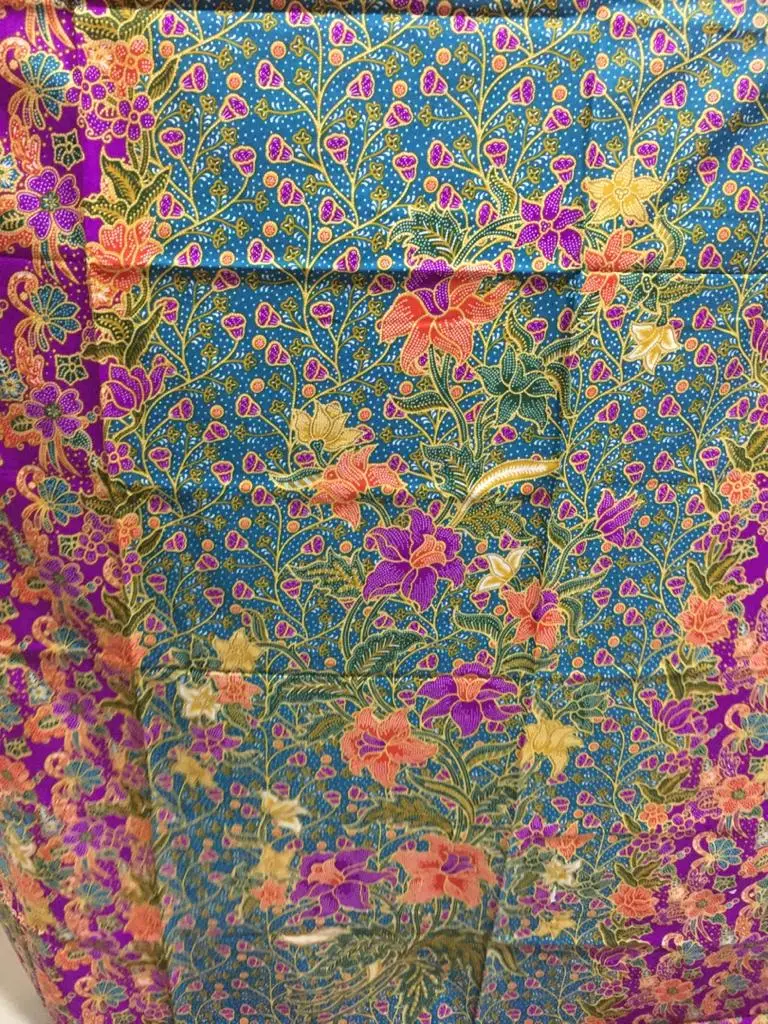
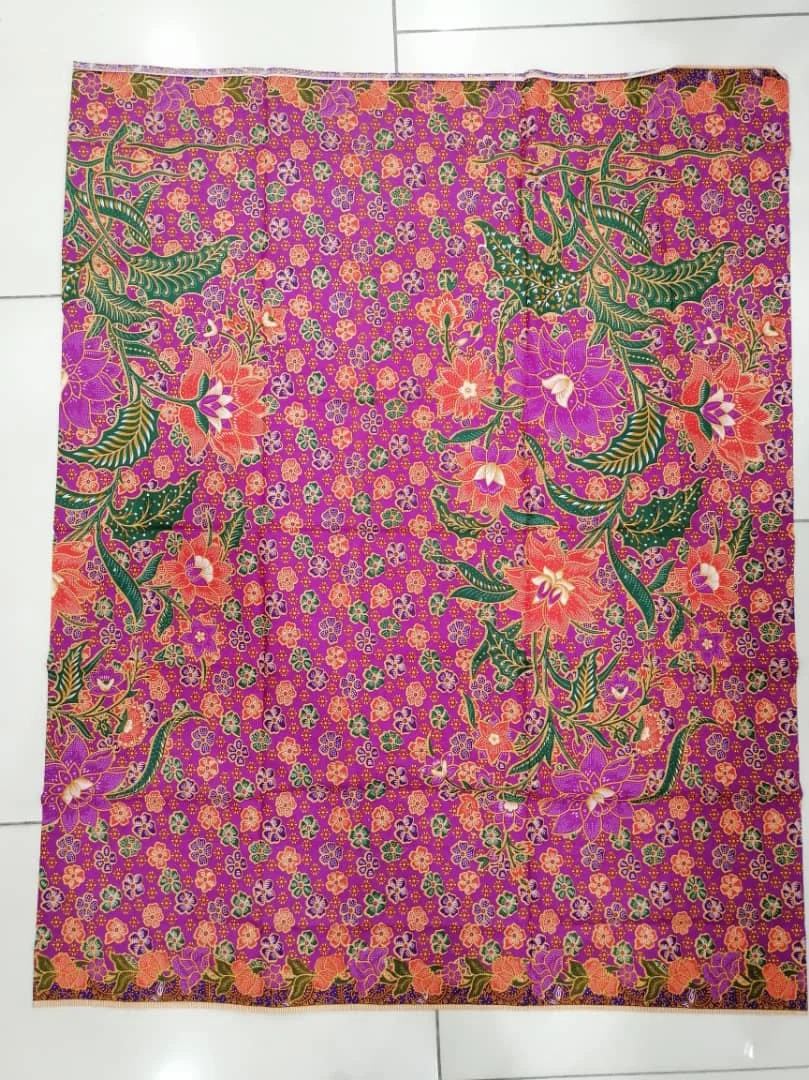
Wholesale Malaysia Batik 100% cotton fabric machine print with floral design pattern
- Category: Other Regional Clothing >>>
- Supplier: AWEN GLOBAL ENTERPRISE
Share on (10000002870507):
Product Overview
Description

Malaysian batik is batik textile art in Malaysia, especially on the east coast of Malaysia (Kelantan, Terengganu and Pahang). The most popular motifs are leaves and flowers. The butterfly theme is a common exception. The Malaysian batik is also famous for its geometrical designs, such as spirals. The method of Malaysian batik making is also quite different from those of Indonesian Javanese batik, the pattern is larger and simpler, it seldom or never uses canting to create intricate patterns and rely heavily on brush painting method to apply colours on fabrics. The colours also tend to be lighter and more vibrant than deep coloured Javanese batik.
According to the Museum of Cultural History of Oslo, it is known for certain that the Javanese influenced Malay batik-making technically as well as in the development of designs. At an early stage the Malaysians used wooden blocks in order to produce batik-like textiles. As late as the 1920s Javanese batik makers introduced the use of wax and copper blocks on Malaysia's east
coast. The production of hand drawn batik in Malaysia is of recent date and is related to the Javanese batik tulis.
coast. The production of hand drawn batik in Malaysia is of recent date and is related to the Javanese batik tulis.
Commercial production started in the 1960s. This craft has developed its own particular aesthetic and design, peculiar to Malaysia. The new Malaysian batik is clearly different from the Javanese tradition of hand-painted batiks.
Malaysian batik can be found on the east coast of Malaysia such as Kelantan, Terengganu and Pahang, while batik in Johor clearly shows Javanese and Sumatran influences since there are a large number of Javanese and Sumatran immigrants in southern Malaysia.
Product Images
Product Range



Company Profile


Awen Global is a fast-growing one-stop sourcing connection direct from manufacturing factories with lowest MOQ for imports & exports.
We are partnering with various wholesalers for fast moving FMCG products.
Our aim is to provide our customers with excellent service quality and convenience. Ensuring every of them receives professional, creative and courteous service.
Awen Global is also focusing on B2B markets for promoting Malaysia Brands, including Food & Beverages, Apparels, Home & office furniture and etc, aiming in helping local SME's especially women entrepreneurs in expanding their products t0 oversea markets.
We also provide services and advices for private labels, own brands products with affordable price and with lowest MOQ.
Awen Global is also focusing on B2B markets for promoting Malaysia Brands, including Food & Beverages, Apparels, Home & office furniture and etc, aiming in helping local SME's especially women entrepreneurs in expanding their products t0 oversea markets.
We also provide services and advices for private labels, own brands products with affordable price and with lowest MOQ.
Certifications

Why Choose Us
Fast and Convenient Services with Lowest MOQ for Imports & Exports