Resin technology for soy Isoflavones separation
- Category: >>>
- Supplier: Jiangsu Helper Functional Material Co. Ltd.
Share on (10000003032420):
Product Overview
Description
Chelating resin
Chelating resin is a kind of crosslinking functional polymer materials which can form multi-coordination complex with metal ions.
The mechanism of chelating resin adsorption of metal ions is that functional atoms on the resin coordinate with metal ions to form a stable structure similar to small molecule chelates, while the mechanism of ion exchange resin adsorption is electrostatic action. Therefore, compared with ion-exchange resins, chelating resins have stronger binding force and higher selectivity with metal ions.
As countries' requirements for environmental protection policies are getting higher and higher, the standards for wastewater discharge are getting higher and higher. And metal ions are one of the important emission standards.The chelating resin can remove nickel, copper, mercury, boron, arsenic, zinc and other ions from water, and also recover valuable metals in wastewater, such as gold and silver. , palladium, platinum, silver, to achieve resource reuse。
Typical Application
Ionic membrane caustic soda secondary brine refining (calcium, magnesium removal )
The mechanism of chelating resin adsorption of metal ions is that functional atoms on the resin coordinate with metal ions to form a stable structure similar to small molecule chelates, while the mechanism of ion exchange resin adsorption is electrostatic action. Therefore, compared with ion-exchange resins, chelating resins have stronger binding force and higher selectivity with metal ions.
As countries' requirements for environmental protection policies are getting higher and higher, the standards for wastewater discharge are getting higher and higher. And metal ions are one of the important emission standards.The chelating resin can remove nickel, copper, mercury, boron, arsenic, zinc and other ions from water, and also recover valuable metals in wastewater, such as gold and silver. , palladium, platinum, silver, to achieve resource reuse。
Typical Application
Ionic membrane caustic soda secondary brine refining (calcium, magnesium removal )
Industrial water and groundwater arsenic, boron removal
Precious metal recovery
Heavy metals removal(Such as Copper,Nickel,mercury,Zinc and so on)
Nitrate and perchlorate removal from drinking water
Fluorine, phosphorus removal from Groundwater

BMCC Amino methyphosphonic type, for Purification of secondary brine
BMCC is a weakly acidic cation exchange resin with chelating amino methyl phosphonic acid groups for the selective removal of trasition heavy metals and alkaline earth cations. BMCC can use for Brine Decalcification
Polymer Structure | Styrene-DVB |
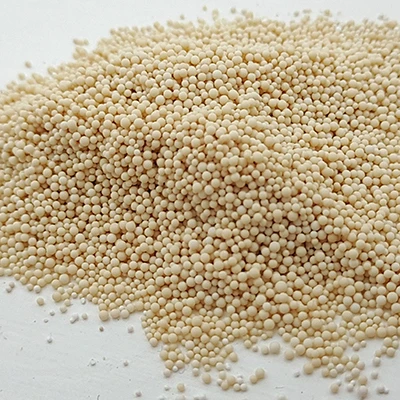
Appearance | Pale yellow opaque spherical particles |
Type | Macroporous Clelating Resin |
Ionic form | Na + |
Functional group | Aminophosphonic |
MoistureContent % | 55-65% |
Total Exchange Capacity (Chelated Copper) Eq/L | ≥0.5 |
Particle Size Range 0.315-1.25mm | ≥95 |
Uniformity Coefficient max. | ≤1.6 |
Reversible Swelling Na →H max % | ≤10 |
Shipping Weight g/ml | 0.72-0.78 |
Temperature Limit ℃ | 100℃ |
Whole Spherical Rate After Attrition % | ≥90 |
WHO WE ARE

RESEARCHING & DEVELOPMENT


We Recommend
New Arrivals
New products from manufacturers at wholesale prices