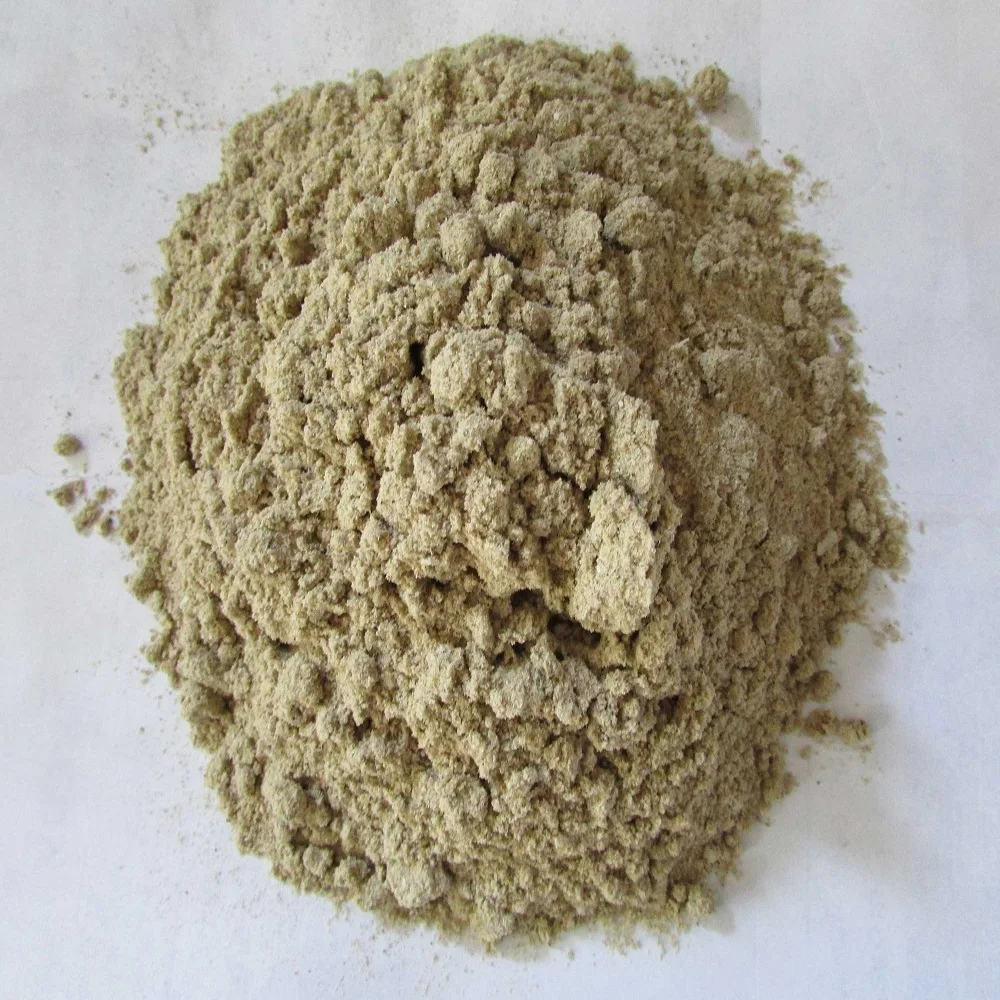
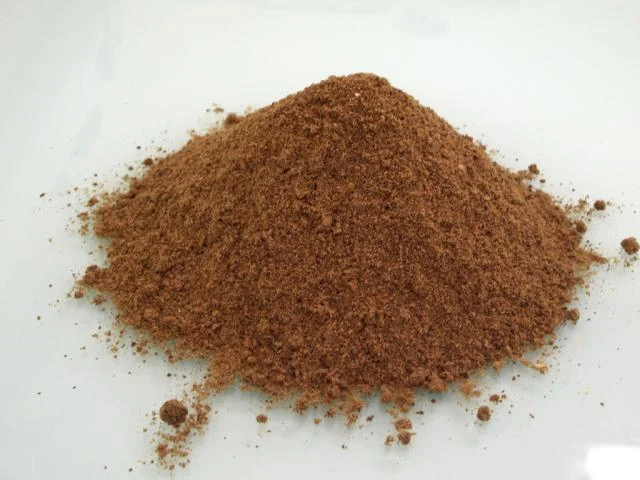
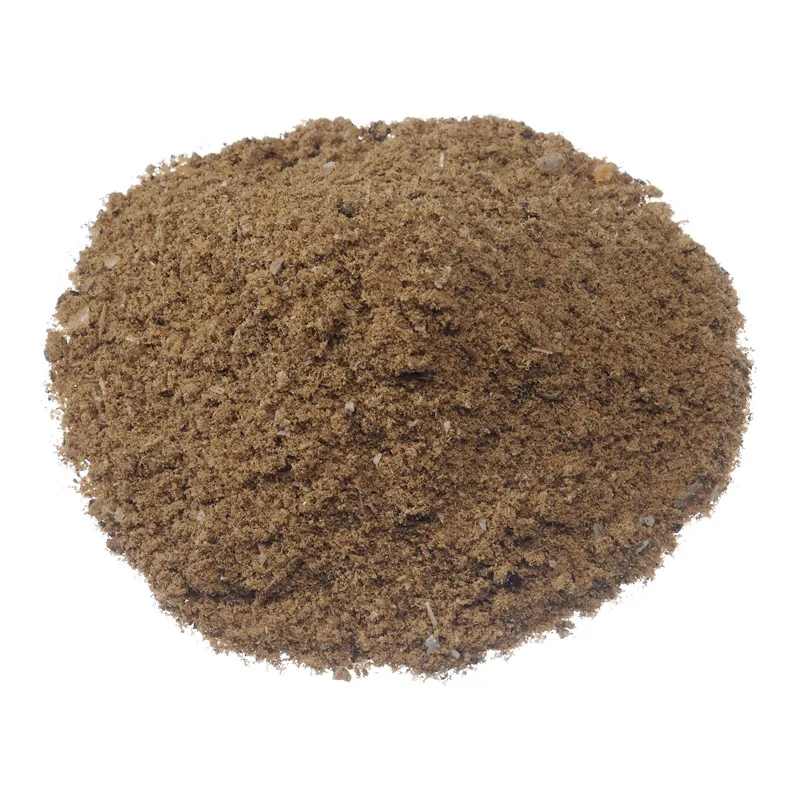
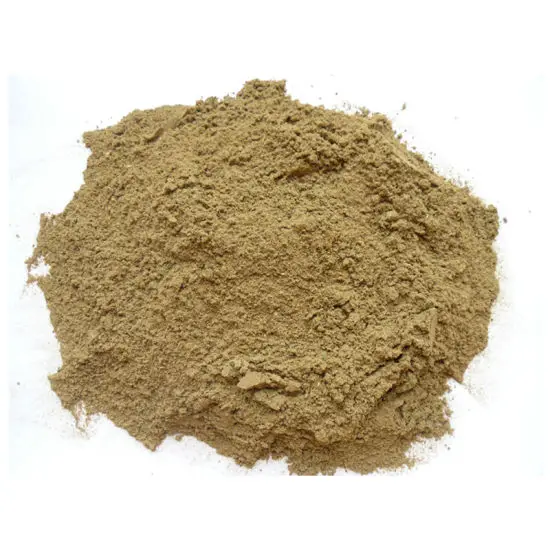
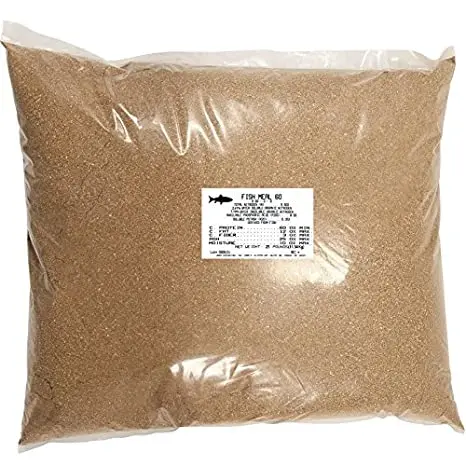
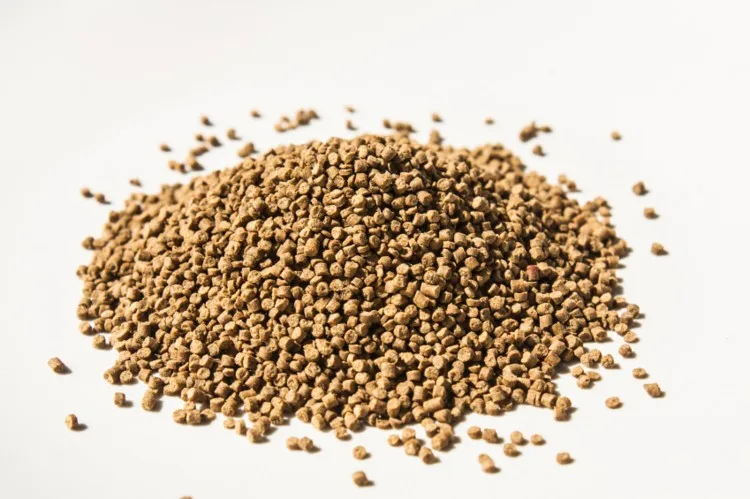
High Protein Decapsulated Fish feed Artemia cysts fish meal Brine Shrimp Eggs Artemia Cysts
- Category: >>>
- Supplier: SM GREEN SUPPLIER CO. LTD.
Share on (10000004778786):
Product Overview
Description
FISH MEAL
Feeding
Fish meal should be introduced into the ration gradually to avoid feed refusal. Since the greatest benefit from feeding fish meal comes during the first half of lactation when protein requirements are highest, it is useful to start adapting the cows to it during the latter part of the dry period.
Fish meal can be fed to milking cows at a rate that supplies up to a maximum of 100 grams (3.5 ounces) of fish oil (fat) per cow per day. Higher levels of fish oil tend to lower fat test. The fat content of fish meal varies among suppliers. Therefore, it is important to know the fat content of the fish meal being used. A practical guideline is to feed it at a rate of up to 1 ½ pounds (0.7 kg) per cow per day.
Typical Analysis | |
Dry matter | 92 % |
Crude Protein | 62.0 % |
Fat | 09.8 % |
Crude fiber | 01.0 % |
Neutral Detergent Fiber | 00.0 % |
Acid Detergent Fiber | 00.0 % |
Calcium | 05.0 % |
Phosphorus | 03.0 % |
Total Digestible Nutrients | 71.0 % |
Net energy—Lactation | 70.0 Mcal/100 lbs. |
Others: Herring, Anchovy, Redfish, and Whitefish meal
Herring and anchovies also are oil-type fish and are processed similarly.
Redfish meal is the filleting waste from ocean perch. Ocean perch are not an oil fish. They are caught for human food off the eastern coast of Canada and the U.S. After the fillets are removed, the heads and racks are ground, cooked and dried to produce redfish meal.
The term whitefish refers to cod, haddock, hake, flounder and pollack. Like ocean perch, these also are caught for human food. After the fillets are removed, the heads and racks are ground, cooked and dried to produce whitefish meal.
FISH MEAL
Description
Low Ash Menhaden meal differs from conventional commodity fishmeal by the additional process developed to remove a large amount of the bone. The resulting meal has a significantly reduced ash content, and a corresponding increase in protein. This meal is ideal in situations where a lower mineral content is needed. This process results in a meal with a much smaller particle size.
Proximate Composition | Micro and Macro Minerals | |||
| Typical | Guaranteed |
|
|
Crude Protein | 70.0 | 68 min | Calcium % | 3.4 |
Fat | 9.0 |
| Phosphorus % | 2.2 |
Moisture | 9.7 |
| Potassium % | 1.0 |
Ash | 13.0 |
| Magnesium % | 0.2 |
Digestibility (0.2%) | 97.8 |
| Sodium % | 0.7 |
Digestibility (0.0002%) | 91.1 | 90 min | Manganese- PPM | 45.2 |
TVN | 0.16 | 0.18 max | Iron- PPM | 924.0 |
|
|
| Boron- PPM | 4.5 |
Amino Acids % of Sample |
|
| Copper-PPM | 7.8 |
|
|
| Zinc- PPM | 94.8 |
Aspartic Acid | 6.4 |
| Chromium- PPM | 4.0 |
Threonine | 3.0 |
| Selenium- PPM | 2.0 |
Serine | 2.7 |
| Strontium- PPM | 66.2 |
Glutamic Acid | 9.2 |
| Barium- PPM | 14.3 |
Proline | 3.5 |
| Aluminum- PPM | 774.4 |
Glycine | 5.4 |
|
|
|
Alanine | 4.6 |
|
|
|
Cystine | 0.7 |
| Vitamins- MG/LB- Literature Values |
|
Valine | 3.5 |
|
|
|
Methionine | 2.3 |
| Botin | 0.1 |
Isoleucine | 3.0 |
| Choline | 1360.0 |
Leucine | 5.1 |
| Folic Acid | 0.1 |
Tyrosine | 2.2 |
| Niacin | 25.0 |
Phenylalanine | 2.8 |
| Pantothenic Acid | 4.0 |
Histidine | 2.0 |
| Vitamin B1- Thiamine | 0.3 |
Lysine | 5.6 |
| Vitamin B2- Riboflavin | 2.2 |
Arginine | 4.4 |
| Vitamin B6- Pyridoxine | 2.7 |
Tryptophan | 0.7 |
| Vitamin B12 | 0.1 |
Taurine | 0.6 |
| a- Tocopherol (IU/#) | 9.5 |
Hydroxyproline | 1.3 |
|
|
|
-


-
-
We Recommend
New Arrivals
New products from manufacturers at wholesale prices