Lobster frozen seafood from Mozambique waters high quality frozen food (150/300) 29.90EXW price / Lobster (300/500) 31.56 EXW
- Category: Instant Food >>>
- Supplier: Agencia para o Investimento e Comercio Externo de Portugal E P Abreviadamente Designada por AICEP
Share on (10000005777659):
Product Overview
Description

Product Description
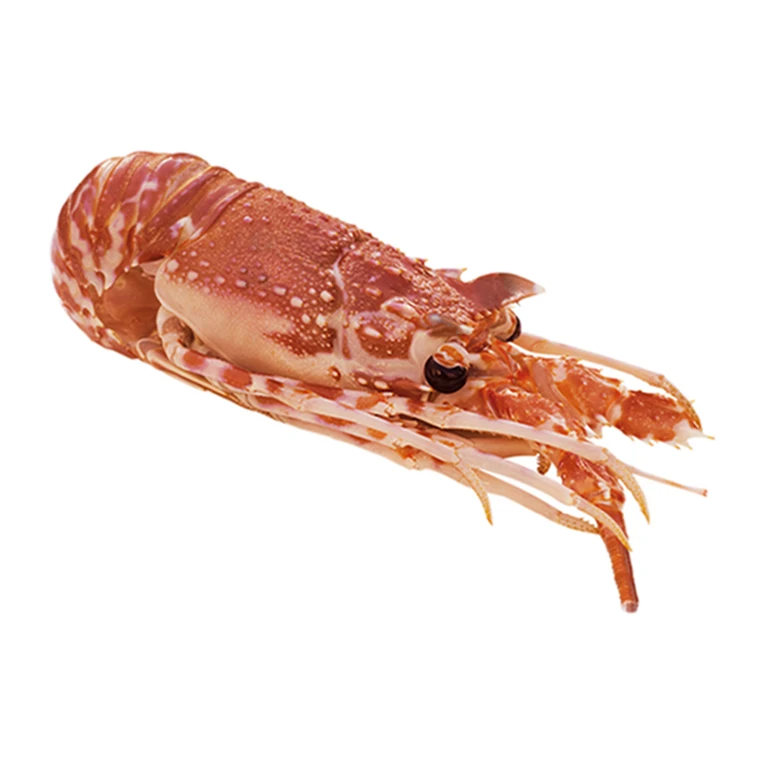
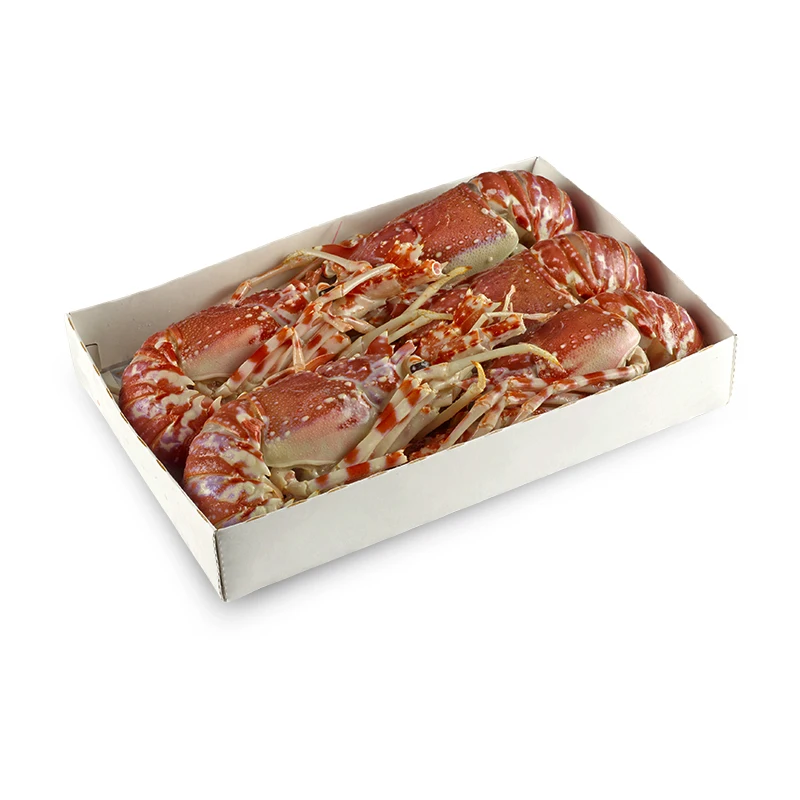
Lobster
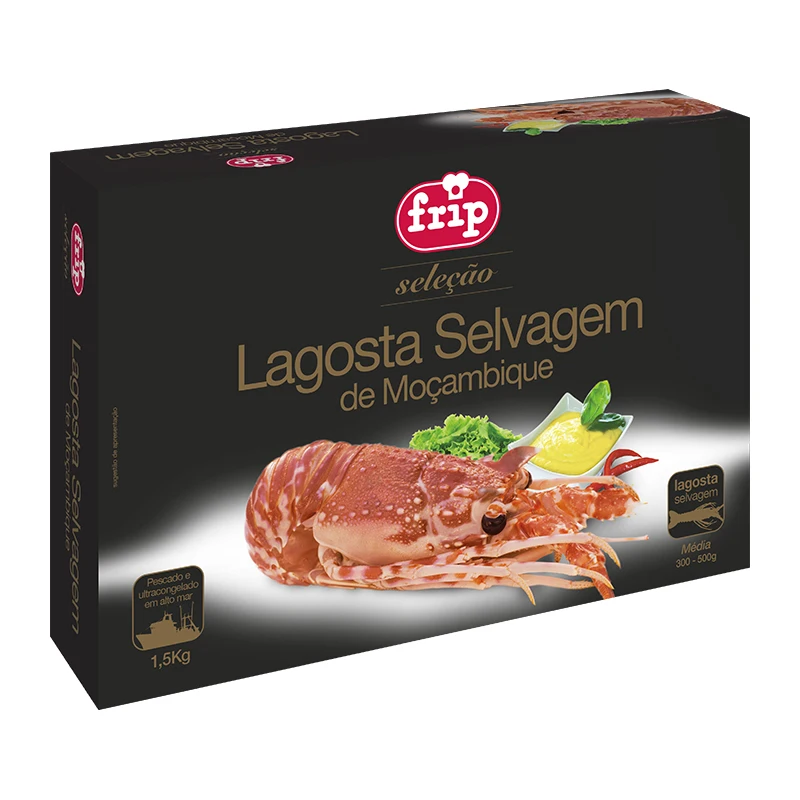
Scientific name :Palinurus Delagoe, FRIP Caliber 1,5kg ( 150/300), (300/500)- from deep Mozambique waters fishing in harmony wih natural habitats.


1. General description of the product:
- Trade name: Deep-frozen wild lobster
- Scientific name: Palinurus delagoae
- Catch area: FAO 51 (Mozambique)
- Counts (units/kg):
No0: >1000 g
No1: 700-1000 g
No2: 500-700 g
No3: 300-500 g
No4: 150-300 g
No 5: 100–150 g
(There are also uncalibrated lobsters)
The lobsters were conveniently washed, calibrated, chemically treated, weighed, deep-frozen, surface-glazed with spray and packaged on board.
- Primary packaging: Lobsters with a unit weight of less than 500 g and uncalibrated lobsters are packed in 1.5 kg polyethylene-lined paperboard, suitable for the products and for the humid on- board environment. Lobster with a unit weight of more than 500 g may be packed in nylon mesh bags or in 3.2 kg polyethylene boxes.
- Secondary packaging: The secondary packaging is made internally and externally by Kraft paperboard. The interior of the package is made of corrugated cardboard, in order to increase its resistance. The net weight can be 6,4 kg (2x3,2 kg), 12 kg (8x1,5 kg) or can be variable (between 10 and 12 kg).
2. Product origin:
- Mozambique
3. Ingredients:
- Deep-frozen wild Lobster (Palinurus delagoae), Antioxidants [E-223 (Sulfites) E-301, E-330], acidity regulator (E-331 iii).
4. Allergens
- Contains crustaceans and sulfites. It may contain traces of molluscs and fish.
5. Physical characteristics to be controlled:
- Net weight and counts: these features will be controlled in the sales unit, according to the legislation in force.
6. Organoleptic characteristics to be controlled:
A quantitative assessment will be performed using the scaling method on a 0/10 scale. A minimum score of 5 should be achieved.
- The lobsters must be fresh, presenting a vivid color without any darkening of the head. The odor must be fresh and reminiscent of the sea, without any ammonial smell. The lobster’s flesh must be translucent..
- After being cooked, the shrimps should have a sweet taste and a firm but not hard texture. Seafood with an obvious melanosis development is not acceptable.
7. Nutrition declaration and chemical characteristics:
- Nutrition declaration
Nutrition declaration Average nutritional values per 100 g
Energy 399 kJ / 94 kcal
Fat 0.9 g
of which saturates 0.3 g
Carbohydrate <0.5 g
of which sugars <0.5 g
Protein 22 g
Salt 0.78 g
- Chemical characteristics
- Time for total melanosis: > 24 hours
- Sulfur dioxide (SO2) is controlled according to the legislation in force
8. Microbiological characteristics:
- In the evaluation of these characteristics, the procedure of sample collection and external microbiological analysis should be followed.
- Microorganisms to be analyzed:
- Microorganisms count at 30 ºC
- Enumeration of coliforms at 30 ºC
- Enumeration of coagulase-positive staphylococci
- Enumeration of Escherichia coli
- Detection of Salmonella spp.
- Detection of Listeria monocytogenes
- Detection of Vibrio spp.
- Limit values according to the legislation in force or with the general specification of microbiology and chemistry (EGQ 001).
9. Labeling characteristics to be controlled:
- In each sales unit, the existence, correction and visibility of the durability date, veterinary and lot numbers will be checked, since all other elements are pre-printed.
10. Preferential usage date:
- Considering that the product will be stored under the appropriate storage conditions, a minimum durability of 24 months after the freezing date will be assigned.
11. Storage and distribution conditions
- The product will be stored at temperatures less than or equal to -18 ºC. During distribution, the temperature variations should be minimal. In the exhibitors, the product should be stored at or below -18 ºC. The maximum permissible temperature variations in the storage, distribution and exhibition for sale shall be in accordance with the legislation in force.
12. Lot codification:
- The production lot will be sequential and will consist of 3 digits that will identify the ship, 2 digits for the year and the
remaining 2 for identification of the ship’s voyage number.
13. Predicted product usage:
- Target consumer: individual or collective, not discerning any group or niche market as not being potentially consumer.
- Way of consumption: heat treated (cooked, fried, grilled).
14. Unpredicted product usage:
- It should not be consumed without heat treatment.
15. Preparation instructions:
- Carefully wash the seafood in running water. The seafood is ready to be cooked.
- After thawing, do not freeze again. Consume within the next 24 hours.
16. Heavy metals and contaminants:
- In accordance with the legislation in force.
17. Ionizing radiation:
- This product has not been subjected to ionizing radiation treatment.
18. Omissive elements:
- In all cases, the product must comply with the legislation in force, in particular with the Community legislation.
19. Genetic modified organisms (GMO)
- This is a wild product and therefore is free from GMO’s.
Our Best products


Giant Scarlet Shrimp | Pink Shrimp | Lobster | Slipper Lobster |
Our Company

FRIP Sociedade de Pesca Miradouro, S.A.
The FRIP Group has been producing high quality dee-frozen food for more than 50 years.
It consists of 5 companies with production units located in Portugal and Mozambique and exports to all continents.
It consists of 5 companies with production units located in Portugal and Mozambique and exports to all continents.
About AICEP
aicep Portugal Global - Trade & Investment Agency (AICEP) is a government business entity, focused in encouraging the best competitive foreign companies to invest in Portugal and contribute in contributing to the success of Portuguese companies abroad in their internationalization processes or export activities. AICEP is your "one-stop-shop" Agency, and reliable partner, whenever you are looking to invest or buy Portuguese services or products. We serve our clients in accordance to their requirements through various solutions and long-term relationships. We direct our activity towards projects and markets that make a better contribution to company competitiveness and the sustainability of the Portuguese economy. We seek to meet expectations by means of a rigorous approach, effectiveness, enthusiasm and a willingness to innovate.

Pricing
CONTACT US TO GET YOUR PERSONALIZED QUOTE
We only need you to send us your query indicating the product, the desired quantity, your company name, email and contact person. An employee will respond to provide detailed product information.
We Recommend



New Arrivals
New products from manufacturers at wholesale prices