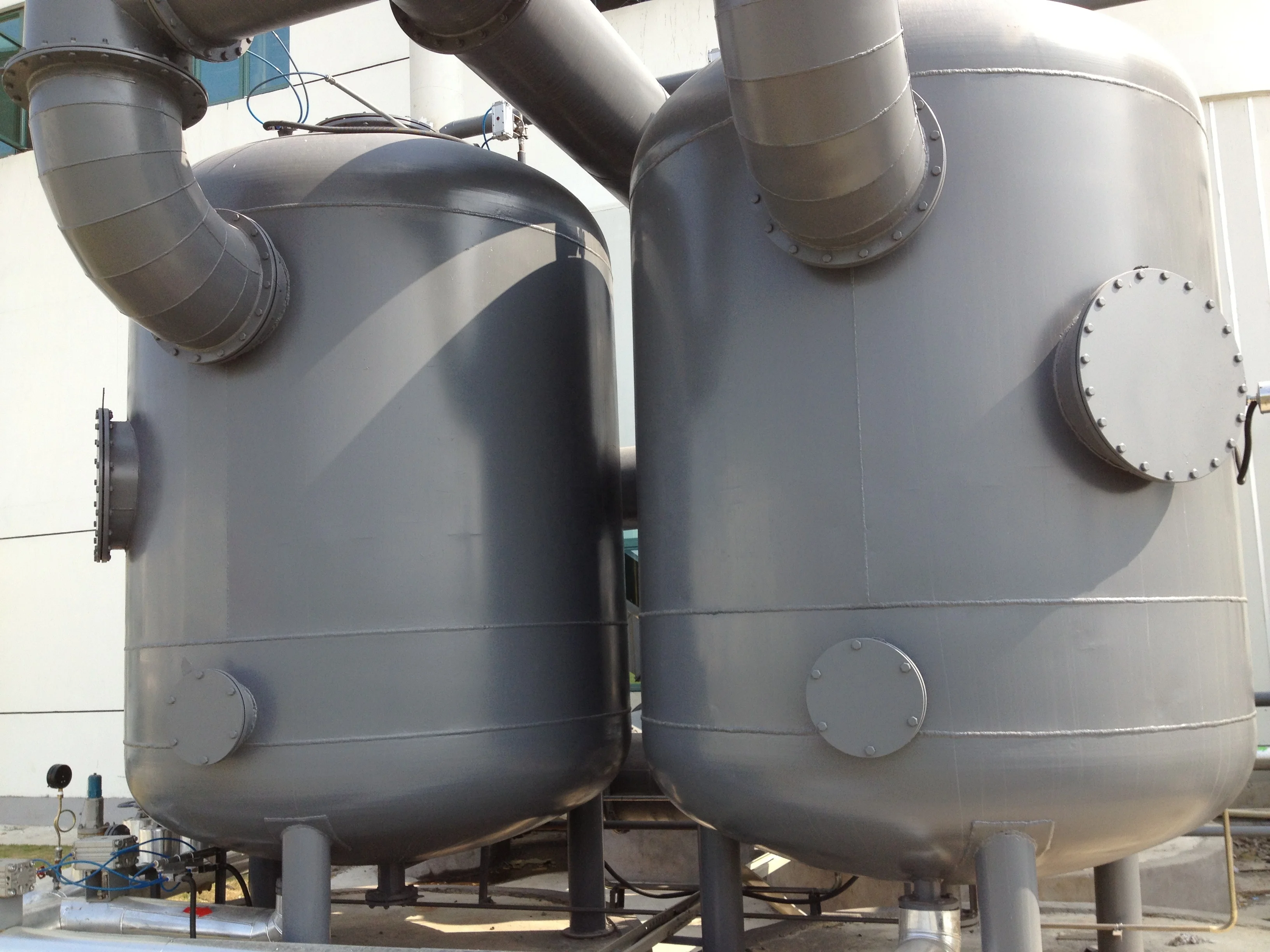
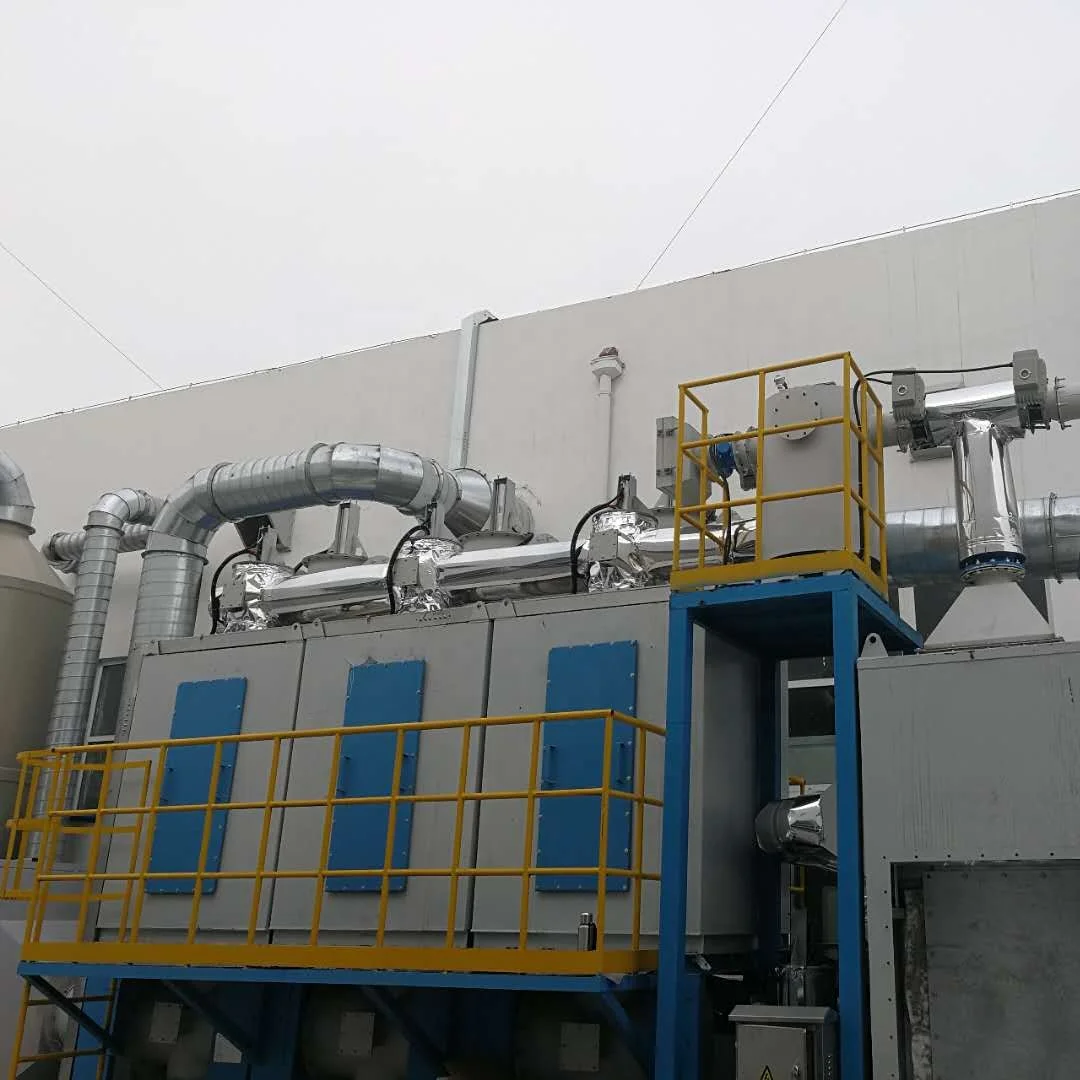
Low Maintenance Cost Zeolite Runner Adsorption and RTO Heat Storage Incineration Equipment for Coal CokingIndustrial
- Category: >>>
- Supplier: Shandong Mingsheng Environmental Protection Technology Co. Ltd.
Share on (10000005967903):
Product Overview
Description
Product Description
 VOCs Flue Gas Treatment System
VOCs source
VOCs refers to organic compounds with saturated vapor pressure greater than 133.32 Pa at room temperature and boiling point less than 50-260 ℃ at atmospheric pressure, or any volatile organic solid or liquid at room temperature and atmospheric pressure.
VOCs Process

1. RTO regenerative incineration process route
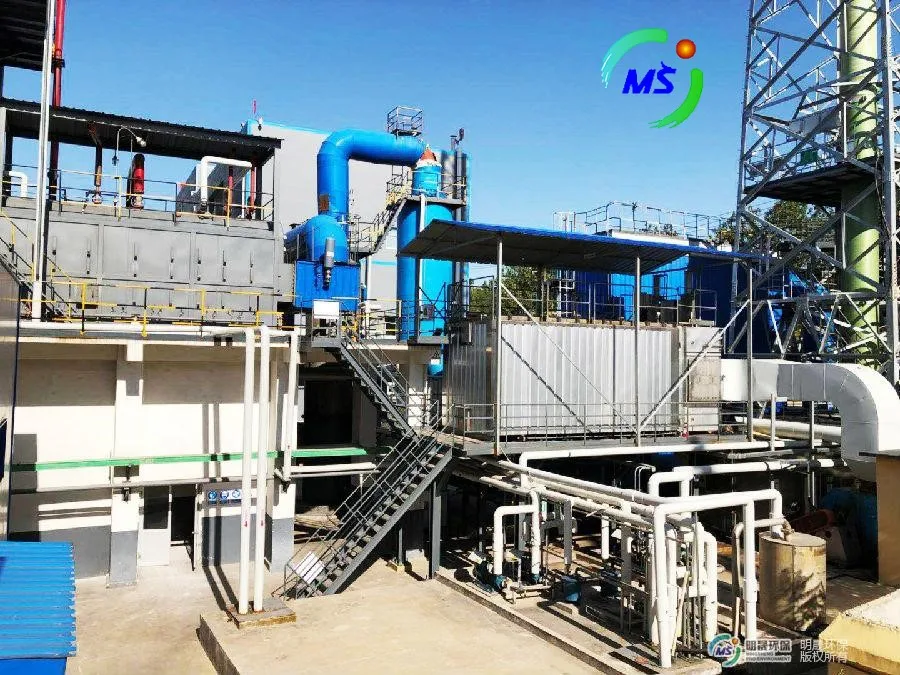
1.1 working principle of RTO
Taking the three bed RTO as an example, after the RTO is preheated, the waste gas enters the first ceramic heat storage area through the switching valve for preheating and stays in the high-temperature combustion area for at least one second. The burner ignites the natural gas to increase the temperature in the chamber to 850 ℃, and the waste gas is fully oxidized. The purified gas flows through the second ceramic heat storage zone to recover up to 97% of the combustion heat and wait for the next cycle for preheating the waste gas at room temperature. After about 1-2 minutes, the change-over valve changes the gas inlet and outlet direction, the waste gas enters from the second heat storage area and is discharged from the third heat storage area, the first heat storage area becomes a purge state, and the incompletely burned waste gas is returned to the RTO inlet again and again.

1.2 RTO process characteristics
1. Excellent safety control solution, fast lifting valve switching system, leakage less than 1 ‰, automatic combustion sequence control, flame monitoring, system self inspection and fault detection.
2. PLC automatic control, simple operation, stable operation and high reliability.
3. superposition or tiling design, suitable for occasions with load or height restrictions (such as roof).
4. The treatment efficiency is high, up to 99.95%, and the heat exchange efficiency of ceramic regenerator is up to 97%, effectively reducing gas consumption.
1.3 RTO performance parameters
1. treatment energy: 5000 ~ 500000 Nm3 / h
2 . design operating temperature: 760 ~ 850 ° C
3 . heat exchange medium: Ceramic
4. process pressure drop: 900 ~ 1200 PA
5. main insulation material: ceramic fiber module
6. auxiliary energy: natural gas or diesel
7. leakage of switching system: < 0.05%
8 . processing capacity: up to 99.95%
2. Zeolite runner adsorption + RTO heat storage incineration
2.1 working principle
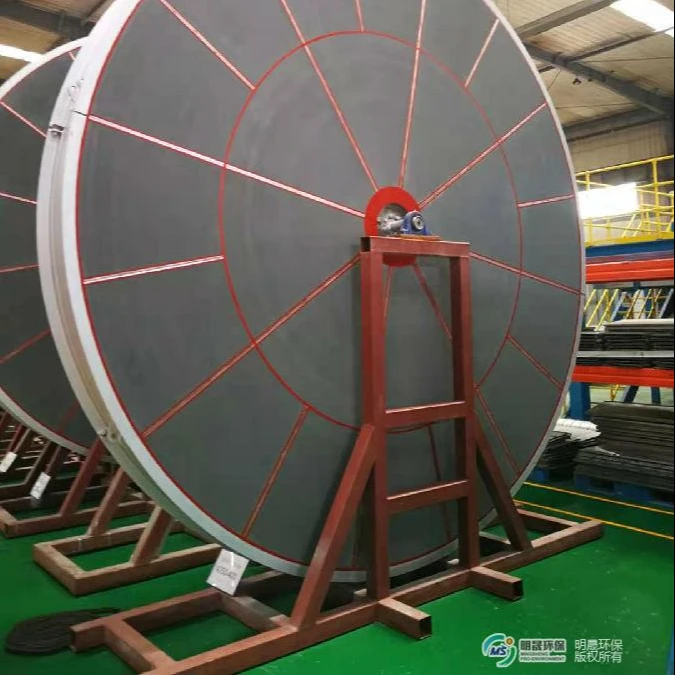
Zeolite runner is a kind of runner equipment that makes zeolite adsorbent materials into honeycomb structure. It can effectively purify volatile organic waste gas (i.e. VOCs waste gas). It has the advantages of strong adsorption, high purification efficiency, long service life and wide application range. It is now a leader in the waste gas treatment industry.
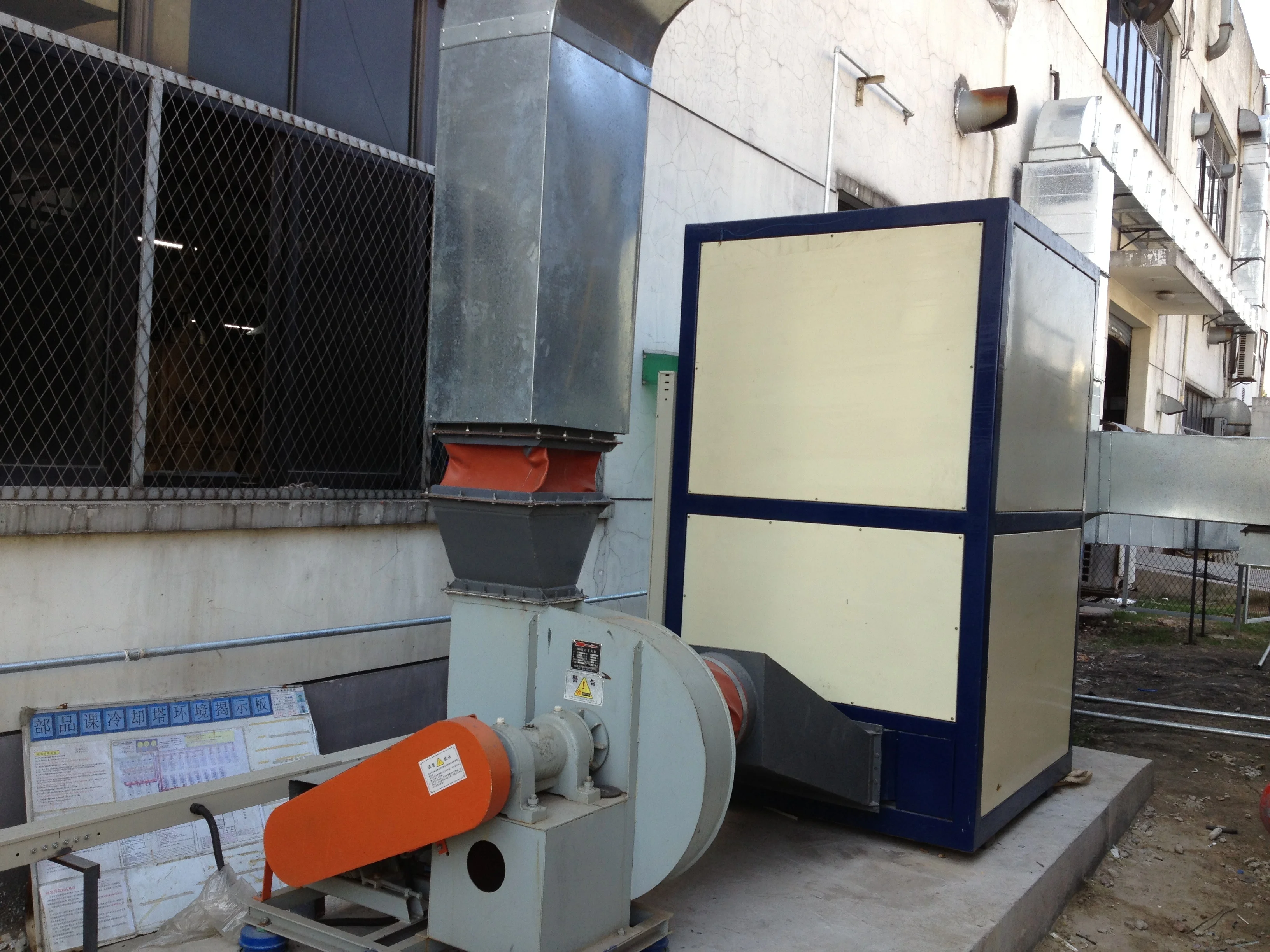
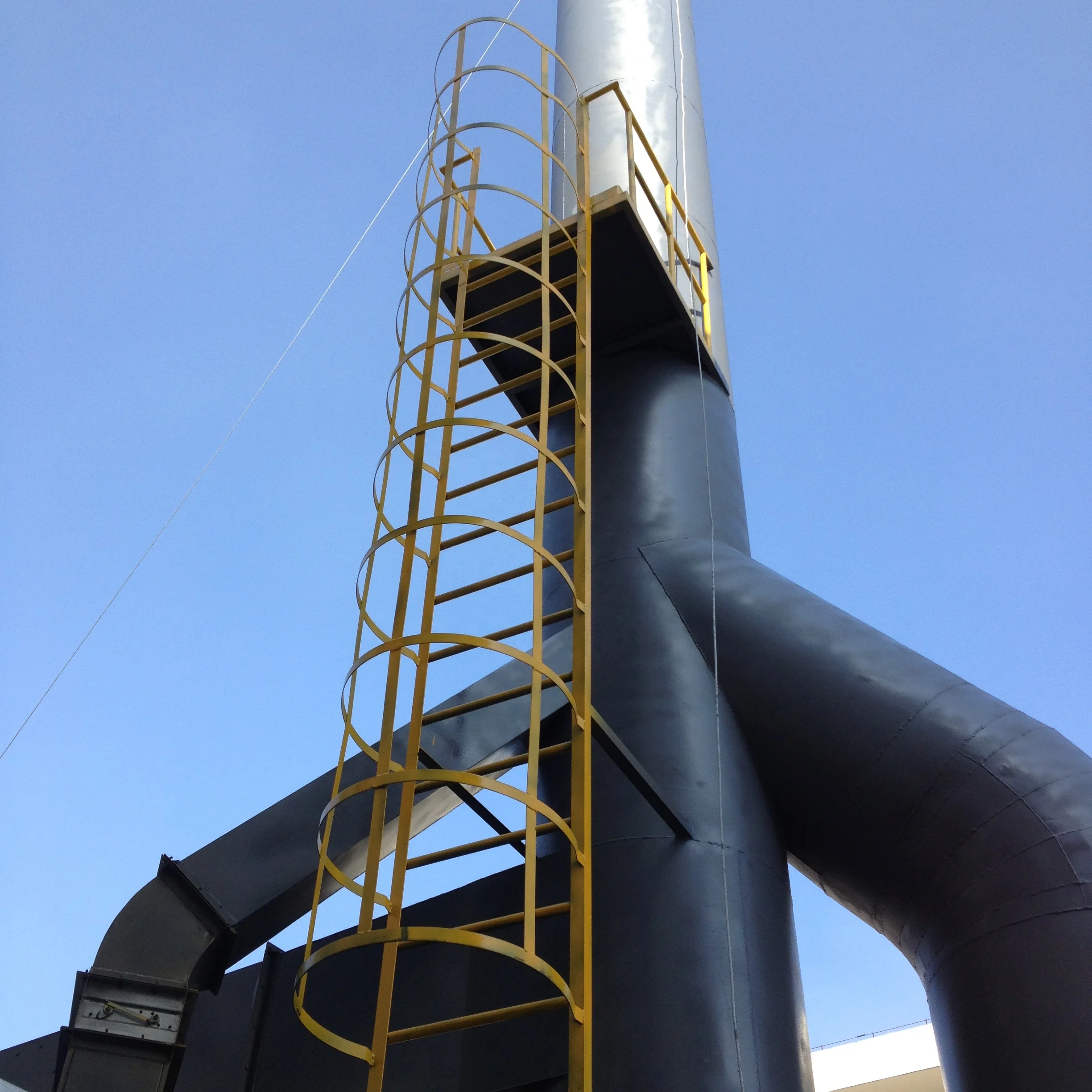
Zeolite concentration runner + RTO organic waste gas treatment system is suitable for VOCs treatment system with low concentration and large air volume. It mainly consists of front-end pretreatment device, zeolite concentration runner, regenerative incinerator (RTO), fan and other main devices. After passing through the three-stage pretreatment device, VOCs with large air volume and low concentration will pass through the hydrophobic porous zeolite molecular sieve as the runner of the adsorption material. The VOCs will be adsorbed by the zeolite in the runner adsorption area, and the purified gas will be discharged to the atmosphere through the chimney, and then the VOCs will be desorbed by a small amount of hot air at 180 ℃ ~ 230 ℃ in another desorption area, The desorbed waste gas with such high concentration and small air volume enters the RTO incinerator and is decomposed into CO2 and H2O. The purified gas is discharged to the atmosphere through the chimney.

2.2 process characteristics
1. Strong adsorption, uniform pore size, ionic adsorbent. It can selectively adsorb according to the size and polarity of molecules;
2. The hydrophobic molecular sieve with high Si / Al ratio does not adsorb water molecules in the air;
3. strong adsorption capacity, large adsorption capacity, single-stage adsorption efficiency up to 90 ~ 98%;
4. It still has strong adsorption capacity at high temperature, high temperature resistance and good thermal stability. The desorption temperature is between 180-220 ℃, and the heat-resistant temperature can reach 350 ℃
5. Complete desorption and high concentration ratio of VOCs
2.1 performance characteristics
1. treatment capacity: 10000 ~ 200000 Nm3 / h
2. desorption temperature: 180 ~ 220 ° C
3. desorption medium: hot air
4. process pressure drop: 600 pa
5. runner diameter: 1.5-4.5m
6. runner thickness: 400 -- 600mm
7. concentration ratio: 3-20 times
8. single stage adsorption efficiency: 90-98%
9. comprehensive treatment efficiency: up to 99.95%
3. RCO regenerative catalytic combustion
Regenerative catalytic oxidation furnace (RCO) is based on the structure of RTO. A layer of noble metal catalyst is added to the oxidation furnace to reduce the activation energy of chemical reaction and change the reaction conditions to achieve the purpose of oxidizing and removing organic waste gas at lower temperature. The RCO device is similar to the RTO device. It adopts bed or rotary design. The ceramic regenerator in the regenerator is used to replace the heat released from the reaction. Firstly, it enters the regenerator through the flame arrester of the front-end dust collector, and heat exchange is carried out in the regenerator, about 200 ~ 400 ℃, and then oxidation is carried out under the action of catalyst through the oxidation chamber. If the reaction temperature cannot be reached, the heating system can realize compensation heating through the automatic control system. The high-temperature flue gas after oxidation enters another regenerator to exchange heat, and the bottom temperature purified flue gas is discharged into the atmosphere through the chimney. The main engine of catalytic oxidation equipment is composed of flame arrester, heat exchanger, preheater, catalytic reaction chamber, main exhaust fan, control system, electric heating components and catalyst. It is the core component of the equipment.

3.1 process characteristics
Catalytic combustion equipment can effectively reduce heat loss and energy consumption resources, and greatly reduce the exhaust degree of purified gas.
1. Convenient operation and small floor area.
2. Low energy consumption: no power (or low power) operation when reaching a certain concentration.
3. Safe and reliable: pressure relief, self-protection, fire prevention and dust removal, over temperature alarm and advanced automatic control.
4. Low resistance and high efficiency: advanced metal impregnated honeycomb ceramic catalyst with large specific surface area.
5. Long service life: the catalyst is generally replaced in one year, and the carrier is renewable.

Company Information


The company always adhering to the product philosophy of "artisans spirit cast leading technology, and create a first-class product to set up industry benchmark", and take thanksgiving, dedication, innovation and pragmatism as the principle, continuous innovation enhance the core competitiveness of enterprises, and lead industrial technological progress and upgrading,and committed to more efficient, more economic, more energy-saving environmental technology solutions, to provide excellent and economic environmental protection for Industrial partners who want to achieve clean and sustainable development.
Certifications


FAQ
 1, Do you have patents and qualification about the technology and engineering?
Yes, we have 26 national patents, with environmental engineering, mechanical and electrical engineering, pressure vessels, pressure pipe design, installation and operation qualifications.
2, Can you supply the construction and operating services?
Yes, we can provide services including design, manufacturing, procurement, installation, construction, operating.
3, What kind of industries are suitable to use the ammonia desulfurization technology?
It can be adopted in projects of chemical, thermal power, coking, carbon, steel, paper making and other industries.
4, How long is the construction period?
It depends on the engineering scope, usually 100-200 days for common projects.
5, Are you a manufacturer?
Yes, we produce flue gas dampers, heat exchangers, pressure vessels. They can be sold separately.
Contact us


We Recommend
New Arrivals
New products from manufacturers at wholesale prices