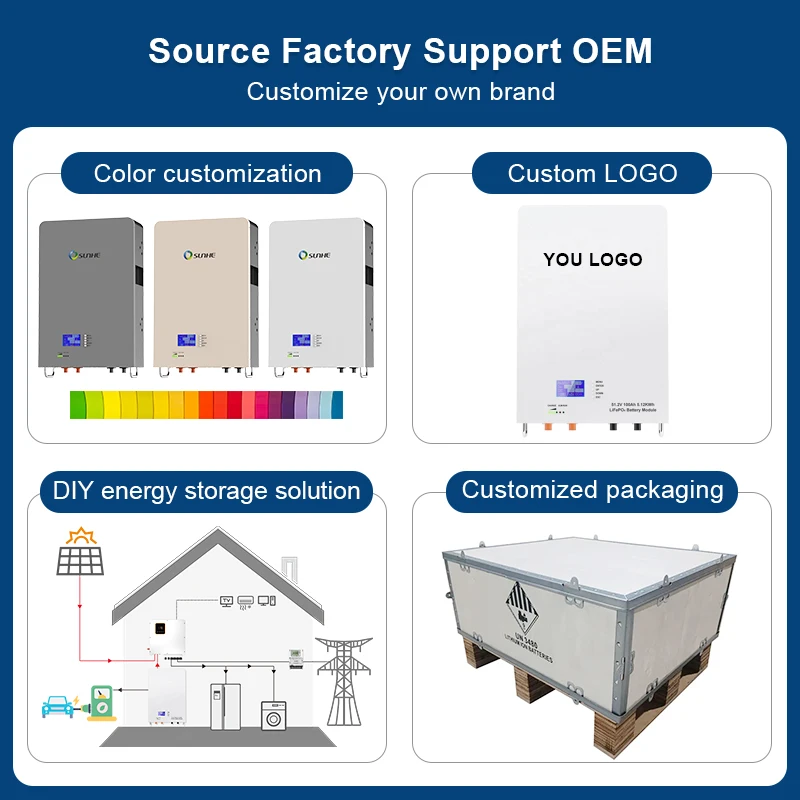
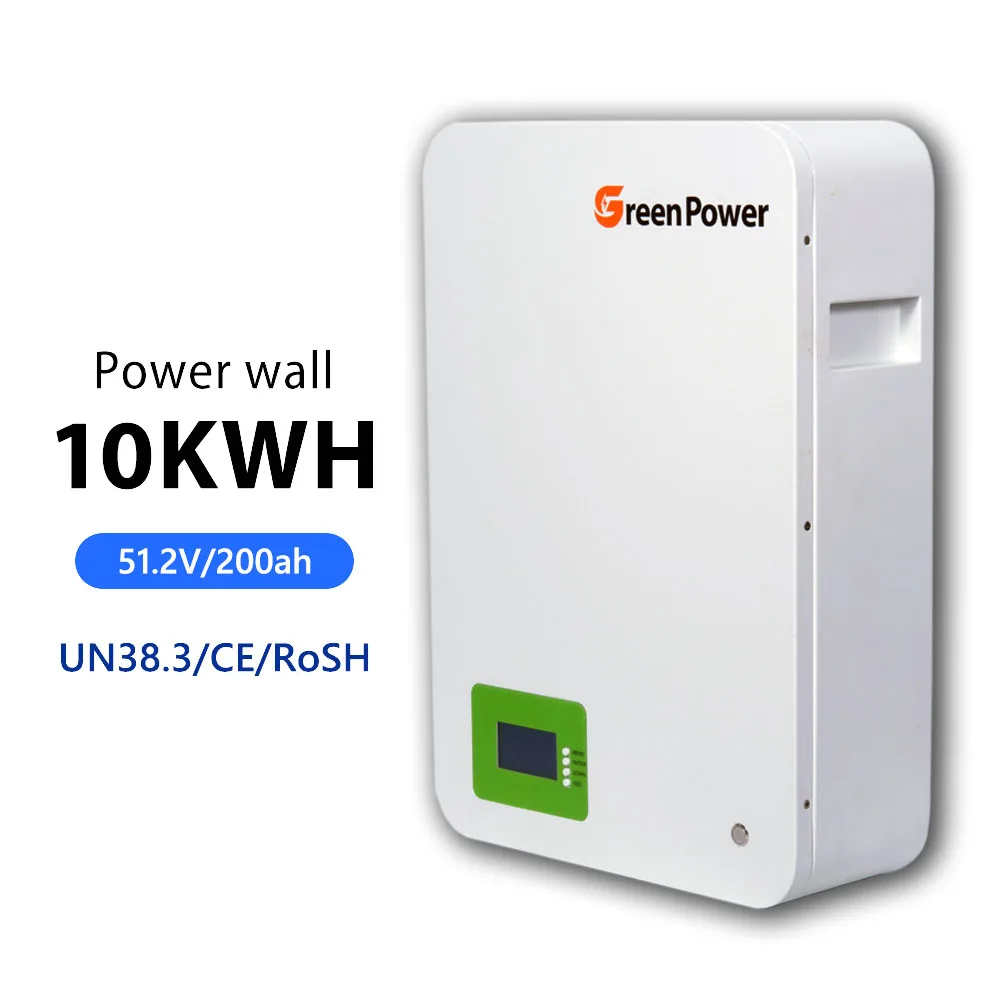
PowerWall 5kwh 10kwh 20kwh 48v 100ah 200ah Lifepo4 Lithium Ion Battery Solar Energy Storage Battery
- Category: >>>
- Supplier: Shenzhen Sunhe Energy Co. Ltd.
Share on (10000009452490):
Product Overview
Description
Product Details


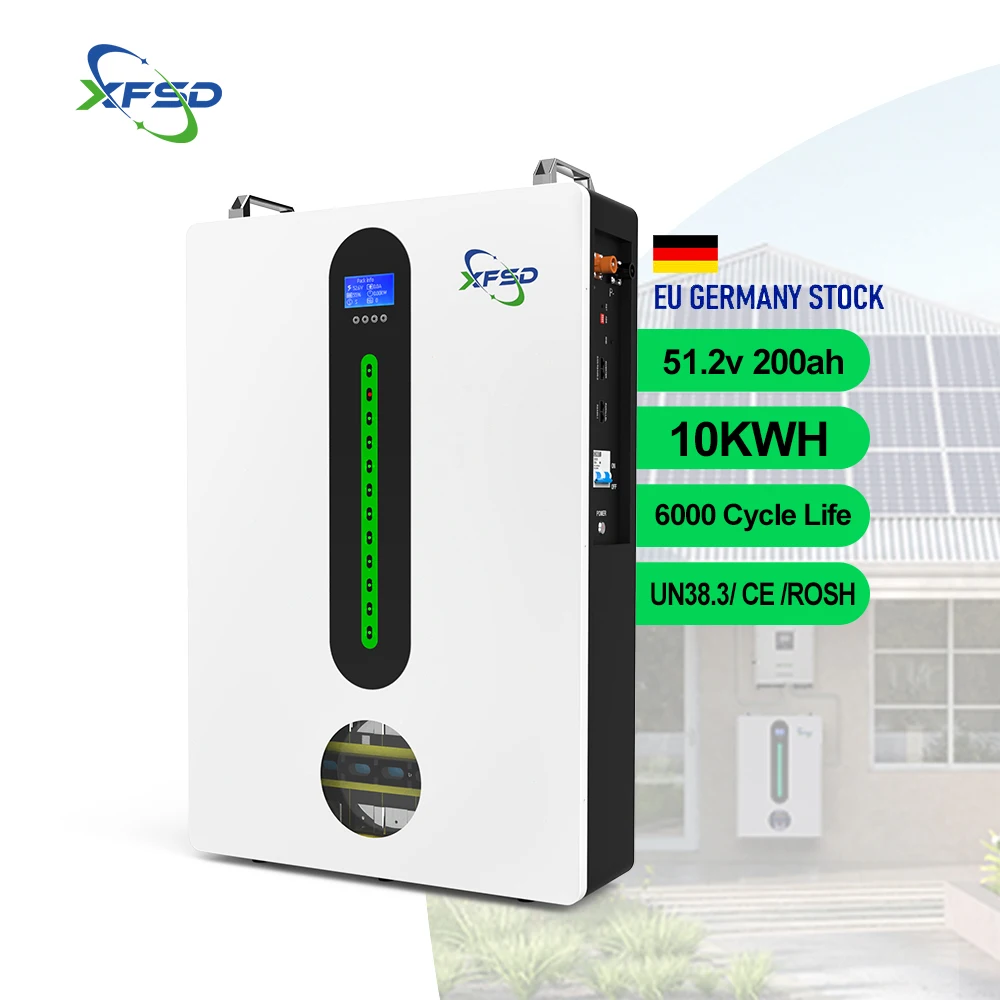
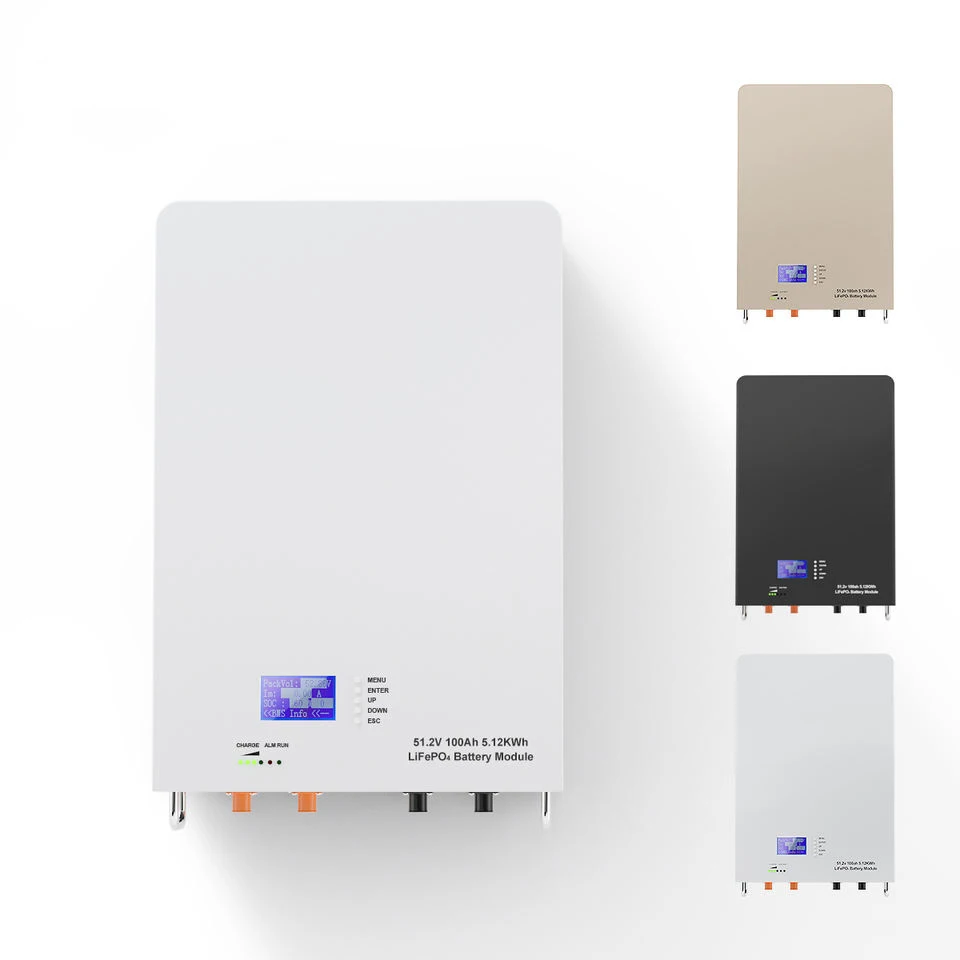
Model No | PW03-50AH | PW03-100AH | PW03-150AH | PW03-200AH | ||||
Voltage | 51.2 V | 51.2 V | 51.2 V | 51.2 V | ||||
Capacity | 50Ah | 100Ah | 150Ah | 200Ah | ||||
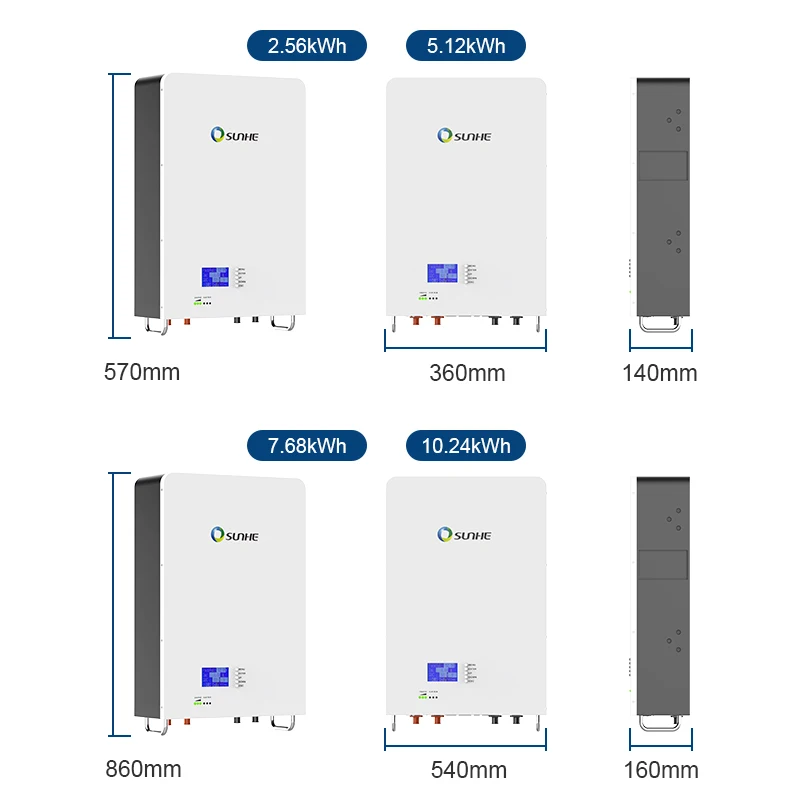
Energy | 2.56KWH | 5.12KWH | 7.68KWH | 10.24KWH | ||||
Operation voltage | 42-54 Vdc | 42-54 Vdc | 42-54 Vdc | 42-54 Vdc | ||||
Max.charging voltage | 54 Vdc | 54 Vdc | 54 Vdc | 54 Vdc | ||||
Max.charging and discharging current | 50A | 100A | 100A | 100A | ||||
Max Power | 2560W | 5120W | 7680W | 10240W | ||||
Size | 360*140*570MM | 360*140*570MM | 360*140*570MM | 540*160*860MM | ||||
Weight | 24KG | 45KG | 50KG | 120KG | ||||
Life time(25°C) | 10 years | |||||||
Life cycles(80% DOD, 25°C) | >6000 Cycles | |||||||
Internal Resistance | ≤30mΩ | |||||||
Months Self Discharge | <3% | |||||||
Storage time / temperature | 5 months @ 25°C; 3 months @ 35°C; 1 month @ 45°C | |||||||
Operation temperature | -20°C to 60°C @60+/-25% Relative Humidity | |||||||
Storage temperature | 0°C to 45°C @60+/-25% Relative Humidity | |||||||
Lithium Battery Standard | UL1642, IEC62619, UN38.3, ROHS,CE-EMC | |||||||
Charge Data | ||||||||
DC Normal Charge Voltage | 58.4±1Vdc | |||||||
Charge Mode | 0.2C to 58.4V, then 58.4V, charge current to 0.02C(CC/CV) | |||||||
Recommended Charger Current | <50A | |||||||
Allowed Max.Charge Current | 50A | |||||||
Charge Cut-off Voltage | 58.4+1Vdc | |||||||
Discharge Data | ||||||||
Continuous Discharge Current | 50A | |||||||
Allowed Max. discharge current | 100A | |||||||
Discharge cut-off voltage | 40V | |||||||
Working Condition | ||||||||
Continuous Discharge Current | 0°C to 45°C(32°F to113°F) | |||||||
Discharge Temperature | -20°C to 60°C(-4°F to 140°F) | |||||||
Storage Temperature | 0°C to 40°C(32°F to 104°F) | |||||||
Enclosure Protection Level | IP54 | |||||||
Mechanical Data | ||||||||
Cell&Capacity | LiFePO4 Battery | |||||||
Shell material | Iron shell | |||||||


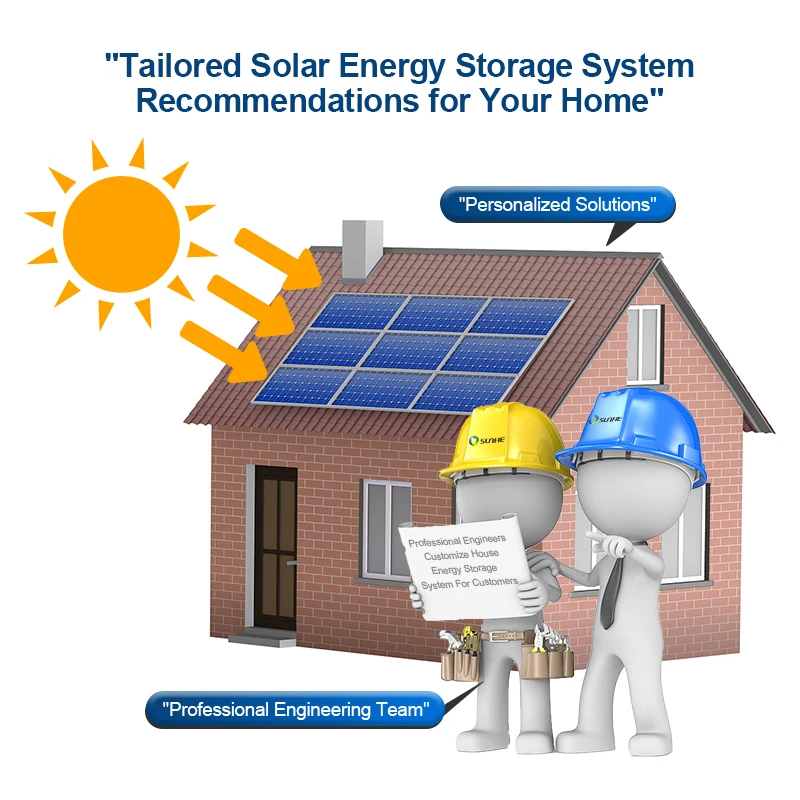
Tailored Solar Energy Storage System Recommendations for Your Needs
The company has a professional engineer team to provide you with energy storage solutions, detached houses, villas, apartment buildings, databases, agricultural irrigation, industrial production, commercial stores/offices, etc.


On-Grid Solar energy storage system
Solar panels ▶ Inverter ▶ Grid/House/Bitcoin mining machine/Telecommunication Tower/Industrial electricity

Off-Grid Solar energy storage system
Solar panels/Dynamo ▶ Battery ▶ Inverter ▶ House/Bitcoin mining machine/Telecommunication Tower/Industrial electricity

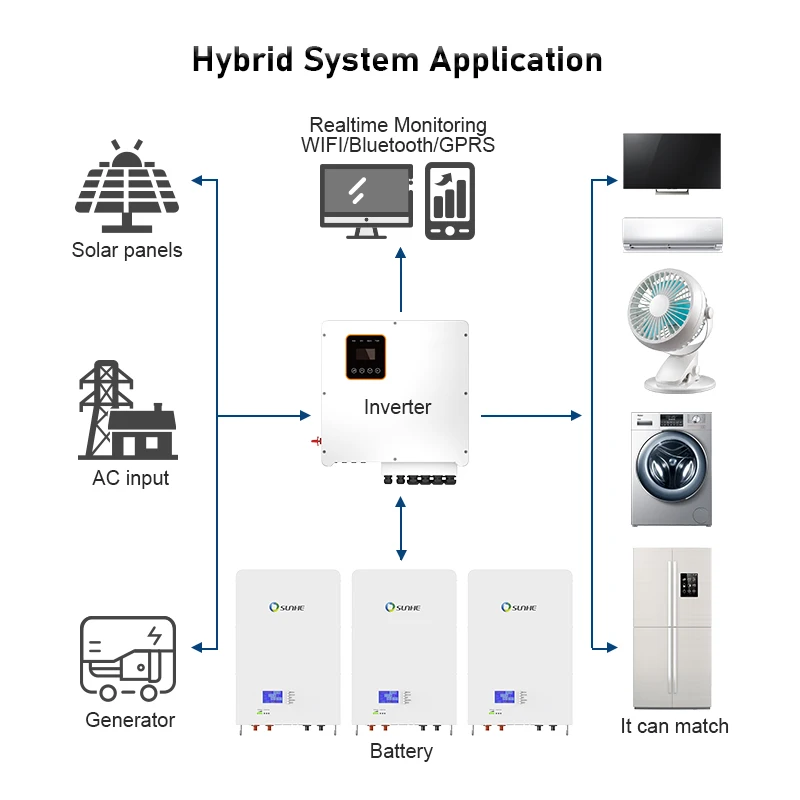
Hybrid Solar energy storage system
Solar plnels ▶ Battery ◀▶ Inverter ◀▶ Grid/House/Bitcoin mining machine/Telecommunication Tower/Industrial electricity


Company Profile

Welcome to Sunhe
Shenzhen Sunhe Energy Co.,Ltd. a stock list company and national high-tech enterprise leader of lithium battery manufacturer located in Shenzhen founded in 2012 focus on research and development. Specialized in Lithium Ion Battery, Power supply, Portable Power Station and Solar Energy System.
A professional lithium battery solution provider and manufacturer who has a strong R&D team and holds 18 technique patents. The factories has passed ISO9001 quality control system and ISO14001 environmental system. All products are obtain international certificates of UL, CE, KC ,CB, IEC62133, PSE, RoHS, UN38.3 BIS, etc.
Sunhe Energy can provide you with professional lithium battery OEM&ODM customized services and new energy solutions according to your needs in extreme quality and good price.
Provide OEM&ODM service:
1. Customized battery voltage, capacity, size and case.
2. Customized BMS charging and discharging current, balance function with communication protocol etc.
3. Customized connector, socket, cable are waterproof.
4. Customized special battery packs for any applications.

Why Choose Us?
1. High Quality, safety in use;
2. Factory background;
3. Competitive price;
4. Low internal resistance;
5. Discharge smoothly;
6. 1000 times cycle life;
7. Extensive in use, dynamic energy;

Our Advantages
1. Professional Tech. background, excellent workmanship, guaranteed quality;
2. Own manufacturing, high capacity, cost competitive;
3. Professional sales team provide professional services;
4. Mature forwarder team and back-up team;
5. Customization acceptable;
2. Own manufacturing, high capacity, cost competitive;
3. Professional sales team provide professional services;
4. Mature forwarder team and back-up team;
5. Customization acceptable;


Packing & Delivery


By Express | DHL, TNT, UPS, FEDEX , Door to Door Service | ||||
By Air | Any Cargo Airport in China | ||||
By Sea | Any port in China | ||||
FAQ
Q:Who are we? | ||||||||
A:We are based in Guangdong, China, start from 2012. sell to North America(40.00%),Western Europe(20.00%),Oceania(10.00%),Southern Europe(10.00%),Southeast Asia(10.00%),Eastern Europe(5.00%),Northern Europe(5.00%). There are total about 170 peoples in our manufacturing factory.We focus on Lithium-ion battery. Lithium iron phosphate (LiFePO4) battery for residential and commercial energy storage system. telecom tower, UPS, AGVs. golf carts, boat, RVs. camping, | ||||||||
Q:What can you buy from us? | ||||||||
A:Lithium Battery, BMS, Inverter, Solar Panel, Battery Box, Lithium-ion polymer battery, 18650 battery pack | ||||||||
Q:Why should you buy from us not from other suppliers? | ||||||||
First-We are a lithium battery manufacturer from China since 2012. You are welcome to visit our manufacturing factory and production process. second-We have many patented products of Li-ion battery in China.we innovate the products usually. third-We have more than a dozen professional electrical engineers with services to customers and provide professional opinions to design and produce battery packs according to their needs. If the quantity is appropriate, we accept OEM/ODM. | ||||||||
Q:What is the production time for your lithium battery? | ||||||||
A:The sample delivery time is about 5-10 days. The bulk order delivery time is about 25-35days according to quantity.electric vehicles. etc. | ||||||||
Q:How do you guarantee the quality? | ||||||||
A:Always a pre-production sample before mass production. Always final Inspection before shipment. | ||||||||
Q:Can i get an sample? | ||||||||
A:Yes. Samples are welcome for the LiFePO4 battery. Please contact our sales manager to place the order. | ||||||||
Q:What kinds of package? | ||||||||
A:Package Information: carton or wooden packaging. | ||||||||
Q:What services can we provide? | ||||||||
A:Accepted Delivery Terms: FOB,CFR,CIF,EXW,DDP,DDU,Express Delivery; Accepted Payment Currency:USD; Accepted Payment Type:T/T,L/C,MoneyGram,Credit Card,PayPal,Western Union,Cash; | ||||||||
What is solar energy storage system(Photovoltaic system) ?
A photovoltaic system, also PV system or solar energy storage system, is an electric power system designed to supply usable solar power by means of photovoltaics. It consists of an arrangement of several components, including solar panels to absorb and convert sunlight into electricity, a solar inverter to convert the output from direct to alternating current, as well as mounting, cabling, and other electrical accessories to set up a working system. It may also use a solar tracking system to improve the system's overall performance and include an integrated battery.
PV systems convert light directly into electricity, and are not to be confused with other solar technologies, such as concentrated solar power or solar thermal, used for heating and cooling. A solar array only encompasses the ensemble of solar panels, the visible part of the PV system, and does not include all the other hardware, often summarized as balance of system (BOS). PV systems range from small, rooftop-mounted or building-integrated systems with capacities from a few to several tens of kilowatts, to large utility-scale power stations of hundreds of megawatts. Nowadays, most PV systems are grid-connected, while off-grid or stand-alone systems account for a small portion of the market.
Operating silently and without any moving parts or environmental emissions, PV systems have developed from being niche market applications into a mature technology used for mainstream electricity generation. A rooftop system recoups the invested energy for its manufacturing and installation within 0.7 to 2 years and produces about 95 percent of net clean renewable energy over a 30-year service lifetime.
Solar grid connection energy storage system
A grid connected system is connected to a larger independent grid (typically the public electricity grid) and feeds energy
directly into the grid. This energy may be shared by a residential or commercial building before or after the revenue
measurementpoint, depending on whether the credited energy production is calculated independently of the customer's energy consumption ( feed-in tariff) or only on the difference of energy (net metering). These systems vary in size from residential (2–10 kWp) to solar power stations (up to 10s of MWp). This is a form of decentralized electricity generation. Feeding electricity into the grid requires the transformation of DC into AC by a special, synchronising grid-tie inverter. In kilowatt-sized installations the DC side system voltage is as high as permitted (typically 1000 V except US residential 600 V) to limit ohmic losses. Most modules (60 or 72 crystalline silicon cells) generate 160 W to 300 W at 36 volts. It is sometimes necessary or desirable to connect the modules partially in parallel rather than all in series. An individual set of modules connected in series is known as a 'string.
directly into the grid. This energy may be shared by a residential or commercial building before or after the revenue
measurementpoint, depending on whether the credited energy production is calculated independently of the customer's energy consumption ( feed-in tariff) or only on the difference of energy (net metering). These systems vary in size from residential (2–10 kWp) to solar power stations (up to 10s of MWp). This is a form of decentralized electricity generation. Feeding electricity into the grid requires the transformation of DC into AC by a special, synchronising grid-tie inverter. In kilowatt-sized installations the DC side system voltage is as high as permitted (typically 1000 V except US residential 600 V) to limit ohmic losses. Most modules (60 or 72 crystalline silicon cells) generate 160 W to 300 W at 36 volts. It is sometimes necessary or desirable to connect the modules partially in parallel rather than all in series. An individual set of modules connected in series is known as a 'string.
Inverter
Systems designed to deliver alternating current (AC), such as grid-connected applications need an inverter to convert the direct current (DC) from the solar modules to AC. Grid connected inverters must supply AC electricity in sinusoidal form, synchronized to the grid frequency, limit feed in voltage to no higher than the grid voltage and disconnect from the grid if the grid voltage is turned off. Islanding inverters need only produce regulated voltages and frequencies in a sinusoidal waveshape as no synchronisation or co-ordination with grid supplies is required. A solar inverter may connect to a string of solar panels. In some installations a solar micro-inverter is connected at each solar panel. For safety reasons a circuit breaker is provided both on the AC and DC side to enable maintenance. AC output may be connected through an electricity meter into the public grid.[78] The number of modules in the system determines the total DC watts capable of being generated by the solar array; however, the inverter ultimately governs the amount of AC watts that can be distributed for consumption. For example, a PV system comprising 11 kilowatts DC (kWDC) worth of PV modules, paired with one 10-kilowatt AC (kWAC) inverter, will be limited to the inverter's output of 10 kW. As of 2019, conversion efficiency for state-of-the-art converters reached more than 98 percent. While string inverters are used in residential to medium-sized commercial PV systems, central inverters cover the large commercial and utility-scale market. Market-share for central and string inverters are a out 44 percent and 52 percent, respectively, with less than 1 percent for micro-inverters. Maximum power point tracking (MPPT) is a technique that grid connected inverters use to get the maximum possible power from the photovoltaic array. In order to do so, the inverter's MPPT system digitally samples the solar array's ever changing power output and applies the proper impedance to find the optimal maximum power point.[80] Anti-islanding is a protection mechanism to immediately shut down the inverter, preventing it from generating AC power when the connection to the load no longer exists. This happens, for example, in the case of a blackout. Without this protection, the supply line would become an "island" with power surrounded by a "sea" of unpowered lines, as the solar array continues to deliver DC power during the power outage.
Islanding is a hazard to utility workers, who may not realize that an AC circuit is still powered, and it may prevent automatic
re-connection of devices.[81] Anti-Islanding feature is not required for complete Off-Grid Systems.
Islanding is a hazard to utility workers, who may not realize that an AC circuit is still powered, and it may prevent automatic
re-connection of devices.[81] Anti-Islanding feature is not required for complete Off-Grid Systems.
Battery
Although still expensive, PV systems increasingly use rechargeable batteries to store a surplus to be later used at night.
Batteries used for grid-storage also stabilize the electrical grid by leveling out peak loads, and play an important role in a
smart grid, as they can charge during periods of low demand and feed their stored energy into the grid when demand is high. Common battery technologies used in today's PV systems include the valve regulated lead-acid battery – a modified version of the conventional lead–acid battery – nickel–cadmium and lithium-ion batteries. Compared to the other types, lead-acid batteries have a shorter lifetime and lower energy density. However, due to their high reliability, low self discharge as well as low investment and maintenance costs, they are currently (as of 2014) the predominant technology used in small-scale, residential PV systems, as lithium-ion batteries are still being developed and about 3.5 times as expensive as lead-acid batteries. Furthermore, as storage devices for PV systems are stationary, the lower energy and power density and therefore higher weight of lead-acid batteries are not as critical as, for example, in electric transportation[9]: 4, 9 Other rechargeable batteries considered for distributed PV systems include sodium–sulfur and vanadium redox batteries, two prominent types of a molten salt and a flow battery, respectively.[9]: 4 In 2015, Tesla Motors launched the Powerwall, a rechargeable lithium-ion battery with the aim to revolutionize energy consumption. PV systems with an integrated battery solution also need a charge controller, as the varying voltage and current from the solar array requires constant adjustment to prevent damage from overcharging. Basic charge controllers may simply turn the PV panels on and off, or may meter out pulses of energy as needed, a strategy called PWM or pulse-width modulation. More
advanced charge controllers will incorporate MPPT logic into their battery charging algorithms. Charge controllers may also divert energy to some purpose other than battery charging. Rather than simply shut off the free PV energy when not needed, a user may choose to heat air or water once the battery is full.
Batteries used for grid-storage also stabilize the electrical grid by leveling out peak loads, and play an important role in a
smart grid, as they can charge during periods of low demand and feed their stored energy into the grid when demand is high. Common battery technologies used in today's PV systems include the valve regulated lead-acid battery – a modified version of the conventional lead–acid battery – nickel–cadmium and lithium-ion batteries. Compared to the other types, lead-acid batteries have a shorter lifetime and lower energy density. However, due to their high reliability, low self discharge as well as low investment and maintenance costs, they are currently (as of 2014) the predominant technology used in small-scale, residential PV systems, as lithium-ion batteries are still being developed and about 3.5 times as expensive as lead-acid batteries. Furthermore, as storage devices for PV systems are stationary, the lower energy and power density and therefore higher weight of lead-acid batteries are not as critical as, for example, in electric transportation[9]: 4, 9 Other rechargeable batteries considered for distributed PV systems include sodium–sulfur and vanadium redox batteries, two prominent types of a molten salt and a flow battery, respectively.[9]: 4 In 2015, Tesla Motors launched the Powerwall, a rechargeable lithium-ion battery with the aim to revolutionize energy consumption. PV systems with an integrated battery solution also need a charge controller, as the varying voltage and current from the solar array requires constant adjustment to prevent damage from overcharging. Basic charge controllers may simply turn the PV panels on and off, or may meter out pulses of energy as needed, a strategy called PWM or pulse-width modulation. More
advanced charge controllers will incorporate MPPT logic into their battery charging algorithms. Charge controllers may also divert energy to some purpose other than battery charging. Rather than simply shut off the free PV energy when not needed, a user may choose to heat air or water once the battery is full.
Article from Wikipedia
We Recommend
New Arrivals
New products from manufacturers at wholesale prices