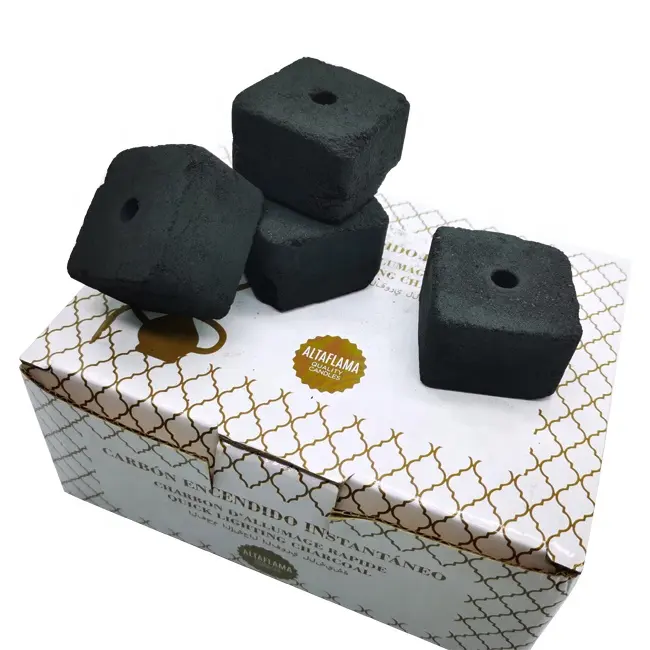
Smokeless odorless low flame hardwood barbecue grill charcoal
- Category: Charcoal >>>
- Supplier: NAGOYAFOOD CO. LTD.
Share on (11000002481468):
Product Overview
Description

Kishu binchotan is the most expensive binchotan in the world.
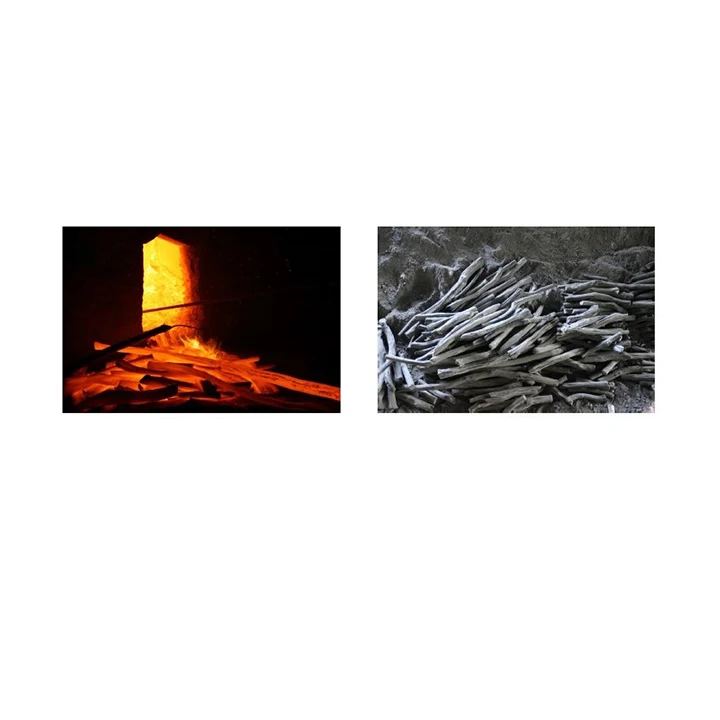
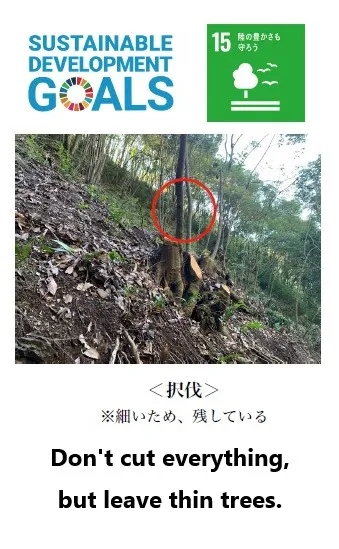
The raw wood used for the charcoal is ubame oak and oak trees from Wakayama Prefecture in Japan, and only the necessary raw wood is used to produce the charcoal in a traditional way, taking SDG's into consideration.
This traditional charcoal making technique is designated as an intangible cultural asset by Wakayama Prefecture. As the origin of binchotan, Kishu binchotan commands a high price due to its brand power and quality.
The raw wood used for the charcoal is ubame oak and oak trees from Wakayama Prefecture in Japan, and only the necessary raw wood is used to produce the charcoal in a traditional way, taking SDG's into consideration.
This traditional charcoal making technique is designated as an intangible cultural asset by Wakayama Prefecture. As the origin of binchotan, Kishu binchotan commands a high price due to its brand power and quality.


(1) High thermal conductivity
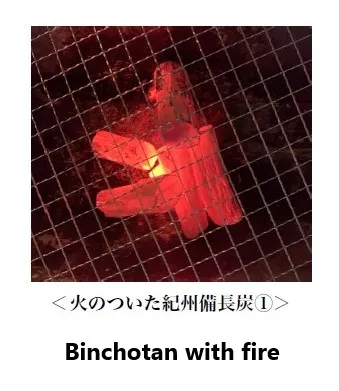
Because Kishu-binchotan is made of highly dense carbon, its thermal conductivity is extremely high, and the entire charcoal turns bright red from the inside out, as if it were made of red iron.
The characteristic of Kishu-binchotan is that it does not catch fire like other types of charcoal, but burns bright red.
(2) Intense far-infrared rays
It can be used for a long time because of its low flame, smokeless, almost odorless, and stable fire power. It can be used indoors as long as ventilation is provided.
Heat is applied to the food from the inside and there is little convection heat, so the food is browned crispy on the outside and fluffy on the inside, making it tasty.
Because Kishu-binchotan is made of highly dense carbon, its thermal conductivity is extremely high, and the entire charcoal turns bright red from the inside out, as if it were made of red iron.
The characteristic of Kishu-binchotan is that it does not catch fire like other types of charcoal, but burns bright red.
(2) Intense far-infrared rays
It can be used for a long time because of its low flame, smokeless, almost odorless, and stable fire power. It can be used indoors as long as ventilation is provided.
Heat is applied to the food from the inside and there is little convection heat, so the food is browned crispy on the outside and fluffy on the inside, making it tasty.

(3) Smokeless, odorless
The final step in the production process of Kishu-binchotan is to apply ash and digest it, so there is very little residue of sap and other ingredients. Carbon purity is extremely high.
As a result, there is no smoke and almost no odor, so there are no unpleasant smells on foodstuffs.
(4) Hard to ignite
Because Kishu-binchotan is dense and air cannot easily pass through to the inside, and because of its high thermal conductivity, only a portion of the charcoal does not reach a high temperature like black charcoal, and does not ignite until the entire charcoal is hot.
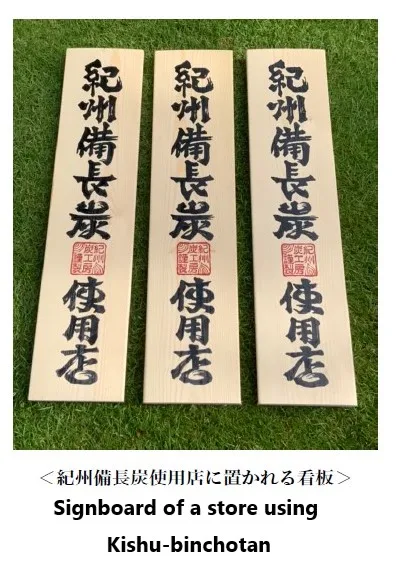
Because of this feature, many high-class Japanese restaurants use Kishu-binchotan, as indicated by their signboards.
The final step in the production process of Kishu-binchotan is to apply ash and digest it, so there is very little residue of sap and other ingredients. Carbon purity is extremely high.
As a result, there is no smoke and almost no odor, so there are no unpleasant smells on foodstuffs.
(4) Hard to ignite
Because Kishu-binchotan is dense and air cannot easily pass through to the inside, and because of its high thermal conductivity, only a portion of the charcoal does not reach a high temperature like black charcoal, and does not ignite until the entire charcoal is hot.
Because of this feature, many high-class Japanese restaurants use Kishu-binchotan, as indicated by their signboards.

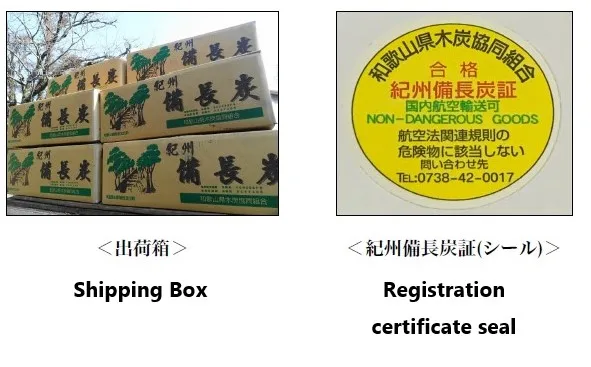
The registered trademark of Kishu-binchotan is issued by the Wakayama Charcoal Cooperative Association, and only members of the association are allowed to use the shipping box and the Kishu-binchotan certificate (seal) when shipping.


①②Mixed load 15kg of Caise | ||
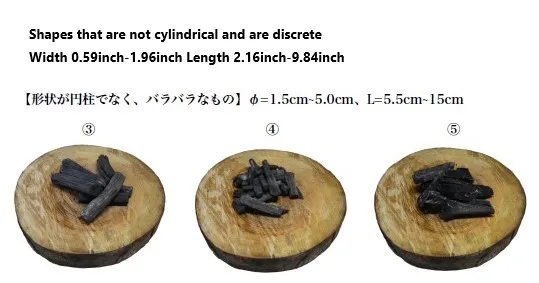
③④⑤Mixed load 15kg of Caise | ||




We Recommend


New Arrivals
New products from manufacturers at wholesale prices