Popular luxurious cotton fabrics custom multifunctional bandana bag
- Category: >>>
- Supplier: MARUSUGI PRINT CO. LTD.
Share on (11000002630634):
Product Overview
Description

Products Description

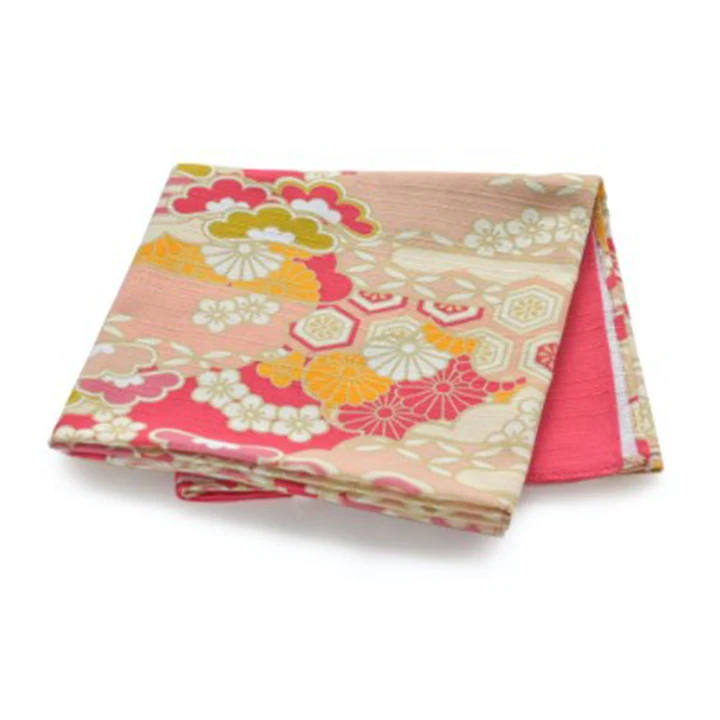
Furoshiki (wrapping cloth)
Furoshiki serves a wide variety of functions in Japan. It is mainly used for wrapping up items and carrying them around like a bag, but it can also be laid out like a tablecloth or used as interior decor.
In recent times, it has even been used to create the backdrop for photos posted on social media platforms.
This is a traditional Japanese eco-bag.
Japanese furoshiki is made of mixed fabrics such as Shantung, Southern Cross, Melon Amundsen, etc., and is popular for its combination of fabric design and dyed patterns.
It is also called "tsutsumu" in Japanese, reflecting how it is used to wrap up items before they are transported.
Size | 50cm×50cm |
70cm×70cm | |
80cm×80cm | |
90cm×90cm | |
100cm×100cm | |
Fabric | Shantan |
Southern Cross | |
meron-amunzen | |
chirimen |
Strengths
Our company can print your favorite designs on our traditional furoshiki.
While furoshiki is traditionally made of cotton fabrics such as Shantung cotton or Southern Cross, the polyester fabric Melon Amundsen has become highly popular in recent times for its Japanese mixed-weave look.
Another popular fabric is Chirimen, a luxurious fabric typically used in kimono.
What sets our company apart is our ability to create a variety of different styles through various combinations of fabrics and designs.
This can be sold at souvenir stores, as event merchandise (such as concert merchandise) or movie merchandise, and on the webshops of creative artists.
Our company can print your favorite designs on our traditional furoshiki.
While furoshiki is traditionally made of cotton fabrics such as Shantung cotton or Southern Cross, the polyester fabric Melon Amundsen has become highly popular in recent times for its Japanese mixed-weave look.
Another popular fabric is Chirimen, a luxurious fabric typically used in kimono.
What sets our company apart is our ability to create a variety of different styles through various combinations of fabrics and designs.
This can be sold at souvenir stores, as event merchandise (such as concert merchandise) or movie merchandise, and on the webshops of creative artists.
Company Profile


MARUSUGI PRINT CO.,LTD.
We were founded in 1954 in Aichi Prefecture, the main center of cotton fabric production in Japan.Our main specialty here as a fabric printer is in cotton fabrics.
We utilize screen printing, reactive dye ink-jet printing, and sublimation transfer printing for our print work with hand towels, happi coats, furoshiki wrapping cloth, banners, and other products.
With reactive dye ink-jet printing and sublimation transfer printing, we can print for small lot production as well, which eliminates the need for keeping large inventories, and it's possible to make the exact amount that has been sold.
The mass disposal of clothing and apparel is now a recognizable global issue, and eco-friendly dyeing methods are compatible with Sustainable Development Goals.
Up until now the standard for fabric production was set at 1,000 meters or more, which made inventory build-up a constant risk. Ink-jet printing doesn't require separate prints for each color, so it's possible to print directly on the fabric as long as there is digital data available.
Furthermore, we still hold on to the legacy of traditional Japanese dyeing techniques. Our work is uncompromising when it comes to presenting traditional Japanese colors using color proofing techniques that have been cultivated over many years. We have a young generation of Japanese artisans here who have inherited techniques to craft traditional products.
For every part of the process from fabric printing to sewing products and packaging, we do it all here in-house.
This means that we can make the exact amount of fabric that we need, and not only that we can do small lot production for hand towels, happi coats, and other products.


We Recommend
New Arrivals
New products from manufacturers at wholesale prices