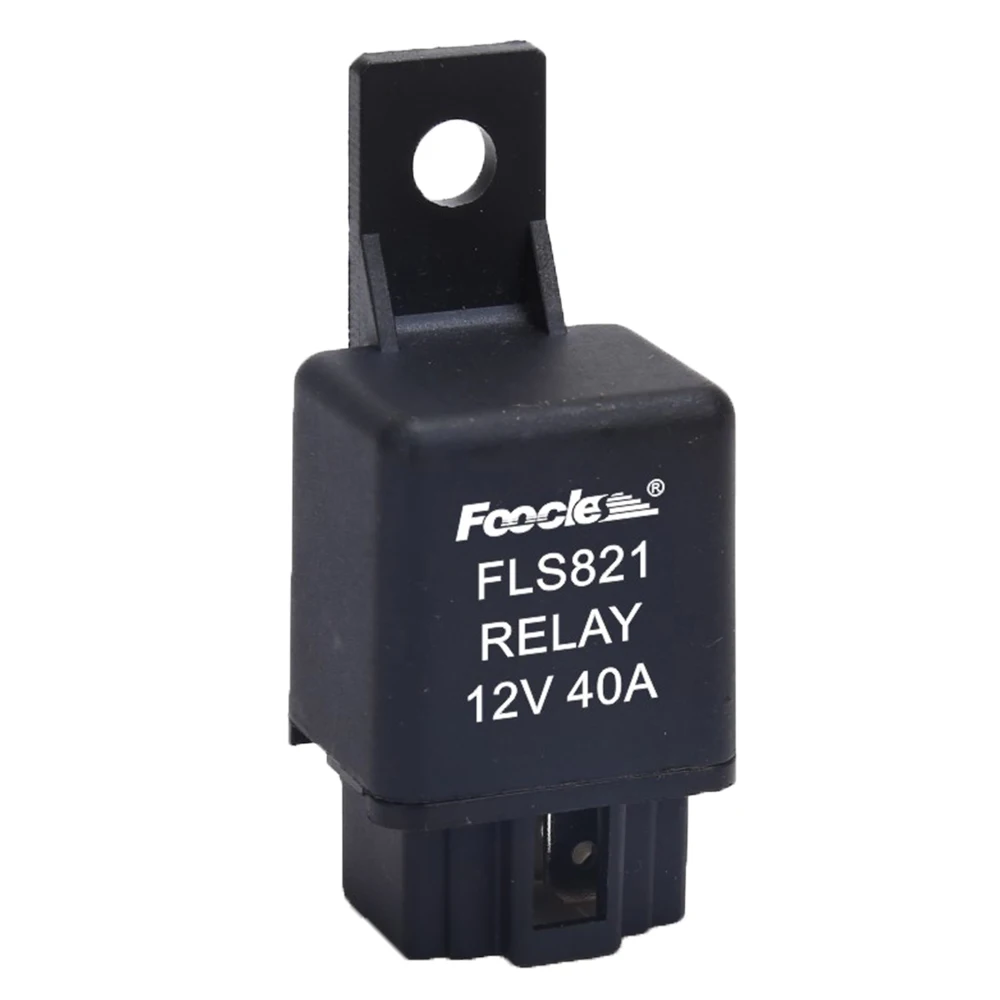
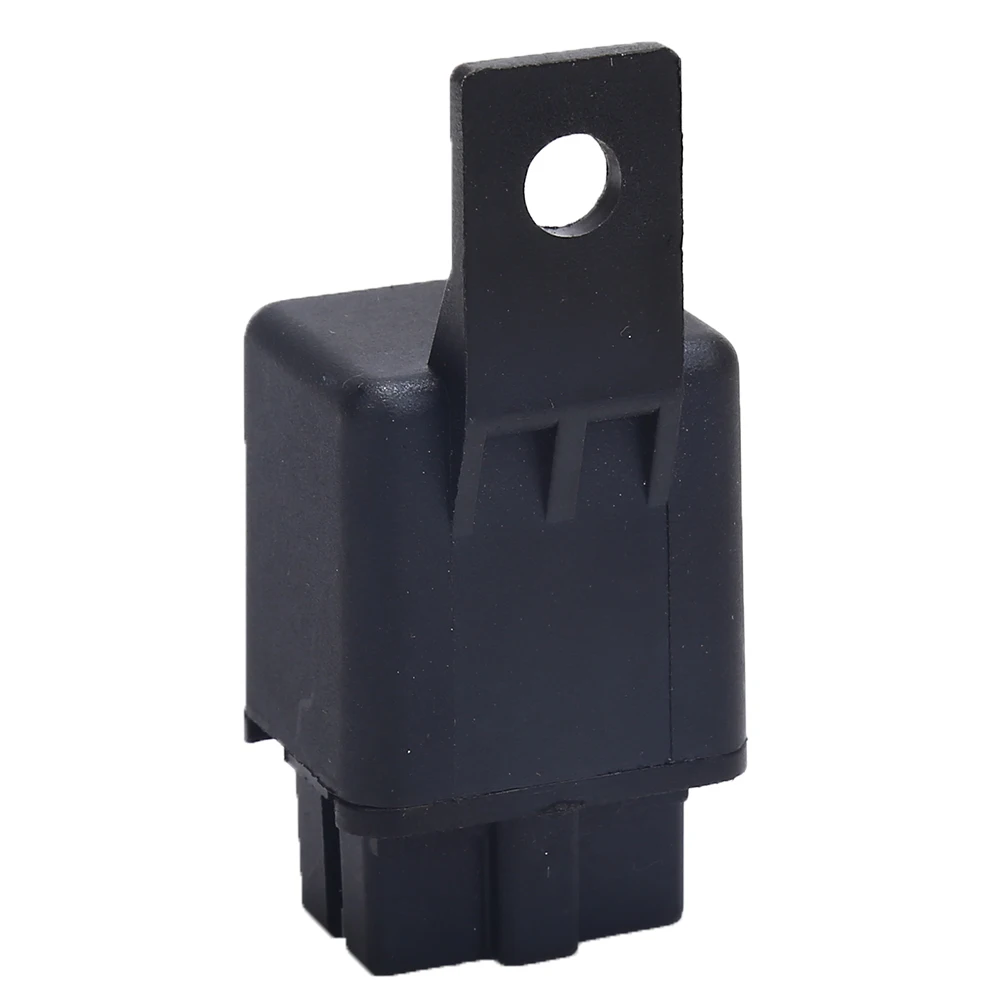
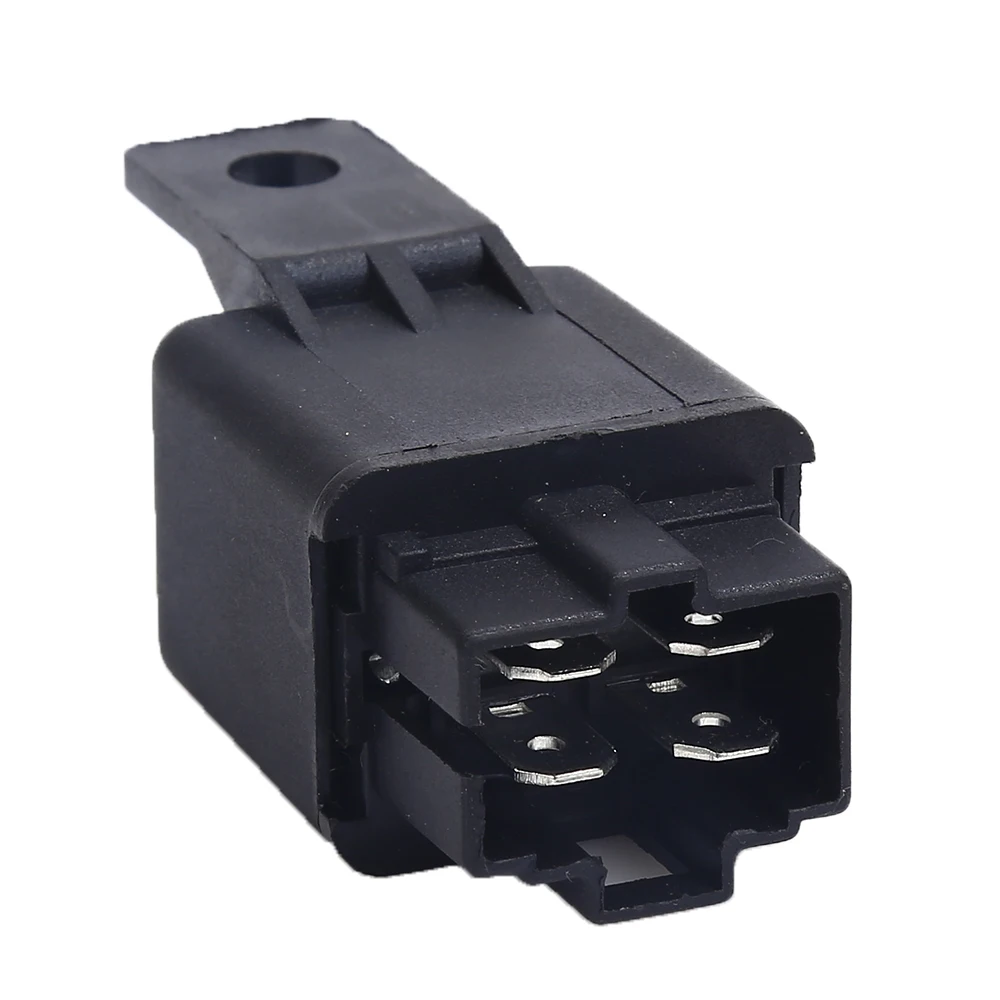
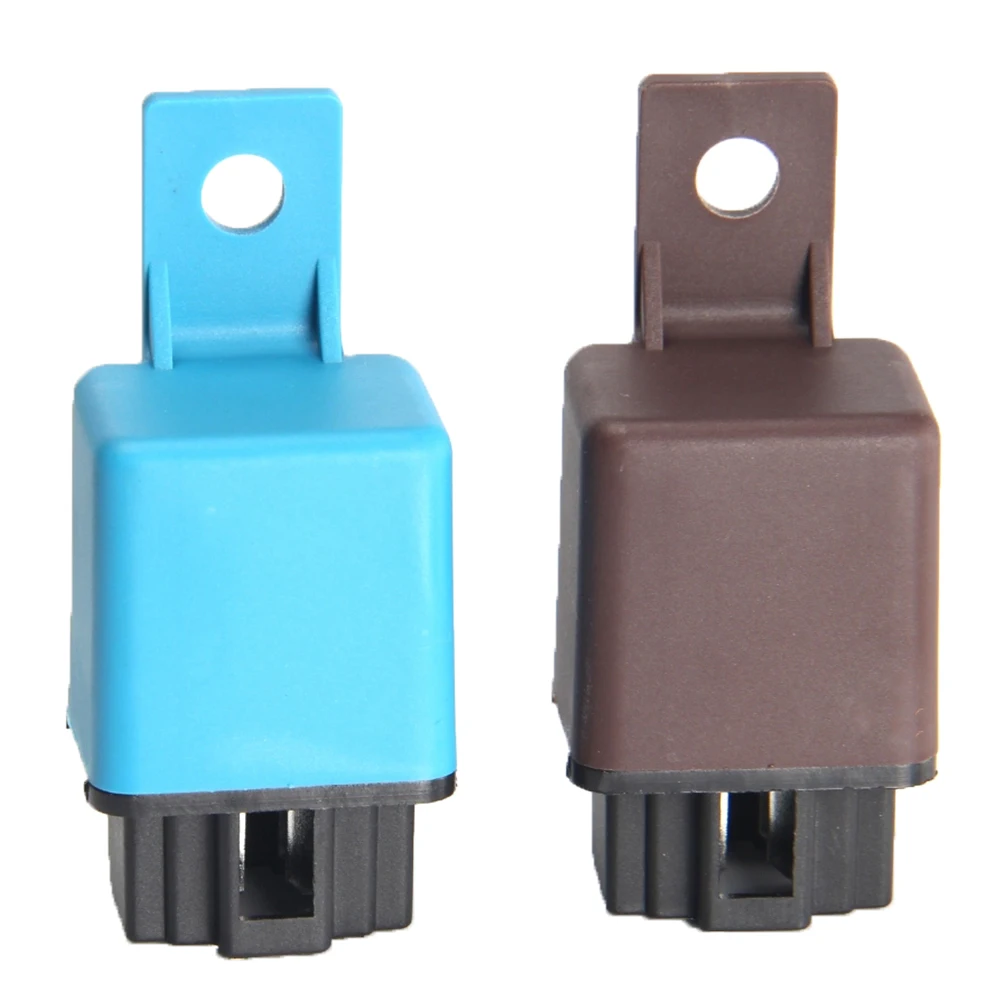
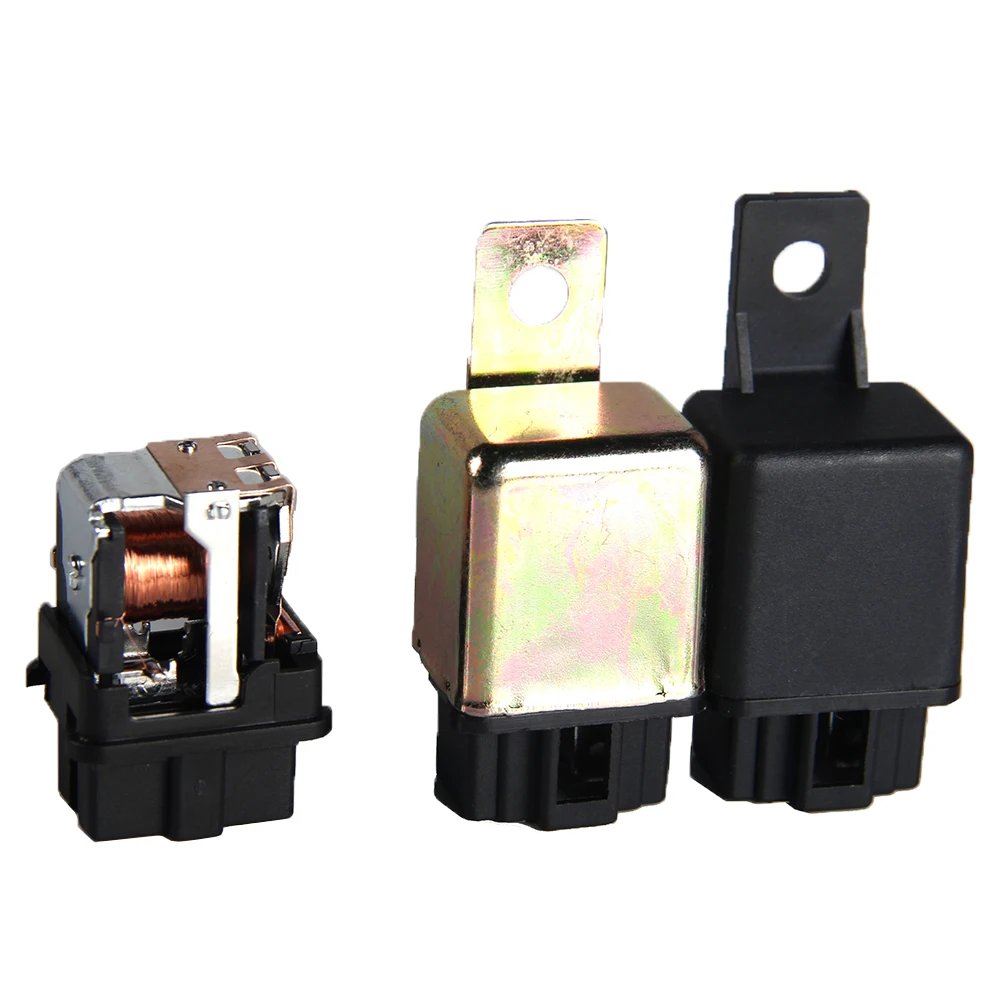
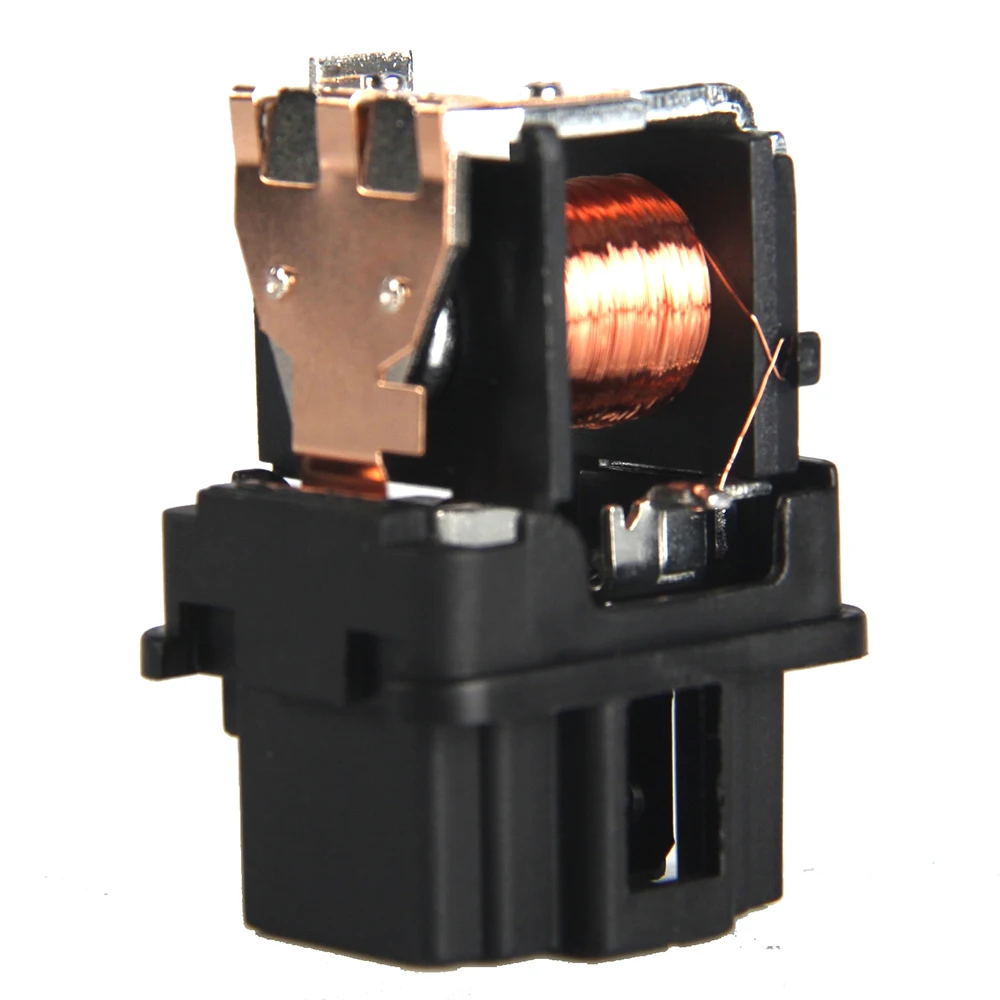
4pins 1A Auto Relay 12V/24V SPST Alarm Relay for Car Automotive Van Boat Truck
- Category: >>>
- Supplier: Yueqing Langshuo Auto Parts Co. Ltd.
Share on (11000008742957):
Product Overview
Description


Features
* 40A switching capability
* 1 form A contact form
* 1 form A contact form
* Outline dimensions: 28.5X30.0X23.0
Specification | ||
Contact Form | 1A | |
Contact Material | AgSno2 | |
Max Operating Current | 40A | |
Max Operating Voltage | 27VDC | |
Rated Load (Resistive Load) | 40A 13.5VDC 20A 27VDC | |
Insulation Resistance | 100MΩ | |
Dielectric Strength (Coil and Contact) | 500VAC/M | |
Ambient Temperature | -40°C~+85°C | |
Operate/Release Time | 10ms/10ms | |
Mechanical Life | 1 X10⁶ | |
Electrical Life | 1 X10⁵ | |
Terminal Type | Quick-connect type | |
Coil Ratings | ||||||||||||||||
Standard | Normal voltage (VDC) | Pick-up voltage (VDC) | Drop-out voltage (VDC) | Coil resistance (Q±10%) | Parallel resistance (Q±5%) | Equivalent resistance (Q±10%) | Power consumption | Max allowable overdrive voltage (VDC) | ||||||||
20 °C/85 °C | ||||||||||||||||
12 | 8.4 | 1.2 | 90 | - | - | 1.6 | 20.2/15.7 | |||||||||
12 | 8.4 | 1.2 | 80 | 680 | 79.5 | 1.8 | 20.2/15.7 | |||||||||
24 | 16.8 | 2.4 | 360 | - | - | 1.6 | 40.5/31.5 | |||||||||
24 | 16.8 | 2.4 | 320 | 2700 | 317.6 | 1.8 | 40.5/31.5 | |||||||||

QUICK ZOOM TABLE FOR REASONS FOR FAILURE
Failure Phenomena | Failure Mode | Failure Reason | ||
Non-operation | No current at the terminal of the coil | Breaking circuit Worse connected or short circuit Terminal welded worse | ||
Insuffcient voltage in the circuit | Insuffcient voltage supply Power circuit too long The voltage of the chosen relay too high | |||
Circuit unconnected | Welded failure Coil breaking | |||
Relay failure | Drop, bumpped badly Contact failure | |||
Voltage polarity of the polarized relay is wrong | Bumped during the transportation Circuit connected badly | |||
No Release | Surplus voltage too high | Energy storage component's influence Leakage current or bypass current Surplus voltage of the semiconductor | ||
Relay failure | Drop, bumped badly Contact failure | |||
Unsteady Operation | Unsteady power | PARD(periodic and random deviation) Insuffcient voltage Resistor beyond the tolerance | ||
Unsteady parameter | Drop or bumped badly Short form among the coils | |||
False operation of the relay | Something wrong with the control procedure The vibration excessively strong in application | |||
NC/NO Contact welding | Current excessively high | Load excessively high Surge current too high | ||
Contact Moving abnormally | External vibration excessively strong Unstable operation | |||
Operation frequency excessively high | ||||
Ambient temoerature excessively high | ||||
Use beyond the life | ||||
NC/NO Contact Not Closed | Contact resistance too high | Weld failure Contamination in the contact Bad using environment, contact oxidizing or sulphidizing | ||
No current in the contacts surface | Load circuit break Circuit connected worse or short circuit Terminal welded worse | |||
Used beyond the life limit | ||||
Notes: when failure happens, if there's any question, please contact us | ||||
We Recommend
New Arrivals
New products from manufacturers at wholesale prices