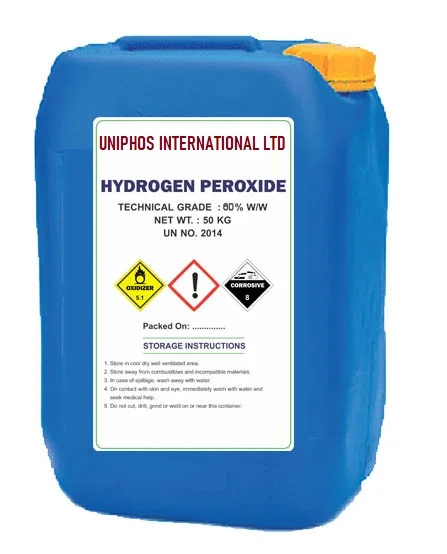
Peroxide Hydrogen for Pools H2O2 Hydrogen peroxide 50% only available in india
- Category: >>>
- Supplier: UNIPHOS INTERNATIONAL LIMITED
Share on (11000009758218):
Product Overview
Description
Product Description
Specification
item | value | |
Classification | Hydrogen Peroxide | |
CAS No. | 0 00 0 | |
MF | H202 | |
EINECS No. | 0 00 | |
Place of Origin | India | |
Maharashtra | ||
Grade Standard | Industrial Grade | |
Purity | 50% 35% | |
Appearance | Colourless odourless transparent liquid | |
Application | coating,paint,printing,ink,paper,plastic, bleaching | |
Brand Name | Uniphos Interantional Ltd | |
Model Number | ||
Product name | Hydrogen peroxide | |
Color | Colourless | |
Usage | Bleaching | |
Certification | ISO 14001 | |
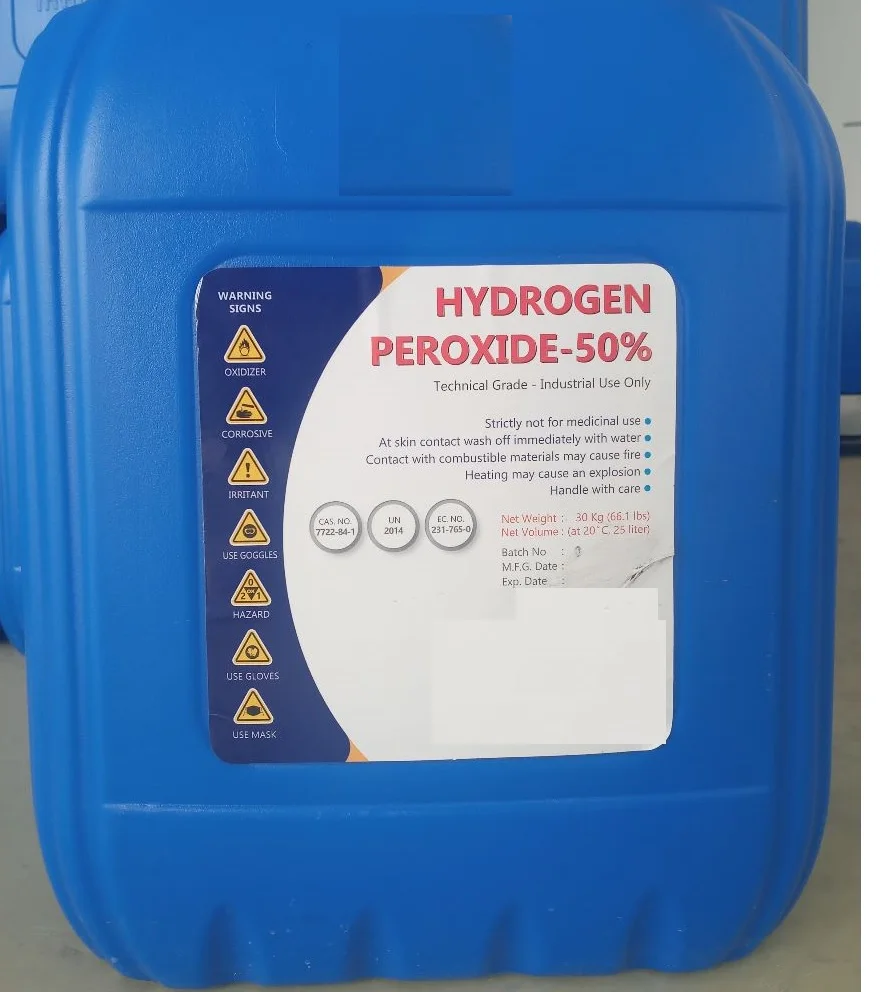
Package | 30 KG | |
Features of Hydrogen Peroxide Chemical Properties The most important chemical property of Hydrogen Peroxide is its ability to provide “active oxygen” to the process concerned. Active oxygen can be explained thus: In most inorganic and organic compounds which contain oxygen(e.g. water, metal oxides, alcohols, carbonates, etc.), the oxygen atom is bound to another type of atom and cannot be easily split off. Hydrogen Peroxide, on the other hand, contains the group -O-O- in which the two oxygen atoms are directly coupled to each other. The oxygen-oxygen link in such compounds can be broken, liberating one atom as “active oxygen”. Reactions Hydrogen Peroxide reacts : * as an oxidant. * as an reductant. * to form other inorganic and organic peroxy compounds. * to form addition compounds. Reaction Mechanisms As an oxidant it usually reacts via one of the following mechanisms * via ionic reactions * oxygen transfer via inorganic and organic peroxygen compounds. * by electron transfer. * free radical reactions, usually in the presence of metal catalysts. Versatility Its versatility is further enhanced by the following properties * effective over whole pH range. * high oxidation potential (Eo=1.763 at pH 0, Eo=0.878 at pH 14) * non-contaminating by-product. * is a liquid and so, easy to use. Transport & Packaging NPL supplies Hydrogen Peroxide 50% w/w in 30 kgs, 50 kgs & 250 kgs non-returnable HDPE carboys/barrels as also in specially constructed dedicated road tankers. Simple Test Method - Strength of Hydrogen Peroxide (20-70% w/w) Principle Hydrogen Peroxide in a diluted portion of the sample is quantitatively oxidized by titration with a potassium permanganate solution of known strength. Compounds that are oxidized by potassium permanganate under acidic conditions interfere. Reagents All reagents should be analytical reagent grade, and only demineralised water should be used. 1. Potassium Permanganate (KMnO4): 1N-Potassium permanganate is a strong oxidizer; wear gloves and safety glasses. Weigh 32 g of KMnO4 into a 1-liter beaker. Add 500 mL of water and stir until all the KMnO4 is in solution. Boil for one hour, cool, and filter through a fritted glass crucible into a 1-liter volumetric flask. Dilute to volume and mix well. Store in a dark-colored bottle. Standardize using the method given in Procedure below. 2. Sodium Oxalate (Na2C2O4): Sodium oxalate is toxic; wear gloves and avoid breathing dust. 3. Sulfuric Acid (1:3): Wearing gloves and safety goggles, slowly add 50 mL of sulfuric acid (Analytical Reagent Grade 96%) to 150 mL of water in a 250-mL beaker while constantly stirring. Allow the solution to cool to room temperature before using. Procedure Standardization of Potassium Permanganate (1.0N) * Weigh (to the nearest 0.1 mg) about 1.0 g of dry sodium oxalate into a 500-mL Erlenmeyer flask. * Add 200 mL of water, 50 mL of H2SO4 (1:3), and a few glass beads. * Heat the solution to boiling on a hot plate. * Remove the flask from heat and add the potassium permanganate solution from a 50-mL Class-A burette until the first appearance of a faint pink color that persists for 30 seconds. Do not let the temperature of the solution in the flask fall below 70°C before the endpoint is reached. Normality of KMnO4 = (Weight Na2C2O4)*(2)*(1000)/((mL KMnO4)*(134)) Determination of Hydrogen Peroxide * Weigh in a glass weigh bottle to the nearest 0.1 mg Using a Mohr pipette: 1. ± 2.0 g of sample for 20% to 35% H2O2 2. ± 1.2 g of sample for 50% to 60% H2O2 3. ± 1.0 g of sample for 70% H2O2 4. a proportionally larger sample for residual H2O2. * Immediately reweigh the glass bottle to the nearest 0.1 mg. Let the weight of the sample be as "W". * Transfer the sample to a 500-mL volumetric flask containing about 100 mL of 10% v/v H2SO4 . * Add the standardized potassium permanganate solution from a 50-mL Class-A burette until the first appearance of a faint pink color that persists for 30 seconds. Record the volume required as "V" mls. Safety Hydrogen Peroxide will cause irritation of the skin, the mucous membranes and in particular the eyes. Such irritation increases in severity with higher strength of the solutions involved. The affected parts should be washed with copious quantities of water. If accidentally swallowed, Hydrogen Peroxide may cause injury by dilation of the oesophagus and of the stomach due to the sudden release of oxygen. Plenty of warm water should be given to drink. In the event of contact of Hydrogen Peroxide with the eyes, the eyes should be thoroughly washed with copious quantities of water. In all the above cases, medical attention is advised. Technical Services Due to the very wide versatility of Hydrogen Peroxide, NPL’s technical services extends to almost all spheres of industrial activity in the country today. Laboratory trials and development work invariably followed up with extended plant trials at the customer’s premises. This has resulted in various new processes being developed in the processing of textile, both for the mill sector and the non-power hand processing sector. Similarly, NPL’s technical services personnel have been successful in optimising the use of Hydrogen Peroxide in the bleaching of pulp for the paper industry. Very useful work has also been done in collaboration with various industries and civic authorities in the treatment of effluent waters. NPL, thus, offers its customers a complete range of technical services on all matters related to Hydrogen Peroxide application, installation of storage tanks, handling and usage. Any special problems, arising out of the circumstances of use, are also attended to. Storage and Handling Stability Hydrogen Peroxide as produced by NPL is very pure and stabilised so as to keep the decomposition rate to minimum. However,the decomposition rate is accelerated if contaminated by soluble metal salts such as those of iron, copper, chromium,vanadium, tungsten, molybdenum, silver and platinum. The same is true of insoluble solids like hydroxides and oxides of the heavy metals as also the noble metals themselves. The most active catalysts for decomposition of Hydrogen Peroxide include ruthenium, manganese, iron, cobalt, nickel,lead/mercuric oxides, platinum, osmium, iridium, palladium,rhodium, silver and gold. Materials of construction Selection of construction materials for equipment to be used in service with commercial solutions of Hydrogen Peroxide must be undertaken with care to avoid decomposition problems. These restrictions do not necessarily apply to end-uses, where contact times are short and the solution may be quite dilute and a safe method has been established. Suitable materials for service with Hydrogen Peroxide are: * Aluminium of 99.5% minimum purity. * Fully austenitic stainless steels like S.S.304 * Plastics like high density polyethylene * Glass NPL has developed detailed engineering codes and specifications covering the fabrication of storage equipment for Hydrogen Peroxide. Advice and assistance is available on request. Precautions for storing, handling and transportation of Hydrogen Peroxide in plastic carboys Carboys of 50% w/w Hydrogen Peroxide must be stored in cool, shaded godowns free from dusty atmosphere and away from light and heat. Persons handling this material must take the usual precautions of wearing goggles, rubber gloves and shoes. 50% w/w Hydrogen Peroxide is not a combustible substance but it is a supporter of combustion. If it happens to drop or splash on cotton material, dry grass, or wood, some fumes may be observed. If the leakage is not stopped in time, the amount of heat generated due to decomposition may be strong enough for the above material to catch fire. The fire could be vigorous depending upon the type of material it comes in contact with. If the peroxide in carboys is not contaminated or exposed to excessive heat, the development of cracks or bursting with pressure will not normally happen. Under no circumstances should Hydrogen Peroxide be transported in the same truck with any other merchandise. If the carboys are exposed to the heat of the sun, the wooden floor of the trucks should be kept wet with water, taking care not to bathe the carboys with water as the water may enter the carboys through the vents and contaminate the contents, leading to decomposition. Carboys should be emptied either by pouring or siphoning. In the case of siphoning, the material of construction should be restricted to HDPE. | ||
Packing & Delivery


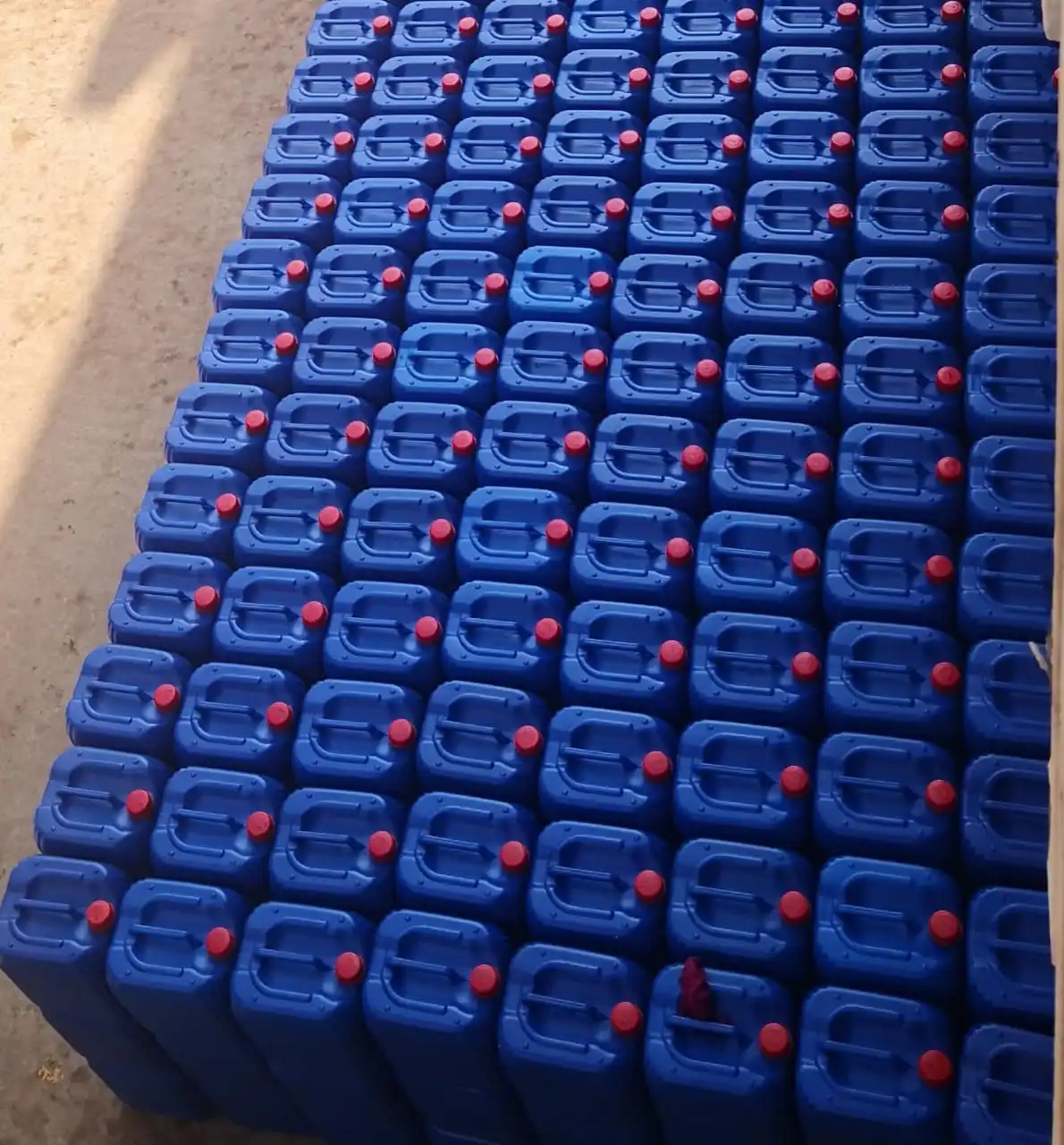
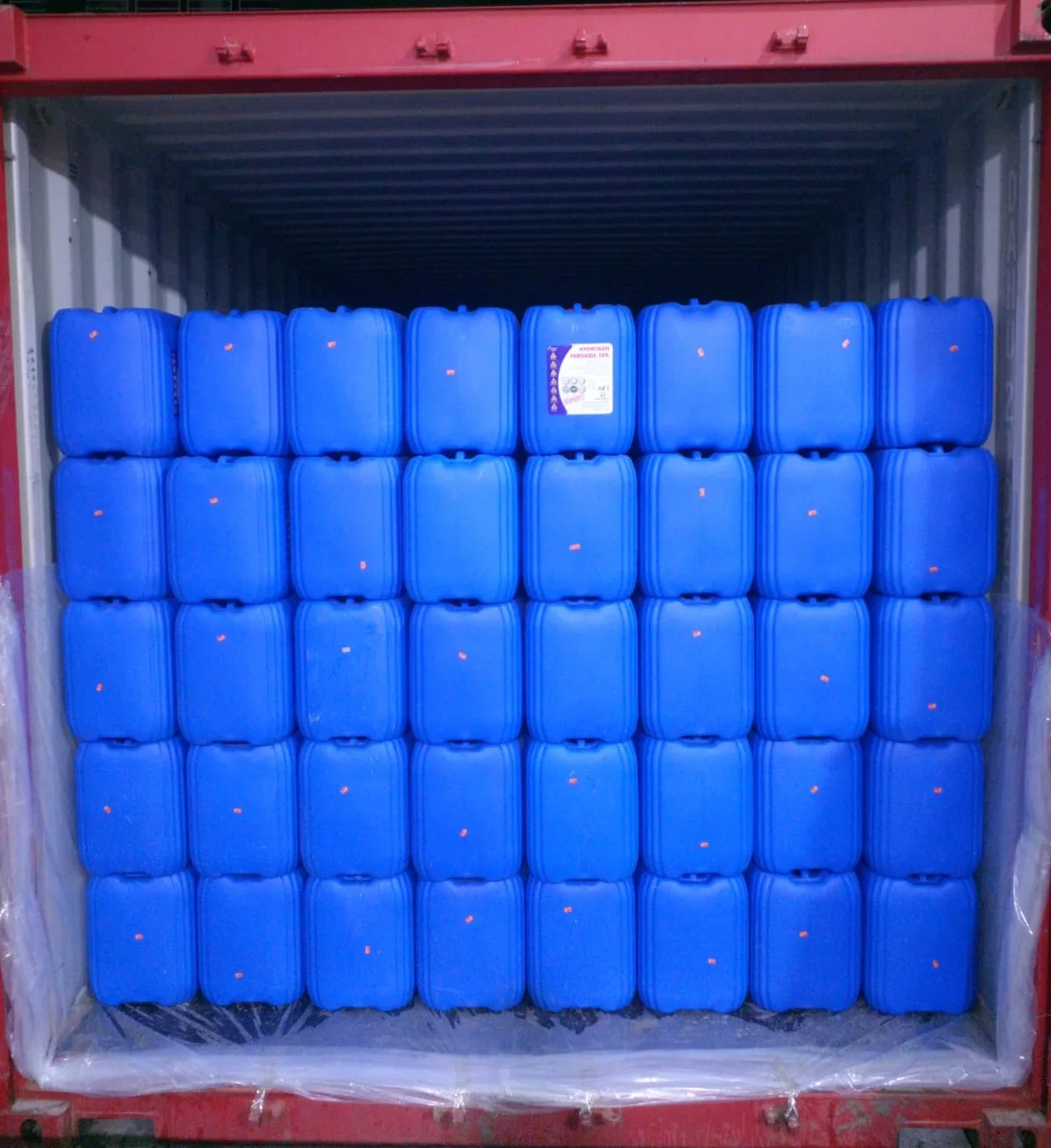
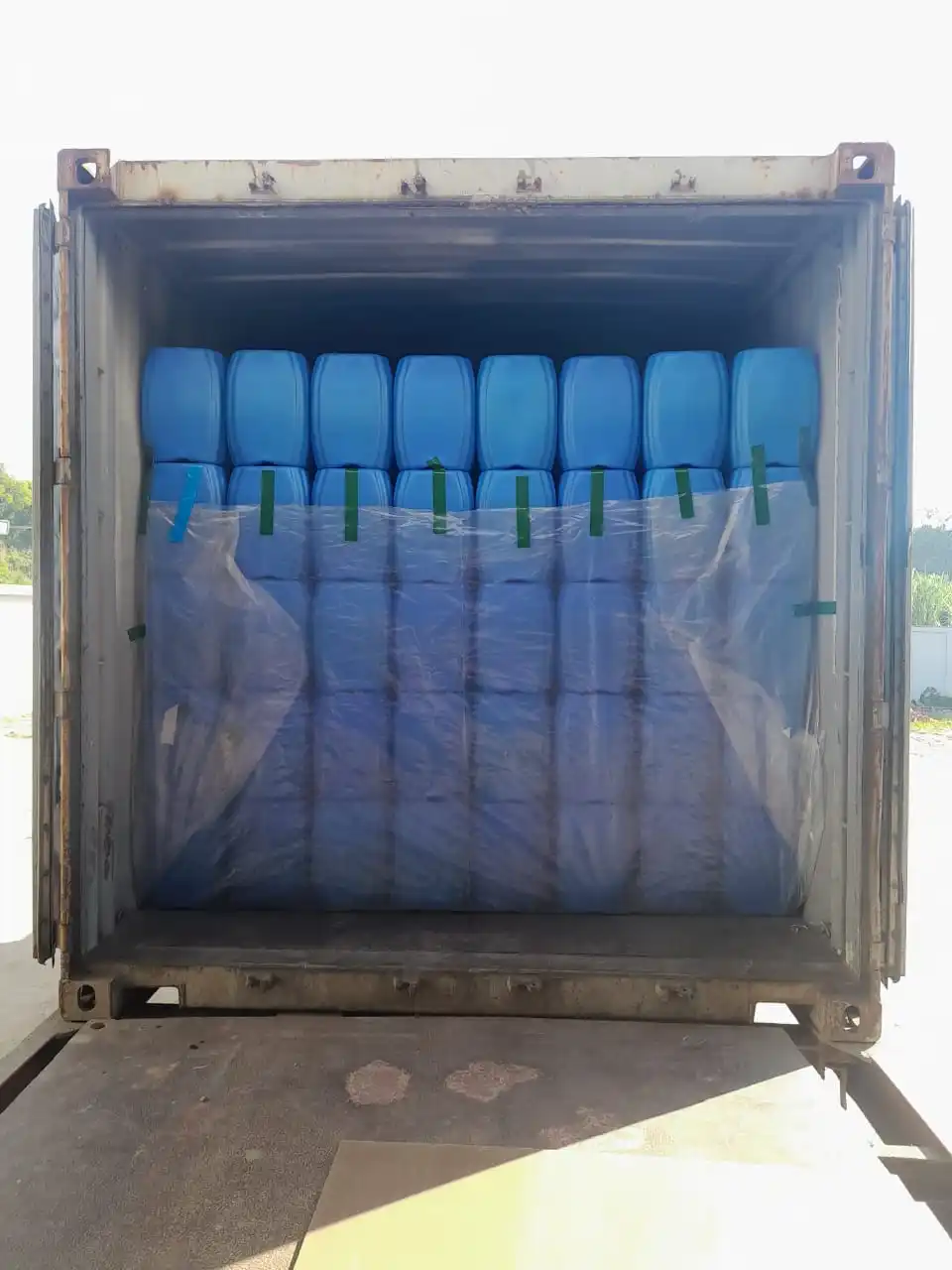
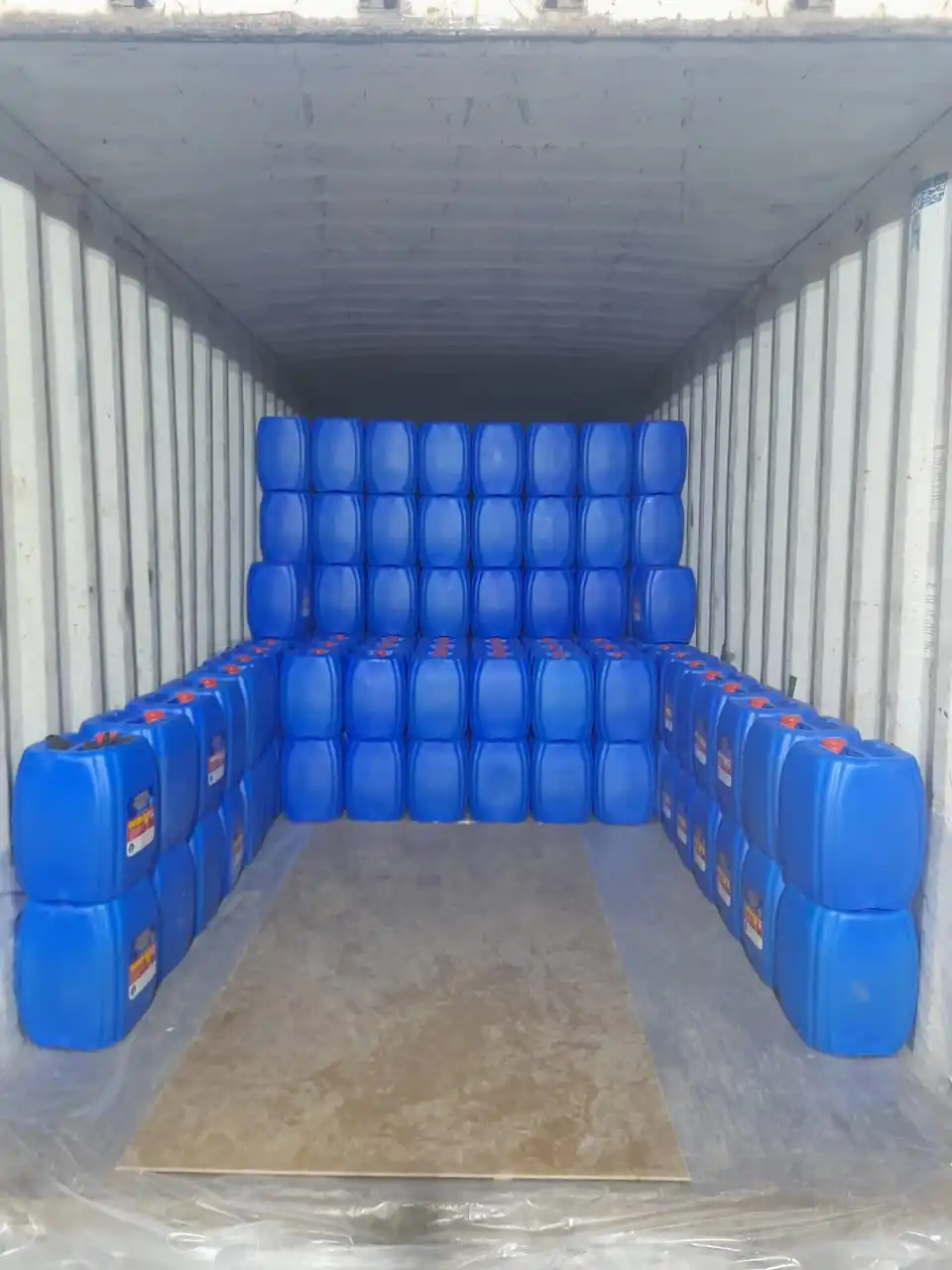
HDPE DRUMS, Flexibags , IBC Packing
Company Profile
We M/s Uniphos International Limited, INDIA (www.uilonline.com) are group company of UPL Limited, INDIA (www.upl-ltd.com) having group turnover of about USD 5 Billion. UPL having 48 manufacturing facility and presence in more than 138 countries all over the world. We are ISO 9001:2015 Certified Company and accredited by Government of India as an Export House. We are one of the reputed Suppliers and Exporters of various types of Chemical, Engineering & Agro Produce Products.
We serves following Sectors & Industries -
Water Treatment Chemicals
Sugar Industries
Leather Industries
Steel & Metal Industries
Packaging Industries
Food Industries
Thermal & Power Sectors
We have been supplying various products to following countries:
Africa - Ethiopia, Kenya, Sudan, South Africa, Nigeria, Ghana, etc.
Middle East - Egypt, UAE, Sultanate of Oman, Kuwait, Kingdom of Saudi Arabia.
Latin America - Rwanda, Peru, Colombia
South Asia: Bangladesh, Sri Lanka, Indonesia, Malaysia
For more information and contact please visit www.uilonline.com
We serves following Sectors & Industries -
Water Treatment Chemicals
Sugar Industries
Leather Industries
Steel & Metal Industries
Packaging Industries
Food Industries
Thermal & Power Sectors
We have been supplying various products to following countries:
Africa - Ethiopia, Kenya, Sudan, South Africa, Nigeria, Ghana, etc.
Middle East - Egypt, UAE, Sultanate of Oman, Kuwait, Kingdom of Saudi Arabia.
Latin America - Rwanda, Peru, Colombia
South Asia: Bangladesh, Sri Lanka, Indonesia, Malaysia
For more information and contact please visit www.uilonline.com
FAQ
1. who are we?
We are based in MAHARASHTRA, India, start from 1992,sell to Africa(45.00%),North America(20.00%),Domestic Market(10.00%),Southeast Asia(10.00%),South America(5.00%),Eastern Asia(5.00%),Mid East(5.00%). There are total about 11-50 people in our office.
2. how can we guarantee quality?
Always a pre-production sample before mass production;
Always final Inspection before shipment;
3.what can you buy from us?
Chemicals,Engineering,Agro Produce,Steel & Metals,PAPER INDUSTRY CHEMICALS
4. why should you buy from us not from other suppliers?
We, Uniphos International Limited are ISO 9001:2015 Certified Company & accredited by Government of India as an Export House. Since 1992, we are the most reputed Supplier & Exporters of Chemical, Engineering and Agro Produce Products to all over the world
5. what services can we provide?
Accepted Delivery Terms: FOB,CFR,CIF,CIP,FCA,CPT,DDP,DDU;
Accepted Payment Currency:USD,EUR,GBP;
Accepted Payment Type: T/T,L/C,D/P D/A;
Language Spoken:English,Hindi
We are based in MAHARASHTRA, India, start from 1992,sell to Africa(45.00%),North America(20.00%),Domestic Market(10.00%),Southeast Asia(10.00%),South America(5.00%),Eastern Asia(5.00%),Mid East(5.00%). There are total about 11-50 people in our office.
2. how can we guarantee quality?
Always a pre-production sample before mass production;
Always final Inspection before shipment;
3.what can you buy from us?
Chemicals,Engineering,Agro Produce,Steel & Metals,PAPER INDUSTRY CHEMICALS
4. why should you buy from us not from other suppliers?
We, Uniphos International Limited are ISO 9001:2015 Certified Company & accredited by Government of India as an Export House. Since 1992, we are the most reputed Supplier & Exporters of Chemical, Engineering and Agro Produce Products to all over the world
5. what services can we provide?
Accepted Delivery Terms: FOB,CFR,CIF,CIP,FCA,CPT,DDP,DDU;
Accepted Payment Currency:USD,EUR,GBP;
Accepted Payment Type: T/T,L/C,D/P D/A;
Language Spoken:English,Hindi
We Recommend
New Arrivals
New products from manufacturers at wholesale prices