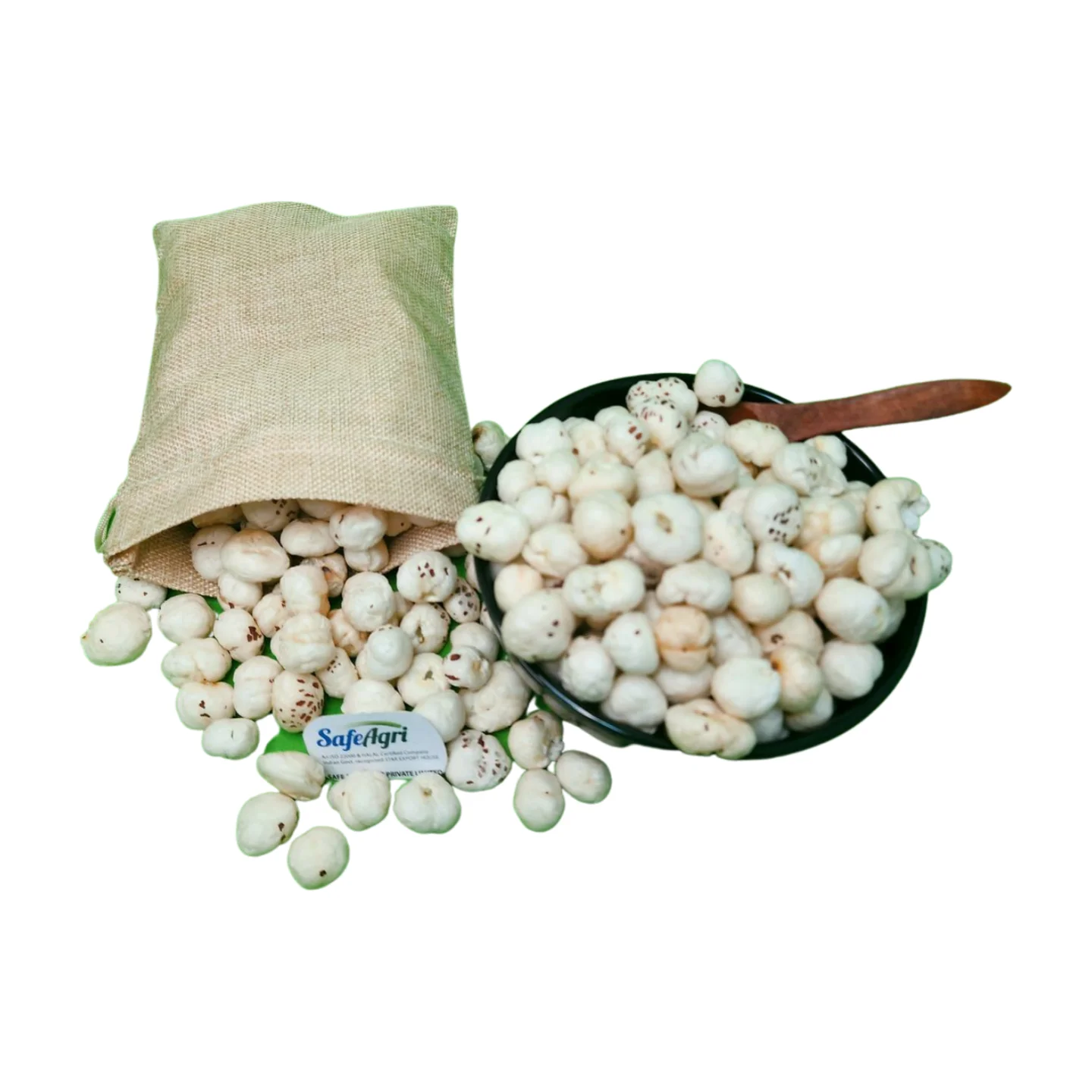
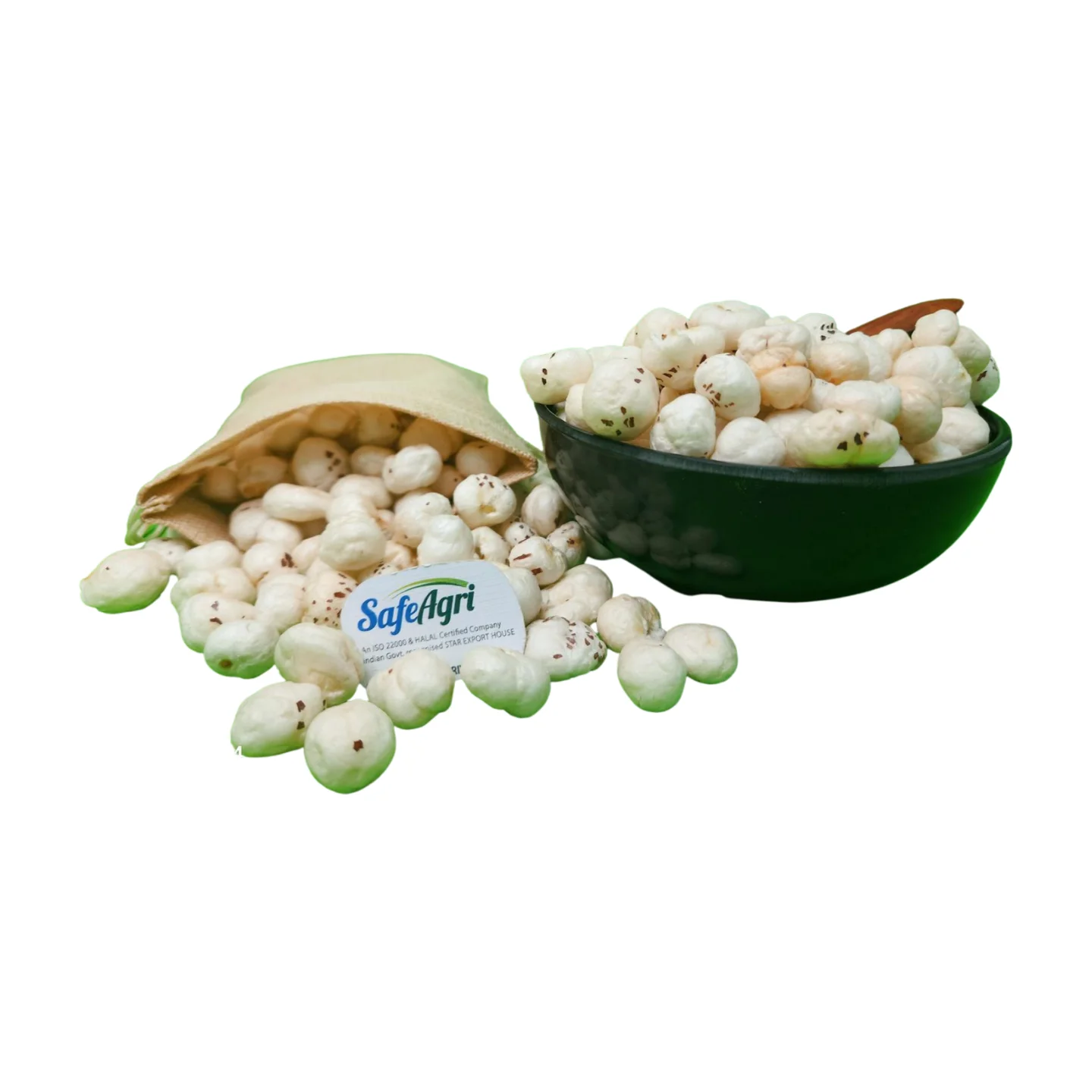
Premium quality Makhana made by roasting the lotus seeds in a pan or oven until they are crisp and crunchy eaten with salt peppe

Share on (11000009915819):


Price:

Quantity:


Product Overview

Description


Safe Agritrade Private Limited is one of the leading processors and exporters of Rice, 1121 Basmati Rice, Tamarind fresh and tamarind paste ( SHIP BRAND ), Chickpeas, Coffee Beans, ICUMSA Sugar, Zedoary Roots, Sesame seeds in Eastern India, serving the customer needs for more than three decades. We have adopted a customer-centric lens to understand the needs of our customers. Our three motto reflects our core values & forms the basis of our mission statement which are:
1. Quality First.
2. Customer Satisfaction.
3. Research & Development Efforts We have a completely automated & state-of-the-art manufacturing facility.
We have in house R&D lab which provides us with the opportunity for continuous innovation. Our core competence is derived from the internal strength of deep industry & innovation knowledge resources & efficiency. It has been engaged in commodity buying and selling to fulfill its customer's requirements. Armed with an excellent procurement network & arrangements with farmers &/or aggregators coupled with the best possible logistics solutions, we are supplying our customers best quality products with the most reasonable price and transit time. We Process and supply Tamarind & Tamarind Paste ship brand, Non-Basmati ( IR64, IR 36, Swarna rice, Round Rice, sona masoori rice, Parmal rice, IR8 RICE, Kranti rice ), Camolino rice, Sesame seed, Refined sugar, Coffee beans, Zedoary Roots, Chickpeas, etc. With our wide range of good quality products and reasonable prices, our spices are well accepted in the international agro-trading community. We have implemented a strict and complete quality control system, which ensures that each shipment of our products can meet the quality requirements of our customers. All of our products are strictly inspected before shipment & adhere to client specifications. We have made a good reputation in this field & our products have always got good feedback from our customer, So we are looking forward to establishing good business relationship with your
esteemed organization and provide with the best quote and quality available in the Indian market. Most of our products are Halal certified and ISO 22000 certified. Our Objective: Through our businesses, services, and products, we aim to provide our customers with health, excitement, and comfort.

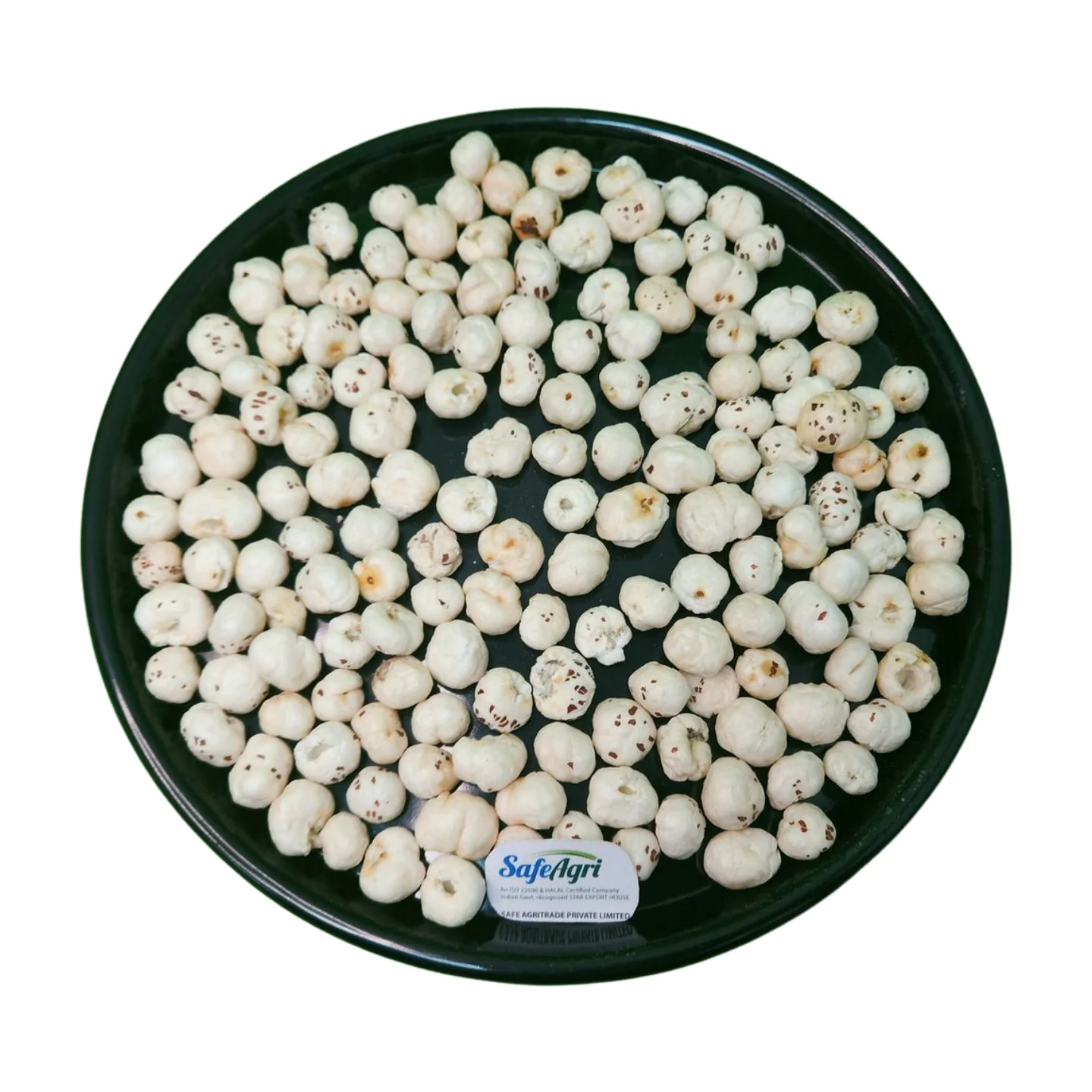
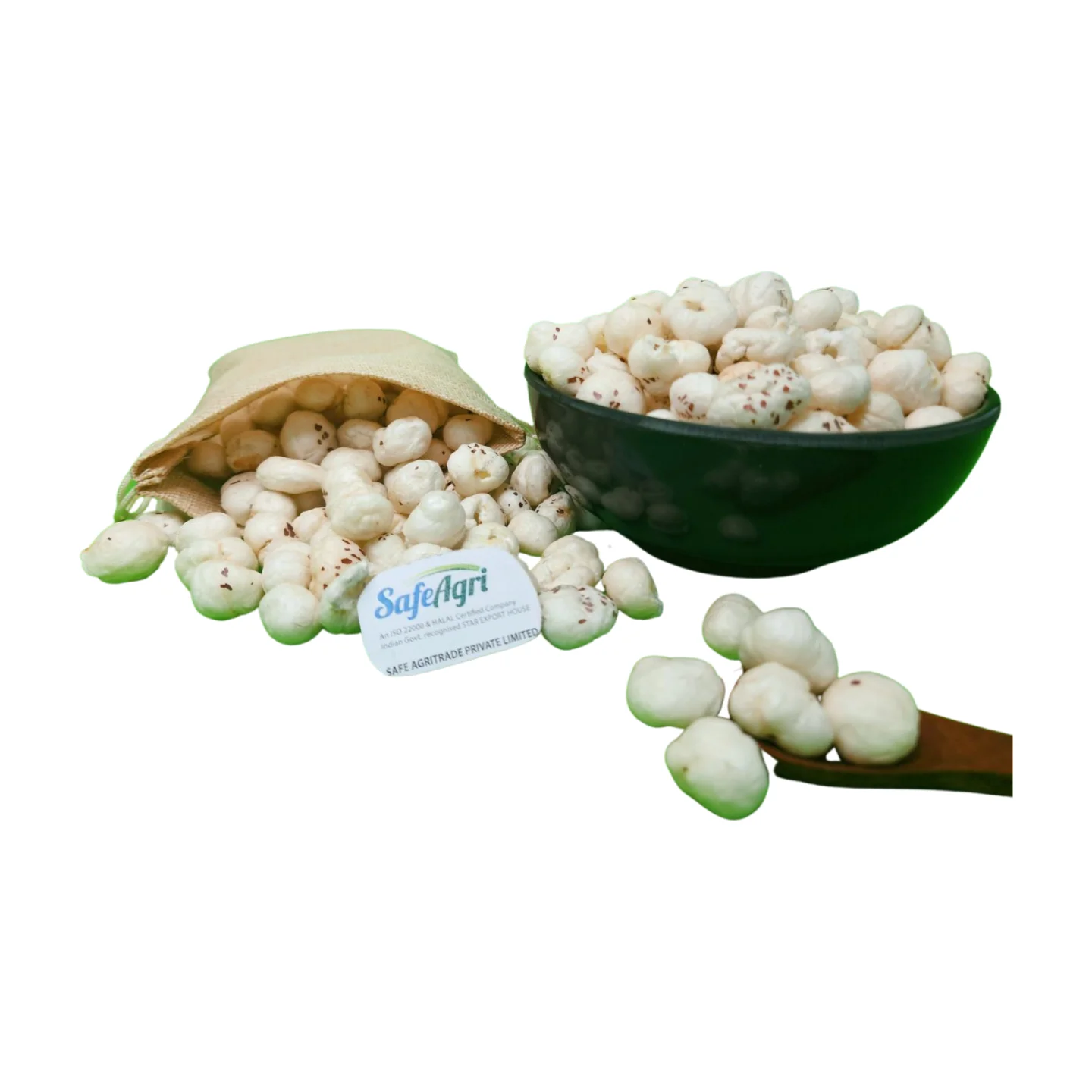
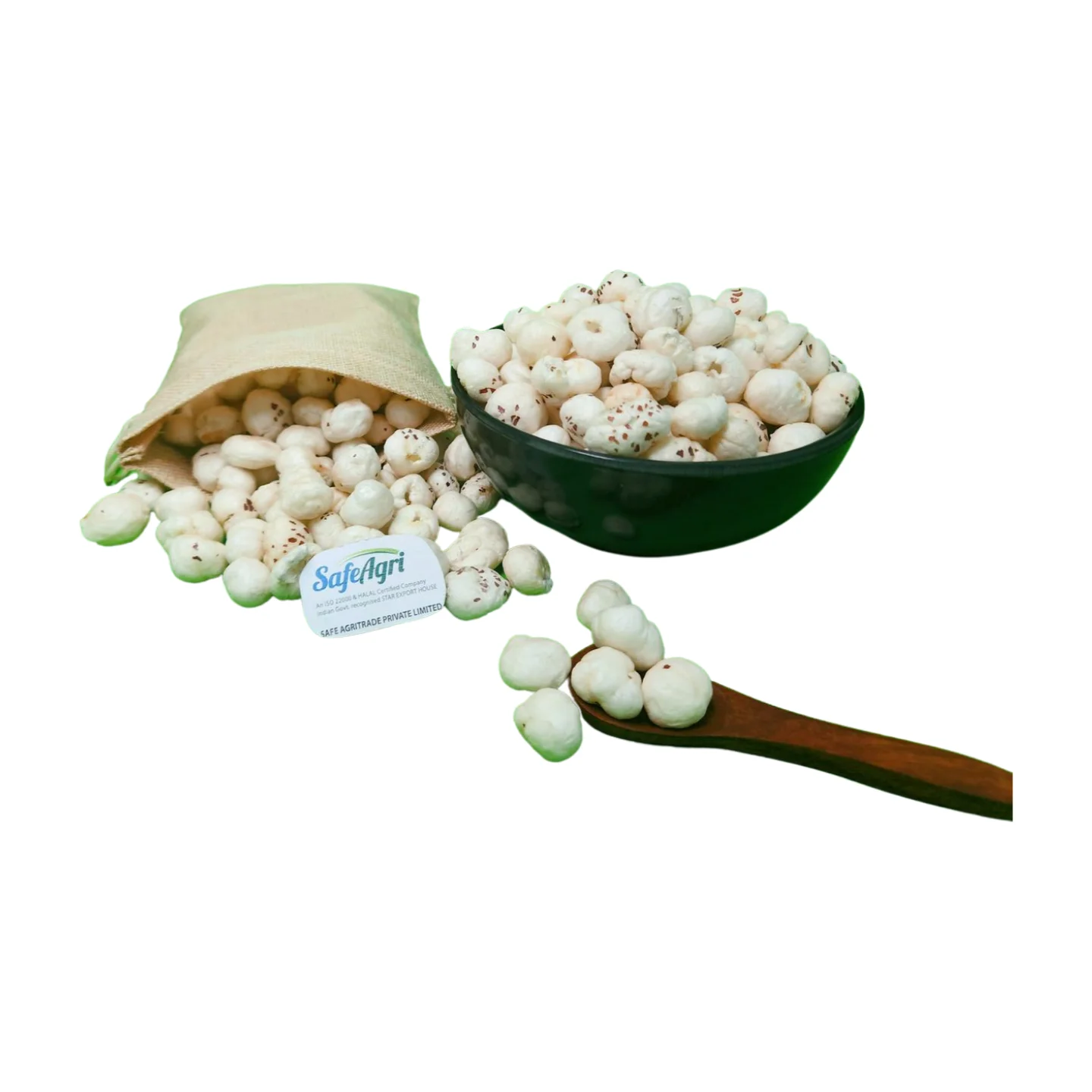
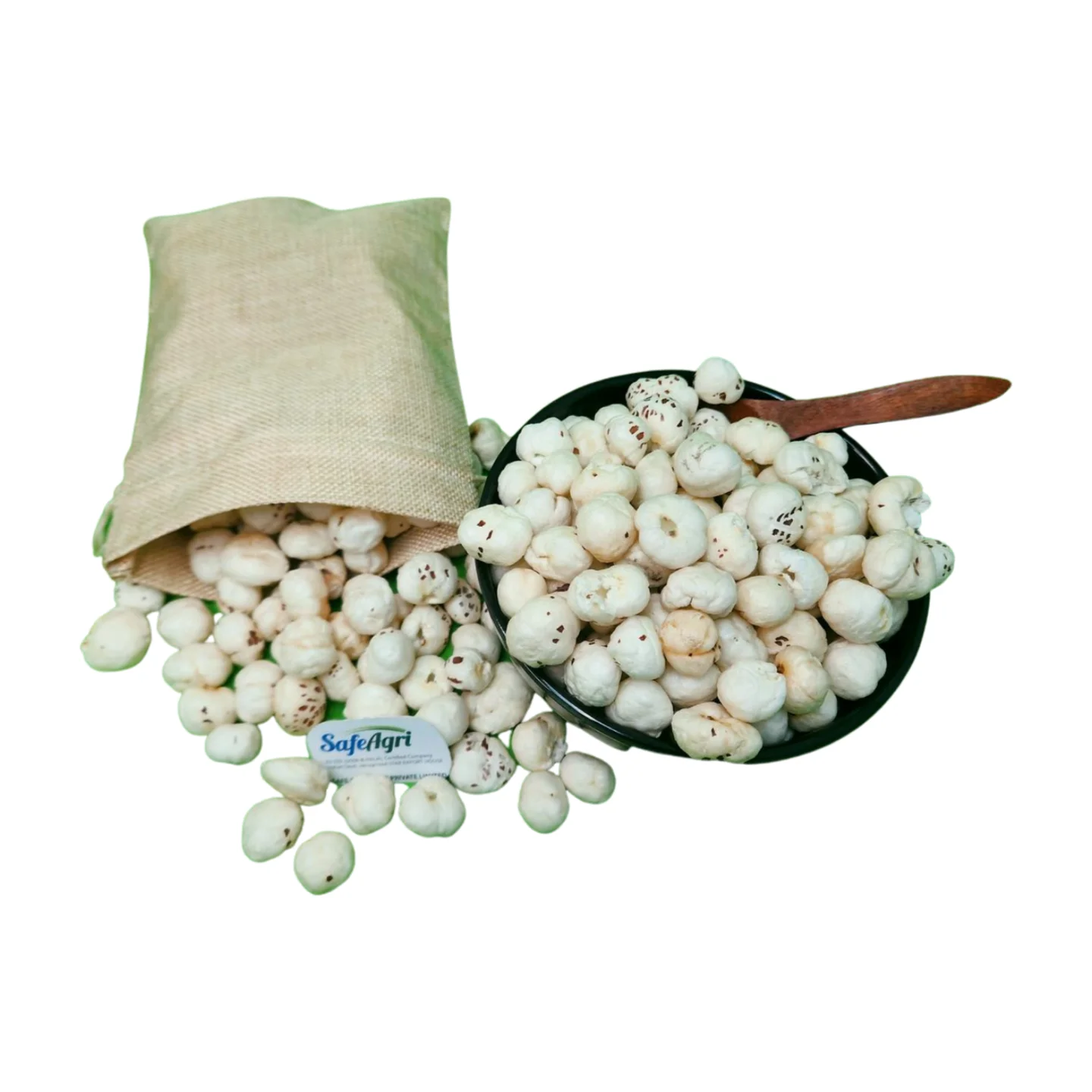
Makhana from Safe Agritrade
Makhana, also known as Gorgon Nut, is cultivated in India, Korea, Japan, and Russia. It is derived from lotus seeds. Foxnut (Makhana) may be combined with veggies and popped like corn to make a delicious porridge. Makhana has been shown to be a high-nutrient meal with therapeutic characteristics that is suitable for a healthy daily diet. Vitamins, minerals, and fiber were among the nutrients. Makhana is a high-value product grown commercially exclusively in Bihar and areas of eastern India. It is also cultivated naturally in Madhya Pradesh, Rajasthan, Jammu and Kashmir, Tripura, and Manipur.
Makhana, also known as fox nuts or lotus seeds, is a famous Indian snack and ingredient. It is formed from the seeds of the lotus flower, which thrives in ponds and lakes with stagnant water. Makhana has been consumed in India for millennia and is highly valued for its nutritional properties. It is high in protein, fiber, magnesium, potassium, and phosphorus. It is also low in fat and calories, making it a healthy snack option. The seeds of the lotus plant are gathered and then dried, roasted, or popped to enhance their flavor and texture. The seed's outer shell is removed, revealing a tiny, white, and crunchy kernel inside. Makhana has a crisp and airy texture that reminds me of popcorn, as well as a mild, nutty flavour. Makhana is a popular snack on its own, either roasted or spiced with spices such as salt, pepper, or chaat masala. It may also be used in a variety of cuisines such as curries, sweets and kheer (a classic Indian rice pudding). It has grown in popularity as a nutritious and guilt-free snack option due to its health advantages and adaptability. It is frequently advised for those leading a healthy lifestyle.
In conclusion, Makhana is a food that made from lotus seeds that is wholesome and filling. People who are concerned about their health love it because of its light and crisp texture and numerous health benefits.


Storage Type
Cool and Dry Place
Specification
12% Max Moisture
Shelf Life
3 Yrs
Manufacturer
Safe Agritrade Pvt Ltd
Ingredients
Lotus Seeds
Content
Foxt Nuts
Address
17, Crooked Lane Kolkata 700069
Instruction for use
Snacks
Place of Origin
India 
Brand Name
Safeagri
Model Number
21069099
Color
White Color
Test
Natural
Usage
Snacks
MOQ
8MT
Quality
Premium
Shape
Round Shape
Admixture
0.1% Max
Moisture
12% Min
Purity
100% Pure Natural


INDIA
Bihar : India produces 90% of the world's fox nut, found in natural forms in northeastern and central India. Indian players Makhanawala's and Too Yum introduced packed snacks, including chatpata masala and classic flavors, transforming consumption in the region.
CHINA : Makhana seed, cultivated in the Hainan and Taiwan islands, is widely used in Chinese medicine and baby foods. It is also used in lotus seed paste, used in Chinese pastries and Japanese desserts. Dried lotus seeds can be used in soups, congee, or other dishes. Fresh lotus seeds are sold in seed heads and eaten by breaking individual seeds. Crystallized lotus seeds are a popular Chinese snack during the Chinese New Year.
UNITED KINGDOM : London-based Nuto produces popped lotus seeds from India, shipped to the UK. The company aims to create healthier, savoury snacks, with a growing market in France, Germany, and Italy.
COLOMBIA : Lotus seeds are common in northern Colombia, particularly Barranquilla and Cartagena, and consumed raw in street markets.


1. Increasing demand for healthy food from an increasingly health conscious consumer base.
2. Rising demand for Demand for Gluten Free Protein Foods.
3. A great snack food for diabetics and heart patients as they contain the good fat and have a low quantity of saturated fats.
4. Growing popularity of snack food category (ready-to-eat packed foods).
5. Rising Use in the Cosmetic Products.
6. Makhana can be very good alternative cash crop.


1. According to insight provider IRI, health and wellness is increasingly important for European shoppers who want more on the-go healthy snacking options.
2. With demand for healthier options, as sugary snacks become less attractive to shoppers, and offer alternatives more suited to guilt-free grazing, such as nuts and seeds, fruit and popcorn.


1. Makhana grows profusely in the stagnant water of wetlands, tanks, ponds, lakes and ditches in the northern parts of Bihar. Besides stagnant water bodies, it is also cultivated in paddy fields and low-lying areas.
2. Lotus seed was an ‘incredibly sustainable’ crop, grown in water near other crops and fish.
3. Compared to corn or soy, for instance, lotus seeds do not require additional water other than the ponds and rivers in which they grow.


Bihar produces over 85% of India's makhana, with northern Bihar being agro-climatically suitable for cultivation. The ICAR estimates a 15000 Ha area, yielding 1,20,000 MT of seeds and 40,000 MT of makhana 5 pop. The production value is Rs 250 Crore at farmers' end and Rs 550 Crore at traders' level.


Processing of Makhana /  Fox Nuts
1. Makhana processing involves sun-drying seeds, storing them in water tanks, and categorizing them into 5-7 grades. Nuts are heated in an earthen pitcher or cast-iron pan and then stored for tempering in baskets or pots for 45-72 hours. This process is labor-intensive and time-consuming, involving human drudgery.
2. Makhana processing involves roasting and popping nuts at 290–340 °C. After a crackling sound, 5-7 roasted seeds are scooped and hammered, resulting in an expanded makhana. The kernel is then polished and packed in gunny bags, with a yield ranging from 30–35% based on raw nut weight.


Makhana seeds are stored in houses on pucca floors, with water regularly sprinkled. The average storage duration is 25 days. Some farmers store them in cemented water tanks for processing.
Makhana pop can be stored for up to a year under proper conditions. Farmers store it in jute bags and raised wooden platforms, with rats and rodents damaging it 5-10%. The surplus is sold to local wholesalers, who store it for price advantage in off-season. Each wholesaler has its own godown, varying in capacity based on trader handling ability.


Makhana is packed in plastic bags for retail marketing, but the process is manual and unskilled, resulting in no quality assurance or hygienic and nutritional quality assurance. Local wholesalers use hand-operated machines for sealing, affecting market acceptability for export. Makhana is also packed in gunny bags weighing 8 kg, 10 kg, and 12 kg, depending on quality.


Quality
Quantity in Kg
High
8
Medium
12
Low
More than 25


0.193 s.