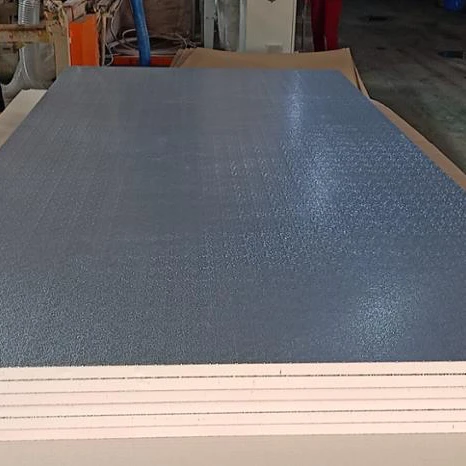
Class A fire resistance heat insulation phenolic foam board
- Category: >>>
- Supplier: Xiamen KeYu Import and Export Co. Ltd.
Share on (124601373):
Product Overview
Description
Class A fire resistance heat insulation phenolic foam board
Physical Qualities of Phenolic Insulation
1. Structure: Rigid Phenolic insulation has a high closed cell content and fine cell structure. It is lightweight, easy to transport , handle and install.
COMPRESSIVE STRENGTH
2. Compressive strength: Phenolic foams are produced with densities in the range of 35 kg/m³ to 200 kg/m³. High density boards have a good compressive strength and are suitable for some floors.
3. Material resistance: Rigid phenolic insulation is resistant to fungus and mould growth and will not sustain vermin.
4. Heat resistance: Rigid phenolic insulation can withstand continuous temperatures of up to 120 degrees C.
5. Moisture resistance: Moisture has a minimal effect on its thermal performance. Rigid phenolic insulation has a 95% (or greater) closed cell content which makes it highly resistant to moisture penetration. It also has a low water vapour permeance. Phenolic foam is also non-wicking. This means that if water enters the insulation system due to the vapour barrier becoming punctured, any moisture ingress is limited and confined to the punctured area. This ensures moisture does not build up and compromise the whole system.
6. Stability: Rigid phenolic is dimensionally stable and can be cut accurately to achieve a snug fit in situations such as between rafters where airtightness will be improved.
7. Fire performance: The fire performance of phenolic foam is exceptional. It combines zero or very low flame spread with negligible smoke emission and a very low level of toxic gas emission. Phenolic foams which have very low thermal conductivities are used as alternatives to PUR or PIR foams where a self extinguishing, low smoke emission, material is required. Insulating materials are rigorously tested to British Standards and fire performance data, to meet the requirements of building regulations, is generally available from manufacturers.
Technical Properties of Phenolic Foam Boards
Properties | Phenolic Foam (PF) |
Density (kg/m3) | 40~60 |
Thermal Conductivity W/(m.K) | 0.02~0.03 |
Heat Insulation | As good as Polyurethane Foam (PUR) or Polyisocyanurate foam (PIR) |
Fire Resistance (ASTM E84) | A |
Drips in Fire | No |
Oxygen Index | >36 |
Max. Smoke Density | 2% |
Smoke Toxicity | Non-toxic |
High Temperature Resistance (°C) | 150 |
Low Temperature Resistance (°C) | -250 |
Dimension Stability | Only color change |
Water Absorption | Low (<1.9%) |
Environmental friendliness | CFC free HCFC free Fiber Free |
Resistance to Bacteria / Virus | Yes |
Sound Insulation | Good |
Rigidness / Compressing Strength | Much better than Rock wool / Glass wool |
Construction Difficulty | Light weight - Easy to process and install |


We Recommend
New Arrivals
New products from manufacturers at wholesale prices