Преобразователь и инструмент исчерпывающий практический курс
- Category: Educational Equipment >>>
- Supplier: TESCA TECHNOLOGIES PRIVATE LIMITED
Share on (134630882):
Product Overview
Description
Products Description
Transducer & Instrumentation Trainer - Exhaustive Practical Course

Specification
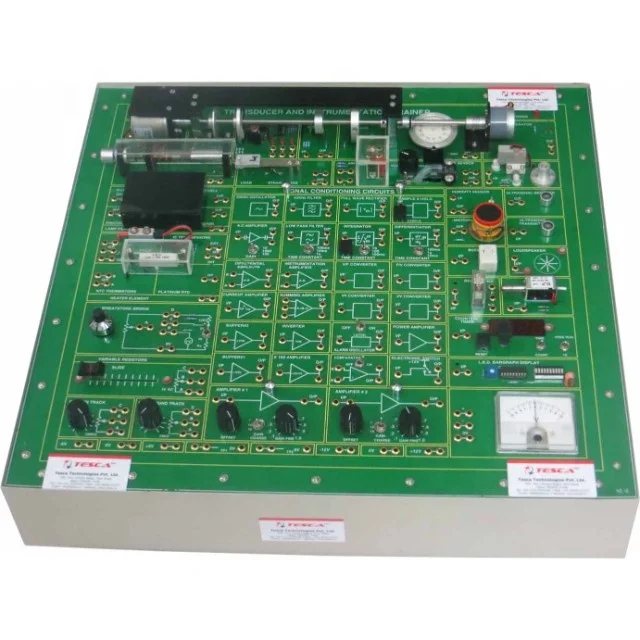
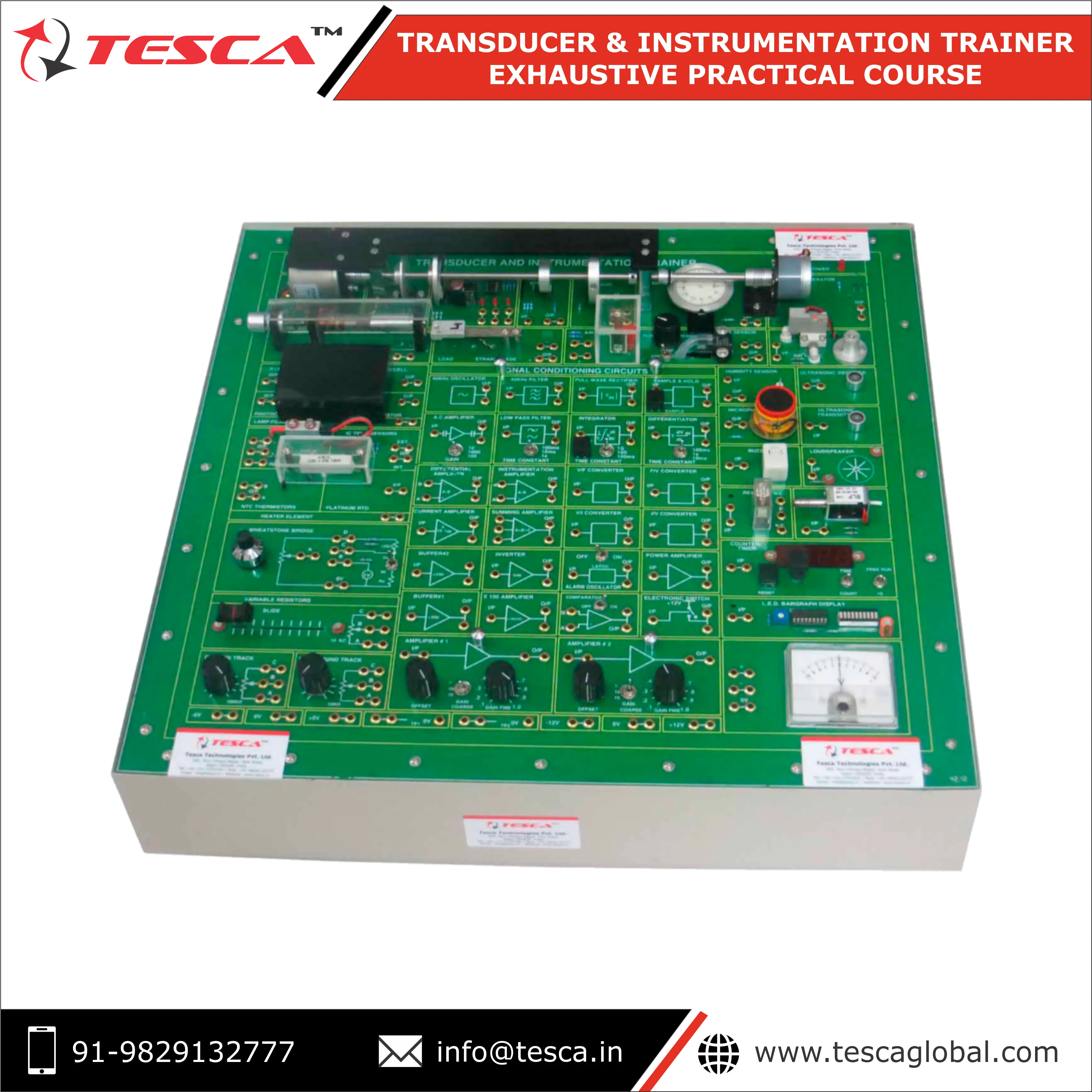
Rugged, self- contained panel trainer with a steel case and integral power supplies. It provides a range of transducer input and output devices together with associated instrumentation circuitry. The transducer and signal conditioning elements of this trainer are typical of those used throughout industry.
These elements include:
1. Transducer input devices.
2. Transducer output devices.
3. Instrumentation circuitry.
Input devices:
For the detection of rotary and linear position, temperature, light, pressure, strain, airflow, humidity and audible and
Ultrasonic sound.
Output devices:
For the generation of heat, light, rotary and linear actions, audible and ultrasonic sound and visual indication of voltage, time and number of events.
Instrumentation circuitry:
For the investigation of Wheatstone Bridges and current measurement techniques, linear and non-linear signal amplification, closed and open loop control, one, two and three term (PID) control, DC restoration of AC signals, signal transmission techniques and alarm generation.
The comprehensive curriculum manuals provided covers the following topic areas:
1. An introduction to basic control systems.
2. An evaluation of the various Input devices.
3. Practical investigation of the various output devices.
4. Practical investigation of the Display devices.
5. Applications in practical systems, evaluation of input requirements.
6. In depth investigation / analysis of the numerous signal conditioning circuits.
7. Investigation of control system characteristics (On/Off,
8. Proportional, Proportional + Derivative & Proportional + Integral + Derivative)
9. Design and implementation of speed control systems, positional control systems, temperature control systems and light level control systems.
Includes the following items:
1. Instrumentation and Transducer Trainer
2. 4mm Lead set
3. Technical manual
4. Curriculum manuals
Hardware specifications:
Input Transducers:
1. Carbon track, wire-wound and precision rotary potentiometers.
2. Slide potentiometers.
3. NTC thermistors.
4. Type 'K' thermocouples.
5. I.C. temperature sensor.
6. Photoconductive cell.
7. Photovoltaic cell.
8. Phototransistor.
9. PIN photodiode.
10. Linear variable differential transformer.
11. Linear variable capacitor.
12. Strain gauge.
13. Air flow sensor.
14. Air pressure sensor.
15. Slotted opto sensor.
16. Reflective opto sensor.
17. Inductive proximity sensor.
18. Hall effect sensor.
19. Precision servo potentiometer.
20. Techo-generator.
21. Humidity sensor.
22. Dynamic microphone.
23. Ultrasonic receiver.
Output Transducers:
1. Heater.
2. Filament Lamp.
3. DC motor.
4. Solenoid air valve.
5. Ultrasonic transmitter.
6. Buzzer.
7. Loudspeaker.
8. Relay.
9. Solenoid.
10. Counter/timer unit with LED display.
11. Bargraph voltage indicator.
12. Analog 10V center-zero meter
Signal Conditioning :
1. Buffers.
2. Inverters.
3. Comparator with switchable hysteresis.
4. Amplifiers with gain and offset control.
5. Current amplifier.
6. Summing amplifier.
7. Differential amplifier.
8. Instrumentation amplifiers.
9. AC amplifier.
10. Oscillator 40kHz.
11. Filter 40kHz.
12. Low-pass filter with switchable time constant.
13. Precision full-wave rectifier.
14. Sample and hold circuit.
15. Integrator with switchable time constant.
16. Differentiator with switchable time constant.
17. Converters: V/F, F/V, V/I, I/V.
18. Alarm oscillator with switchable latching.
19. Power amplifier.
20. Electronic switch.
Introduction:
Transducers and their related Instrumentation circuitry are commonplace in all aspect of everyday life. An Industry grows evermore reliant on transducers to monitor and control numerous processes and production systems. The new generation of Engineers and technicians must be skilled in the technology of transducers and Instrumentation. The proposed Transducer & Instrumentation trainer is a single self-contained Panel Trainer covering fundamentals of Transducers & Instrumentation and providing comprehensive training resource. Unlike traditional training systems, this compact, portable design of unit along with its associated competency based teach-ware makes it ideal for both On /Off site training. The system teach-ware includes detailed curriculum text and Technical manual.
Topics Covered :
1. An introduction to basic control system.
2. Input transducers – practical investigation of the various on-board devices for detection of rotary and linear position,
temperature, light, pressure, strain, airflow, humidity and audible & ultrasonic sound.
3. Output Devices – practical investigation of the various on-board devices for generation of heat, light, rotary and linear
actions, audible & ultrasonic sound and visual indications of voltage, time and number of events.
4. Signal Conditioning Circuitry : In depth investigation / analysis of the number of circuits provided on board.
5. Control systems Evaluation : Investigation of control system characteristics including On/Off, Proportional, Proportional + Derivative and full Proportional + Integral + derivative control systems. Design and Implementation of Speed Control systems, Positional Control systems,
Temperature control systems and Light level control systems.
Technical Specifications :
The system comprises a rugged, portable hardware module that features a PCB mounted in a steel case. All electrical and pneumatic power supplies are housed in a case. The PCB features a system layout screen-printed in yellow and white onto a green plastic panel. A comprehensive series of transducer input and output devices together with signal conditioning and instrumentation circuit is provided. These include:-
Input transducers
1. Carbon track, wire wound and precision rotary potentiometers.
2. Slide potentiometers.
3. NTC thermistors.
4. Type 'K' thermocouples.
5. I.C. temperature sensor.
6. Photoconductive cell.
7. Photovoltaic cell.
8. Phototransistor.
9. PIN photodiode.
10. Linear variable differential transformer.
11. Linear variable capacitor.
12. Strain gauge.
13. Air flow sensor.
14. Air pressure sensor.
15. Slotted opto sensor.
16. Reflective opto sensor.
17. Inductive Proximity Sensor.
18. Hall effect sensor.
19. Precision servo potentiometer.
20. Tachogenerator.
21. Humidity sensor.
22. Dynamic microphone.
23. Ultrasonic receiver.
Output devices
1. Heater.
2. Filament Lamp.
3. DC Motor.
4. Solenoid Air Valve.
5. Ultrasonic transmitter.
6. Buzzer.
7. Loudspeaker.
8. Relay.
9. Solenoid.
10. Counter/timer unit with LED display.
11. Bargraph voltage indicator.
12. Analog 10v centerzero meter
Signal conditioning
1. Buffers.
2. Inverters.
3. Comparator with switchable hysteresis.
4. Amplifiers with gain and offset control.
5. Current amplifier.
6. Summing amplifier.
7. Differential amplifier.
8. Instrumentation amplifiers.
9. AC amplifier.
10. Oscillator 40kHz.
11. Filter 40kHz.
12. Low pass filter with switchable time constant.
13. Precision full-wave rectifier.
14. Sample and hold circuit.
15. Integrator with switchable time constant.
16. Differentiator with switchable time constant.
17. V/F and F/V converters.
18. V/I and I/V converters.
19. Alarm oscillator with switchable latching.
20. Power amplifier.
21. Electronic switch.
Onboard Power Supplies
1. -5V, +5V 1A precision supply.
2. -12V, +12V 1A regulated supply.
Objective List for Transducers & Instrumentation Trainer
Chapter1: Basic Control Systems Equipment and Terms Used Lists the basic components of a closed loop system and explain their functions. Identifies the meaning of terms associated with control system equipment. Calculates the overall gain of a negative feedback closed loop system from given information. Writes the expression for the overall gain of a negative feedback closed loop system. States the difference between open loop and closed loop systems.
Chapter 2: Positional Resistance Transducers States that the resistance section may be either a carbon track or wire wound. To Do the difference between a logarithmic and a linear track. Draws the basic characteristics of output voltage against variable control setting. To Do the effect on the output voltage of loading the output circuit. Compares the application of a carbon track variable resistor to the wire wound type. To Do the basic construction of rotary and slider variable resistors.
Chapter 3: Wheatstone Bridge Measurements States and applies the expression for calculating an unknown resistance from the Bridge values at balance. Applies null methods to voltage measurements. Makes resistance and voltage measurements using the facilities. Identifies the term 'null balance'. States the principles of the basic Wheatstone Bridge circuit for resistance measurement. Discusses the reason for the three-wire resistance circuit. Discusses the factors affecting the resolution and accuracy of measurements.
Chapter 4: Temperature Measurement To Do the characteristics of an IC temperature sensor. To Do the construction and characteristics of a Platinum RTD resistance transducer. To Do the construction and characteristics of an n.t.c. Thermistor. Discusses the characteristics of n.t.c. thermistor bridge circuits. To Do the construction and characteristics of a thermocouple. Deduces temperatures from a voltage reading across a transducer.
Chapter 5: Light Sensors To Do the construction and characteristics of a photovoltaic cell. To Do the construction and characteristics of a PIN photodiode. To Do the construction and characteristics of a phototransistor. Discusses the characteristics of a filament lamp. To Do the construction and characteristics of a photoconductive cell.
Chapter 6: Linear Position or Force Applications To Do the construction, principle and characteristics of a Linear Variable differential Transformer (LVDT). To Do the construction and characteristics of a linear variable capacitor. To Do the construction and characteristics of a strain gauge.
Chapter 7: Environmental Measurements To Do the construction and characteristics of an air flow transducer. To Do the construction and characteristics of an air pressure transducer. To Do the construction and characteristics of a humidity transducer.
Chapter8: Rotational Speed or Position Measurements To Do the construction, principles and application of a Tacho-Generator to speed measurement Recognizes the construction, principles and application of Reflective Opto Transducers and Gray Coded Disc for position measurement. To Do the construction, principles and application of Slotted Opto Transducers for counting and speed measurement. To Do the construction, principles and application of Hall Effect Transducers to speed and positional measurement. To Do the construction, principles and application of Inductive Transducers for speed measurement.
Chapter 9: Sound Measurements To Do the construction and characteristics of a dynamic microphone. To Do the construction and characteristics of an ultrasonic receiver and transmitter. Compares the various methods of measuring sound signals.
Chapter 10: Sound Output To Do the construction and characteristics of a moving coil loudspeaker. To Do the construction and characteristics of a buzzer.
Chapter 11: Linear or Rotational Motion To Do the construction and characteristics of a DC solenoid air valve. To Do the
construction and characteristics of a DC permanent magnet motor. To Do the construction and characteristics of a DC relay. To Do the construction and characteristics of a DC solenoid.
Chapter 12: Display Devices To Do the characteristics and application of the LED Bargraph Display. To Do the characteristics and application of the Moving Coil Meter. States and calculates the requirement to extend the voltage range of a Moving Coil Meter. Selects a suitable device for a particular voltage measurement. To Do the characteristics and application of the Timer/Counter.
Chapter 13: Signal Conditioning Amplifiers To Do the characteristics and application of an inverter amplifier. To Do the characteristics and application of a current amplifier. To Do the characteristics and application of a differential amplifier. To Do the characteristics and application of a buffer amplifier. To Do the characteristics and application of an AC amplifier. To Do the characteristics and application of DC amplifiers. Identifies the term 'Offset' and the need for offset control. To Do the characteristics and application of a power amplifier.
Chapter 14: Signal Conversions To Do the characteristics of a voltage to current converter (V/I). To Do the characteristics of a current to voltage converter (I/V). To Do the characteristics of a voltage to frequency converter (V/F). To Do the characteristics of a frequency to voltage converter (F/V). To Do the characteristics of a full wave rectifier.
Chapter 15: Comparators, Oscillators and Filters To Do the characteristics of an alarm oscillator. To Do the characteristics of low pass filters. To Do the characteristics of band pass filters. To Do the characteristics of a 40kHz oscillator. Identifies the term 'latch' applied to an alarm oscillator. Identifies the effect of hysteresis on the operation of a comparator. To Do the
characteristics of a comparator. To Do the characteristics of an electronic switch.
Chapter 16: Mathematical Operations To Do the characteristics of a summing amplifier. To Do the characteristics of an integrator. To Do the characteristics of a differentiator. To Do the characteristics and application of a 'sample and hold' circuit.
Chapter17: Control Systems Characteristics To Do the characteristics of a Derivative system. Identifies that a practical system may incorporate Proportional, Integral and Derivative components and be referred to as a 3-term (or PID) controller. To Do the characteristics of a Proportional system. To Do the characteristics of an ON/OFF system. To Do the characteristics of an Integral system.
Chapter18: Practical Control Systems To Do the characteristics of a light controlled ON-OFF system. To Do the characteristics of a positional control system having: proportional, Proportional + integral, proportional + derivative and proportional + integr al + derivative Controls. To Do the characteristics of a speed control system.
Company Profile


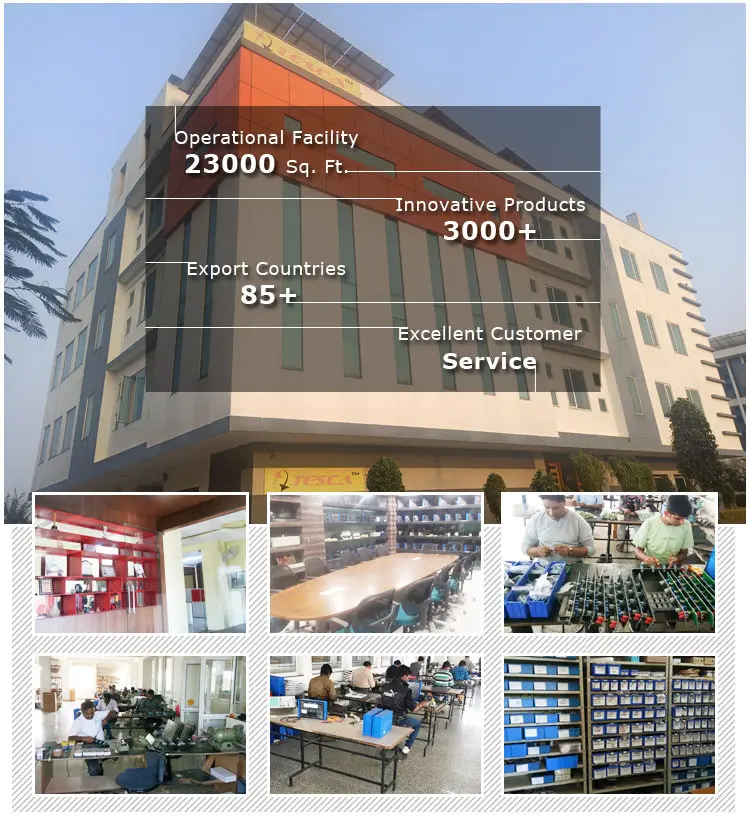
Tesca Technologies Pvt. Ltd. is World's Leading ISO & CE Certified Manufacturer & Exporter of Turnkey Projects, TVET, Skill Development, Educational Equipment, Electrical, Electronics, PLC, Hydraulic & Pneumatic, Physics Labs, Test & Measurement, Workshop Tools & Machines. Member for Electronics & Computer Software Export Promotion Council, New Delhi, India having sales in 85+ Countries Worldwide. Tesca's operations are spread out in 23000 Square Feet encompassing more than 3000 manufactured Innovative Products and Turnkey Project Capabilities for International Tenders. Tesca is an Export House established in December 2009 with our Registered & Corporate Office both set up at Jaipur. We are actively doing business in Middle East, CIS, South East Asia, Africa as well as South America Countries.
PRODUCT RANGE:
- EDUCATIONAL TRAINERS : Analog Electronics Trainer, Antenna, Satellite, GPS, Radar, RF Trainers, Biomedical Trainers, Bread Board Trainers, Communication Trainers, Consumer Electronics Trainers, Digital Electronics Trainers, Display Boards Trainers, Educational Motors & Machines, Educational Wall Charts, Embedded / Microprocessor Trainers, Fiber Optic Trainers, Instrumentation Trainers, Microwave Test Benches, PCB Lab, Physics Trainers, Power Electronics Trainers, Robotic Kits / Trainers
- TEST & MEASUREMENT INSTRUMENTS : Ac/Dc Power Supplies, Analog Oscilloscopes, Analog Portable Meters, Compact Mixed Signal Oscilloscopes, Decade Boxes (R,L,C), Digital Clamp Meters, Digital Multimeters, Digital Portable Meters, Digital Storage Oscilloscopes, Digital Tachometers, Energy Meters, Frequency Counters, IC Testers & Programmers, Infrared Thermometers, LCR Meter, Logic Probes, LUX Meters, Patch Cords, Programmable Dc Electronic Loads, Rheostats, Signal Generators, Spectrum Analyzers
- EDUCATIONAL SOFTWARES, MECHANICAL & CIVIL LAB EQUIPMENT, CIVIL ENGINEERING LAB, ELECTRONIC COMPONENTS, SOLAR PRODUCTS, MILK ANALYSER & SOIL TESTING KITS, E-LEARNING LMS, CMS, WEB & SOFTWARE APPLICATIONS, PHYSICS, CHEMISTRY, BIOLOGY, SCIENCE KITS, IT, COMPUTERS, NETWORKING, LABORATORY PLASTICWARE, SOLDERING & DESOLDERING STATION, VARIACS/DIMMERSTAT, OIL INSULATION TESTERS, FLUKE PRODUCTS, WORKSHOP HAND POWER TOOLS & MACHINES, LAB FURNITURE
EXPORT OPERATIONS:
- America/ Europe / Australia - Austria, Brazil, Bolivia, Canada, Chile, Ecuador, Finland, France, Germany, Greece, Iceland, Italy, Jamaica, Luxembourg, Macedonia, Mexico, New Zealand, Peru, Portugal, Serbia, Spain, Switzerland, Turkey, UK, USA
- Africa - Algeria, Benin, Botswana, Burkina Faso, Egypt, Ethiopia, Eritrea, Ghana, Ivory Coast, Kenya, Lesotho, Malawi, Mali, Morocco, Mozambique, Nigeria, Rwanda, South Africa, Sudan, Tanzania, Tunisia, Uganda, Zimbabwe, Zambia
- Middle East - Albania, Bahrain, Iraq, Israel, Jordan, Lebanon, Oman, Palestine, Saudi Arabia, UAE, Yemen
- Asia - Bangladesh, Bhutan, Brunei, Cambodia, China, Fiji, Hong Kong, India, Indonesia, Japan, Mongolia, Malaysia, Mauritius, Myanmar, Nepal, Pakistan, Philippines, Singapore, Sri Lanka, Taiwan, Thailand, Vietnam
Tender Support Team of 10 Engineers are working for all your tender requirements.

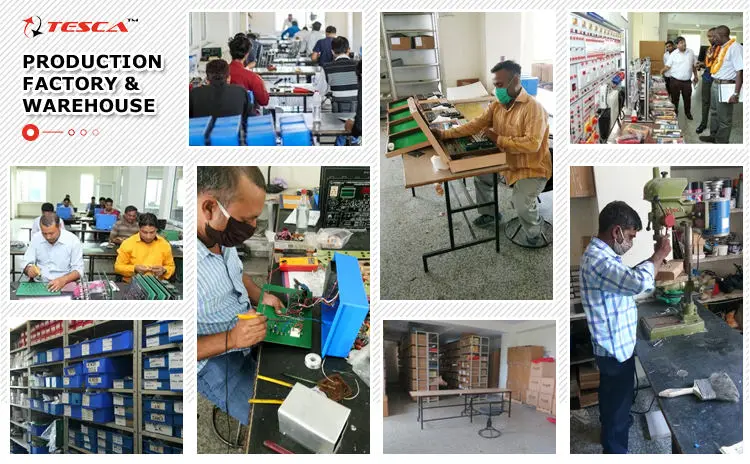
Packing & Delivery

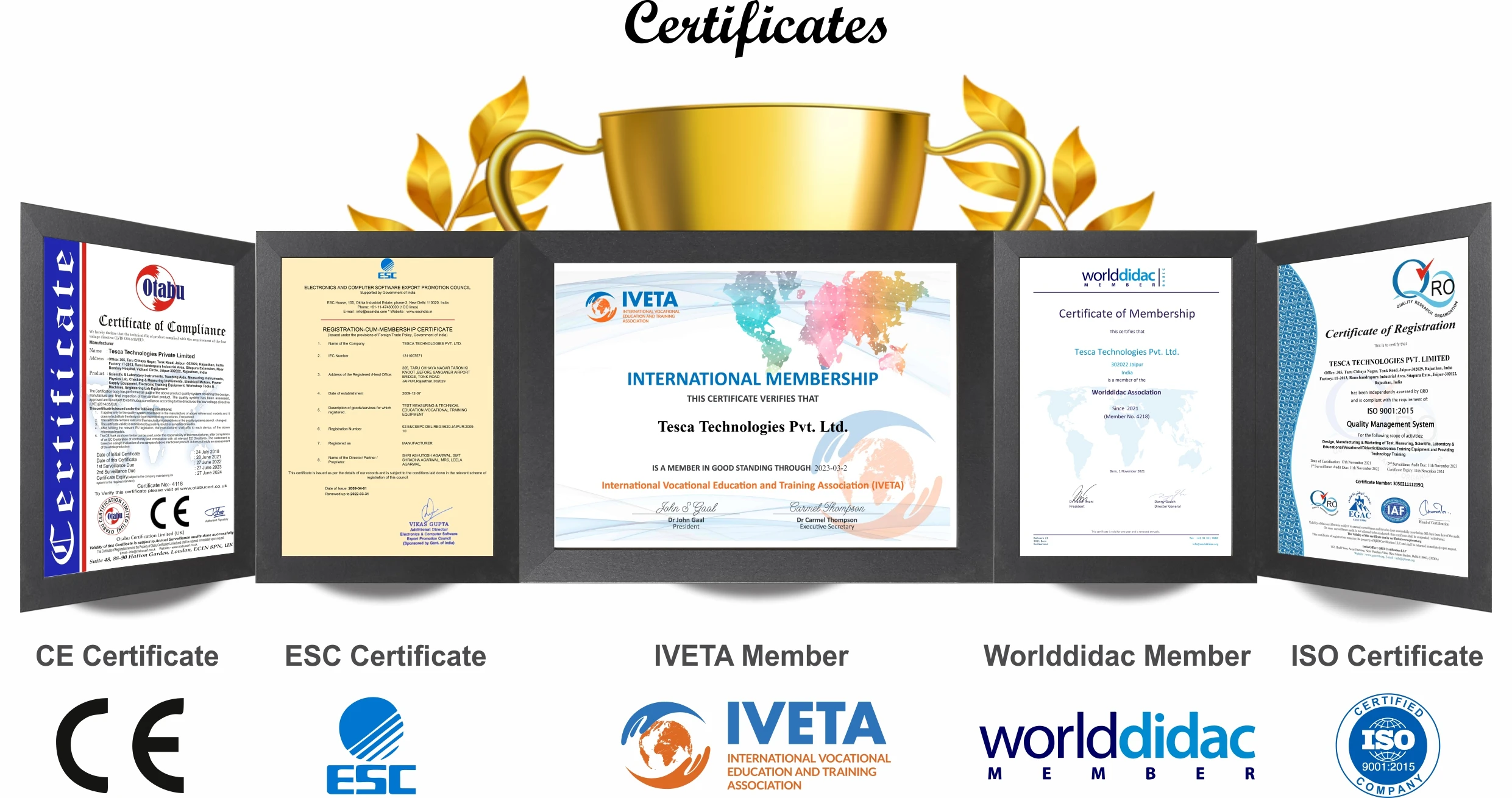
Certifications

Exhibition

FAQ
1. who are we?
We are based in Rajasthan, India, start from 2011, sell to Africa (85.00%), Domestic Market (3.00%),South America (1.00%), South Asia (1.00%), Southern Europe (1.00%), Northern Europe (1.00%), Central America (1.00%), Western Europe (1.00%), Eastern Asia (1.00%), Mid East (1.00%), North America (1.00%), Oceania (1.00%), Southeast Asia (1.00%), Eastern Europe (1.00%). There are total about 11-50 people in our office.
2. how can we guarantee quality?
Always a pre-production sample before mass production;
Always final Inspection before shipment;
3.what can you buy from us?
Communication Trainer, Microwave Trainer, Microwave Test Bench, Educational Equipment, Electrical Machine Trainer
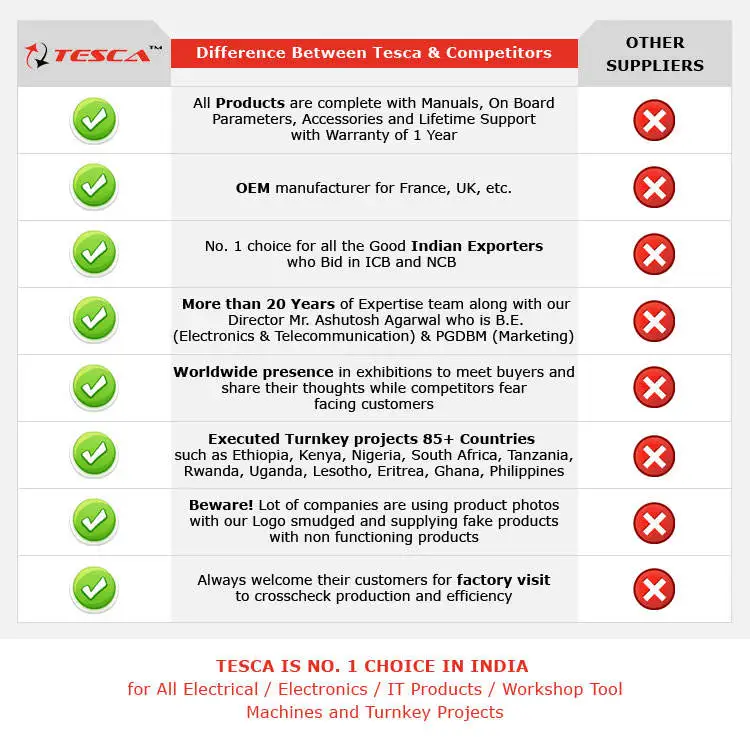
4. why should you buy from us not from other suppliers?
1) Single Sourcing Partner for all your Educational/Didactic Solutions
2) Quality Control at multiple stages
3) Excellent technical support, training, installations & demonstrations
4) Service Support
5) Hassle free shipment ordering & fast response
5. what services can we provide?
Accepted Delivery Terms: FOB, CFR, CIF, EXW, FCA;
Accepted Payment Currency: USD, EUR, CAD, AUD, HKD, GBP, CNY, CHF;
Accepted Payment Type: T/T, L/C, Cash;
Language Spoken: English, Hindi
We are based in Rajasthan, India, start from 2011, sell to Africa (85.00%), Domestic Market (3.00%),South America (1.00%), South Asia (1.00%), Southern Europe (1.00%), Northern Europe (1.00%), Central America (1.00%), Western Europe (1.00%), Eastern Asia (1.00%), Mid East (1.00%), North America (1.00%), Oceania (1.00%), Southeast Asia (1.00%), Eastern Europe (1.00%). There are total about 11-50 people in our office.
2. how can we guarantee quality?
Always a pre-production sample before mass production;
Always final Inspection before shipment;
3.what can you buy from us?
Communication Trainer, Microwave Trainer, Microwave Test Bench, Educational Equipment, Electrical Machine Trainer
4. why should you buy from us not from other suppliers?
1) Single Sourcing Partner for all your Educational/Didactic Solutions
2) Quality Control at multiple stages
3) Excellent technical support, training, installations & demonstrations
4) Service Support
5) Hassle free shipment ordering & fast response
5. what services can we provide?
Accepted Delivery Terms: FOB, CFR, CIF, EXW, FCA;
Accepted Payment Currency: USD, EUR, CAD, AUD, HKD, GBP, CNY, CHF;
Accepted Payment Type: T/T, L/C, Cash;
Language Spoken: English, Hindi
Contact Us

We Recommend


New Arrivals
New products from manufacturers at wholesale prices