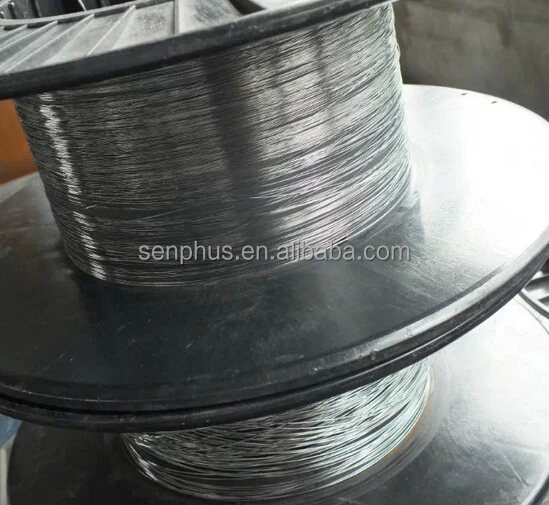
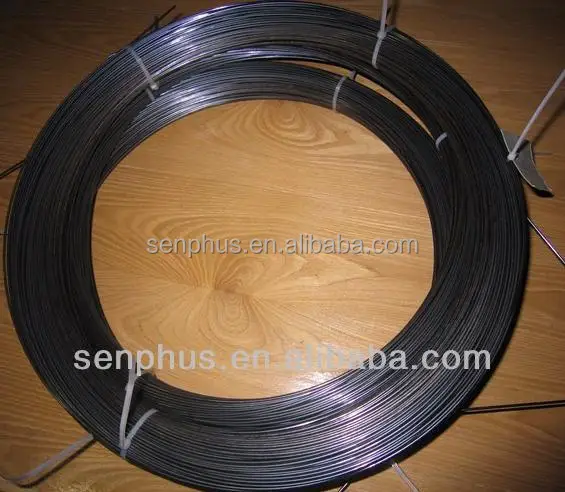
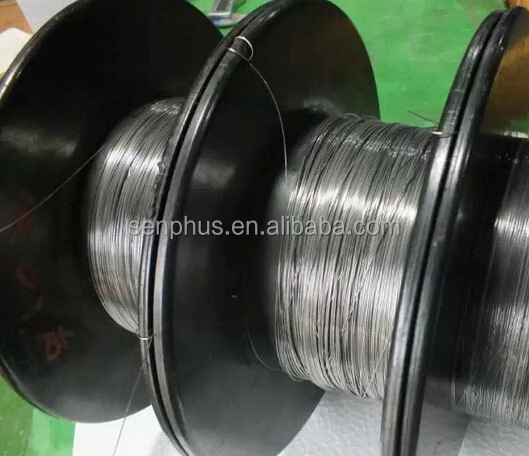
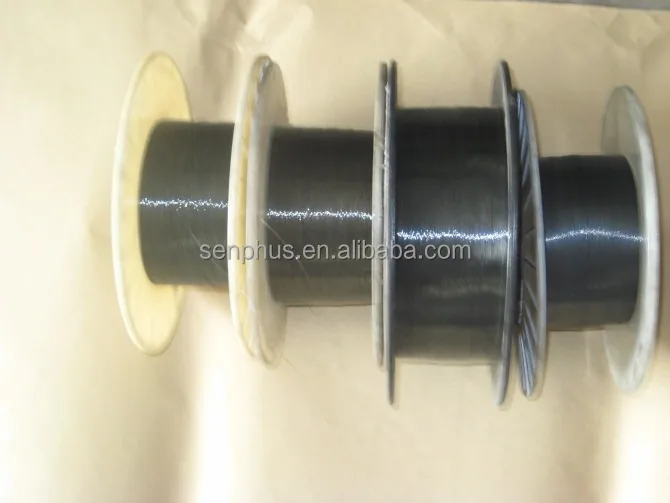
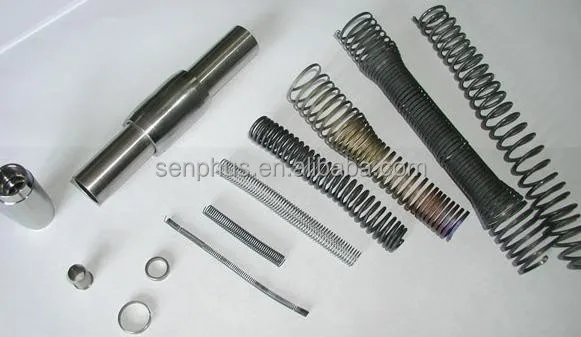
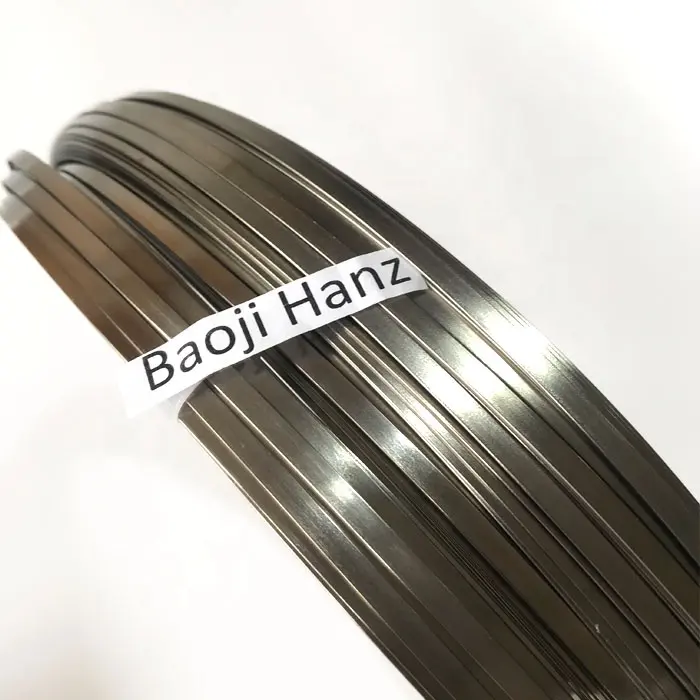
1.3mm 1.4mm 1.8mm Gr2 Titanium Thin Coil Wire
US $20.00-$55.00
Share on (1488451861):
Nitinol memory wires:
You could tell us the AF temperature, the use, and diameter of the nitinol memory wires, etc., and we will recommend you the wire model. Of course, if you buy wire for medical use, please tell us!
· Diameter Range: 0.10mm~7.00mm;
· Surface State Options:
o Black oxide surface
o As cleaned surface
o Medical grade polished surface
o Centerless ground surface
· nitinol wire Tolerances:
4.000~2.000mm ±0.020mm
2.000~1.000mm ±0.015mm
1.000~0.350mm ±0.010mm
0.350~0.260mm ±0.007mm
0.260~0.150mm ±0.005mm
0.150~0.080mm ± 0.004mm
For tolerances other than the above recommended specifications, please contact us.
· Nitinol wire alloy code:
a. Regular binary NiTi alloy code, main composition, and typical active Af temperature (per ASTM F2063-05 or GB 24627-2009)
Alloy code | A | B | S | C | D | E |
Main composition mass%Ni | 55.07 | 55.66 | 55.76 | 55.86 | 55.96 | 56.25 |
*Active Af after heat treatment, °C | 75+/-5 | 28+/-5 | 23+/-5 | 11+/-5 | 5+/-5 | -15+/-5 |
*The real active Af temperature may varies with actual composition, thermo-mechanical history of the product.
b. Regular ternary NiTi alloy code, main composition, and typical active Af temperature
Alloy code | F | G | I | J | H |
Main composition mass%Ni | 44.0Ti | 44.0Ti | 50.0Ti | 50.0Ti | 47.0Ni |
*Active Af after heat treatment, °C | Similar to binary Nitinol D with higher strength | Similar to ternary NiTi0.2Cr with higher strength | 42+/-5 | -32+/-6 | 142+/-10 |
*The real active Af temperature may vary with actual composition, thermo-mechanical history of the product.
c. Chengxin manufactures different medical grades (binary NiTi code D, C, S, E and ternary NiTiV code J) of Nitinol wire products available in either as straightened super-elastic (SE) wire or the cold worked (CW) condition wire ready for heat treatment.
d. Each medical grade of Nitinol material is comprised of near equal atomic weight percentage of nickel and titanium. In actual operation, our most common medical grade binary NiTi codes D, C, S, E exceeds chemistry requirements set forth either by ASTM F2063-05 for use in surgical implants or GB 24627-2009 for compulsory surgical implant applications in China. At Chengxin, all incoming Nitinol raw materials are subject to third party inspection to ensure they meet proprietary internal specifications for chemistry, ingot transformation temperature, material homogeneity, and microstructure. Optimized to promote an exceptionally smooth and uniform surface finish quality, all wire products utilize a high precision single and multi crystalline diamond drawing die technology, depending on the finished wire diameter.
· Heat Treatment Status:
Medical grade Nitinol wire may be purchased in the super-elastic condition (SE) or the cold worked (CW), and after the correct super-elastic heat treatment will accommodate strain up to 8% without permanent kinking at body temperature.
· Typical transformation temperature
The transformation temperatures and mechanical properties for typical grades of Nitinol are presented in the table below:
Typical Nitinol wire important data, including typical applications
Nitinol code | Ni content | As straightened super-elastic (SE) | Cold worked (CW) | Typical mdeical applications | |||||
sb | Δ | sload MPa | sunload | Active Af | Ingot As | sb | |||
Nitinol-D regular | 55.96 | > 1240 | > 10 | > 482 | >138 | +10 ~ +18 | -30 ~ -10 | > 1378 | Guide wires, stents, shapeset parts, stone retrieval baskets, orthodontic files, etc |
Nitinol-D High fatiqute | 55.96 | > 1240 | > 10 | > 448 | >103 | +14 ~ +22 | -10 ~ +10 | > 1378 | For device require high cycling performance at 37°C |
Nitinol-S regular | 55.76 | > 1000 | > 10 | > 400 | Depand on Af | +15 ~ +28 | -10 ~ +10 | > 1150 | For device with high fatigue file such as implants, stents & Shapeset parts |
NiTiCr | 55.8Ni-0.2~0.3Cr | > 1447 | > 10 | > 551 | > 241 | 0 ~ +18 | - 45 ~ - 15 | > 1722 | Non-medical applications for higher upper plateau stress at ambient temperatures, such as antenna, eyeglass frame etc. |
Remark |
| All Mechanical Testing Conducted at 22°C +/- 2°C; Permanent Set < 0.5% after strained to 8%; Elongation at Break > 10% | Elongation at break > 4% |
| |||||


New products from manufacturers at wholesale prices