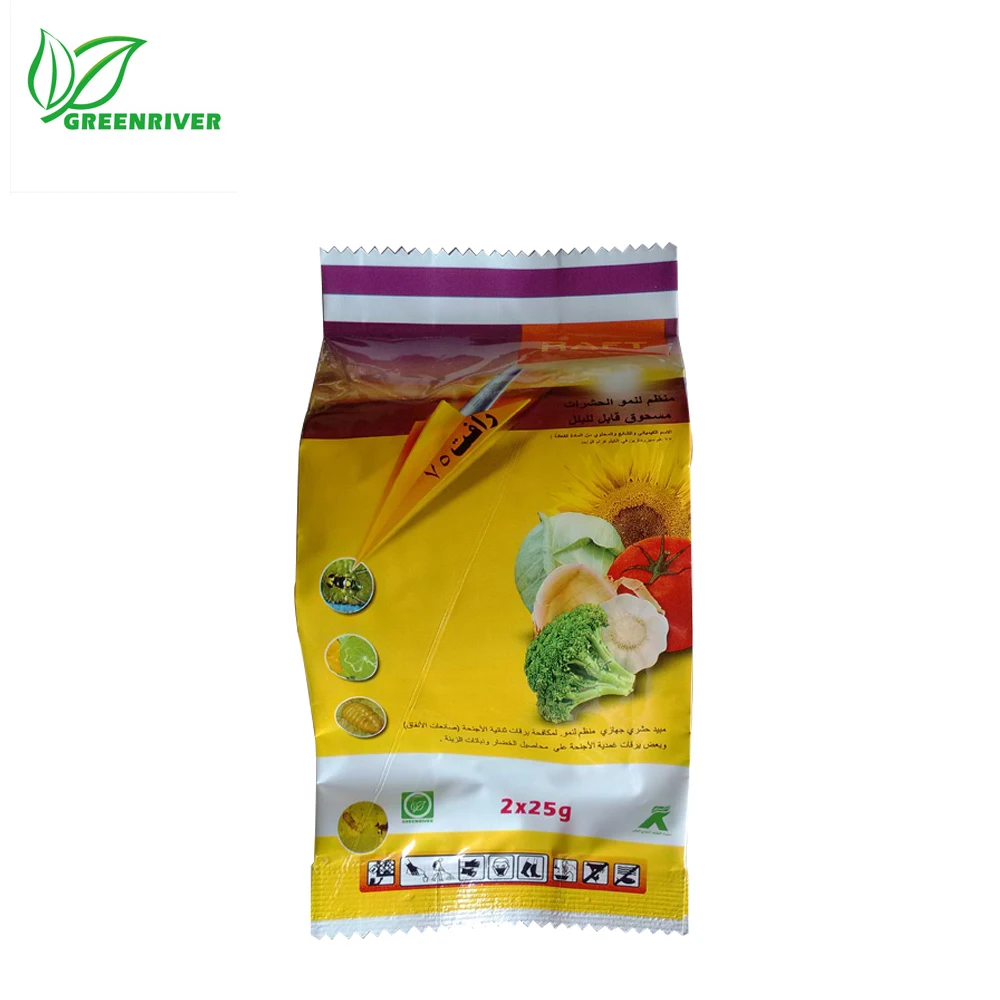
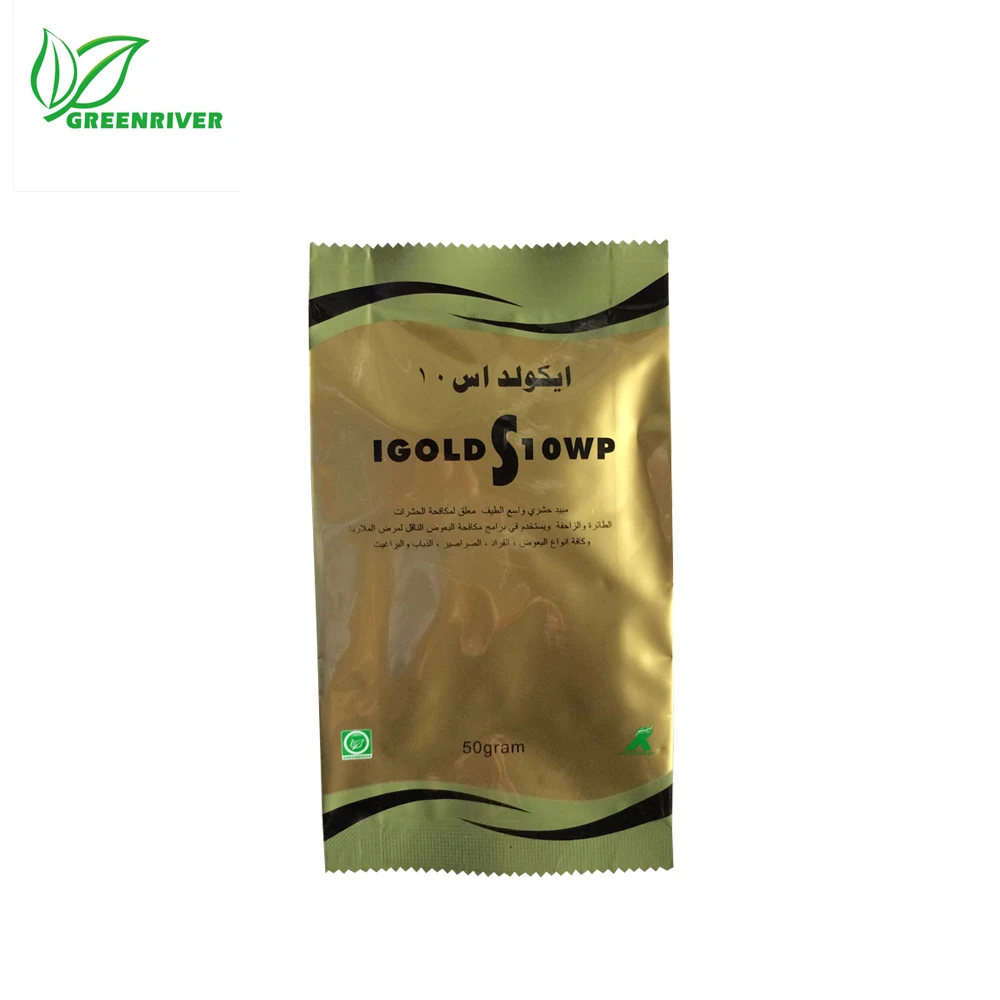
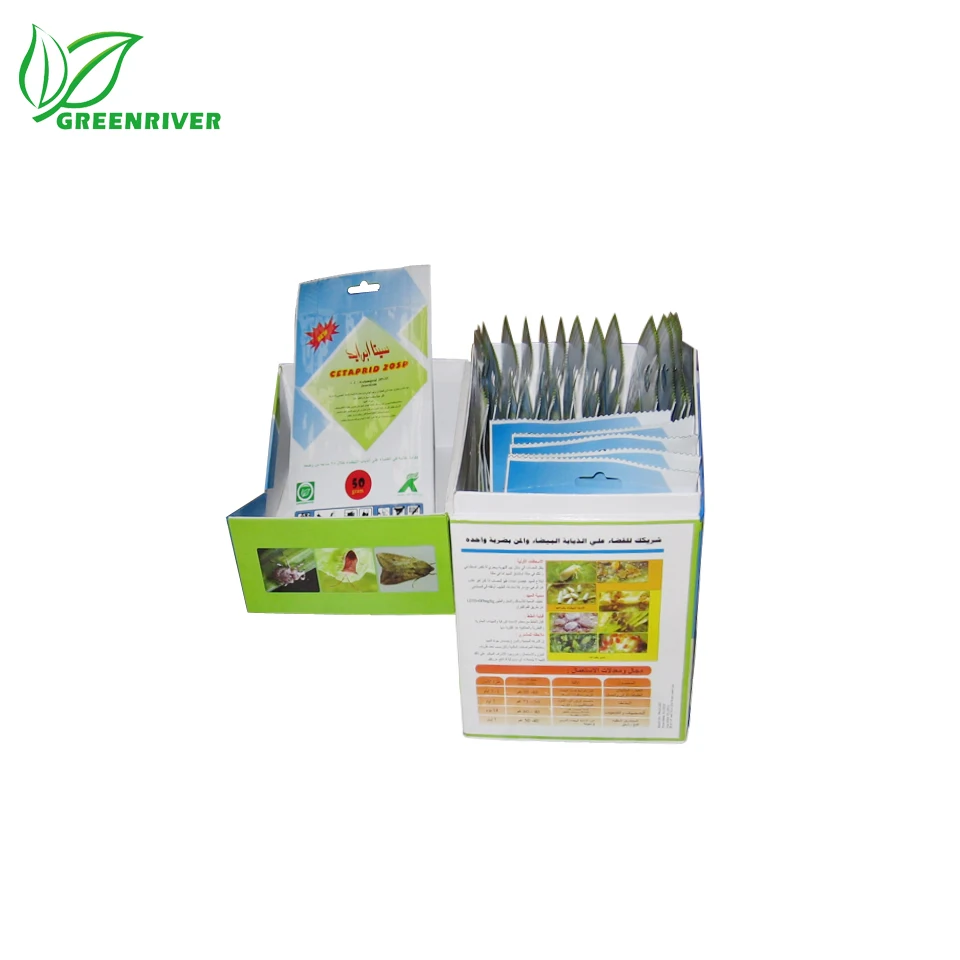
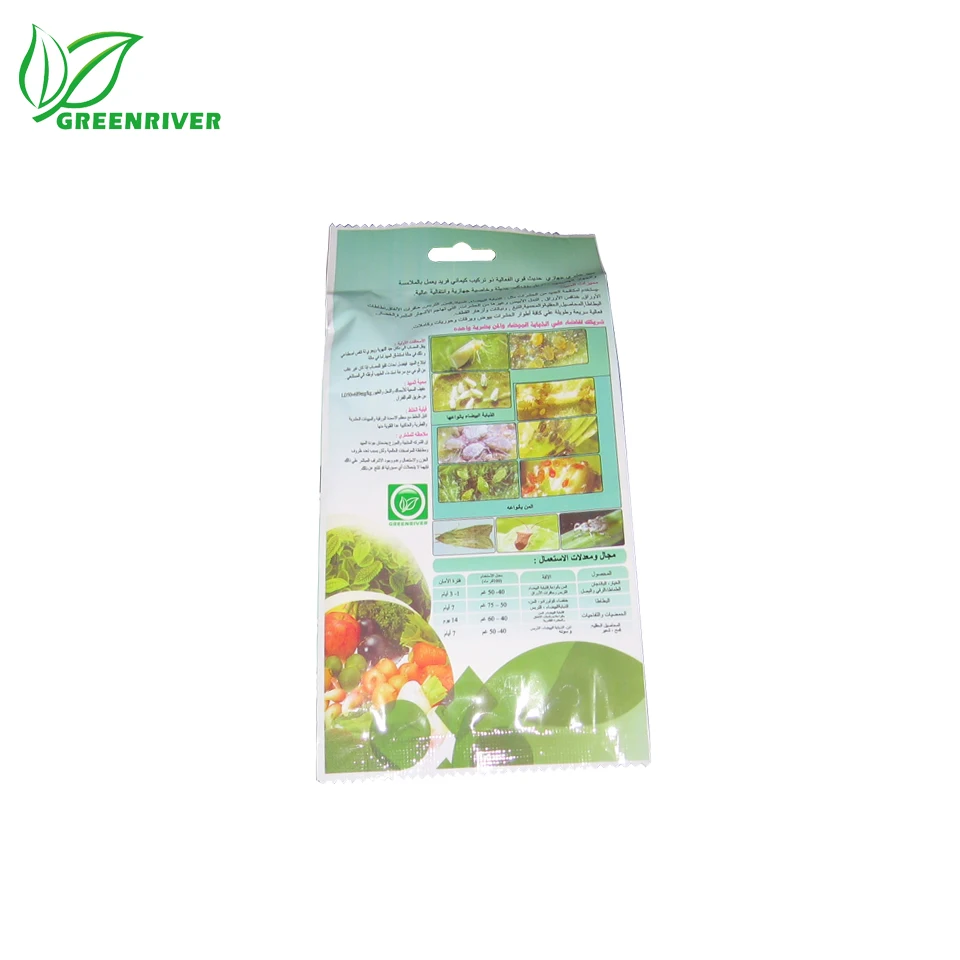
Cartap hydrochloride 98%Tech 50%sp 98%sp 4%gr insecticide
- Category: >>>
- Supplier: Greenriver Industry Co. Ltd.
Share on (1500473038):
Product Overview
Description
Product Description
Active ingredient | Cartap hydrochloride |
Classification | Insecticide / Agrochemical |
Formulation | 98% Tech, 98%SP, 50%SP, 4%GR |
Biochemistry | Analogue or propesticide of the natural toxin nereistoxin. Nicotinergic acetylcholine blocker, causing paralysis by blocking cholinergic transmissions in the central nervous systems of insects. |
Mode of action | Systemic insecticide with stomach and contact action. Insects discontinue feeding, and die of starvation. |
Usage | Cartap hydrochloride is used, at c. 0.4-1.0 kg/ha, for control of chewing and sucking insects (particularly Lepidoptera and Coleoptera), at almost all stages of development, on many crops, including rice (Chilo suppressalis, Cnaphalocrocis medinalis, Lissorhoptrus oryzophilus and rice-leaf beetle), potatoes, cabbage and other vegetables (Agromyzidae, Leptinotarsa decemlineata and Plutella xylostella); also on soya beans, peanuts, sunflowers, maize, sugar beet, wheat, pearl barley, pome fruit, stone fruit, citrus fruit, vines, chestnuts, ginger, tea, cotton, and sugar cane. |
Phytotoxicity | May be phytotoxic to cotton, tobacco, and apples, under certain soil and climatic conditions. |
Mammalian toxicology | Oral: Acute oral LD50 for male rats 345, female rats 325, male mice 150, female mice 154 mg/kg. Skin and eye: Acute percutaneous LD50 for mice >1000 mg/kg; no irritation to skin or eyes in rabbits. Inhalation: LC50 (6 h) for rats >0.54 mg/l. |
Company Profile

FAQ
Q1. I want more styles, how can I get latest catalogue for your reference?
A: You can contact us by Email, we will give you our latest catalogue according to your information.
Q2. Can you add our own logo on the product?
A: Yes. We offer the service of adding customers’ logo. There are many types of this service. If you have this need, kindly send us you own logo you are welcome.
Q2. Can you add our own logo on the product?
A: Yes. We offer the service of adding customers’ logo. There are many types of this service. If you have this need, kindly send us you own logo you are welcome.
Q3. How does your factory do regarding quality control?
A: "Quality is priority? We always attach great importance to quality controlling.
A: "Quality is priority? We always attach great importance to quality controlling.
1) Skillful workers care every details in handling the producing and packing processes;
2) Quality Control Department specially responsible for quality checking in each
process.
Q4. How can we guarantee quality?
Always a pre-production sample before mass production;
Always final Inspection before shipment;
Q5. How can I order?
A: You can directly place an order on our shop in Alibaba web. Or you can tell us the product name, packing and quantity you need, then we will send you the quotation.
Q6.what can you buy from us?
Insecticide,Herbicide,Fungicide,Rodenticide,Plant Growth Regulator
Q7. what services can we provide?
Accepted Delivery Terms: FOB,CFR,CIF,CIP,CPT,DDP,DDU,Express Delivery;
Accepted Payment Currency:USD,EUR,HKD,CNY;
Accepted Payment Type: T/T,L/C,D/P D/A,Credit Card,PayPal,Western Union,Cash;
Language Spoken:English,Chinese,Spanish,Arabic,Russian
process.
Q4. How can we guarantee quality?
Always a pre-production sample before mass production;
Always final Inspection before shipment;
Q5. How can I order?
A: You can directly place an order on our shop in Alibaba web. Or you can tell us the product name, packing and quantity you need, then we will send you the quotation.
Q6.what can you buy from us?
Insecticide,Herbicide,Fungicide,Rodenticide,Plant Growth Regulator
Q7. what services can we provide?
Accepted Delivery Terms: FOB,CFR,CIF,CIP,CPT,DDP,DDU,Express Delivery;
Accepted Payment Currency:USD,EUR,HKD,CNY;
Accepted Payment Type: T/T,L/C,D/P D/A,Credit Card,PayPal,Western Union,Cash;
Language Spoken:English,Chinese,Spanish,Arabic,Russian
We Recommend
New Arrivals
New products from manufacturers at wholesale prices