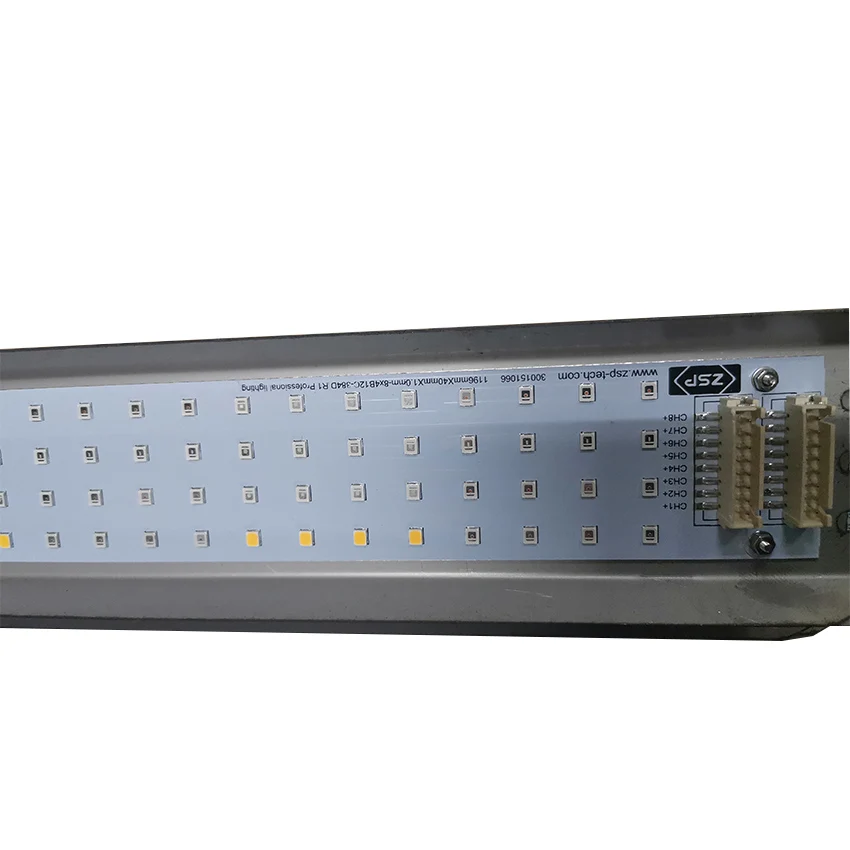
Sustainable cultivation of microalgae with dimming led for energy production
- Category: >>>
- Supplier: Zsp Technology Co. Ltd.
Share on (1600053387341):
Product Overview
Description
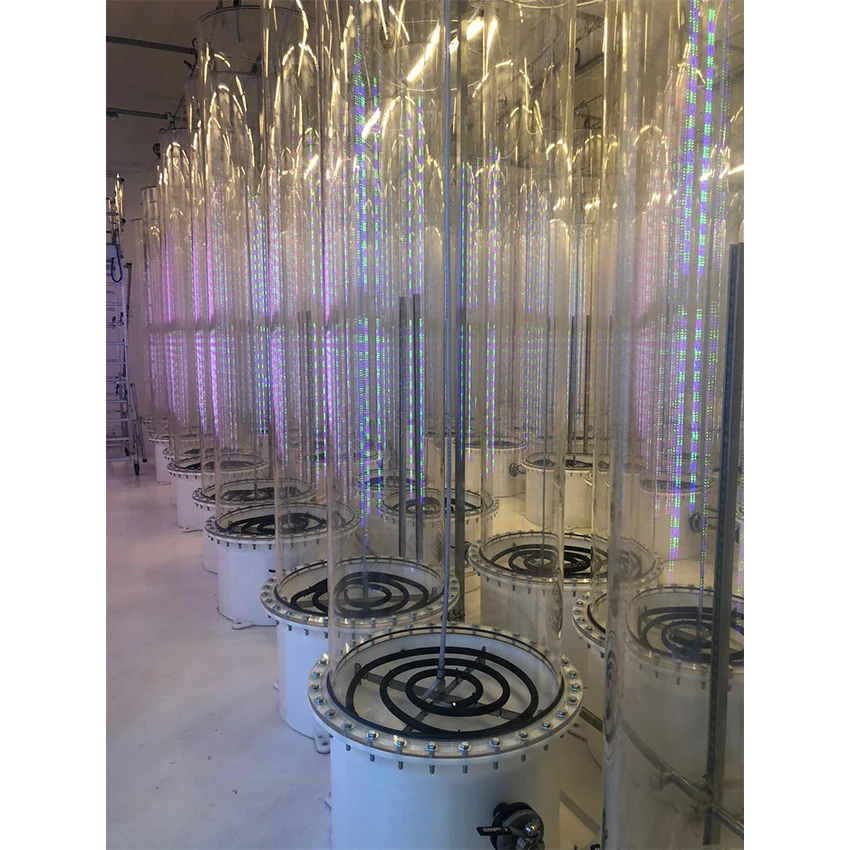
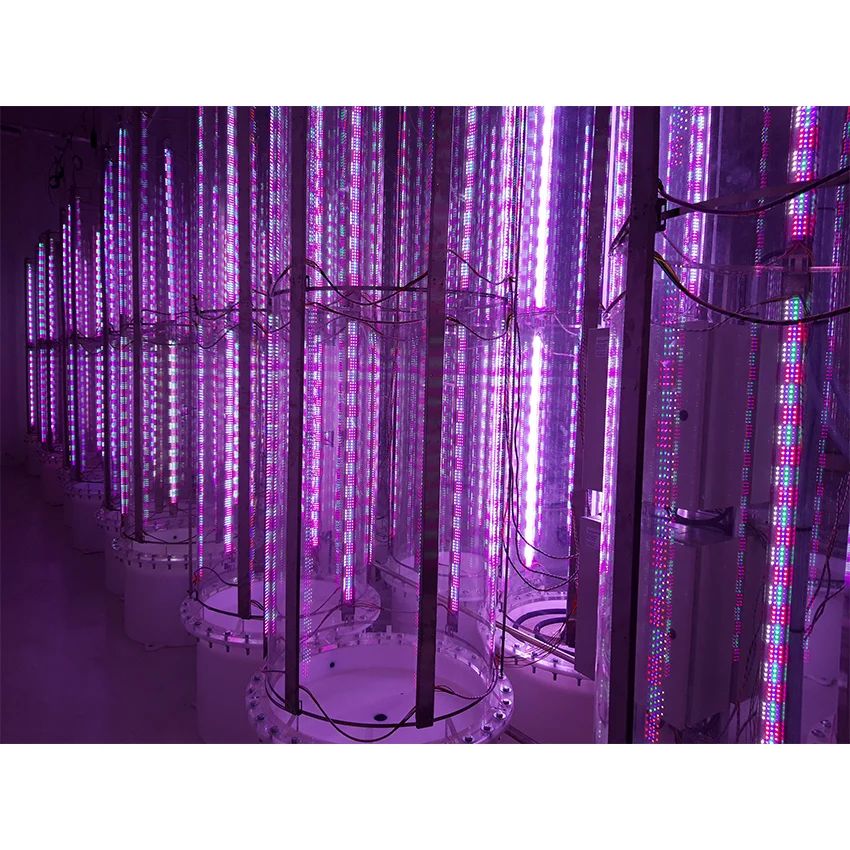
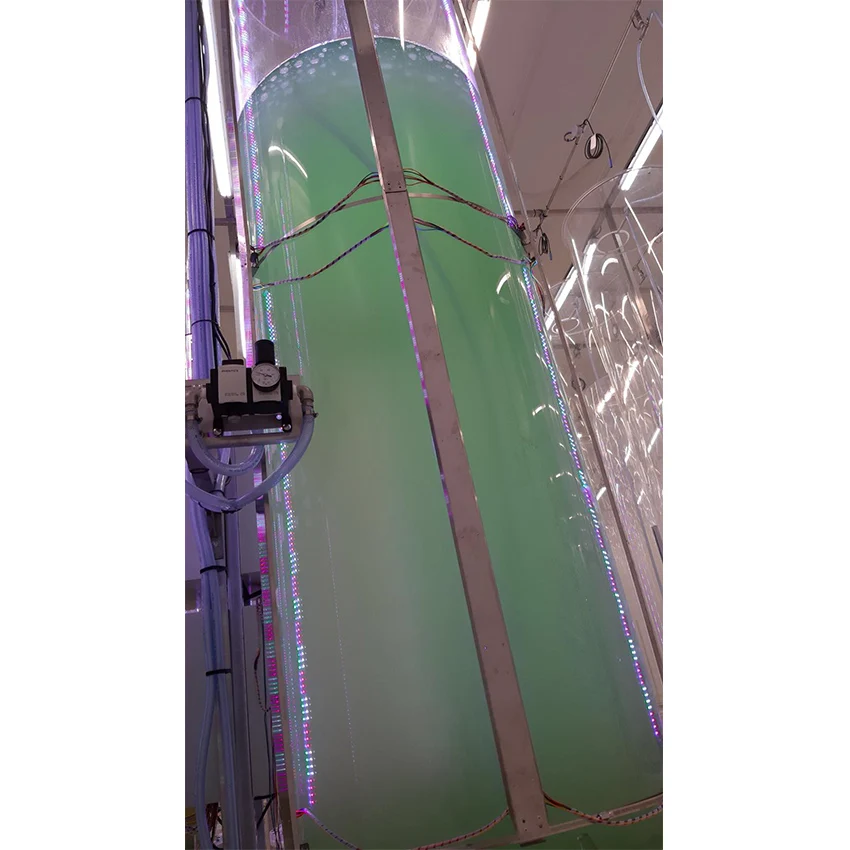
Sustainable cultivation of microalgae with dimming led for energy production
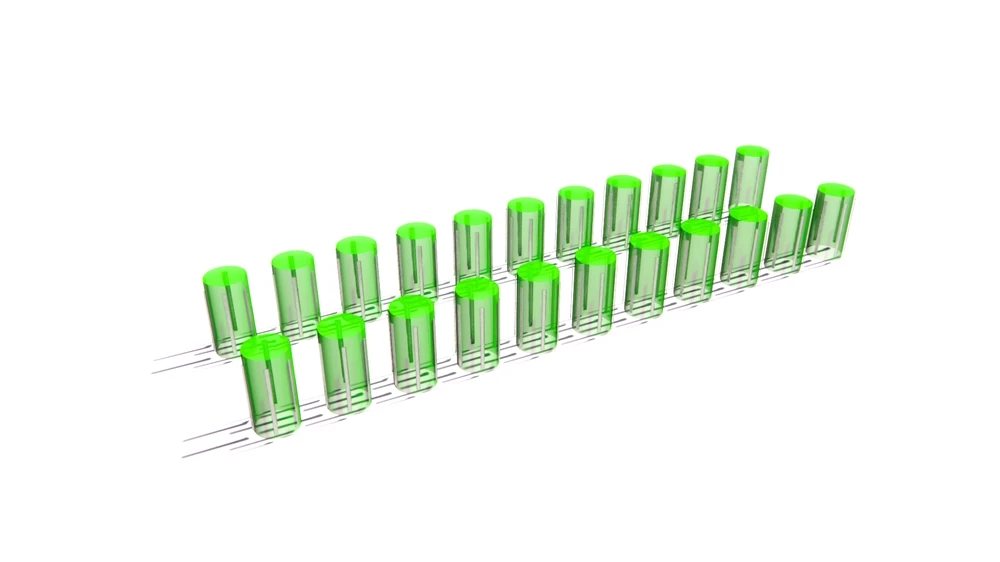
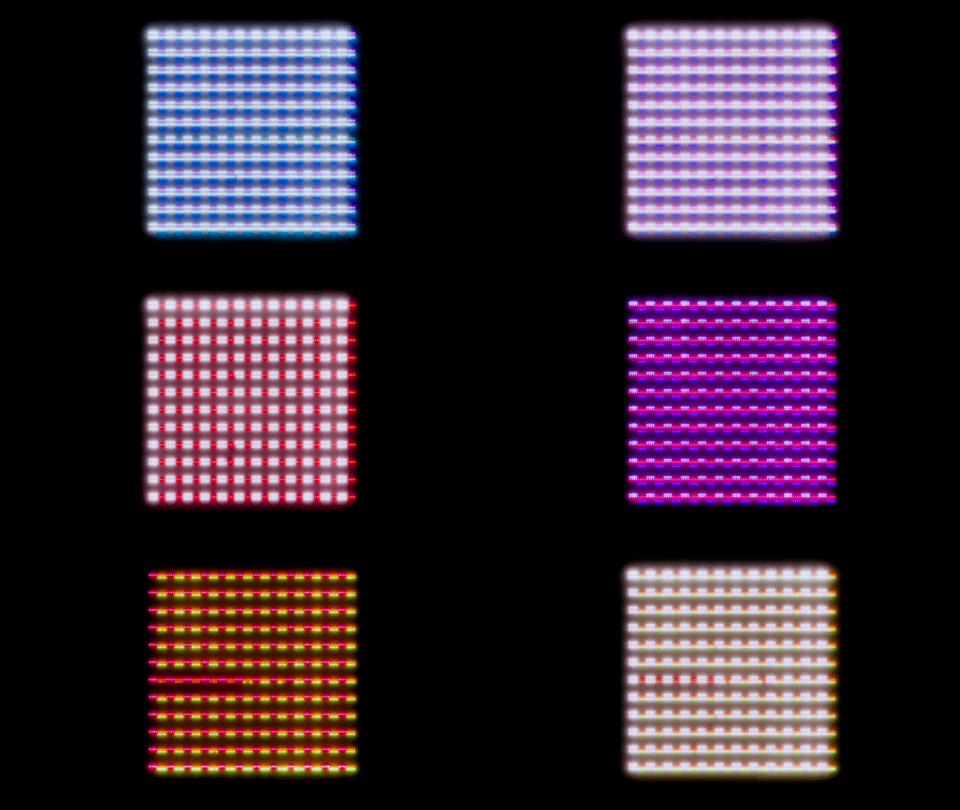
Adjustable light intensity & Spectrum Ratio, Easy for lab
| Wavelength | Spectrum | Group ID | Channel | Driver's Address |
| 730nm | 730 Red | 01 | CH1 | 0x11 |
| white | Warm White | CH2 | ||
| 630nm | 630 Red | 02 | CH1 | 0x12 |
| 430nm | 430 Blue | CH2 | ||
| 450nm | 460 Blue | 03 | CH1 | 0x13 |
| 530nm | 530 Green | CH2 | ||
| 660nm | 660 Red | 04 | CH1 | 0x14 |
| 395nm | 375 UVA | CH2 |
Microalgae are a type of autotrophic plants that are widely distributed in the ocean and land, have high photosynthetic utilization, and are rich in nutrients. External factors, that is, the living environment, have obvious effects on the growth of microalgae. , Carbon source, organic nutrients and biological factors are the main factors affecting the growth of microalgae.
1 Light
Under the condition that temperature and nutrition do not limit the growth of microalgae, the factor that affects the growth of microalgae is light.
1.1 Light source In addition to using artificial light sources, sunlight is the main light source for microalgae cultivation. Both large-scale outdoor cultivation and indoor small-scale cultivation can effectively utilize solar light sources. However, extreme variability is a characteristic of solar light sources, which makes it more difficult to control the optimal light intensity during cultivation. Indoor small-scale cultivation can use artificial light sources such as incandescent lamps or white fluorescent lamps. The temperature generated by incandescent lamps is very high, which can increase the temperature of the culture fluid, and it is not suitable for use when the temperature is high in summer. The use of artificial light sources can better control the light intensity and time, but there is a problem of high cost, so secondary culture is rarely used in production.
1.2 Light quality The color of light is light quality, which refers to light of different wavelengths. In the 300-700 nm spectral region, Salina has two absorption peaks at 436 nm and 679 nm and a shoulder at 470 nm. Phaeodactylum tricornutum growth rate under the five different light qualities of red, yellow, blue, white and purple is blue light, purple light, white light, red light and yellow light in order, and the growth constant under blue light is about 0.44 It was only 0.26 under yellow light; the polysaccharide content was the highest under red light after 8 days of cultivation. When the light intensity is lower than 13.20 μmol / (m² · s), the biomass of spirulina is highest under red light.
1.3 Penetration of light in cell suspension When light enters algae fluid, due to the scattering and absorption of algae cells, the light intensity decreases rapidly with the increase of depth. The density of algal cells depends on the depth of light input. The lower the density, the deeper the light penetration. The light intensity absorbed by most cells is often insufficient, because at high density, only the superficial cells can absorb the saturated light intensity that can be used for photosynthesis, and the lower cells are actually in "darkness". Emerson and Lewis determine the light absorption in the suspension of Chlorella nucleus, at a concentration of 1 g / L (calculated as DW), within the first centimeter, there are more than 95% of red and blue light and 60% The green light is absorbed; at a concentration of 10 g / L (calculated as DW), most of the light is absorbed within the first millimeter.
1.4 Light intensity Light intensity is the intensity of light. Different algae have suitable light intensity. Under a certain light intensity, the amount of oxygen produced by photosynthesis is exactly the same as the amount of oxygen consumed by respiration. The cells can only maintain basal metabolism and cannot grow. At this time, the light intensity is the light compensation point. Different algae have different light compensation points. The light suitable range of algae must be higher than the light intensity of the compensation point, otherwise it cannot grow and reproduce normally.
1.5 Light cycle The daily light time is called the sunshine time, also known as the light cycle. It is also necessary to cultivate microalgae using artificial light sources and understand the reasonable sunshine time of the algae under specific conditions. Tian Gongbo et al. (1955) used 6, 12, and 18 h sunshine time to study their effects on the growth of chlorella. It is found that when the sunshine time is short, the growth rate is proportional to the light time; when the temperature is high or the light intensity is low, although the sunshine time is long, the growth rate is proportional to the sunshine time; Under the light time, continue to increase the sunshine time without increasing the growth rate, there is a "light saturation" phenomenon, too strong and too long light will also cause light suppression. If the photo-inhibition time is too long, the chlorophyll in the algae will undergo photolysis and fade, or even become yellowish white. At low temperatures, the light saturationpointis lower, at this time the algae are more susceptible to damage by strong light, and weak light at low temperatures is more beneficial to the growth of microalgae.


We Recommend
New Arrivals
New products from manufacturers at wholesale prices