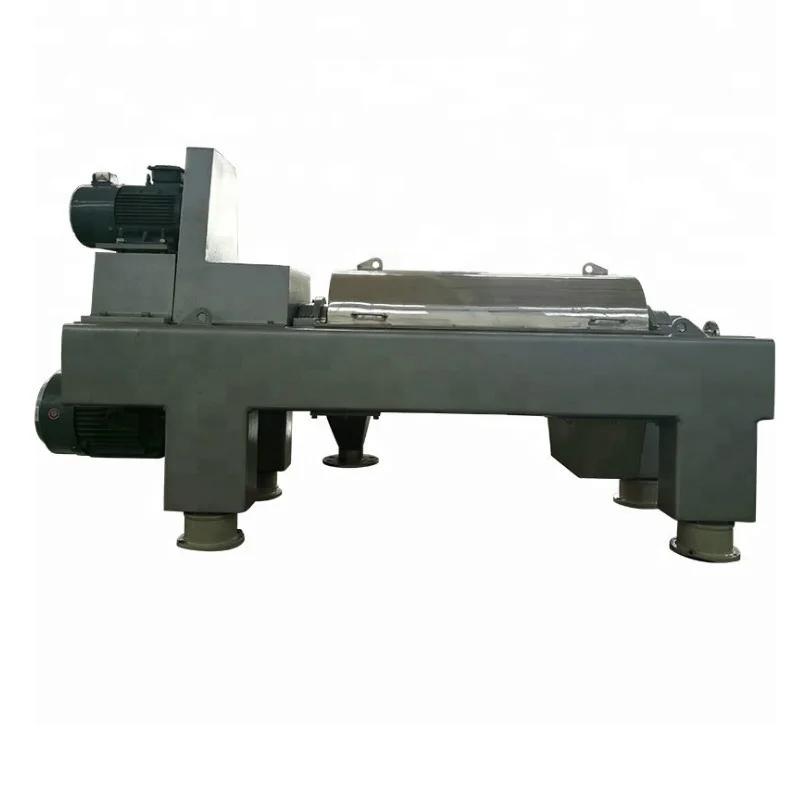
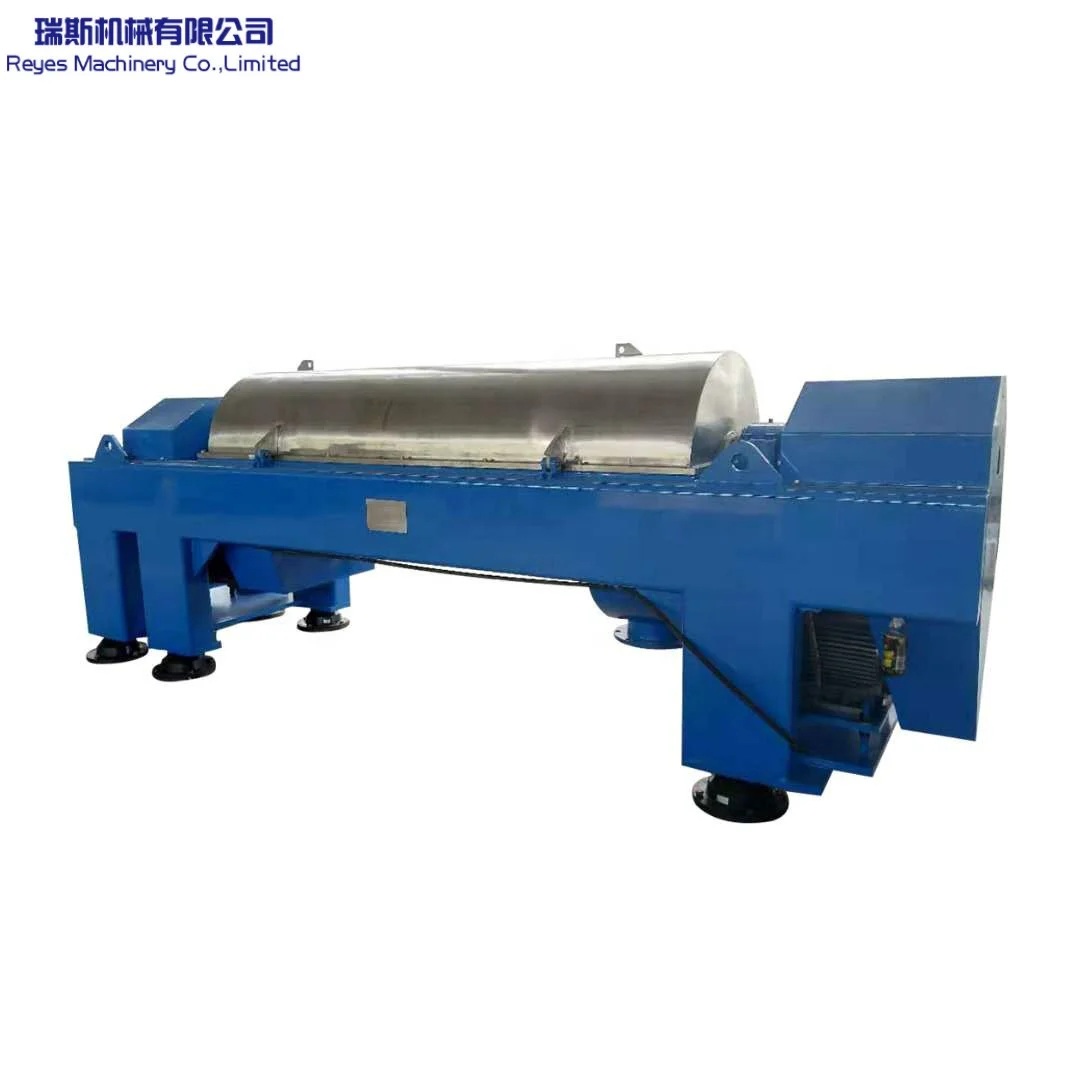
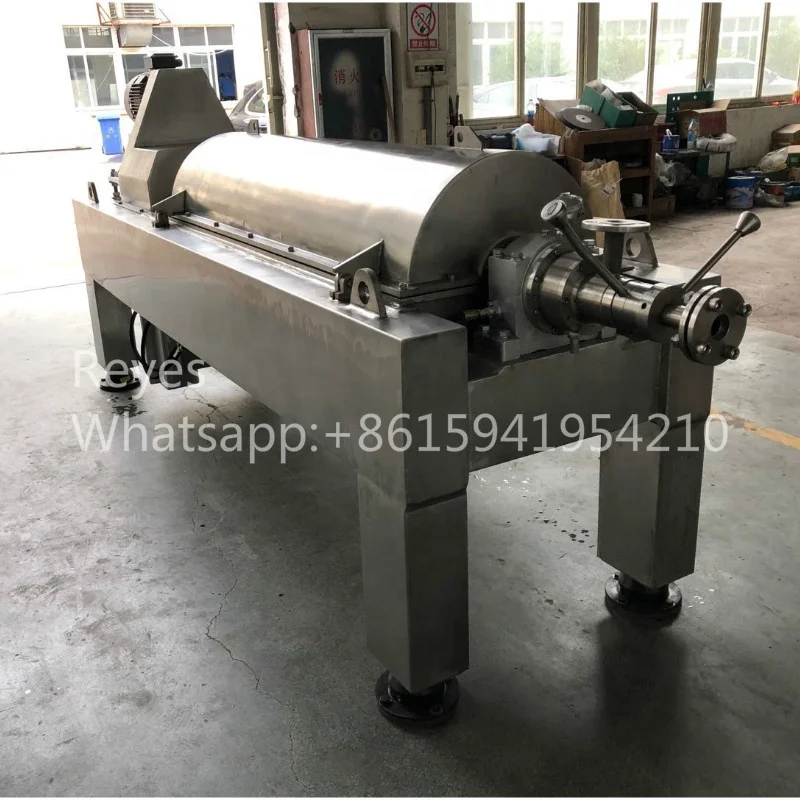
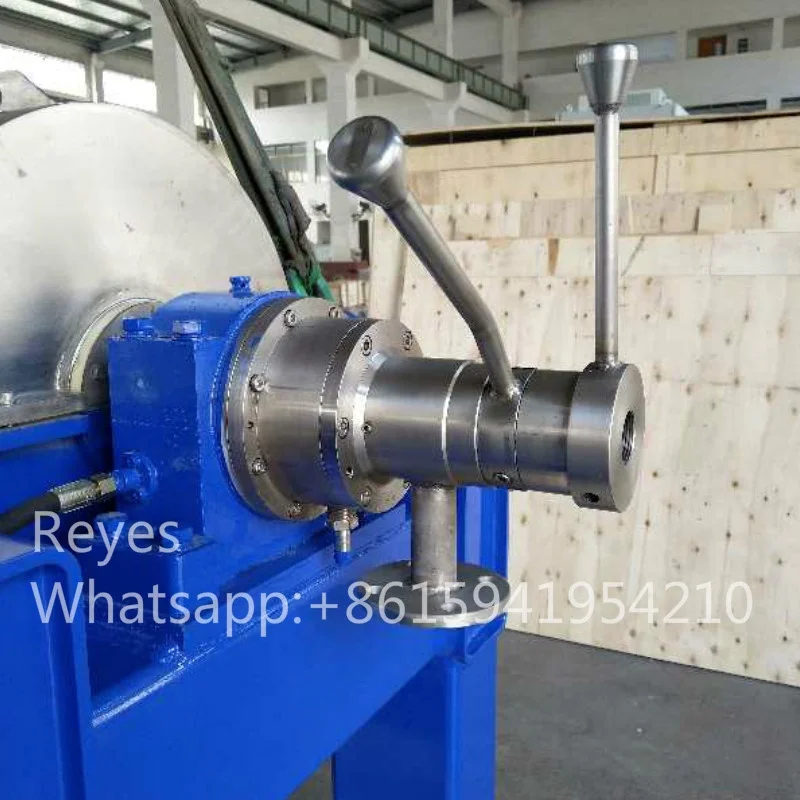
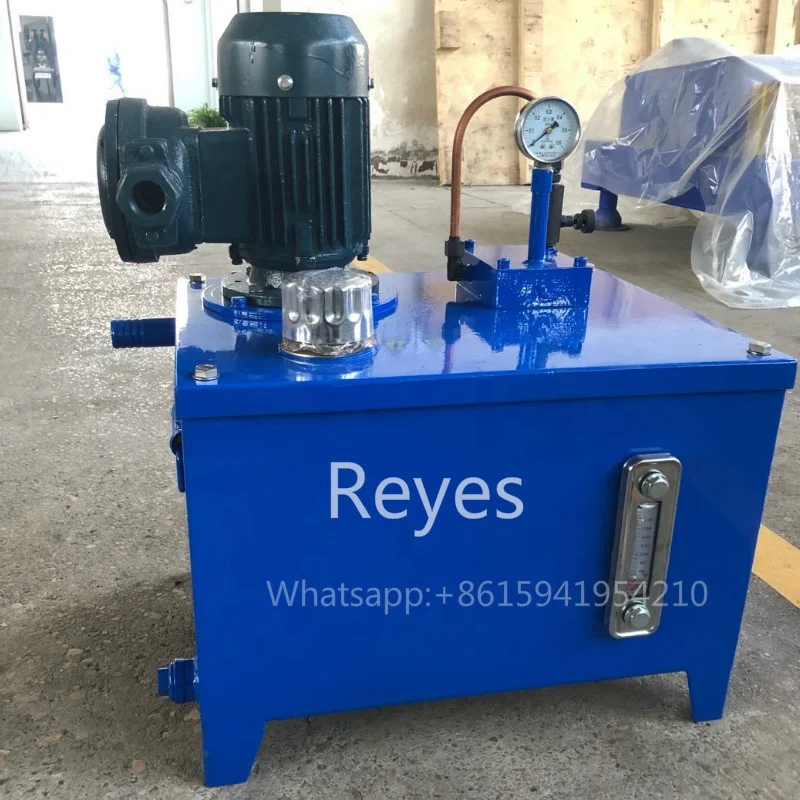
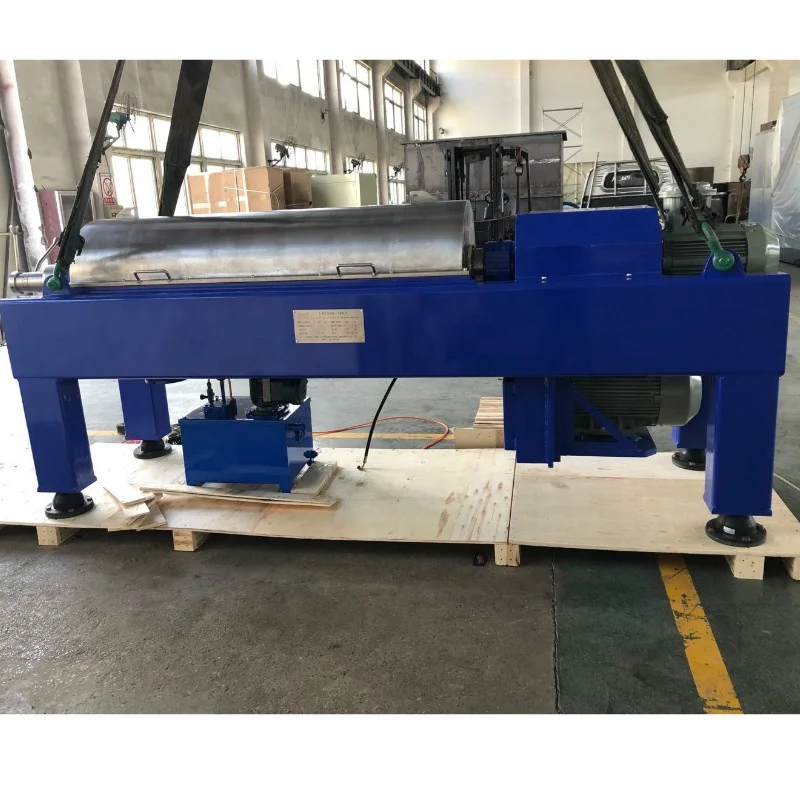
DDGS Separation Centrifuge
- Category: >>>
- Supplier: Dalian Reyes Import & Export Co. Ltd.
Share on (1600060906804):
Product Overview
Description
Decanter Centrifuge Applies in Winery Plant
With the introduction of mandatory measures for the deadlines of sewage companies, the management of DDGS in the brewing industry has become a top priority for many manufacturers. At present, in the Cray treatment mode, the advantages and disadvantages of the separation of the solid and liquid of the wine grains play a very important role.
It is obviously not advisable to adopt backward methods such as natural sedimentation filtration and manual bag extrusion, which is not only because of the large area, labor, low efficiency, poor working environment, but also the quality is difficult to stabilize. Processing brings disadvantages. In addition, the decanter centrifuges commonly used in many factories also have large investment, bulky, high installation requirements, high power consumption during use, high noise, fast self-wearing, difficult to repair, high cost and other defects, forcing some manufacturers to have to Discard and use a cone basket centrifuge. However, the cone basket centrifuges currently used in various factories have a short filter life (average one shift needs to be replaced) and affect the continuity of its use. The more important formula is limited by the structure of the device itself. The filter mesh is limited to a nylon mesh cloth of about 100 mesh (the strength is worse if the mesh size is increased, and the service life is shorter), resulting in poor filtrate quality and an average suspended matter of 1.5%. In the above, the conformity of the subsequent processing is increased. In addition, the center of gravity of the cone basket centrifuge is high, the belt drive shaft is subjected to axial tension, the mechanical structure is easy to wear, the vibration and noise are large, and the bearing part needs to be cooled by water or oil due to heat during operation, and the maintenance and replacement of each component is frequent and difficult. These have also become defects in their actual use.
The new centrifuge for the separation of DDGS developed by Reyes separation is reasonable in structure and can be continuously produced. It is continuously updated in the actual operation of distiller's grains separation. It has been optimally configured for the separation of distiller's grains in structure and design, with less power consumption and fully automatic. Control, vibration and noise are better than the national standard, the liquid suspension after separation is less than 0.7%, and the moisture content of the filter cake is 75%. It has been widely used in the production line of the majority of alcohol manufacturers, and the treatment effect of the distiller's grains is remarkable.
Specification:
Model | Drum | G-force | Capacity
| Max solid discharge | Power
| Weight
| Overall size (L×W×H)
| |||
Diameter (mm) | Speed (rpm) | Length (mm) | Length-to-diameter rate |
| (m3/h) | (m3/h) | (kw) | (kg) | (mm) | |
LW-10-W | 250 | 5400 | 1000 | 4 | 4080 | 0.5~5 | 0.4 | 11/4 | 1000 | 2410 × 800 × 1080 |
LW-12-4-W | 300 | 4200 | 1200 | 4 | 3500 | 1~5 | 0.6 | 11/4 | 1200 | 2610 × 800 × 1080 |
LW-12-4.5-W | 300 | 4200 | 1350 | 4.5 | 3000 | 1~10 | 0.8 | 11/4 | 1400 | 2760 × 800 × 1080 |
LW-14-W | 355 | 4000 | 1600 | 4.5 | 3180 | 1~20 | 1.2 | 18.5/7.5 | 1800 | 3495 × 840 × 1180 |
LW-16-W | 400 | 3650 | 1800 | 4.5 | 3000 | 2~25 | 2 | 22/7.5 | 2500 | 3890 × 1020 × 1205 |
LW-18-4.4-W | 450 | 3200 | 2000 | 4.4 | 2600 | 3~35 | 2.8 | 30/11 | 3000 | 4297 × 1080 × 1385 |
LW-18-4.8-W | 450 | 3200 | 2150 | 4.8 | 2600 | 4~40 | 3 | 37/11 | 3200 | 4447 × 1080 × 1385 |
LW-20-4-W | 500 | 3000 | 2000 | 4 | 2500 | 5~45 | 3.2 | 37/11 | 3800 | 4330 × 1140 × 1470 |
LW-20-4.5-W | 500 | 3000 | 2250 | 4.5 | 2500 | 8~50 | 3.5 | 45/15 | 4000 | 4580 × 1140 × 1470 |
LW-21-W | 530 | 2900 | 2280 | 4.3 | 2500 | 15~65 | 5 | 55/15 | 5000 | 4924 × 1170 × 1540 |
LW-23-W | 580 | 2780 | 2500 | 4.3 | 2500 | 20~80 | 6.5 | 75/18.5 | 6500 | 5205 × 1270 × 1540 |
LW-26-W | 650 | 2500 | 2800 | 4.3 | 2270 | 25~110 | 8 | 75/18.5 | 7000 | 4300 × 1900 × 1350 |
Features & Benefits – For olive oil recovery
- No addition of dilution water necessary in most cases
- The olive oil obtained in the 2-phase process contains all natural constituents of oil (polyphenols), giving the oil a more intense taste
- Solid / water mixture can be processed relatively easily (e. g. for pit separation, water separation and olive oil recovery
Features & benefits – For palm oil recovery
- Extremely short process time
- Virtually no dilution water
- Low energy consumption
- No vertical clarifier and sludge tanks
- Much smaller ponds – considerably reduced methane emission
- Higher product yield
- Palm oil in premium quality
- Recycling of nutrients
- Increased FFB production by organic fertilizer


We Recommend
New Arrivals
New products from manufacturers at wholesale prices