In recent years, with the increasing application of drones in aerial photography, express delivery, survey, search, plant protection, etc., people's quality of life and social efficiency have rapidly improved. However, with the rapid development of the drone market, more and more drones "black flying" have brought serious threats and troubles to national security and social stability. Prisons are key households "visited" and "threatened" by illegal drones. In China, incidents of drones invading and threatening regulatory sites have occurred from time to time, and they are getting more and more serious. According to a report by the Straits Metropolis Daily on April 24, unidentified drones were often found in the sky over a prison in Fuzhou late at night. Teaching buildings, administrative office buildings, and armed police camps were flying around and hovering over places such as The nature and cause of the circling could not be ascertained. The local procuratorate stated that drones hovering in the sky pose major hidden dangers such as dropping dangerous goods and filming supervision facilities, which seriously threaten safety. In response to incidents of drone intrusion, secret photography and even airdrop of contraband in surveillance sites, some provinces in China (such as Sichuan, Inner Mongolia, etc.) have launched pilot projects in key prisons to establish drone defense systems to prevent unauthorized intrusion into restricted areas. Human-machine detection, surveillance and interference drive away. In view of the urgent needs of the judicial, public security, civil aviation, military and other departments for UAV security, based on decades of technology accumulation, our company has developed and launched the "unmanned aircraft" with comprehensive detection and prevention functions after in-depth research and innovation. Machine automatic detection and defense system".
2. Design scheme of drone detection and defense system
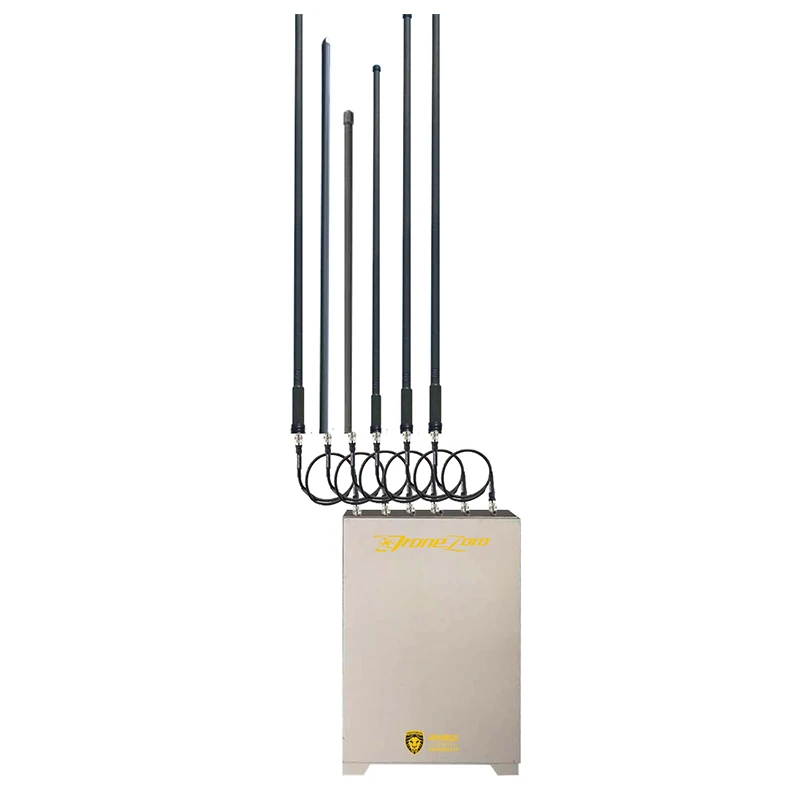
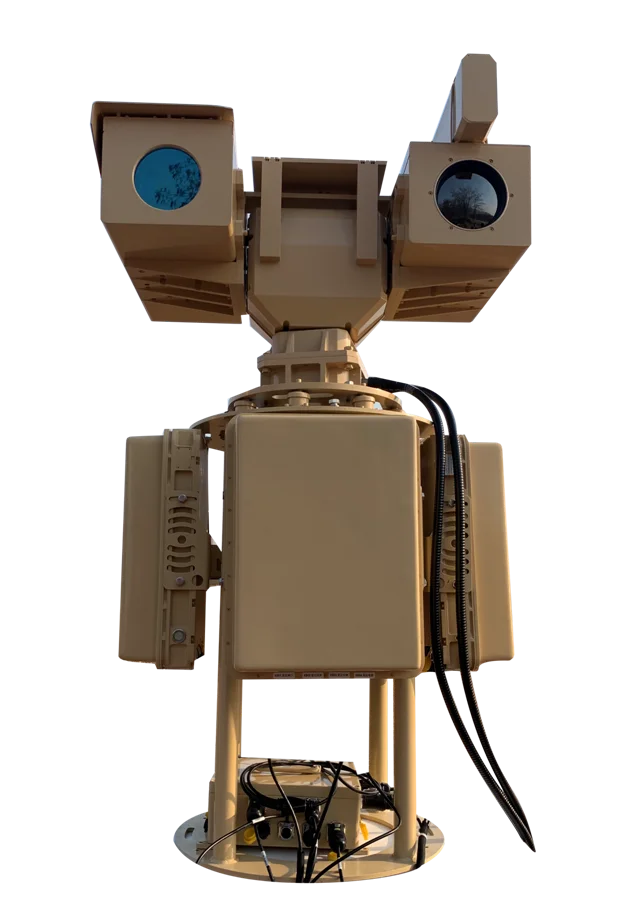
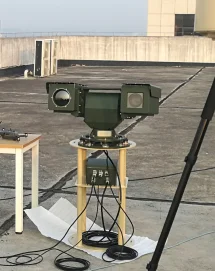
2.1 Main functions and features of the system 1) Types of drones for system detection and interference attack: The radio spectrum monitoring system passively intercepts the image transmission signal and remote control signal between the drone and the remote control, and realizes the passive detection, lateral direction, identification and Positioning, using passive detection technology, 360-degree detection of radio signals from multiple targets, and positioning the location of the target based on the signal. Except for a few unmanned reconnaissance aircraft that may completely use pre-programmed control flight, most UAVs need Send intelligence information and receive control commands through wireless communication with the measurement and control station. 2) Radio interference strike capability: The maximum interference power is 50W, and the farthest interference strike radius is more than 1.6km. The omnidirectional interference method can be used to attack all targets in the interference range; the interference signal objects include the UAV's uplink remote control signal, downlink telemetry and downlink remote control signals operating in the 2.4GHz, 5.8GHz, 1.5 GHz, 433 GHz, and 915 GHz frequency bands. Image transmission signal. 3) System working mode and working mode: The system adopts a fully automated, intelligent, 7x24h unattended working mode. Specifically, it can be set to use one of four working modes: fully automatic mode (detection and interference strikes do not require any human participation, as the main working mode), semi-automatic mode (automatic detection and identification, but ask before interference strikes, determined by manual After the implementation of jamming strikes), clearance mode (uninterrupted continuous scanning interference to the airspace of the entire circumference or specified angles, which can effectively prevent the use of radio-operated drones from taking off and flying into the no-fly zone, defense zone or warning zone ) And manual mode (detection, identification and interference strikes are all operated manually, and this mode is mainly implemented by technical experts). 4) Scalability and openness: The system has good scalability, and can be equipped with additional equipment to achieve stronger functions in the later stage as needed (for example: the ability to combat interference in the 130-3000MHz band except 2.4GHz/5.8GHz; optical Surveillance, radar detection and other monitoring methods: it can monitor and discover other types of drones that do not use radio); the system has good openness, and can interface with other users' systems as needed to push important information to it.
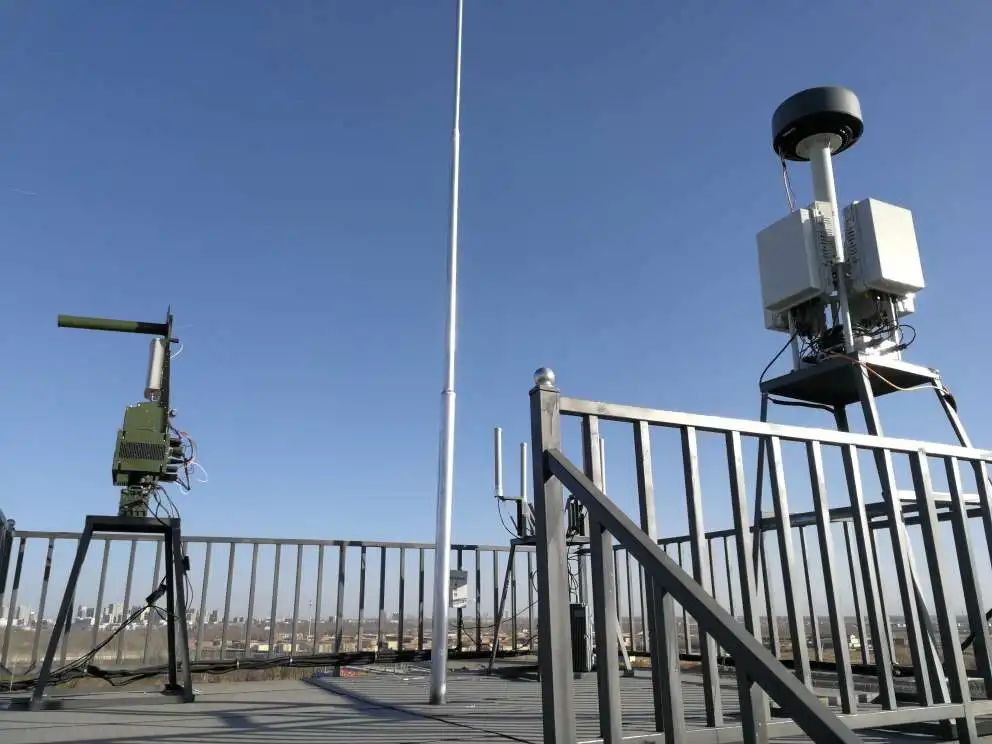
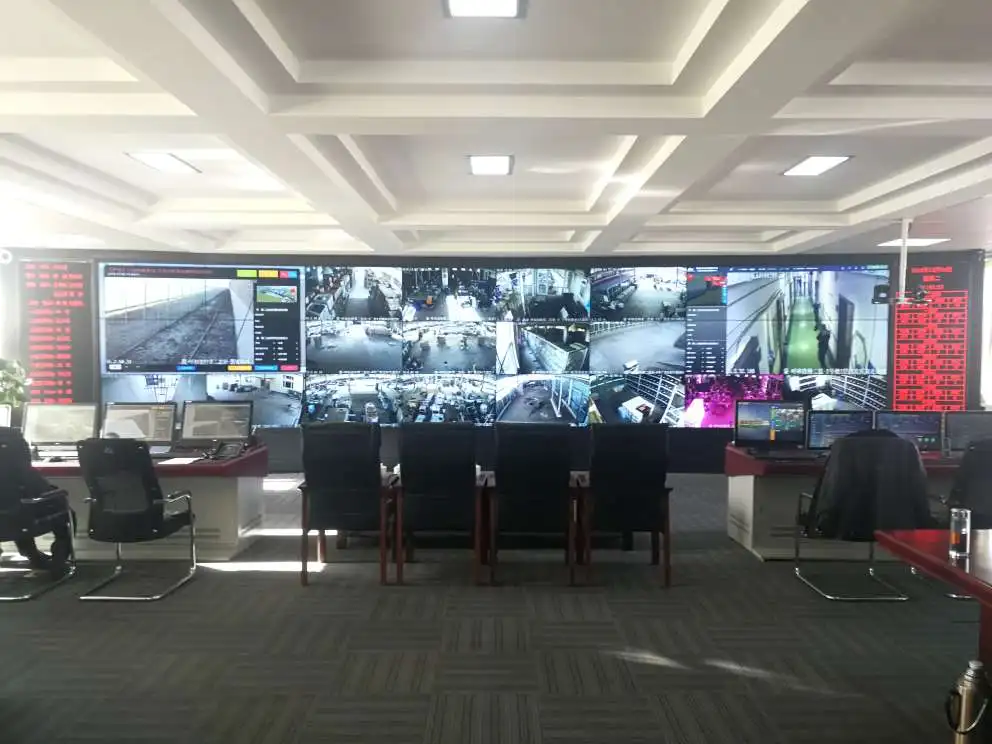
2.2 System composition and deployment design The project "UAV automatic detection and defense system" is planned to be composed of 1 "radio frequency spectrum monitoring system", 1 "omnidirectional fixed strike" and 1 "monitoring command center". (The specific layout method of each station can be adjusted according to the construction situation)
2.3 Functional technical indicators of each subsystem 2.3.1 Radio spectrum monitoring system The radio spectrum monitoring system provides long-distance detection of UAVs (effective discovery distance ≥3km). After the detection data is fused according to the use environment, the radio frequency interference system shields the UAV's flight control channel and navigation signals, and drives away/forces to land. Drone. Passively intercept the image transmission signal and remote control signal between the UAV and the remote control, and realize the passive detection, lateral direction, identification and positioning of the UAV. In practical applications, in order to achieve 360-degree omni-directional direction finding, a common method is to use multi-element circular array direction finding. The commonly used direction finding methods are mainly divided into amplitude method and phase method. The amplitude-specific direction finding method is the most commonly used one in the amplitude method direction finding system. It has the advantages of mature technology, low difficulty, wide instantaneous bandwidth, high interception probability, unaffected by frequency measurement, and low cost. However, due to the amplitude direction of the antenna It is difficult to accurately analyze and express the characteristics of the graph, and it is difficult to achieve the consistency of the amplitude of different antennas, so the accuracy of the amplitude direction finding is difficult to be high. The correlation interferometer direction finding method is one of the most commonly used methods in the phase method direction finding system. It has the advantages of simple algorithm, high direction finding accuracy, high sensitivity, good real-time performance, and various antenna arrays, but its direction finding accuracy and phase The ambiguity problem has contradictory requirements on the baseline length. To obtain higher accuracy, the baseline length needs to be increased. When the baseline length exceeds one-half of the wavelength, it will cause phase ambiguity, and the longer the baseline, the more serious the phase ambiguity. In order to realize the high-precision direction finding of the multi-element circular array, this system intends to adopt a circular array correlation interferometer defuzzification method based on the amplitude-comparison direction-finding method. The phase difference ambiguity is resolved by the correlation amplitude direction-finding method for coarse angle measurement, and the unambiguous phase Difference, and then achieve high-precision direction finding through the relevant interferometer.2.2 System composition and deployment design The project "UAV automatic detection and defense system" is planned to be composed of 1 "radio frequency spectrum monitoring system", 1 "omnidirectional fixed strike" and 1 "monitoring command center". (The specific layout method of each station can be adjusted according to the construction situation)
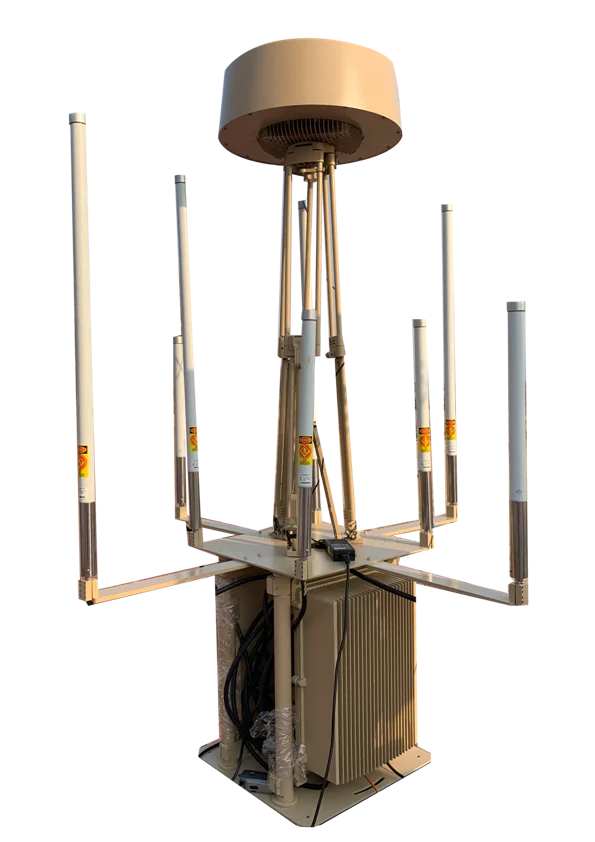
The radio spectrum monitoring system includes passive detection extensions, data transmission modules, networking fusion center modules, and situation display modules. The communication detection sub-system consists of multiple communication detection stations, routers, central station servers, etc., each of which is composed of an antenna array, LNA switch, multi-channel receiver, signal processor, control host, GPS compass, etc. constitute. As shown below:
.
As shown in the figure above, the array antenna is mainly used to intercept the received target signal to the receiver for amplification, filtering, and down-conversion into an intermediate frequency signal. The signal processor performs signal detection and parameter estimation on the intermediate frequency signal to obtain the direction and load of the drone. The characteristic parameters such as frequency are sent to the fusion center server through the communication transmission dedicated network. After the fusion center receives the characteristic parameters of multiple UAV detection systems, it performs direction finding and cross positioning on the multiple UAV characteristic parameters to realize the detection, positioning and tracking of the UAV. The detection and positioning results obtained by the server can be sent to the command and control center, and can also be sent to the monitoring terminal to realize the alarm and detection and positioning guidance of the UAV. It can also cooperate with and guide each other with radar detection and photoelectric/infrared observation, forming a joint reconnaissance capability among multiple methods. In order to realize the real-time control of the aircraft by the controller and the real-time reading and display of the images acquired by the aircraft during the working process of the UAV system, there is a stable and long-term interactive signal between the controller and the aircraft, that is, the ground remote control The remote control signal of the flight control system and the image transmission signal sent to the display by the steering gear pan/tilt video system. This provides a signal source for passive passive detection and positioning of drones and remote controllers. Therefore, the communication detection sub-system passively intercepts the remote controller signals sent by the ground remote controller and the image transmission signals from the drone. Down-conversion, A/D sampling, digital channelization and array signal processing extract signal parameters, perform amplitude-phase integrated direction finding processing according to the parameters of different antennas, and realize the identification of UAV models by comparing the measured parameters with the database. After completing the detection and analysis of the UAV remote control and image transmission signal, the multi-station direction finding cross positioning system is used for positioning to realize the passive detection, direction finding, positioning, identification and tracking of the UAV and remote control, such as As shown below.