60mil or 80mil thickness hdpe geomembrane root barrier for bamboo
- Category: >>>
- Supplier: Taian Ranger Engineering Material Co. Ltd.
Share on (1600133160331):
Product Overview
Description

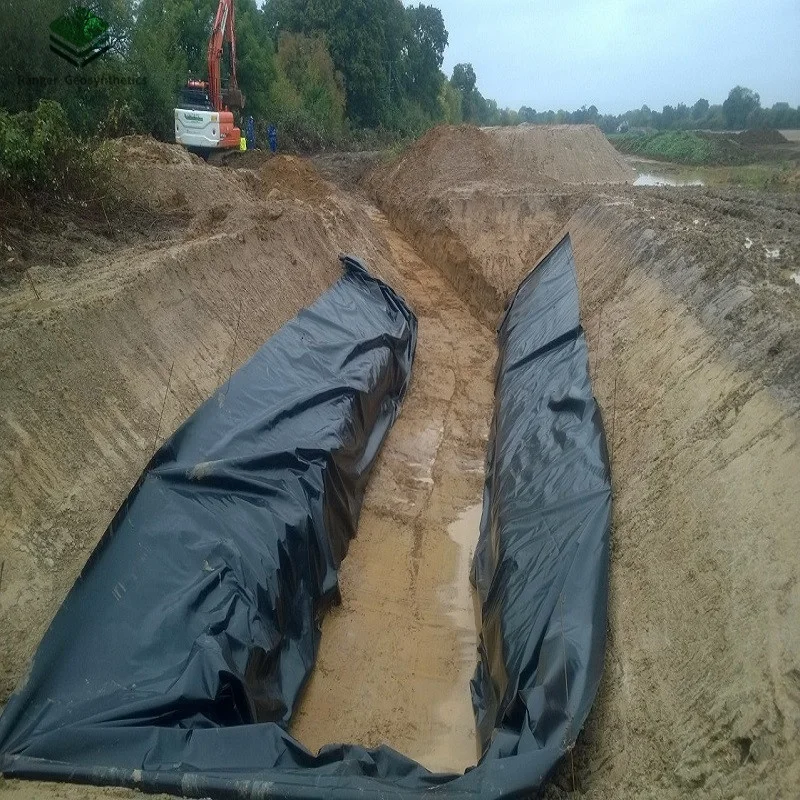
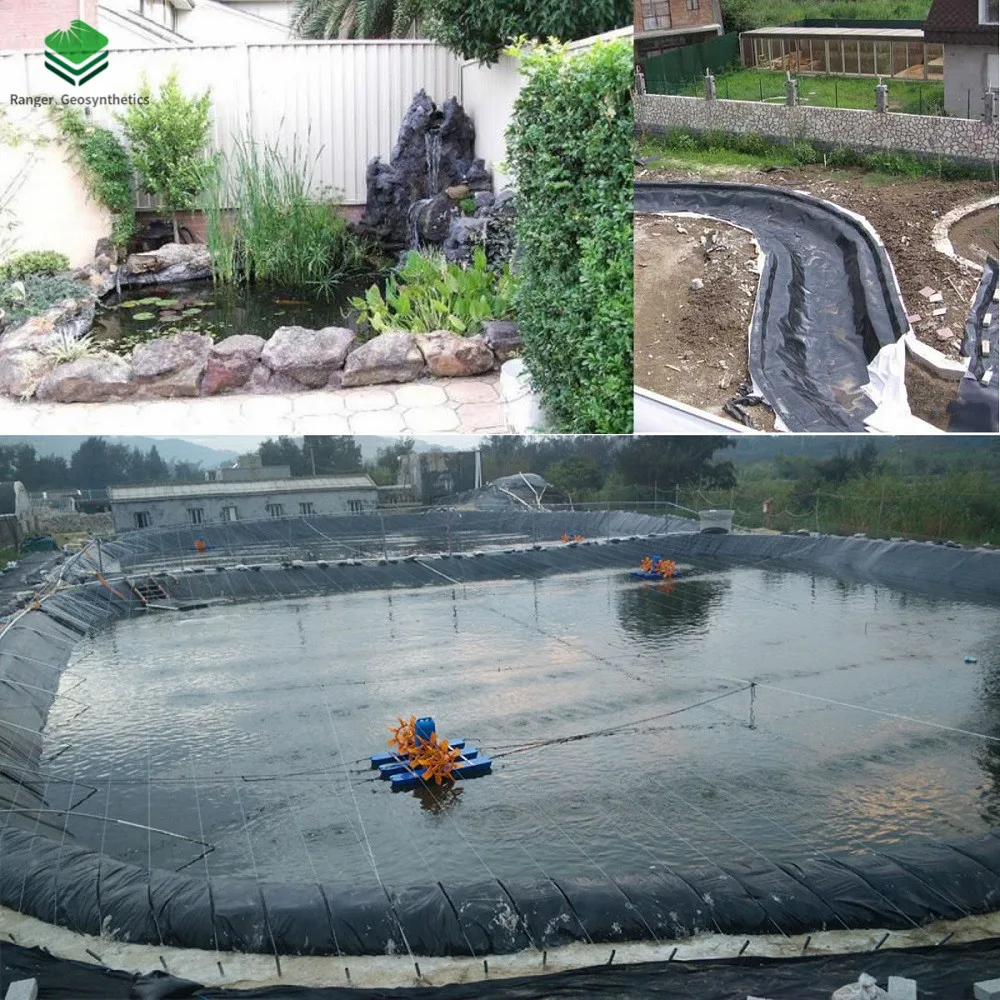
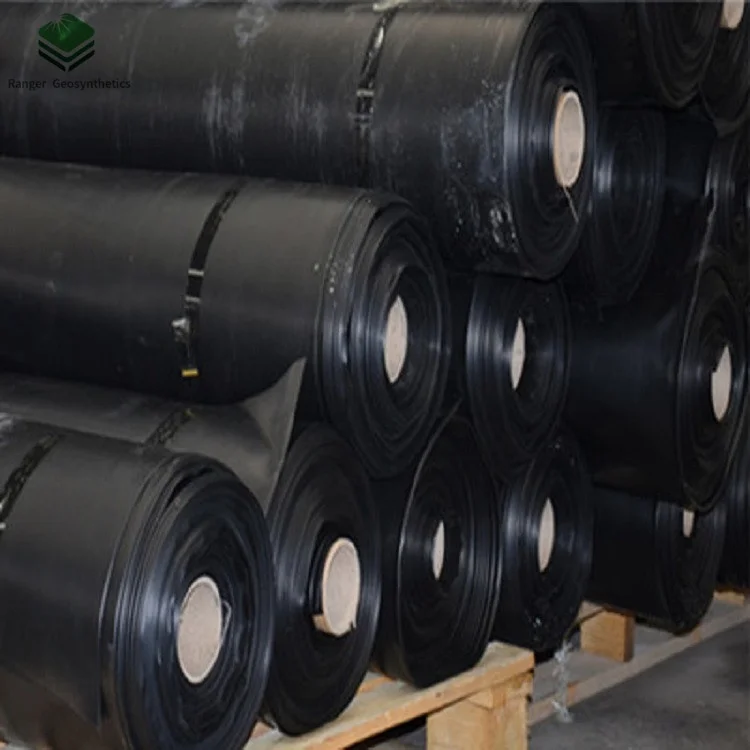
HDPE Geomembrane is the low permeable synthetic membrane liner and geotechnical engineering materials which are widely used for solid waste containment, mining and water containment applications. Ranger HDPE Geomembrane is made of finest quality high density polyethylene HDPE with specially formulated, virgin polyethylene resin, combined with specified quantity carbon black, antioxidant, anti-aging agent and UV resistance components, which makes our HDPE Geomembrane with excellent resistance to UV radiation and is suitable for exposed conditions.

Our HDPE Geomembrane is fabricated by the state of the art automatic geomembrane production lines and advanced three layered pressing technology in accordance with GRI GM13 standard. Compared with traditional concrete, asphalt and compacted clay, HDPE Geomembrane has proven to be far more cost effective, environmentally safe, excellent durable, chemically resistant, fast deployment and easy transportation.


Product Uses
DeepRoot bamboo barrier Geomembrane can be cut to any desired length with a utility knife, joins vertically or horizontally with sealant tape and is made in China.
Applications
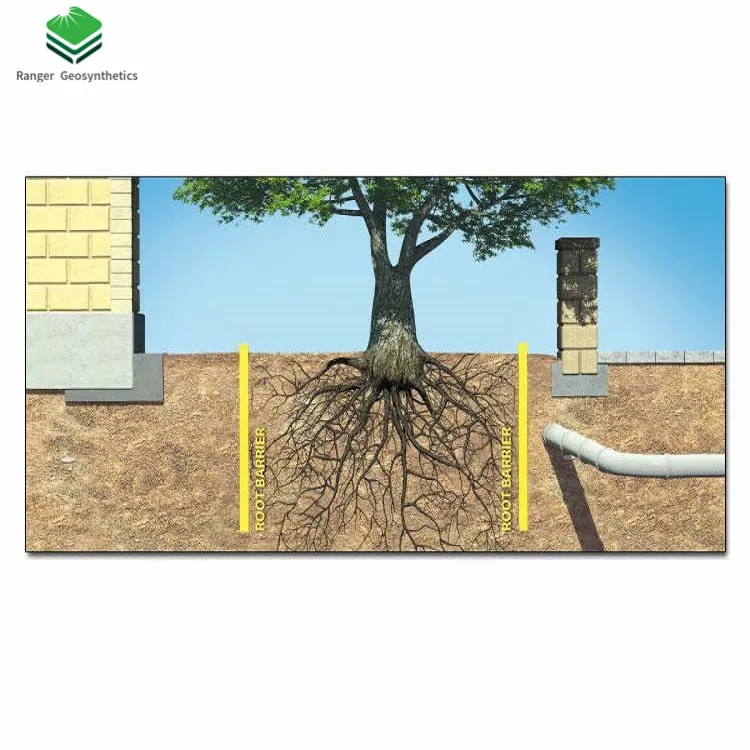
Containment of bamboo and invasive species.
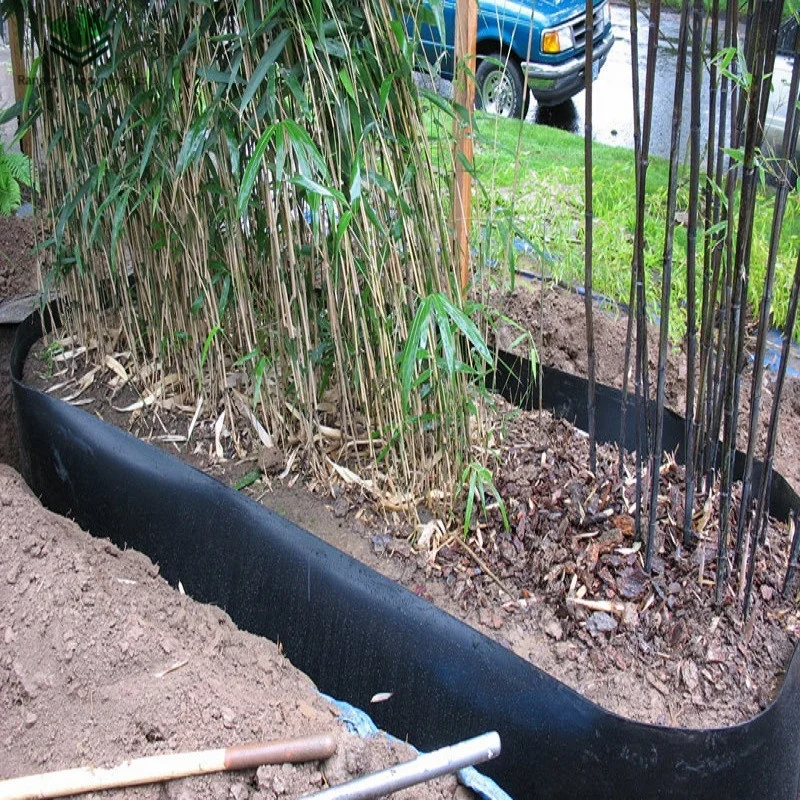
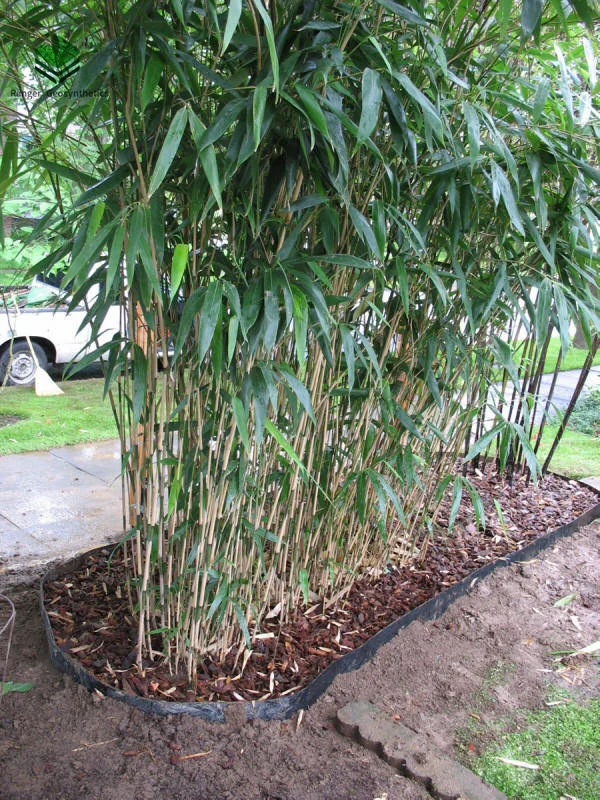
Bamboo makes an ideal garden plant and grows quickly to provide privacy and beauty, however, if left unchecked bamboo can grow throughout the yard and become a major nuisance. Bamboo Barrier is an effective material to prevent its unwanted spread.
The smooth surface of the Bamboo Barrier acts as a root stop, diverting the rhizome and preventing rampant growth. The rhizome will not penetrate the barrier; instead it will turn and continue to grow along the surface of the barrier. This contains the bamboo and prevents spreading where it isn't wanted.
Rhizome Barrier Installation Instructions
Please read and follow these directions carefully. Although installing root barrier takes a bit of work, if done correctly it will require very minimal maintenance and reward you with many years of well-behaved bamboo.
For containing running types of bamboo we have found that polypropylene rhizome barrier works better than any other material, such as sheet metal or concrete. Concrete cracks and has a rough surface on which the rhizomes can get a purchase and break through. Sheet metal requires several seams and will rust, leaving the way open for bamboo “escapees.” Wood is not strong enough and will rot.
If you are planting a clumping type of bamboo, installing barrier is unnecessary and can actually cause maintenance problems down the road. For further information on the special maintenance needs of clumpers, see Containment & Control.
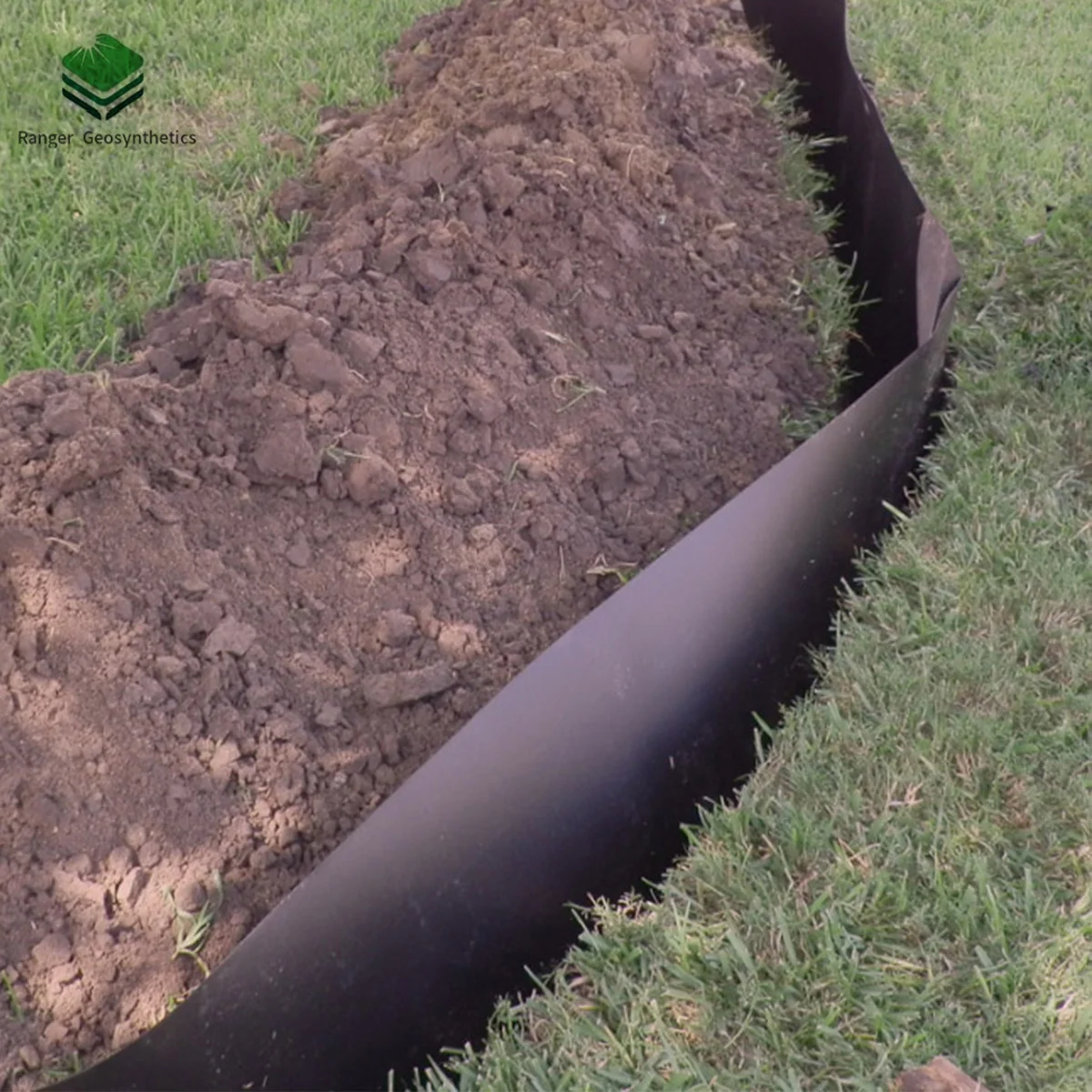
One of the advantages of this thick but flexible barrier is that you can create a screen or grove of bamboo of any shape. It is most effective when enough space is provided for your particular species of bamboo. Speaking in broad generalities, for small to mid-sized bamboos, define an area that is no narrower than 2 feet wide (4 feet is much better!). Allow even more space for larger species. Trying to confine your bamboo to a very small area makes for unhealthy, stunted bamboo that can become root bound very quickly and put unnecessary stress on your barrier. Generally, the larger the area provided, the happier your bamboo will be.
We also recommend leaving a minimum of 12 to 24 inches of space between the edge of your barrier and any existing structures such as fences, buildings, or sidewalks. This allows for maintenance access, which you will need to prune, check your barrier edge and to maintain your structure if the need ever arises.
When you install your barrier, it is important to leave 2 inches protruding above ground level. Bamboo rhizomes sometimes come up to the surface and then dive back down again, hopping over the edge of the barrier. For this reason we recommend you check around the entire edge of your barrier once or twice a year and clear any leaf-litter or soil build-up. Once cleared it is easy to spot and cut any rhizomes before they escape over the top and get established.
As a service to our customers we offer barrier at close to cost when over $250 of bamboo is purchased. We offer 30 and 36 inch deep barrier in both 60 mil and 80 mil thick. For lightweight jobs such as groundcovers or the lining of boxes, 24 inch by 40 mil thick is also offered. All barriers are made of 100% post consumer recycled content.
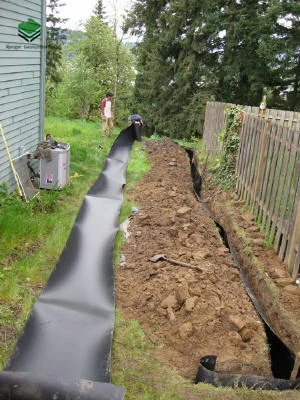
Basic Instructions:
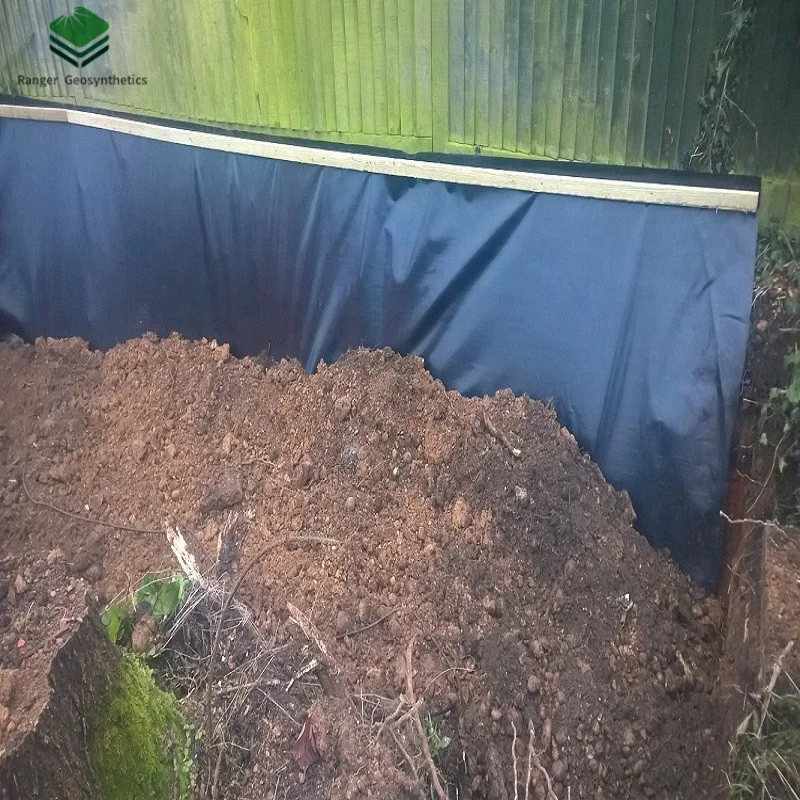
Begin by digging a narrow, exactly vertical trench around the perimeter of the area in which you wish to keep the bamboo contained, avoiding sharp angled corners if possible. If using 30″ polypropylene rhizome barrier, the trench needs to be 28” deep; for 36” barrier, the trench should be 34” deep, etc., so that 2” of the barrier remains above ground.
Insert the barrier into the trench, making sure it remains vertical (no angling in or out). Minimize the number of seams if possible and be sure to overlap the barrier 12 inches where the two ends meet (or at any seam). Be sure there is no soil in between the overlapped layers. Use our strapping system to secure the barrier seam, as illustrated. This system is basically just 2 metal straps sandwiching the overlapped area and bolted securely. It creates an effective seal and prevents the rhizomes from doing an “S” curve through the seam.
Back fill the barrier, being sure to maintain the vertical orientation and 2 inches of barrier above ground level, then pack the soil as firmly as possible. You want to make this area as inhospitable as possible, so using heavy clay soils to back fill, especially in the bottom half of your trench, is ideal.
Now you are done and can plant your running bamboo screen or grove within the contained area with ease of mind. May you and your bamboo flourish!
If you have questions, please feel free to call us.

Products features
| Excellent chemical resistance. |
| Outstanding stress crack capacity. |
| Lowest permeability. |
| Excellent UV resistance. |
| Stable low temperature embrittlement resistance. |
| Complete width and thickness. |
| Cost effective. |
| Proven performance. |
| Fast deployment. |
| Easy transportation. |
| Meet or exceed all aspects of GRI GM13. |


1.What's your advantage?
A: Honest business with competitive price and professional service on export process.
2. How I believe you?
A : We consider honest as the life of our company, we can tell you the contact information of our some other clie
nts for you to check our credit. Besides, there is trade assurance from Alibaba, your order and money will be well guaranteed.
3.Can you give warranty of your products?
A: Yes, we extend a 100% satisfaction guarantee on all items. Please feel free to feedback immediately if you are not pleased with our quality or service.
4.Where are you? Can I visit you?
A: Sure,welcome to you visit our factory at any time.
5.How about the delivery time?
A: Within 15-35 days after we confirm you requirement.
6.what kind of payment does your company support?
A: T/T, 100% L/C at sight, Cash, Western Union are all accepted if you have other payment,please contact me.

We Recommend
New Arrivals
New products from manufacturers at wholesale prices