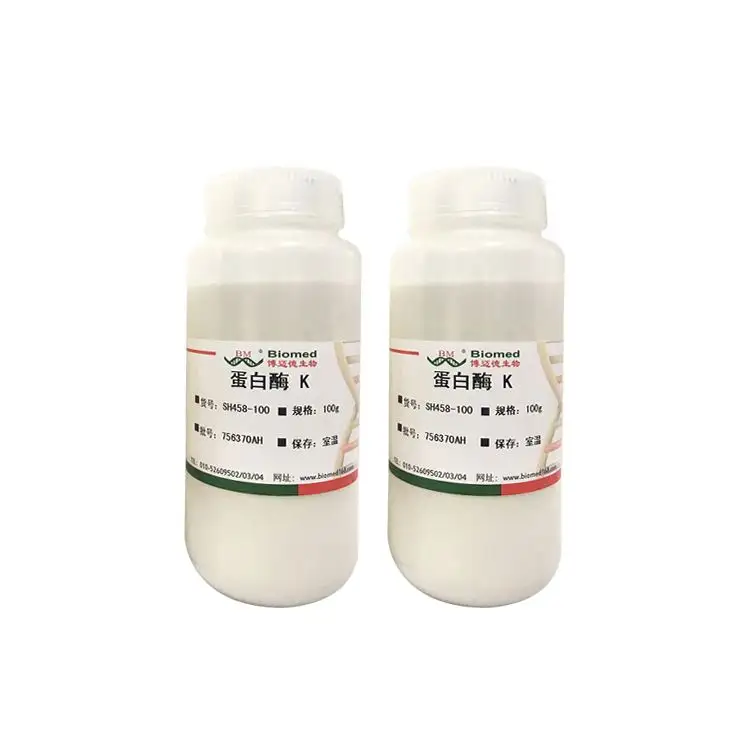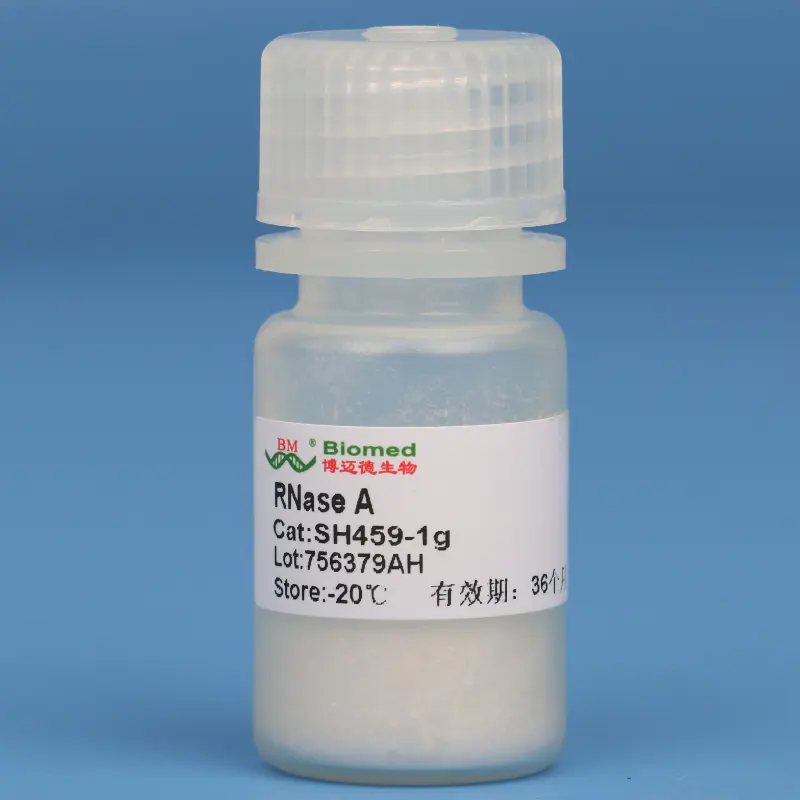
China Supplier OEM RNase A Dry Powder Biochemical Reagent
US $78.00-$300.00
Share on (1600147100149):



|
Component |
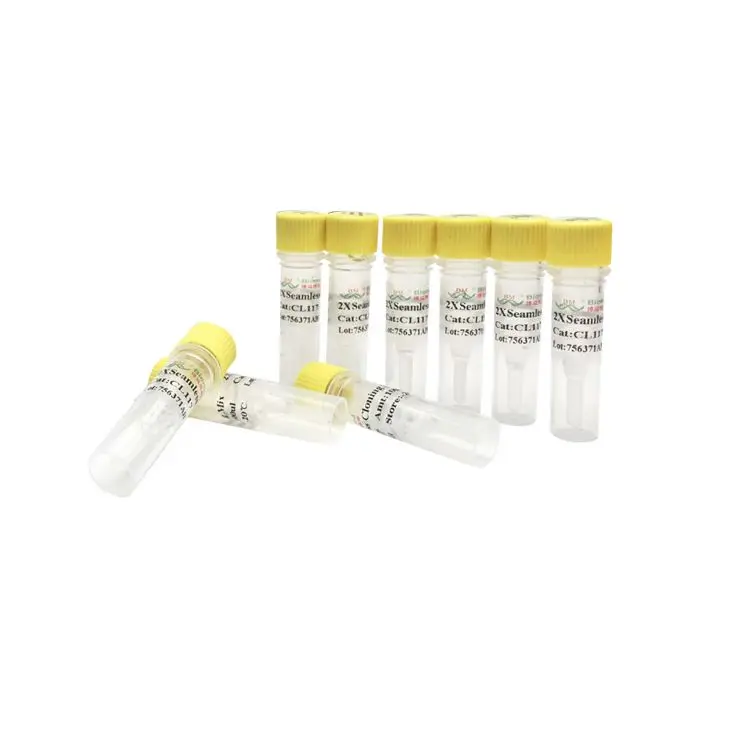
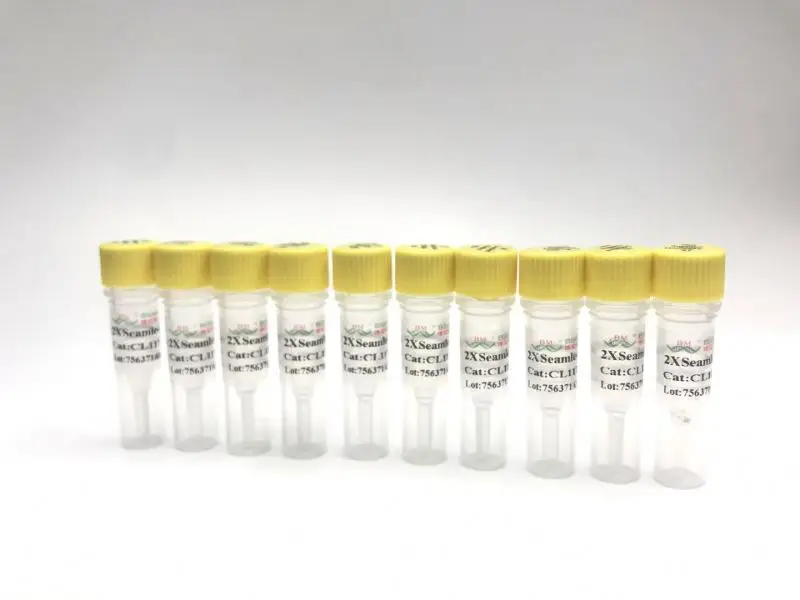
CL117-01 (20 rnxs) |
CL117-02 (20 rnxs×10) |
|
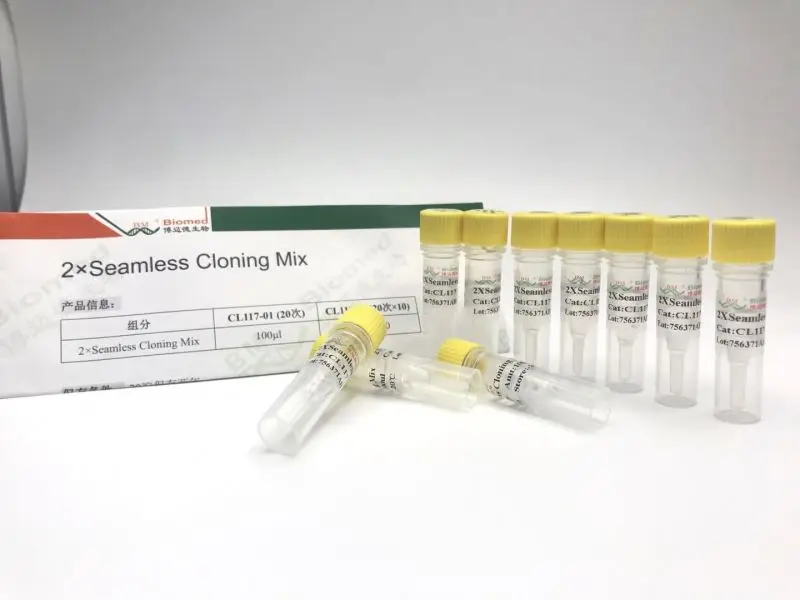
2×Seamless Cloning Mix |
100μl |
100μl×10 |
Storage condition: Stored at -20℃ for two years.
Product Introduction:
Different from conventional cloning methods such as topological cloning, T-A cloning and enzyme digestion cloning, seamless cloning technology can clone fragments to any position in any vector to obtain recombinant plasmid with the action of recombinant enzyme and only one step reaction.
As a very powerful cloning technology, seamless cloning technology has the characteristics of rapid, simple, efficient, multi-fragment assembly and directional cloning. It is used for the cloning of a single DNA fragment, multi-dna fragment assembly cloning and multi-site mutation construction and other experimental purposes.
Product Features:
1. Simple, fast, accurate and targeted cloning, the connection process takes only 15 minutes.
2. Simple PCR amplification is required for the preparation of fragment purposes, without endonuclease, ligase or phosphorylase.
3. The preparation of linearized vectors can be amplified by PCR or the selection of appropriate endonuclide enzyme digestion.
Experimental principle:
(The following figure shows the assembly and cloning of the two fragments.)
Operation steps:
1. Preparation of linearized vectors
(1) Enzymatic digestion was used to prepare linearized vectors
The clones were linearized by single or double enzyme digestion, and the results showed that double enzyme digestion was better than single enzyme digestion.The complete linearization of carriers is the key to the success of seamless connection.False positive clones of the recombinant products of incomplete enzymatic digestion vectors are generally formed by the transformation of unlinearized cyclic vectors. When the false positive clone is high, the enzyme digestion vector needs to be redone. Electrophoretic method to determine whether the linearization of the vector is complete, it must be used as a control plasmid without enzyme digestion.
The recombination region selected on vector should be a region with no repeat sequence and uniform base distribution. With G+C content ranging from 40% to 60% in the recombination area, the recombination efficiency will reach the highest.The linearized vector prepared by single or double digestion does not require terminal dephosphorylation.
Linearized clone vectors were prepared by reverse PCR amplification
Using vector plasmid DNA as template and cloning site as cut-off point, a pair of reverse primers were designed to be amplified by high-fidelity DNA polymerase to prepare linearized vectors for recombination. To prevent the influence of residual plasmid template, It is necessary to purify the linearized vector by the glue recovery method or the Dpn I digestion and binding glue recovery method.The product of high-fidelity PCR amplification was flat terminal, the functional group of DNA terminal was hydroxyl group, and there was no phosphate group (except the primer modified by phosphorylation).
2. PCR amplification of target DNA
The inserted fragment can be amplified by any PCR enzyme (Taq enzyme or high-fidelity enzyme) without regard to the presence or absence of an A-tail at the end of the product (it will be removed during the recombination and will not appear in the final plasmid). High fidelity polymerase is recommended for amplification to reduce the occurrence of amplified mutations.After PCR, a small amount of the product was taken for agarose electrophoresis to test the length and specificity of the amplified product. the presence of nonspecific amplification and primer dimers will seriously affect the cloning efficiency, so it is recommended to purify the target fragment with gel recovery kit.
(1) Primer design for splicing cloning of a single fragment
The kit can clone any PCR amplification product, but the amplification primers have special design requirements. Primer sequences consist of 15-25nt overlapped areas for homologous recombination and 3' -specific primers for the target gene.The following figure is a schematic diagram of primer design requirements when a single fragment is cloned.
For example, BamH I, EcoR V, and Kpn I restriction sites are digested to produce 5 'protrusion ends, flat ends, and 3' protrusion ends, respectively.The base length of the overlap region was designed to be between 15-25nt, and the gene specific primers were adjacent to the overlap region sequence, usually 18-25nt in length. According to the design method shown in the figure below, the endonuclease sites used in the preparation of the recombinant vector will not exist.
If the restriction site is retained in the primer of the amplified target fragment or a new restriction site is added, the original restriction site or the newly added restriction site will appear in the final recombinant plasmid sequence. The figure below shows only the status of single enzyme digestion, which can be three in practice any of or any two combinations of terminal structures.
(2) Primer design for assembly clone of multiple fragments
The primer design of multi-fragment assembly clone is shown in the figure below.The design method of primers at both ends of the vector is the same as that of single fragment primers, and the design of multi-fragment primers refers to the design principle of overlapped extended PCR primers
The connection system
(According to the following table, a 0.2ml PCR tube was successively added)
|
component |
volume |
|
The PCR product (50-100ng/μl) |
Xμl |
|
Linearized vector(50-100ng/μl) |
Yμl |
|
2×Seamless Cloning Mix |
5μl |
|
Add ddH2O to the total volume |
10μl |
Operation:
Mix gently and centrifuge for a few seconds.The temperature was kept at 50℃ on the PCR instrument for 15 minutes. After the reaction, the centrifuge tube was placed on ice for the transformation experiment. If the transformation experiment is not done temporarily, the connecting product can be frozen at -20℃.
1. The vector dosage is generally 50-100ng.The molar ratio of vector and fragment is 1:1 to 1:3. When the fragment is less than 200bp, the fragment dosage can be increased to 5 times of the vector.
2. Reaction time at 2.50℃ shall not exceed 60 minutes.
The transformation experiment:
Please follow the operating instructions of the competent cell product.
Positive cloning identification:
(1) Colony PCR method;
(2) Restriction enzyme digestion analysis method;
(3) DNA sequencing analysis method.

Beijing bomeide Gene Technology Co., Ltd. is a professional enterprise of DNA sequencing, DNA synthesis, molecular biological reagents and technical services. The company not only has a rigorous and efficient R & D, production team, but also has a professional sales team and technical service team to provide you with efficient and efficient professional services.
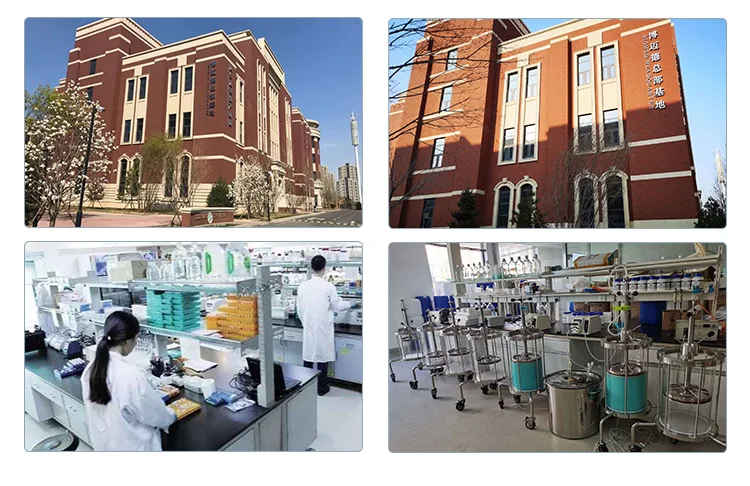
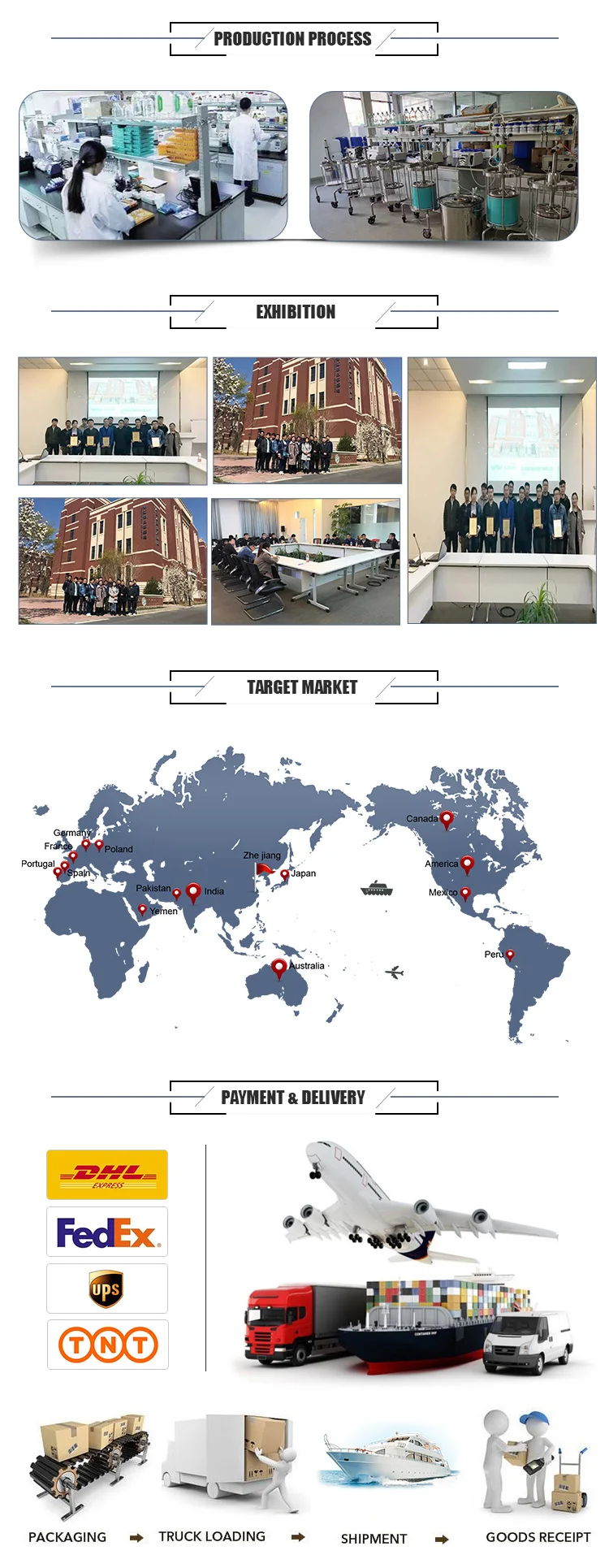

Beijing bomeide Gene Technology Co., Ltd. is a professional enterprise of DNA sequencing, DNA synthesis, molecular biological reagents and technical services.

New products from manufacturers at wholesale prices