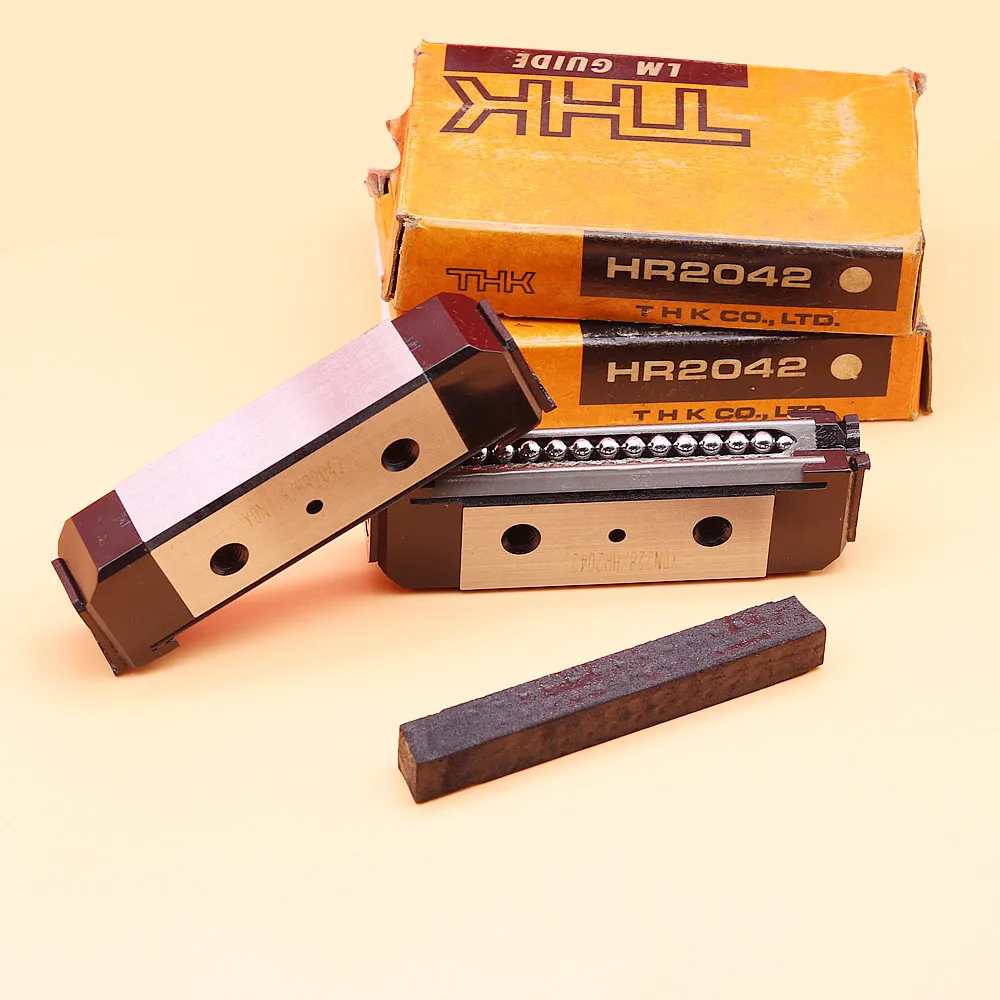
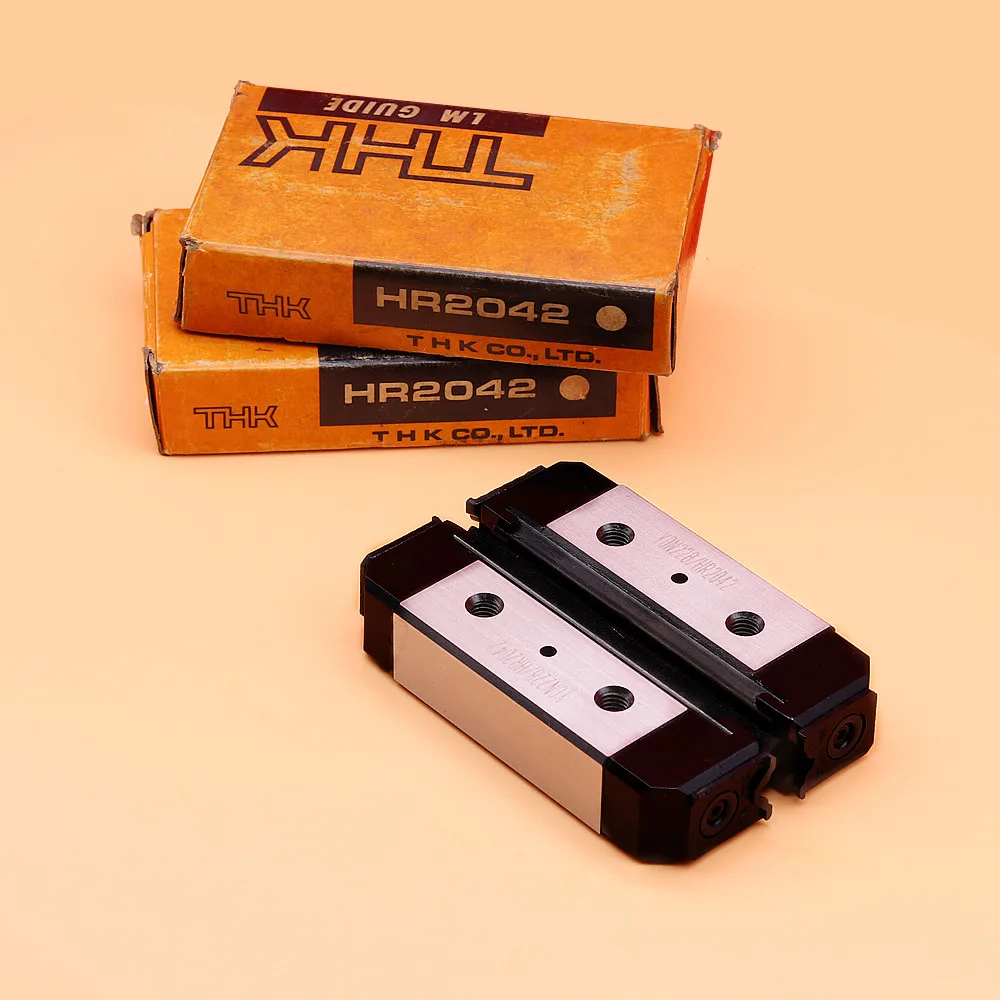
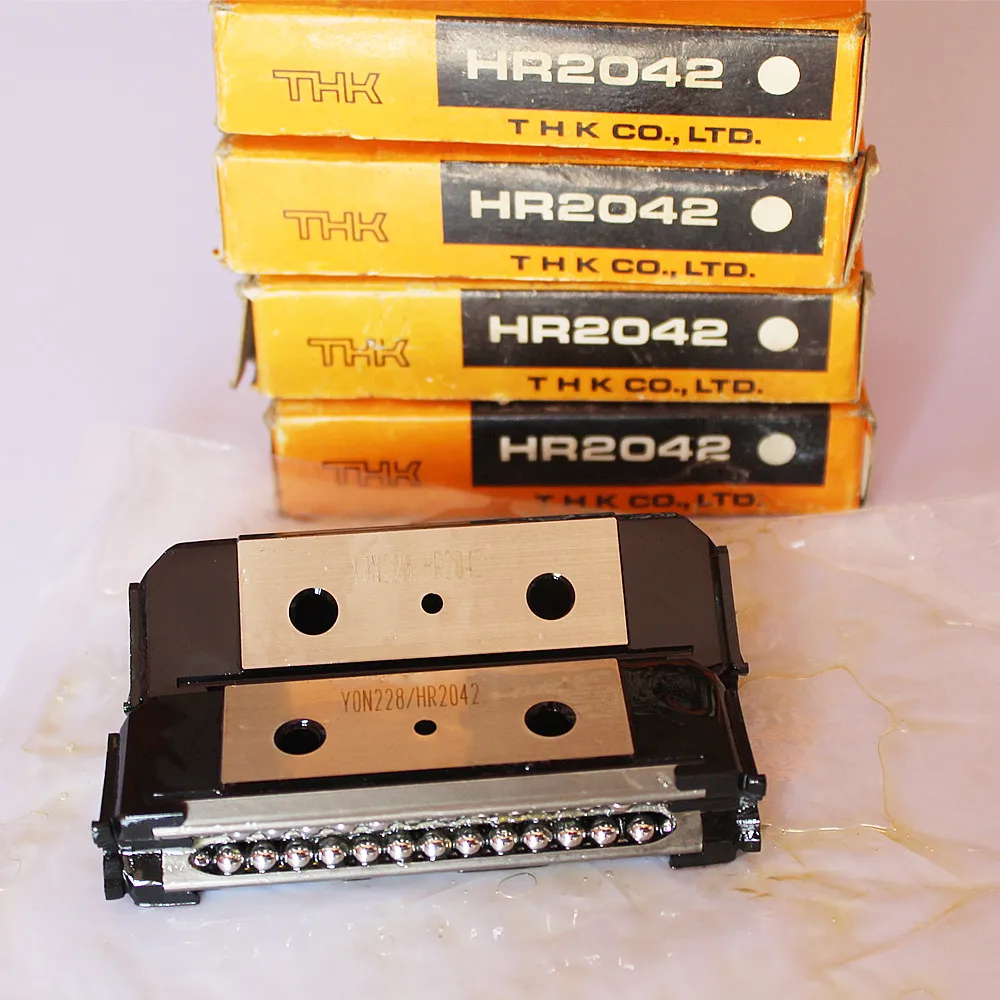
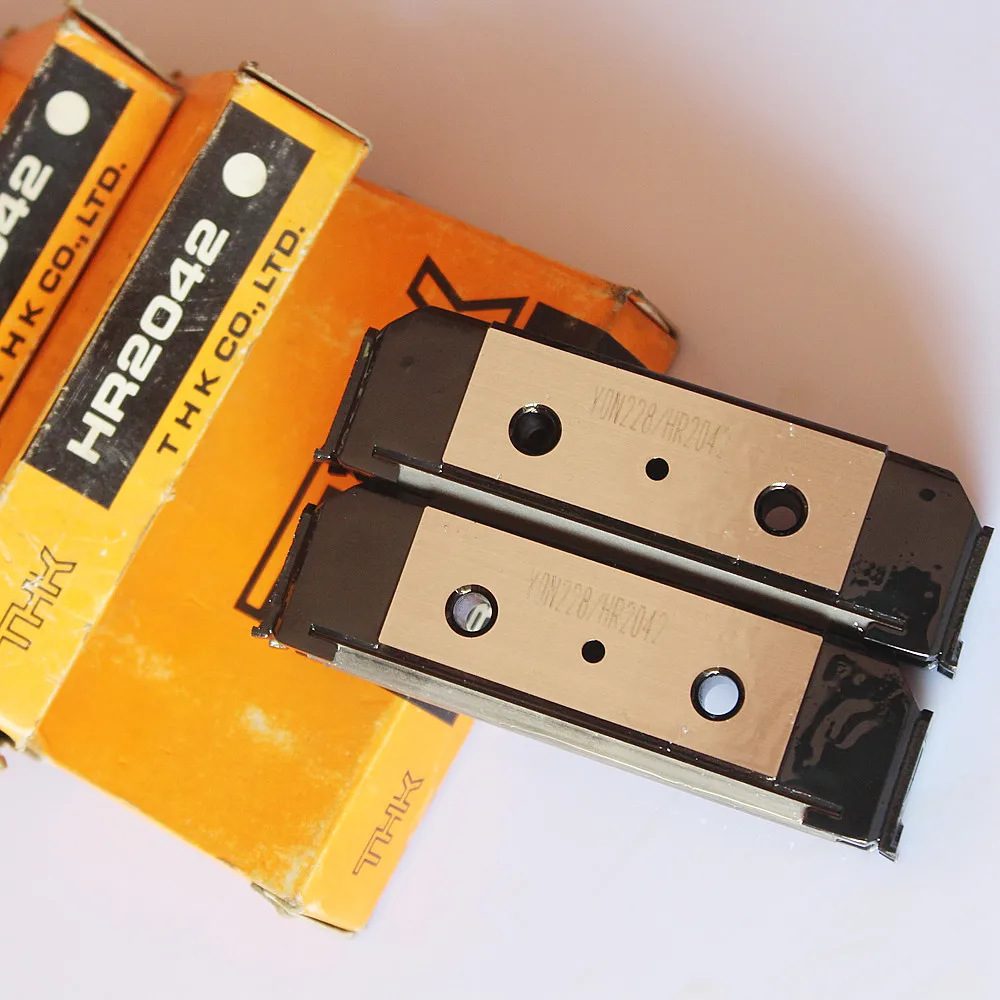
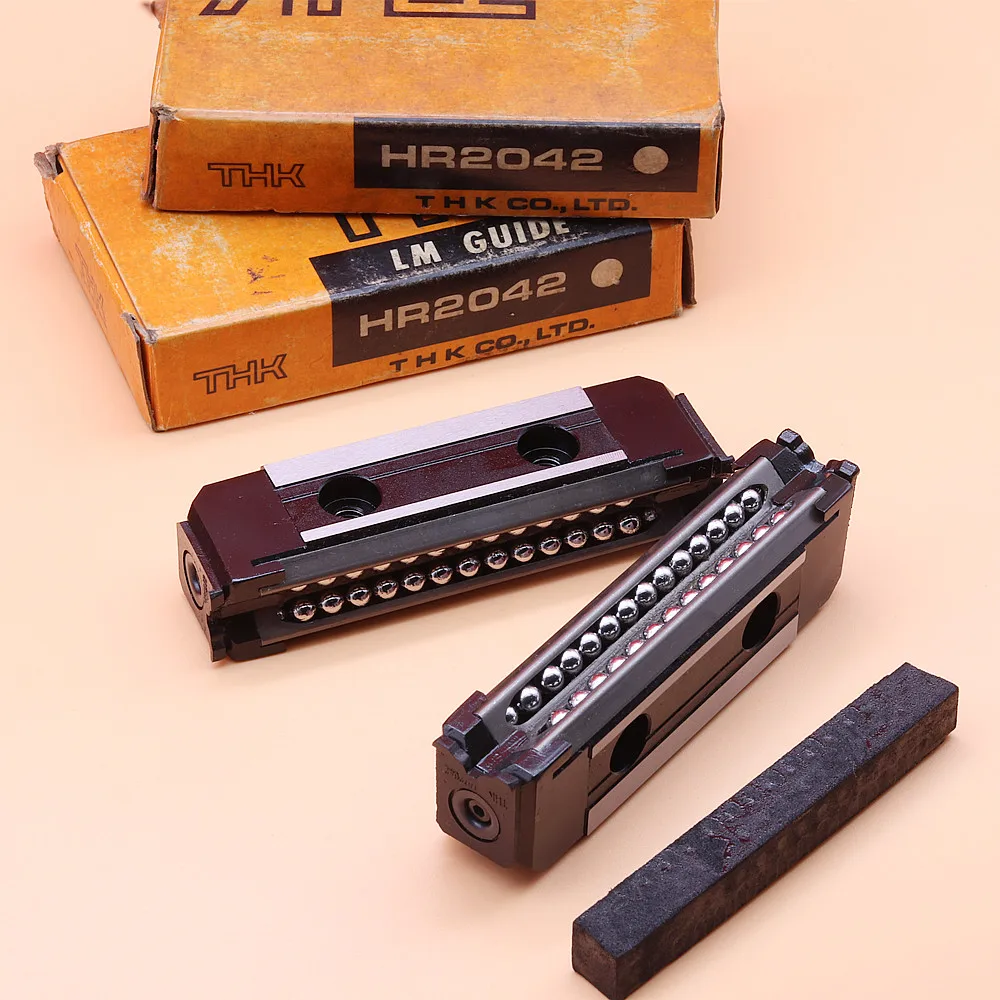
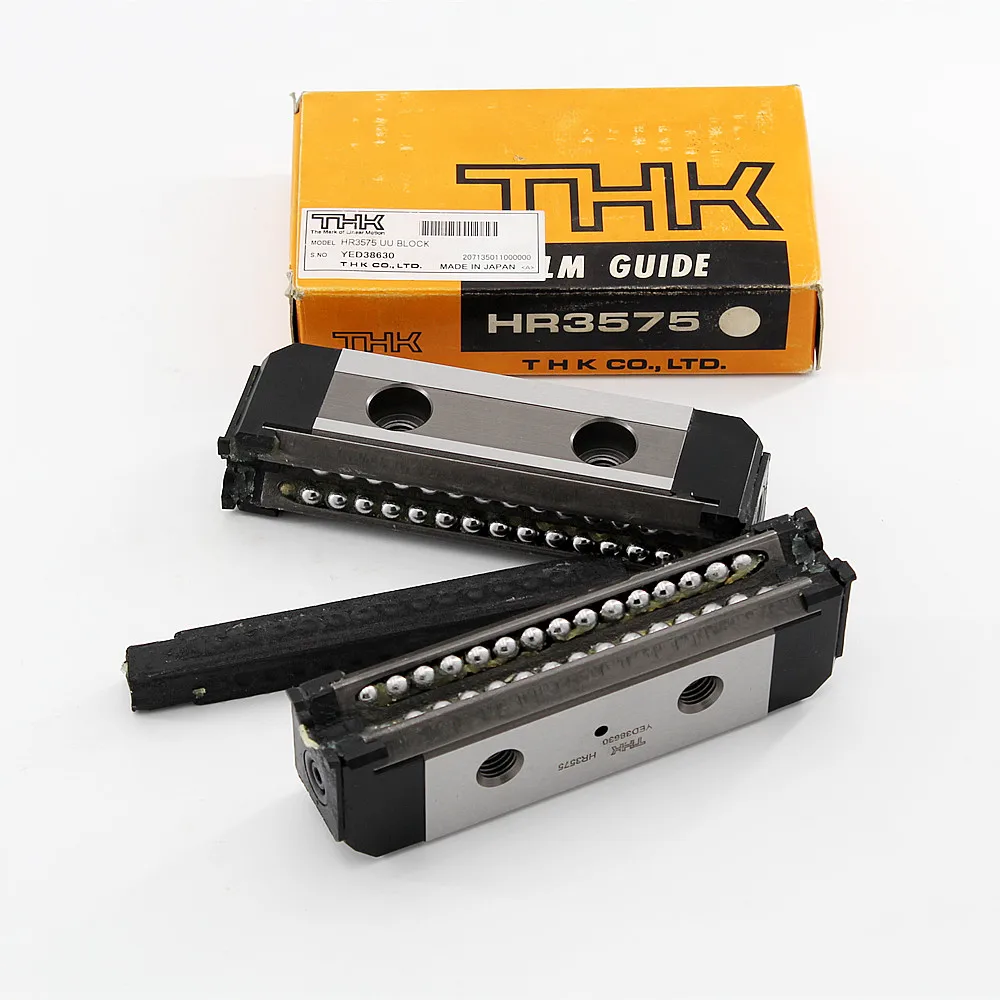
THK LM Guide Separate Type HR918 HR918M Rail Slide Linear Guide Rail
- Category: >>>
- Supplier: Qingdao Baoxi Automation Technology Co. Ltd.
Share on (1600200025725):
Product Overview
Description

Structure and Features
incorporated in the LM block allow the balls to circulate. Since retainer plates hold the balls, they do not fall off.Because of the angular contact structure where two rows of balls rolling on the LM rail each contact the raceway at 45, the same load can be applied in all directions (radial, reverse radial and lateral directions) if a set of LM rails and LM block is mounted on the same plane (i.e., when two LM rails
are combined with an LM block on the same plane). Furthermore, since the sectional height is low, a compact and stable linear guide mechanism is achieved.
This structure makes clearance adjustment relatively easy, and is highly capable of absorbing a mounting error.
[Easy Installation]
Model HR is easier to adjust a clearance and achieve more accuracy than cross-roller guides.
[Self-adjustment Capability]
Even if the parallelism or the level between the two rails is poorly established, the self-adjustment capability through front-to-front confi guration of THK’s unique circular-arc grooves (DF set) enables a mounting error to be absorbed and smooth straight motion to be achieved even under a preload.
[4-way Equal Load]
When the two rails are mounted in parallel, each row of balls is placed at a contact angle of 45° so that the rated loads applied to the LM block are uniform in the four directions (radial, reverse radial and lateral directions), enabling the LM Guide to be used in various orientations and in applications.
[Sectional Dimensions Approximate to Cross-roller Guides]
Since model HR utilizes endcaps for recirculation, cage/retainer creep cannot occur as with crossroller guides. In addition, the sectional shape of model HR is approximate to that of cross-roller guides, therefore, its components are dimensionally interchangeable with that of cross-roller guides.
[Stainless Steel Type also Available]
A special type whose LM block, LM rail and balls are made of stainless steel is also available.
Model HR - Heavy-load Type
The LM blocks can be mounted from the top
and the bottom.
Model HR-T-Ultra-heavy Load Type
Has the same cross-sectional shape as model HR, but has a greater overall LM block length (L) and a higher load rating.
Brand | THK |
Types and Features | Model HR |
Model No. | HR3575 |
Packing & Delivery

Company Profile

Company Profile
Qingdao Baoxi Automation Co., Ltd. was established in 2014. It mainly sells linear bearings, guide rail sliders, spline nuts, ball screws, etc. Since the establishment of the company, a good cooperative relationship has been established in major brand agents and factories. The products are of affordable price, high quality, and short delivery time. They have a good image in the hearts of our customers.
FAQ
1.What's your advantage?
A: Honest business with competitive price and professional service on export process.
2. How I believe you?
A : We consider honest as the life of our company, we can tell you the contact information of our some other clients for you to check our credit. Besides, there is trade assurance from Alibaba, your order and money will be well guaranteed.
3.Can you give warranty of your products?
A: Yes, we extend a 100% satisfaction guarantee on all items. Please feel free to feedback immediately if you are not pleased with our quality or service.
4.Where are you? Can I visit you?
A: Sure,welcome to you visit our factory at any time.
5.How about the delivery time?
A: Within 15-35 days after we confirm you requirement.
6.what kind of payment does your company support?
A: T/T, 100% L/C at sight, Cash, Western Union are all accepted if you have other payment,please contact me.
A: Honest business with competitive price and professional service on export process.
2. How I believe you?
A : We consider honest as the life of our company, we can tell you the contact information of our some other clients for you to check our credit. Besides, there is trade assurance from Alibaba, your order and money will be well guaranteed.
3.Can you give warranty of your products?
A: Yes, we extend a 100% satisfaction guarantee on all items. Please feel free to feedback immediately if you are not pleased with our quality or service.
4.Where are you? Can I visit you?
A: Sure,welcome to you visit our factory at any time.
5.How about the delivery time?
A: Within 15-35 days after we confirm you requirement.
6.what kind of payment does your company support?
A: T/T, 100% L/C at sight, Cash, Western Union are all accepted if you have other payment,please contact me.
We Recommend
New Arrivals
New products from manufacturers at wholesale prices