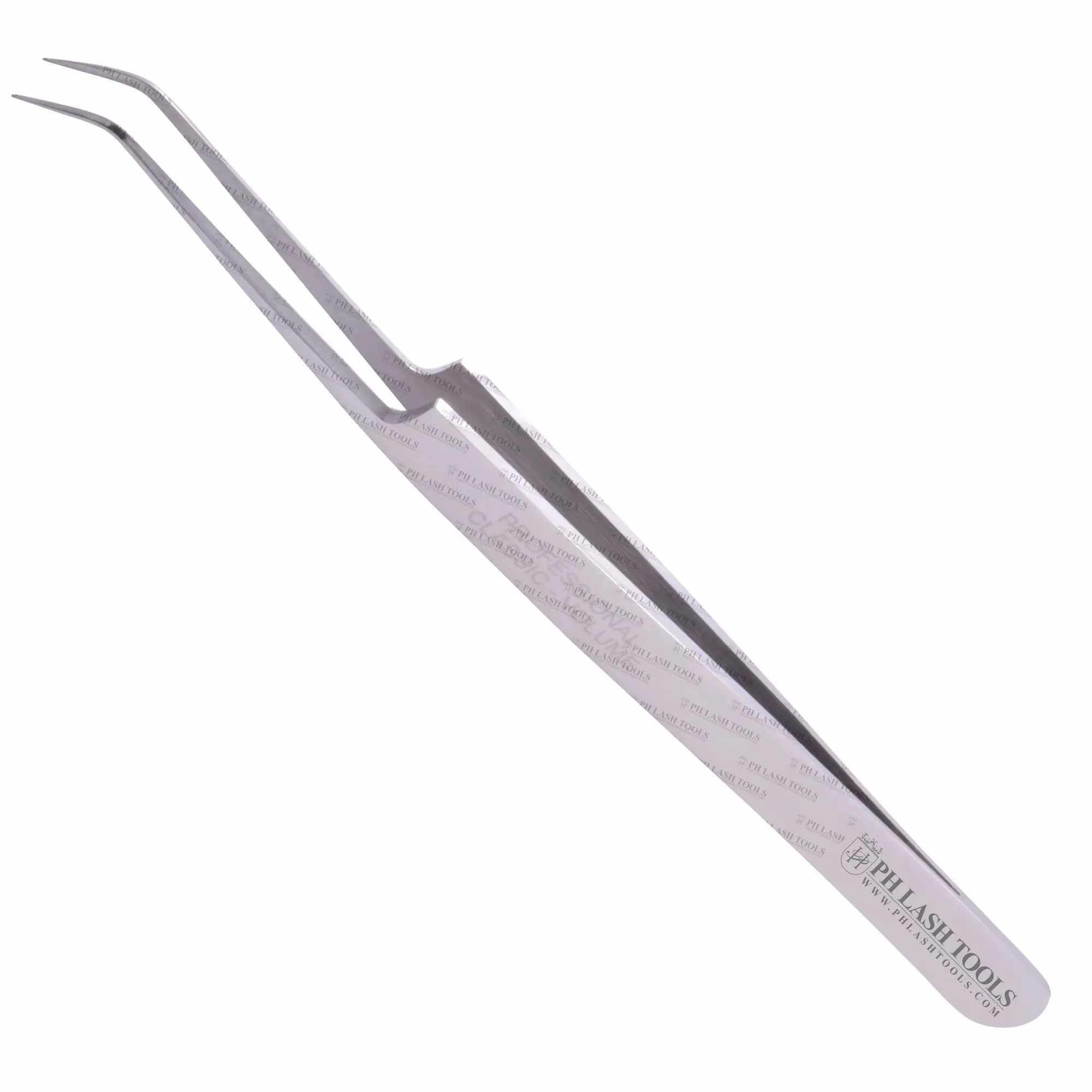
Disposable bipolar forceps nonstick surgical appliances
- Category: Neurosurgery Instruments >>>
- Supplier: Shandong Zhushi Pharmaceutical Group Co. Ltd.
Share on (1600242820146):
Product Overview
Description
Product Description

Specification


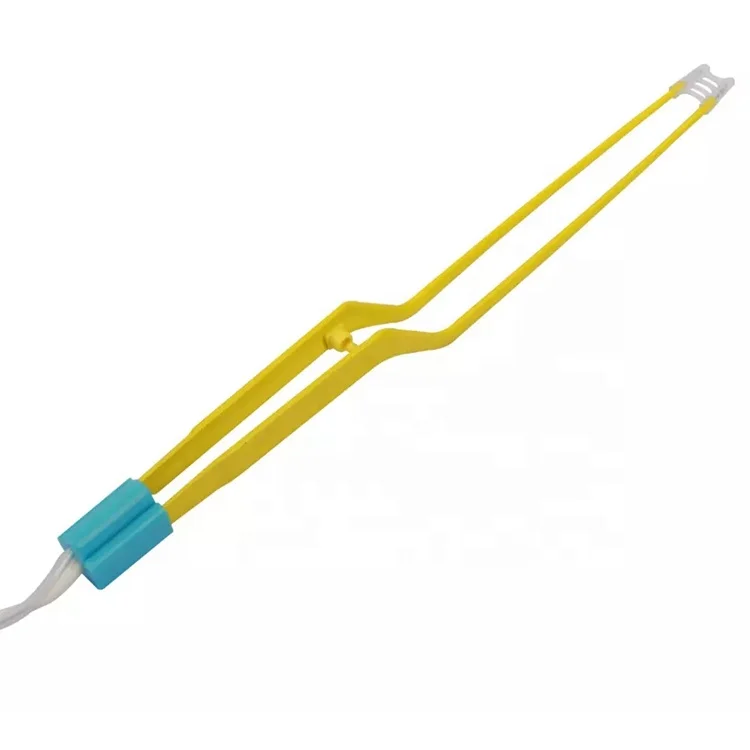
Product name | Non-stick bipolar coagulation forceps |
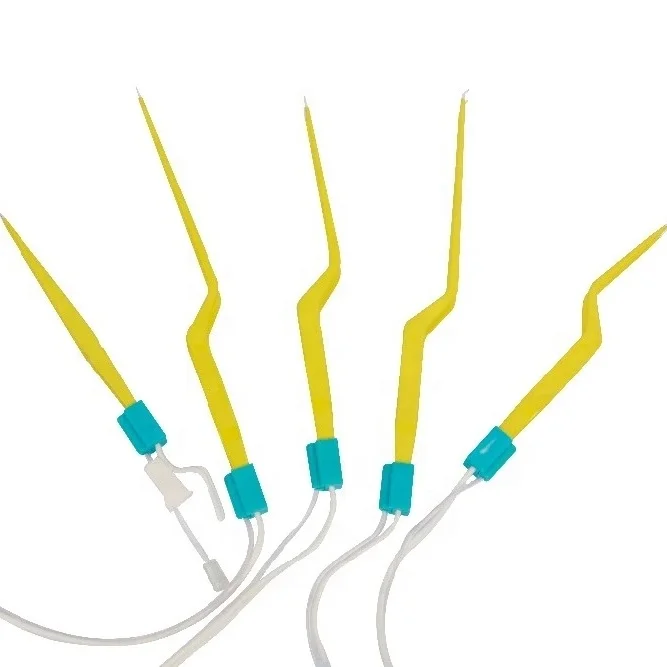
Model Number | Straight;gun;bent and gun models |
Properties | Neurosurgery Instruments |
Type | Tweezers,Clip,Pincers |
Instrument classification | Class II |
Forceps tip material | Silver alloy |
Forceps body material | Copper alloy |
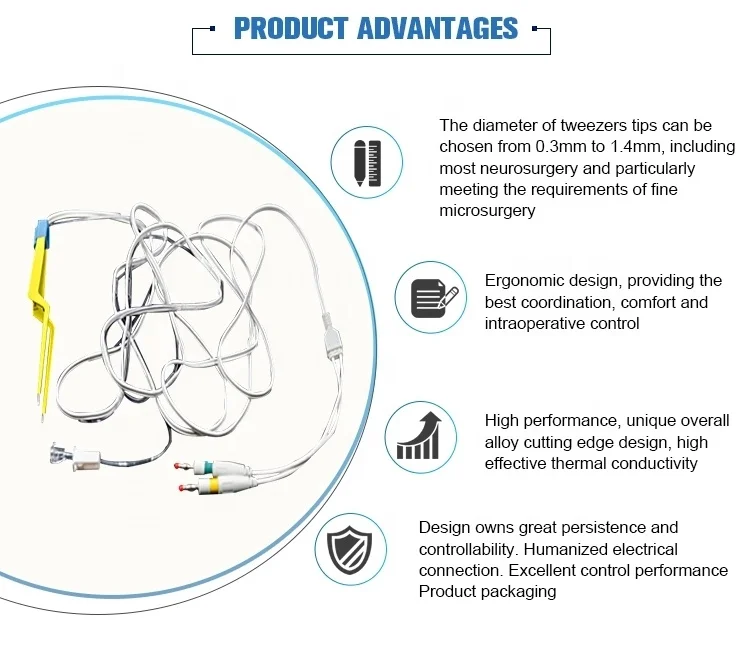
Forceps tip thickness | 0.3-1.4mm |
Application | Neurosurgery, Microsurgery, ENT, Urology, Burn orthopaedics surgery |
Packing | Individual Package |
Function | Hemostasis Prevent Bacteria |
Color | Yellow |
Sample | yes |
Advantage | factory prices and good quality |


Appearance
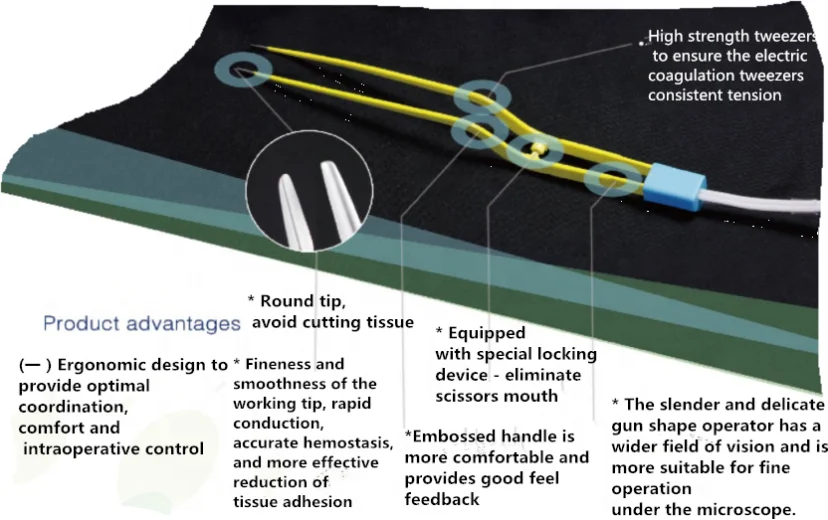
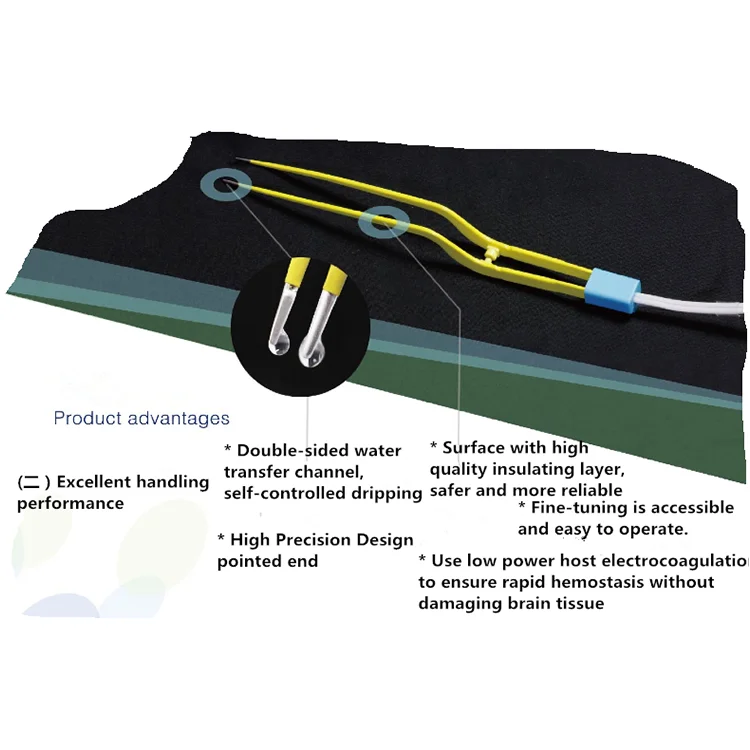
The slender and delicate gun shape operator has a wider field of vision and is more suitable for fine operation under the microscope.

Device
Equipped with special locking device - eliminate scissors mouth.

Product advantages
Round tip,avoid cutting tissue. Fineness and smoothness of the working tip, rapid conduction, accurate hemostasis, and more effective reduction of tissue adhesion.

Matters needing attention
The resistance between the tweezers tips and sockets should be ≤1.0Ω; the resistance between the metal sockets is ≤1.0Ω when the short circuit occurs between tweezers tips. Products are sterile.


[Instructions for Use]
1, according to the clinical needs, choose the corresponding specifications of the electric coagulation tweezers products.
2. Take out the sterile small package, take out the electric coagulation tweezers from the opening, remove the sheath and effectively connect the water supply pipe with the physiological salt water bottle, connect the high-frequency electric knife jack with the connecting line, adjust the water discharge of the water conveyer for 1 minute, and enter the normal use state.
The tissue attachment on the tip of tweezers should be wiped with gauze in time during the operation to ensure that the dripping mouth is unblocked.
3. During the whole operation, the aseptic operation and relevant operating procedures should be strictly implemented, and the patient's symptoms should be observed.
4. This product should be used by professional medical personnel.
2. Take out the sterile small package, take out the electric coagulation tweezers from the opening, remove the sheath and effectively connect the water supply pipe with the physiological salt water bottle, connect the high-frequency electric knife jack with the connecting line, adjust the water discharge of the water conveyer for 1 minute, and enter the normal use state.
The tissue attachment on the tip of tweezers should be wiped with gauze in time during the operation to ensure that the dripping mouth is unblocked.
3. During the whole operation, the aseptic operation and relevant operating procedures should be strictly implemented, and the patient's symptoms should be observed.
4. This product should be used by professional medical personnel.
[Technical characteristics]
1、The connection of the conductor is firm: the conductor should be firmly connected and not fall off.
2、Tweezers: The electrocoagulation tweezers should have certain elasticity and toughness. After 85 kneading, the opening distance of the tweezers should be no less than 6 mm, and the tweezers should not break.
3、Water conveyance performance: The tube cavity of the electric coagulation tweezers should be unobstructed, and the minimum water conveyance should be more than 50ml/h when the water conveyance flow regulator is fully open.
4. Sealability of water conveyance pipe: The water conveyance pipe of electric coagulation tweezers should have good sealability. The air pressure which is 20 kPa higher than atmospheric pressure lasts for 10 seconds, and there should be no air leakage.
1、The connection of the conductor is firm: the conductor should be firmly connected and not fall off.
2、Tweezers: The electrocoagulation tweezers should have certain elasticity and toughness. After 85 kneading, the opening distance of the tweezers should be no less than 6 mm, and the tweezers should not break.
3、Water conveyance performance: The tube cavity of the electric coagulation tweezers should be unobstructed, and the minimum water conveyance should be more than 50ml/h when the water conveyance flow regulator is fully open.
4. Sealability of water conveyance pipe: The water conveyance pipe of electric coagulation tweezers should have good sealability. The air pressure which is 20 kPa higher than atmospheric pressure lasts for 10 seconds, and there should be no air leakage.
5 、 If there is aging phenomenon on the surface of the special connection line, it should stop using.
6 、 It is not suitable for patients to contact or to have observable capacitance of metal objects (such as operating table brackets) to the ground. Therefore, antistatic separators are recommended. 7、 To prevent skin contact, such as between the limbs of patients, such as inserting dry gauze.
8、When using both high-frequency surgical equipment and physiological monitoring equipment
on the same patient, any monitoring electrode should be as far away from the high-frequency electrode as possible. Needle-shaped monitoring electrode is not recommended.
9、In all cases, a monitoring system with a high frequency current limiter is recommended.
10、Operating electrode cables should be placed to prevent contact with patients or other leads. 11、Temporarily unused surgical electrodes should be stored in isolation from patients.
12 、 For surgical operations where high-frequency current may flow through smaller cross-sectional areas of the human body, bipolar technology is preferred to prevent unwanted assembly damage.
13 、 If electrically operated on in the chest or head area, the use of flammable anesthetics and oxidizing gas nitrous oxide (N2O) and oxygen should be prevented unless these reagents are removed (before surgery).
14、If possible, it is advisable to use non-flammable reagents for cleaning and disinfection.
15、Flammable reagents can be allowed to clean and disinfect or to be used as solvents as binders, but these reagents should be evaporated before high-frequency surgery. The patient's body or grooves (such as the umbilical eye) and cavity (such as the vagina) are at risk of accumulating flammable reagents. Before using high-frequency surgical equipment, it is advisable to wipe out any accumulated liquid and pay attention to the danger of gas ignition in the body. Some materials, such as cotton, wool and gauze, when filled with oxygen, can be ignited by sparks generated by the normal use of high-frequency surgical equipment.
16 、 For patients with cardiac distention pacemaker or other active implants, there may be a risk,
because it may interfere with the pacemaker's work or damage the pacemaker. If in doubt, give appropriate and effective suggestions.
17 、 Warning: Interference from high-frequency operating equipment may adversely affect the operation of other electronic devices.
18 、 It is recommended that users check accessories regularly, especially those used in electrode cables and endoscopes, for possible damage.
19 、 Warning: Failure of high-frequency surgical equipment can cause unexpected increase in output power.
6 、 It is not suitable for patients to contact or to have observable capacitance of metal objects (such as operating table brackets) to the ground. Therefore, antistatic separators are recommended. 7、 To prevent skin contact, such as between the limbs of patients, such as inserting dry gauze.
8、When using both high-frequency surgical equipment and physiological monitoring equipment
on the same patient, any monitoring electrode should be as far away from the high-frequency electrode as possible. Needle-shaped monitoring electrode is not recommended.
9、In all cases, a monitoring system with a high frequency current limiter is recommended.
10、Operating electrode cables should be placed to prevent contact with patients or other leads. 11、Temporarily unused surgical electrodes should be stored in isolation from patients.
12 、 For surgical operations where high-frequency current may flow through smaller cross-sectional areas of the human body, bipolar technology is preferred to prevent unwanted assembly damage.
13 、 If electrically operated on in the chest or head area, the use of flammable anesthetics and oxidizing gas nitrous oxide (N2O) and oxygen should be prevented unless these reagents are removed (before surgery).
14、If possible, it is advisable to use non-flammable reagents for cleaning and disinfection.
15、Flammable reagents can be allowed to clean and disinfect or to be used as solvents as binders, but these reagents should be evaporated before high-frequency surgery. The patient's body or grooves (such as the umbilical eye) and cavity (such as the vagina) are at risk of accumulating flammable reagents. Before using high-frequency surgical equipment, it is advisable to wipe out any accumulated liquid and pay attention to the danger of gas ignition in the body. Some materials, such as cotton, wool and gauze, when filled with oxygen, can be ignited by sparks generated by the normal use of high-frequency surgical equipment.
16 、 For patients with cardiac distention pacemaker or other active implants, there may be a risk,
because it may interfere with the pacemaker's work or damage the pacemaker. If in doubt, give appropriate and effective suggestions.
17 、 Warning: Interference from high-frequency operating equipment may adversely affect the operation of other electronic devices.
18 、 It is recommended that users check accessories regularly, especially those used in electrode cables and endoscopes, for possible damage.
19 、 Warning: Failure of high-frequency surgical equipment can cause unexpected increase in output power.
[Recommendations for Electromagnetic Interference and environmental Protection Requirements]
1. This product is the application part of the high-frequency electric knife. It is used in combination with the high-frequency electric knife during the operation.
2. The product is disposable, and the waste (metal and/or plastic) should be disposed according to the requirements of the local environmental protection department.
[Transport and Storage]
Ambient temperature range: -40℃~70℃;
Relative humidity range :10%~100%;
Atmospheric pressure range: 50.0kPa~106.0kPa.
Relative humidity range :10%~100%;
Atmospheric pressure range: 50.0kPa~106.0kPa.
[Operating conditions]
Ambient temperature range: 10℃ -- 40℃;
Relative humidity range: 30%-75%;
Atmospheric pressure range: 700hPa -- 1060hPa
Relative humidity range: 30%-75%;
Atmospheric pressure range: 700hPa -- 1060hPa
【 packing】
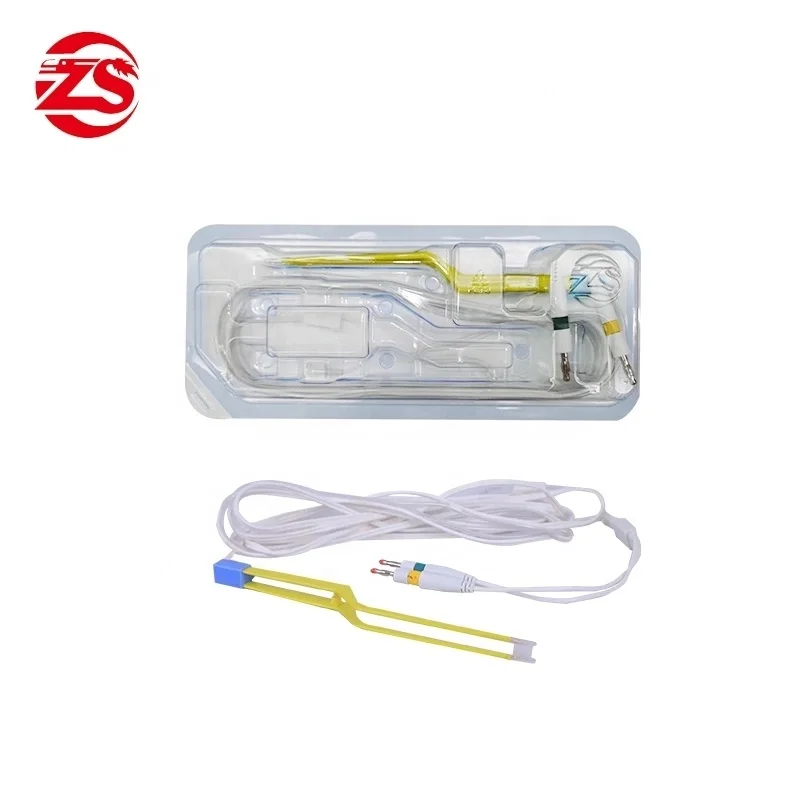
The single package shall be packed with paper plastic or non-toxic plastic materials, sealed and put into the packing box, which shall be attached with the certificate of qualification and the operation manual.
[Effective period]
After packaging, the product is sterilized with ethylene oxide, and the sterilization period is two years under the condition of complying with the storage rules.
We Recommend


New Arrivals
New products from manufacturers at wholesale prices