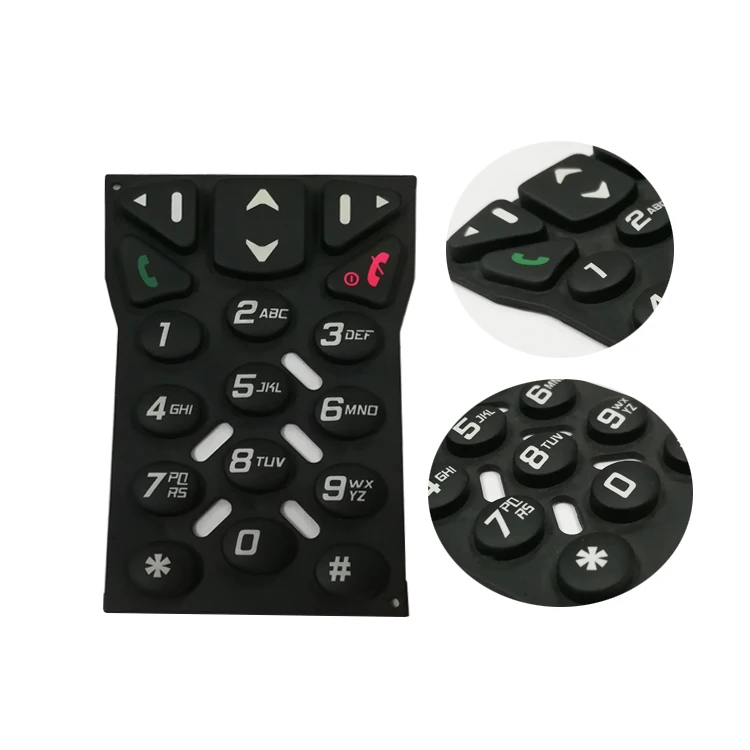
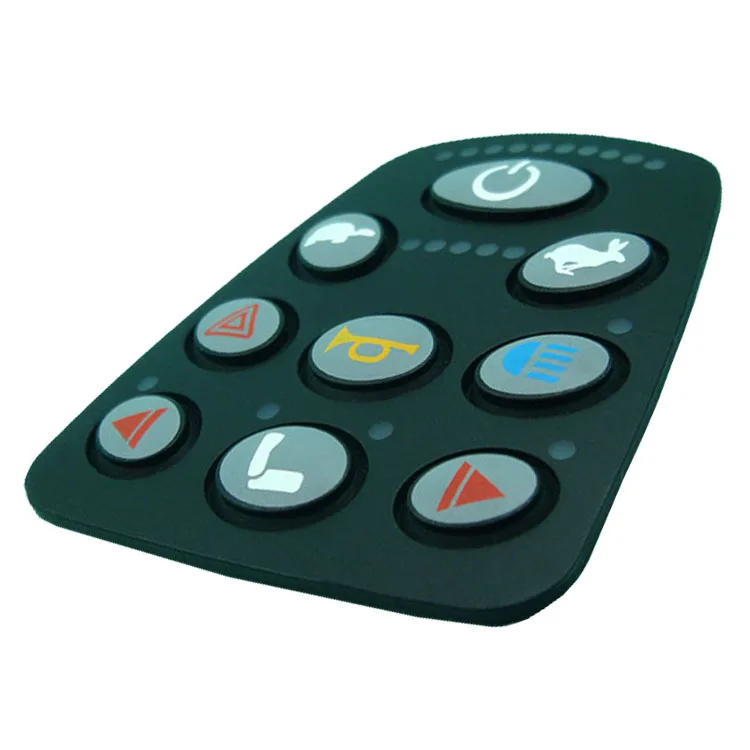
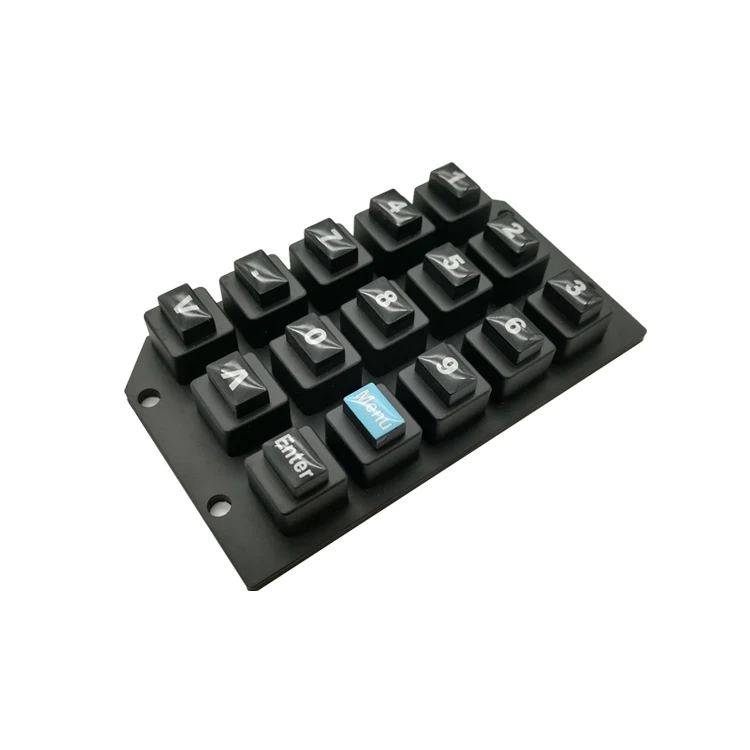
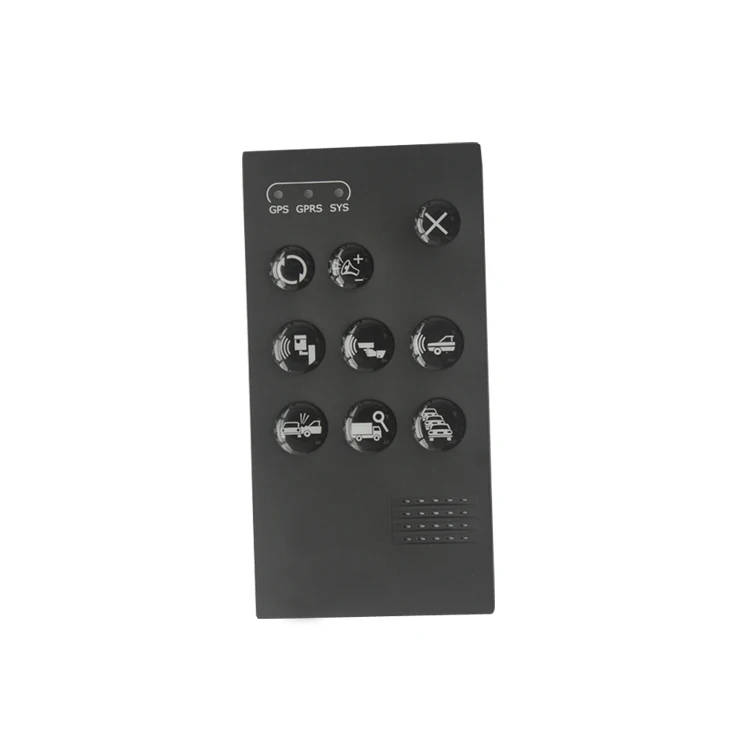
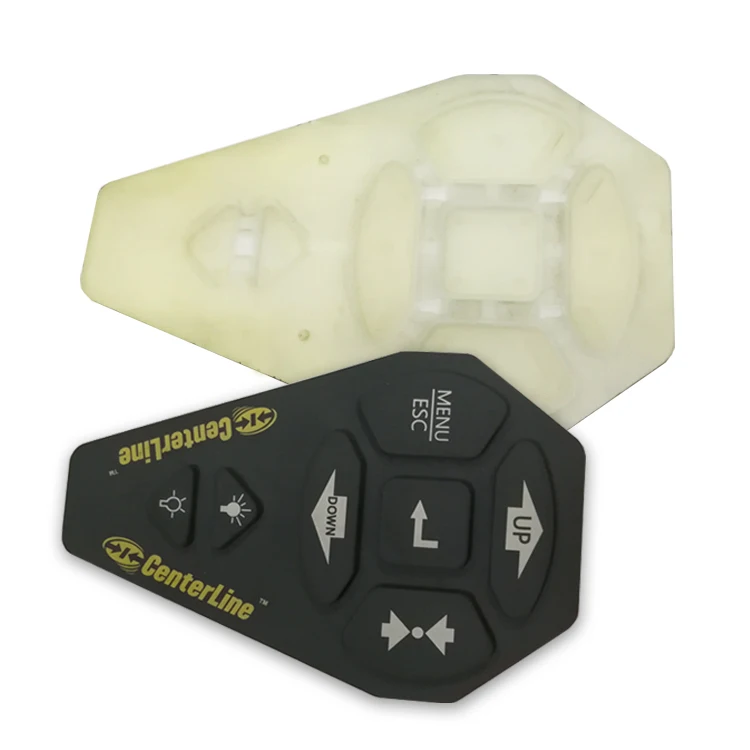
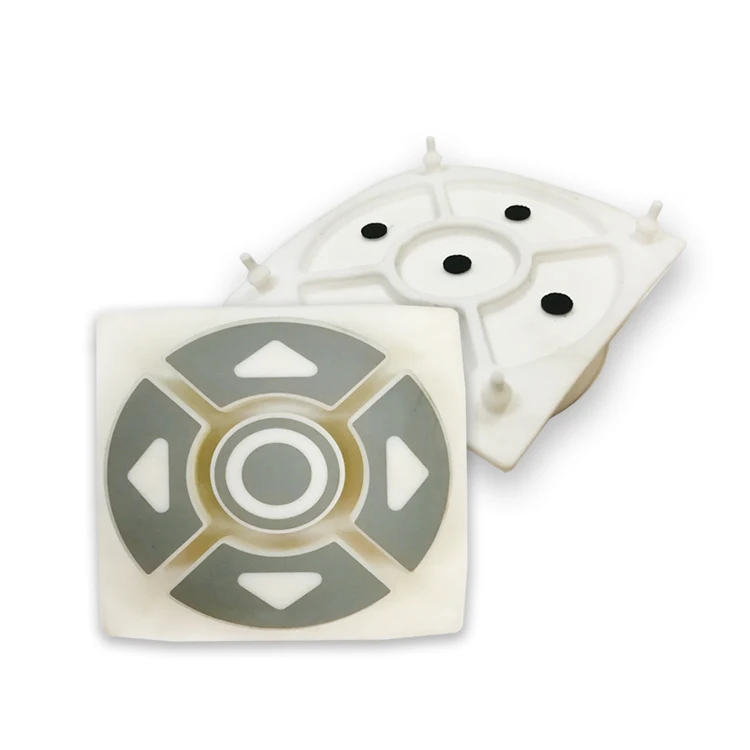
Customized different types silicone rubber membrane switch keypad keyboard keycaps
- Category: >>>
- Supplier: Guangzhou Jianming Electronic Technology Co. Ltd.
Share on (1600246124206):
Product Overview
Description
Product Description
Silicone Rubber Keypads:
Silicone Rubber Keypads are manufactured from elastic, nontoxic silicone rubber compounds and are processed from compression or injection molding. The result is an economical and reliable keypad for small, medium and large production runs. Silicone keypads can be integrated with printed circuit boards or flexible circuits and have excellent resistance to temperature and aging.
Uniontech can also integrate your rubber keypad solution with a graphic overlay, printed circuit board (PCB), membrane ½ switch to allow additional flexibility in your design.
BASE MATERIAL:
The natural color of raw silicone rubber material is translucent white. Raw materials are blended with silicone-based color
pigments to obtain the color required. Phosphorescent materials can be blended with the base rubber to create a “glow-in-the-dark” effect. Durometer is one of several ways to indicate the hardness of a material. It defines the material’s resistance to permanent indentation. It is named for instrument maker AlbertF.Shore, who developed a measurement device called a durometer in the 1920s. The term durometer is often used to refer to the measurement, as well as the instrument itself. Durometer is typically used as a
measure of hardness in polymers, elastomers and rubbers.
Suggested hardness for silicone rubber keypads is 40 to 60 Shore A depending on your requirements for actuation force, tactile response and life. Higher hardness rubber keypads offer higher actuation force and snap ratio but shorter life.
PRINTING, MOLDING AND HARDCOATING:
Silkscreen printing
Graphics can be applied directly to the keytops of the rubber keypad by screen printing. Multiple colors may be printed, with each color requiring an additional process. The optimum keytop for printing is a flat keytop. However, some curved keytops can also be printed.
Spray paint and laser etch
After the translucent rubber is molded into the keypad shape, the entire top surface of the keypad is spray-painted with one or more colors. A laser is used to etch graphics on the keytops to expose either an underlying layer of paint or the raw rubber. When backlit, light will pass through the translucent rubber and be visible in the etched areas.
Two-shot molding
Similar to Dual Durometer, a keypad can be produced using one color of rubber for the key top and a separate color for the base.
Flow molding
This process allows specific areas of a keypad to be molded with different colored rubber. This provides different base colors without requiring complicated spray-paint techniques. Silk screening is typically done on top of these base colors to provide additional graphics.
Key caps
Premolded hard plastic keytops can be applied to the molded rubber keypad. This provides a hard key feel with the economies and
efficiencies of a rubber keypad.
PU coating
Silicone rubber keypads can also be spray-coated with PU resin to provide absolute lifetime abrasion resistance and oil
resistance. This important technique has already been successfuly developed.
Hard coating
A screen-printing or spray-painting process is used to apply an additional protective clear silicone ink on the keytops. This
increases the abrasion resistance of the printed graphics.
Epoxy coating
Silicone rubber keypads can be coated with a layer of epoxy resin to form a hard top and feel like plastic. The epoxy coating also provides additional abrasion resistance for the printed graphics.
Conductive contacts
Silicone rubber keypads can be co-molded with carbon impregnated silicone pills (carbon pills), gold -plated pills and metal pills according to the application requirements. Due to the low cost of production and acceptable resistance (less than 100 ohms), most rubber keypads are co-molded with carbon pills.
GENERAL SPECIFICATIONS:
Contact resistance
200 ohm maximum with 150 ohm typical
Life
1 million actuations per key
Contact bounce
10 Msec. maximum
Insulation resistance
100 Mohm at 250v DC
Maximum contact rating
24v DC 100mA
Dielectric strength
15 kv/mm
Operation temperature
40 to 150°C
Storage temperature
-50 to 175°C
Travel
0.8mm to 1.2mm typical
Material hardness
50±5 Shore A typical
FEATURES:
• Light pipes
• Abrasion-resistant coating
• Epoxy capped
• Laser etching
• Positive or negative printing
• Fluorosilicone
• Glow-in-the-dark
• Variety of colors
Silicone Rubber Keypads are manufactured from elastic, nontoxic silicone rubber compounds and are processed from compression or injection molding. The result is an economical and reliable keypad for small, medium and large production runs. Silicone keypads can be integrated with printed circuit boards or flexible circuits and have excellent resistance to temperature and aging.
Uniontech can also integrate your rubber keypad solution with a graphic overlay, printed circuit board (PCB), membrane ½ switch to allow additional flexibility in your design.
BASE MATERIAL:
The natural color of raw silicone rubber material is translucent white. Raw materials are blended with silicone-based color
pigments to obtain the color required. Phosphorescent materials can be blended with the base rubber to create a “glow-in-the-dark” effect. Durometer is one of several ways to indicate the hardness of a material. It defines the material’s resistance to permanent indentation. It is named for instrument maker AlbertF.Shore, who developed a measurement device called a durometer in the 1920s. The term durometer is often used to refer to the measurement, as well as the instrument itself. Durometer is typically used as a
measure of hardness in polymers, elastomers and rubbers.
Suggested hardness for silicone rubber keypads is 40 to 60 Shore A depending on your requirements for actuation force, tactile response and life. Higher hardness rubber keypads offer higher actuation force and snap ratio but shorter life.
Lower hardness
rubber keypads have lower actuation force and snap ratio but longer life. Silicone rubber is available in flame classifications of UL94HB and UL94V0. The flame classification of most silicone rubber used for keypads is UL94HB.
COMPARISON OF SHORE A DUROMETERS:
25 Shore A
Rubber band
40 Shore A
Pencil eraser
55 Shore A
Door Seal
65 Shore A
Tire Tread
100 Shore A
Hard skateboard wheel
Dual Durometer solutions are also available. In this construction, a higher (harder) durometer rubber is used for the key top and a lower (softer) durometer rubber is used for the base.
rubber keypads have lower actuation force and snap ratio but longer life. Silicone rubber is available in flame classifications of UL94HB and UL94V0. The flame classification of most silicone rubber used for keypads is UL94HB.
COMPARISON OF SHORE A DUROMETERS:
25 Shore A
Rubber band
40 Shore A
Pencil eraser
55 Shore A
Door Seal
65 Shore A
Tire Tread
100 Shore A
Hard skateboard wheel
Dual Durometer solutions are also available. In this construction, a higher (harder) durometer rubber is used for the key top and a lower (softer) durometer rubber is used for the base.
PRINTING, MOLDING AND HARDCOATING:
Silkscreen printing
Graphics can be applied directly to the keytops of the rubber keypad by screen printing. Multiple colors may be printed, with each color requiring an additional process. The optimum keytop for printing is a flat keytop. However, some curved keytops can also be printed.
Spray paint and laser etch
After the translucent rubber is molded into the keypad shape, the entire top surface of the keypad is spray-painted with one or more colors. A laser is used to etch graphics on the keytops to expose either an underlying layer of paint or the raw rubber. When backlit, light will pass through the translucent rubber and be visible in the etched areas.
Two-shot molding
Similar to Dual Durometer, a keypad can be produced using one color of rubber for the key top and a separate color for the base.
Flow molding
This process allows specific areas of a keypad to be molded with different colored rubber. This provides different base colors without requiring complicated spray-paint techniques. Silk screening is typically done on top of these base colors to provide additional graphics.
Key caps
Premolded hard plastic keytops can be applied to the molded rubber keypad. This provides a hard key feel with the economies and
efficiencies of a rubber keypad.
PU coating
Silicone rubber keypads can also be spray-coated with PU resin to provide absolute lifetime abrasion resistance and oil
resistance. This important technique has already been successfuly developed.
Hard coating
A screen-printing or spray-painting process is used to apply an additional protective clear silicone ink on the keytops. This
increases the abrasion resistance of the printed graphics.
Epoxy coating
Silicone rubber keypads can be coated with a layer of epoxy resin to form a hard top and feel like plastic. The epoxy coating also provides additional abrasion resistance for the printed graphics.
Conductive contacts
Silicone rubber keypads can be co-molded with carbon impregnated silicone pills (carbon pills), gold -plated pills and metal pills according to the application requirements. Due to the low cost of production and acceptable resistance (less than 100 ohms), most rubber keypads are co-molded with carbon pills.
GENERAL SPECIFICATIONS:
Contact resistance
200 ohm maximum with 150 ohm typical
Life
1 million actuations per key
Contact bounce
10 Msec. maximum
Insulation resistance
100 Mohm at 250v DC
Maximum contact rating
24v DC 100mA
Dielectric strength
15 kv/mm
Operation temperature
40 to 150°C
Storage temperature
-50 to 175°C
Travel
0.8mm to 1.2mm typical
Material hardness
50±5 Shore A typical
FEATURES:
• Light pipes
• Abrasion-resistant coating
• Epoxy capped
• Laser etching
• Positive or negative printing
• Fluorosilicone
• Glow-in-the-dark
• Variety of colors
Specification
item | value |
Place of Origin | China |
Brand Name | UTC |
Model Number | UTC518 |
Type | Membrane Keypad |
Application | Remote Controller |
Keypad Button Material | silicone rubber |
Color | Customized Color |
Size | Customized Size |
Shape | Customized Shape |
Logo | Customized Logo |
Printing | Laser Printing |
Feature | Water-proof.durable.Eco-friendly |
Certification | ISO9001:2015 / ROHS |
Usage | Electric Appliance |
Life Expectancy | 1 Million Times |
Back adhesive | 3M9498A/3M467/3M468/3M200 |
Packing & Delivery


Packed with polybag and protected by foam in the export carton.
Company Profile
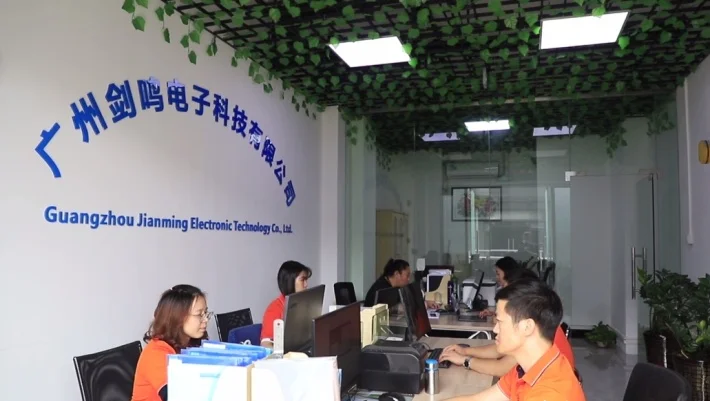
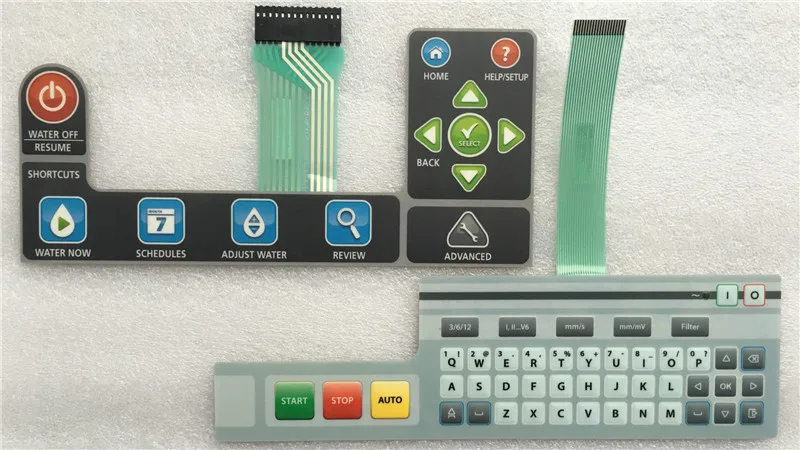
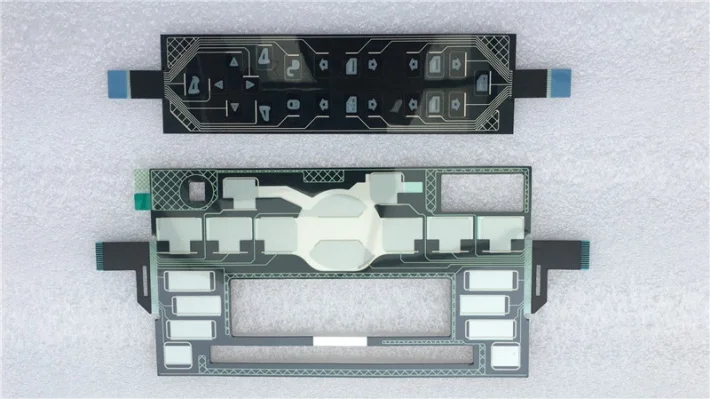
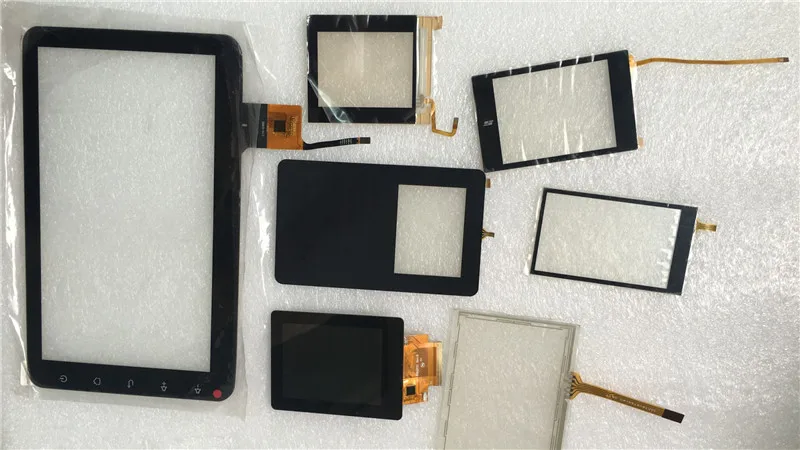
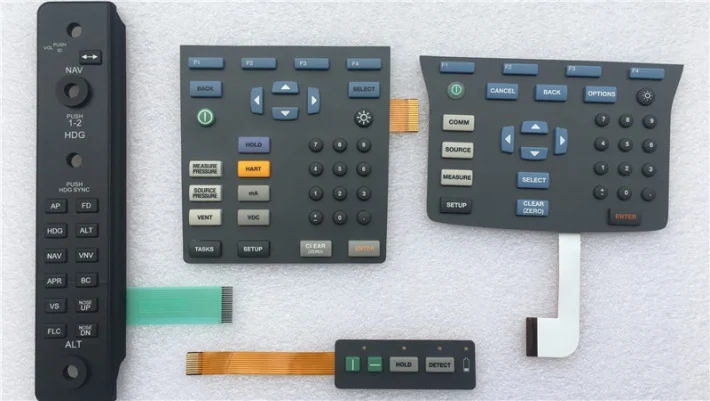
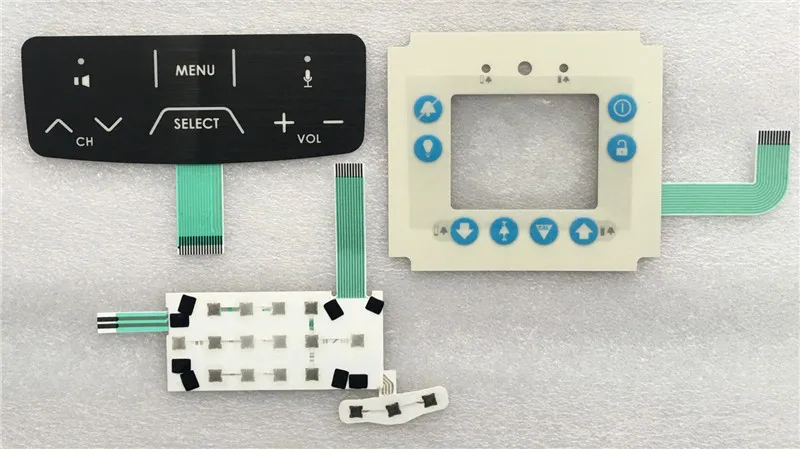
Guangzhou Jianming Electronic Technology Co., Ltd(UTC for short) is a specialized in large-scale production of Membrane Switches, Graphic Overlays, Silicone Keypads, Touch Screens(Touch Panel), Flexible Circuits, PCB(printed circuit board) Designs,Metal Touch, Plastic Housings , Aluminum Parts and Decals high-tech enterprises. Our products are widely used in electronic communications\\industrial control\\man-machine interface\\medical instrumentation\\body-building apparatuses\\Automotive industry\\Instrumentation equipment\\household appliances\\children's toys\\Military equipment and other industries and fields. Our market is between china and abroad, our products currently export to America\\England\\Canada\\Japan\\Germany\\Sweden\\France\\Australia\\Taiwan and so on. The overseas market is 80% of our business.
Guangzhou Union Tech Circuit Co., Ltd, founded in 2008, is a private stock enterprises, our location is about 10 minutes drive from the Guangzhou Airport. Now our staff is more than 120 people, including 6-10 engineering, 10-15 QC and so on. Our factory size is more than 4,000 square meters and includes the clean room which is more than 300 square meters.
Our company is constantly introducing technology and equipment from Japan\\United States\\and Taiwan. As well as a professional management team and ISO9001:2008. We offer high-quality\\efficient\\beautiful\\environmental products to our clients (fit RoHS certification).
Service does not have an end. Also, satisfaction does not have an end.
Guangzhou Union Tech Circuit Co., Ltd, founded in 2008, is a private stock enterprises, our location is about 10 minutes drive from the Guangzhou Airport. Now our staff is more than 120 people, including 6-10 engineering, 10-15 QC and so on. Our factory size is more than 4,000 square meters and includes the clean room which is more than 300 square meters.
Our company is constantly introducing technology and equipment from Japan\\United States\\and Taiwan. As well as a professional management team and ISO9001:2008. We offer high-quality\\efficient\\beautiful\\environmental products to our clients (fit RoHS certification).
Service does not have an end. Also, satisfaction does not have an end.
FAQ
1. who are we?
We are based in Guangdong, China, start from 2013,sell to North America(30.00%),Eastern Europe(21.00%),Domestic Market(17.00%),Western Europe(12.00%),Southern Europe(8.00%),Northern Europe(7.00%),Southeast Asia(5.00%). There are total about 11-50 people in our office.
2. how can we guarantee quality?
Always a pre-production sample before mass production;
Always final Inspection before shipment;
3.what can you buy from us?
Membrane Switch,Touch Panel,Digital Printing Graphic Overlay,PCB Membrane Switch,Silicone Keyboard
4. why should you buy from us not from other suppliers?
We have more than 12 years membrane switches and touch screen desinging and produce experience.
Our engineering team has over 20 years of membrance switches and touch screen experience.
Factory has more than 120 staff, includes 6-10 engineers, 10-15 QC.
5. what services can we provide?
Accepted Delivery Terms: FOB,CIF,EXW,FCA,DDP,DDU,Express Delivery;
Accepted Payment Currency:USD,EUR,JPY,CAD,AUD,HKD,GBP,CNY,CHF;
Accepted Payment Type: T/T,L/C,D/P D/A,MoneyGram,Credit Card,Western Union,Cash;
Language Spoken:English,Chinese,Japanese
We are based in Guangdong, China, start from 2013,sell to North America(30.00%),Eastern Europe(21.00%),Domestic Market(17.00%),Western Europe(12.00%),Southern Europe(8.00%),Northern Europe(7.00%),Southeast Asia(5.00%). There are total about 11-50 people in our office.
2. how can we guarantee quality?
Always a pre-production sample before mass production;
Always final Inspection before shipment;
3.what can you buy from us?
Membrane Switch,Touch Panel,Digital Printing Graphic Overlay,PCB Membrane Switch,Silicone Keyboard
4. why should you buy from us not from other suppliers?
We have more than 12 years membrane switches and touch screen desinging and produce experience.
Our engineering team has over 20 years of membrance switches and touch screen experience.
Factory has more than 120 staff, includes 6-10 engineers, 10-15 QC.
5. what services can we provide?
Accepted Delivery Terms: FOB,CIF,EXW,FCA,DDP,DDU,Express Delivery;
Accepted Payment Currency:USD,EUR,JPY,CAD,AUD,HKD,GBP,CNY,CHF;
Accepted Payment Type: T/T,L/C,D/P D/A,MoneyGram,Credit Card,Western Union,Cash;
Language Spoken:English,Chinese,Japanese
Certifications


We Recommend
New Arrivals
New products from manufacturers at wholesale prices