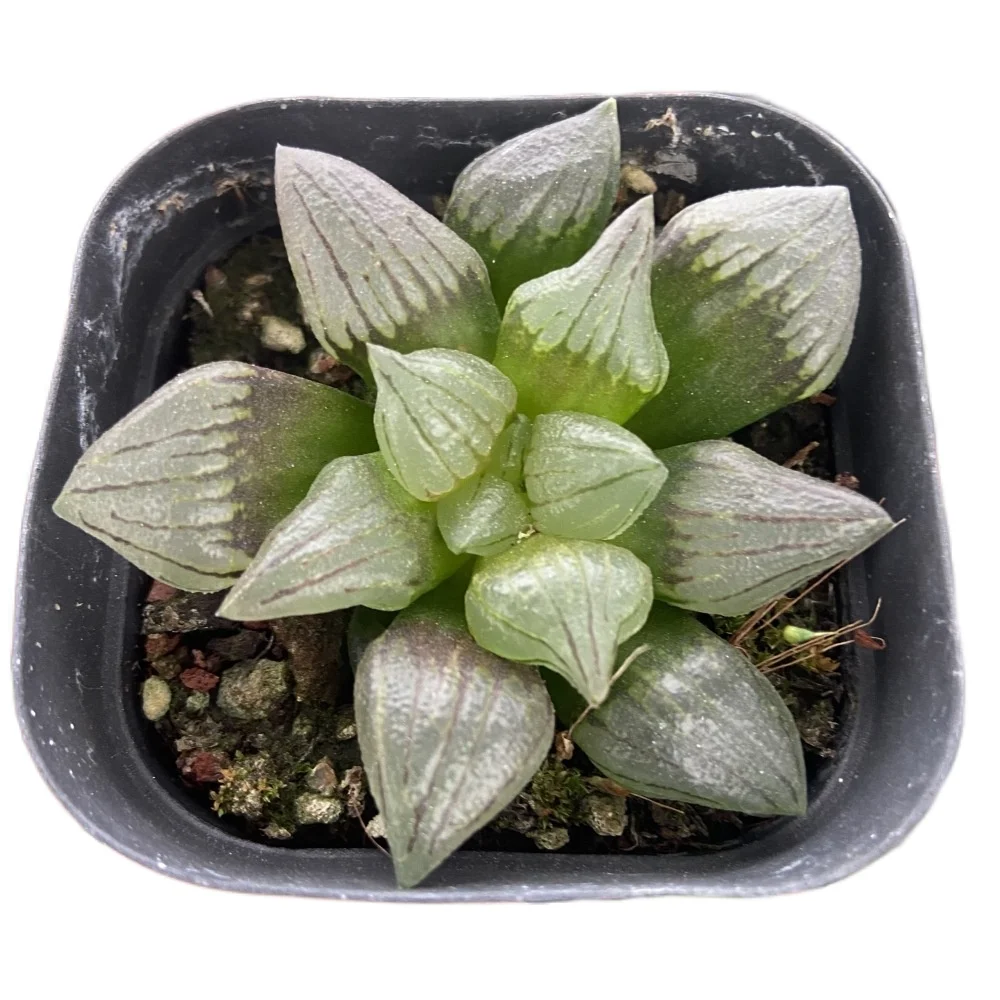
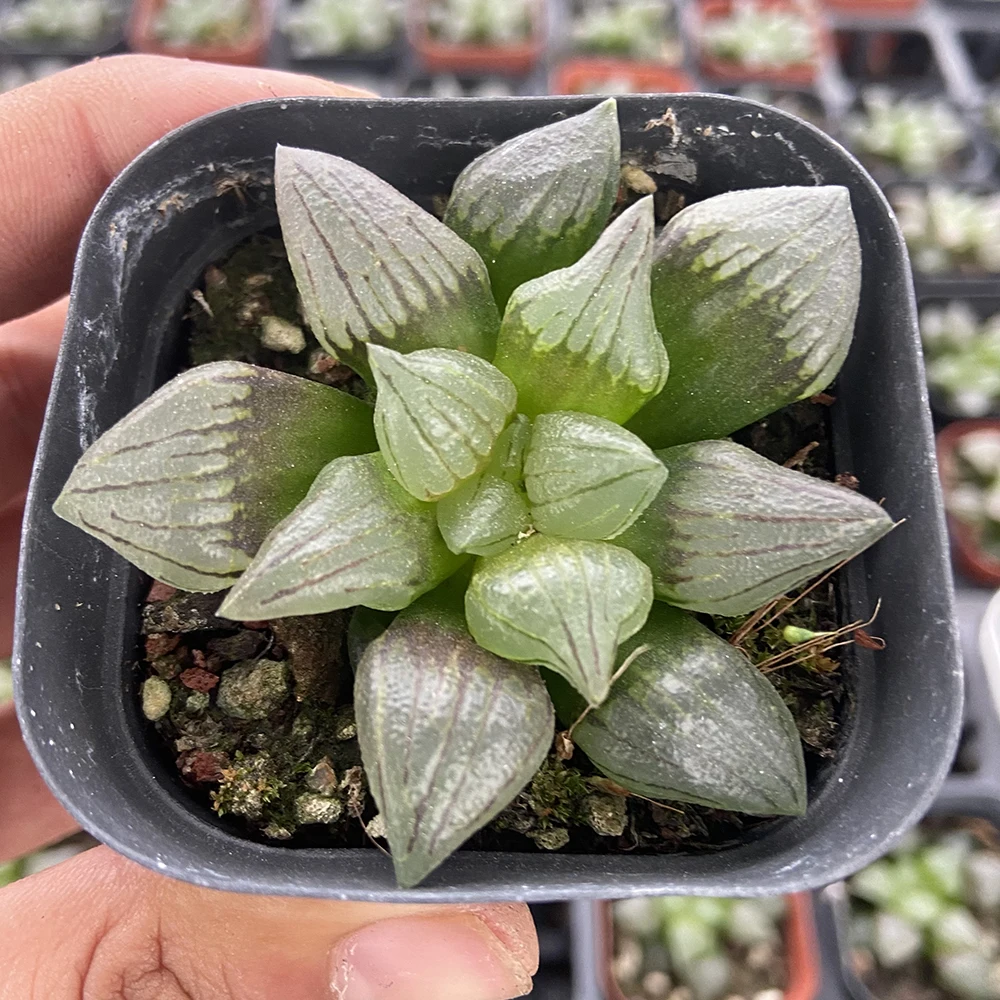
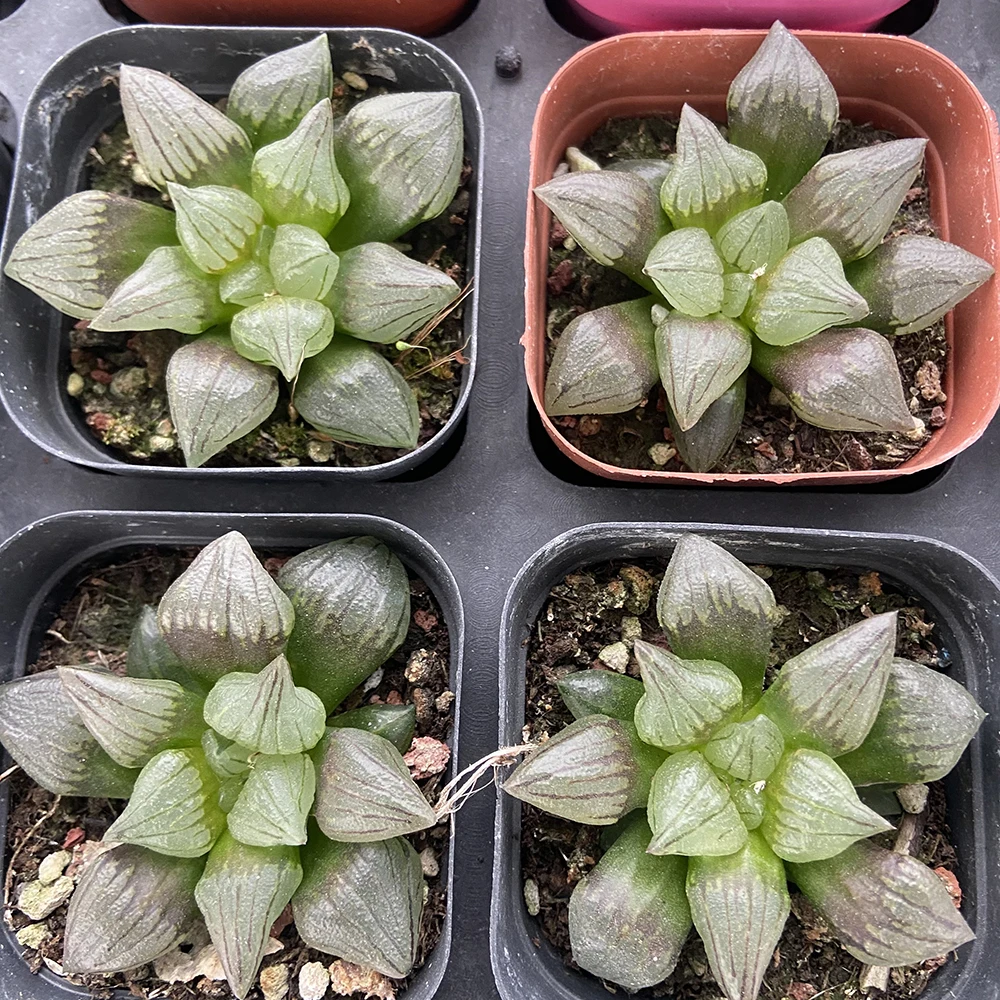
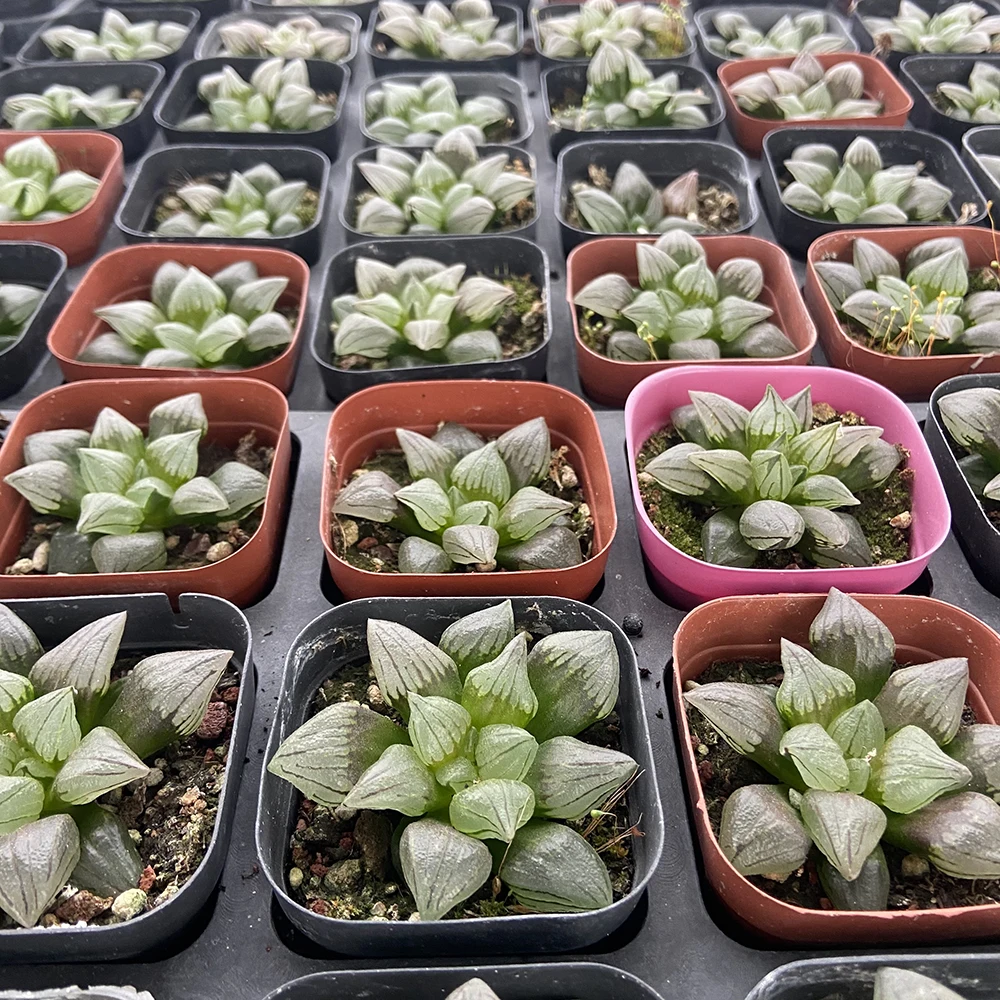
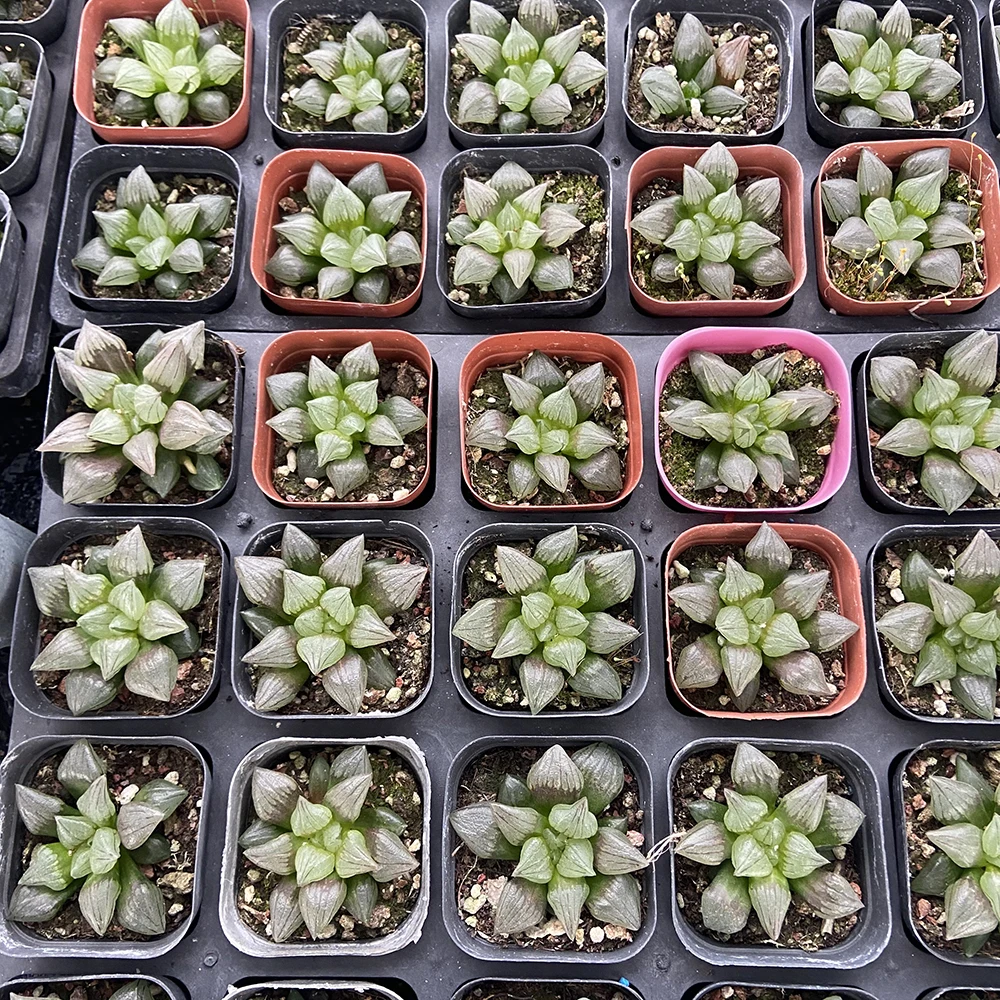
Succulent perennial herbs. The plant is 5-16cm in height. The plant is solitary at the beginning, and then gradually presents group growth. The fleshy leaves are arranged in a rosette shape, with green color and transparent or translucent top, which is called "window". There are dark vertical lines on the surface and small "whiskers" on the top (commonly known as "top hair", which is not found in some horticultural jade dew). Loose raceme with white florets and longitudinal green stripes. It blooms at the end of spring.
Cultivation Techniques
During the growth period of Yulu, the soil should be kept moist to avoid ponding and rain, especially for a long time, in order to avoid rotten roots; But it is not suitable for long-term drought, otherwise the plant will not die, but the leaves are withered, the color of leaves is dim and lack of vitality. Yulu likes the environment with certain air humidity. When the air is dry, it can often spray water on the plant and the surrounding environment to increase the air humidity. In the growing season, it can also cover the plant with a transparent colorless beverage bottle with the upper part cut off, so that it can grow in the small environment with humid air. This can make the leaves full and the transparency of the "window" higher. But in the high temperature season in summer, we must remove the drink bottle, so as to avoid the plant death due to hot and humid. During the growing period, the plants with vigorous growth should be applied with decomposed thin liquid fertilizer or compound fertilizer with low nitrogen and high phosphorus and potassium once a month, while the plants with new growth or weak growth should not be applied with fertilizer; Fertilization is not necessary during the dormancy period when the temperature is high in summer or low in winter. The fertilization time should be in the morning or evening when the weather is fine[ 5] In summer, the plant is dormant or semi dormant, and its growth is slow or completely stagnant. It can be maintained in a ventilated, cool and dry place, so as to prevent the plant from "steaming" to death in a muggy and humid environment, and avoid the sun exposure. Do not pour too much water, stop fertilization, and return to normal management after it is cool in autumn. In winter, the lowest temperature is about 8 ℃ at night and above 15 ℃ during the day. The plants can continue to grow and should be watered normally; If water is controlled to make the plant dormant, it can endure low temperature of 3-5 ℃ or even short-term low temperature of 0 ℃. If the plant is in low temperature environment below 5 ℃ for a long time, it will not die, but there will be traces of frostbite on the leaf surface, and even the peripheral leaves will freeze to death. Therefore, it is better to keep the overwintering temperature above 5 ℃[ 5] For the robust growth of Yulu, change the basin once a year in spring or autumn. If the plant growth is stagnant and the leaves are shriveled during the growth period, it is likely that the root system is damaged, so it is necessary to turn the basin to clean up the root system in time. When turning the pot, the aged and hollow roots are cut off, the long roots are cut short, and the thick white new roots are retained, and then planted with new culture soil. The newly planted plants can spray water frequently, but they should be watered less each time, so that the plants can recover as soon as possible. The soil should be loose and fertile, with good drainage and air permeability, calcareous and coarse granular matrix. It is usually planted in the mixed soil of 2 parts of rotten leaf soil or peat, 3 parts of coarse sand or vermiculite, and mixed with a small amount of bone powder. The ornamental value of Yulu flower is not high. If the seed is not reserved, the flower can be pulled out from the base to avoid consuming too much nutrients. It should be noted that the flower stem should not be cut with scissors, but should be pulled out by shaking left and right hands, so as to avoid the residual flower stem remaining between leaves, causing adverse effects on the growth of new leaves in the future[ 5] Poor soil permeability, long-term waterlogging easily lead to rotten roots, plant rot caused by central waterlogging, long-term drought or other causes of root atrophy, no new roots, unable to absorb nutrients and water, resulting in plant growth stagnation, withered leaves, can improve the cultivation environment for prevention, if there are signs of rotten plants, to deal with in time, remove the rotten parts, And daub carbendazim on the wound, then air it until the wound is dry. For completely rotten plants, check whether there are still relatively complete leaves (especially the base must be complete). If there are, dry the base and then carry out leaf cutting propagation[ 10]
size
About 10 cm
Main value
Yulu is one of the small succulent plants with exquisite plants, rich varieties, crystal clear leaves, moist and fresh, just like a living handicraft. It is suitable for planting in small pots or making horticultural scenery boxes to decorate windowsill, desk, desk, balcony, etc.
Material
Living plants
Introduction to Plants
Native to South Africa. It likes cool semi shade environment, and grows mainly in spring and autumn. It is resistant to drought but not cold. It should avoid high temperature, humidity and sun exposure. It is afraid of shade and soil ponding. The sandy loam with loose air permeability and smooth drainage is suitable.
Reproduction modum
Ramet It can be carried out in combination with changing pots, or the young plants beside the mother plant can be dug in the growing season. Both rooted and rootless plants can survive. Those with roots can be planted directly, and those without roots should be dried for 1-2 days before planting. The newly planted plants should not be watered too much, so as to avoid rot. after the new roots grow, the normal management should be carried out[ 5] cuttage In the growing season, the selection of robust and full fleshy leaves requires complete base. After the leaves are taken off, they are allowed to air for 3-5 days. After the wound is dry, they are inserted into the substrate. Later, the basin soil is kept slightly moist. It is easy for the base of nephew to take root and grow small buds. When the small buds are slightly larger, they can be planted separately[ 5] sow Seeds can be obtained by artificial pollination and sown in autumn or spring. The sowing soil can be mixed with vermiculite in 3 parts and rotten leaf soil or peat soil in 2 parts. It is best to disinfect the soil with high temperature before sowing. The seeds were covered with glass and emerged about 20 days after sowing. Remove the glass after emergence, pay attention to ventilation, do not make the soil too dry, when the seedlings are overcrowded, pay attention to transplanting. Some variation plants may appear in the seeded seedlings. The young plants with larger plants, compact plant type, fleshy leaves, high transparency of "window" and obvious veins can be selected as the seedlings for preservation[ 9]
Company Profile
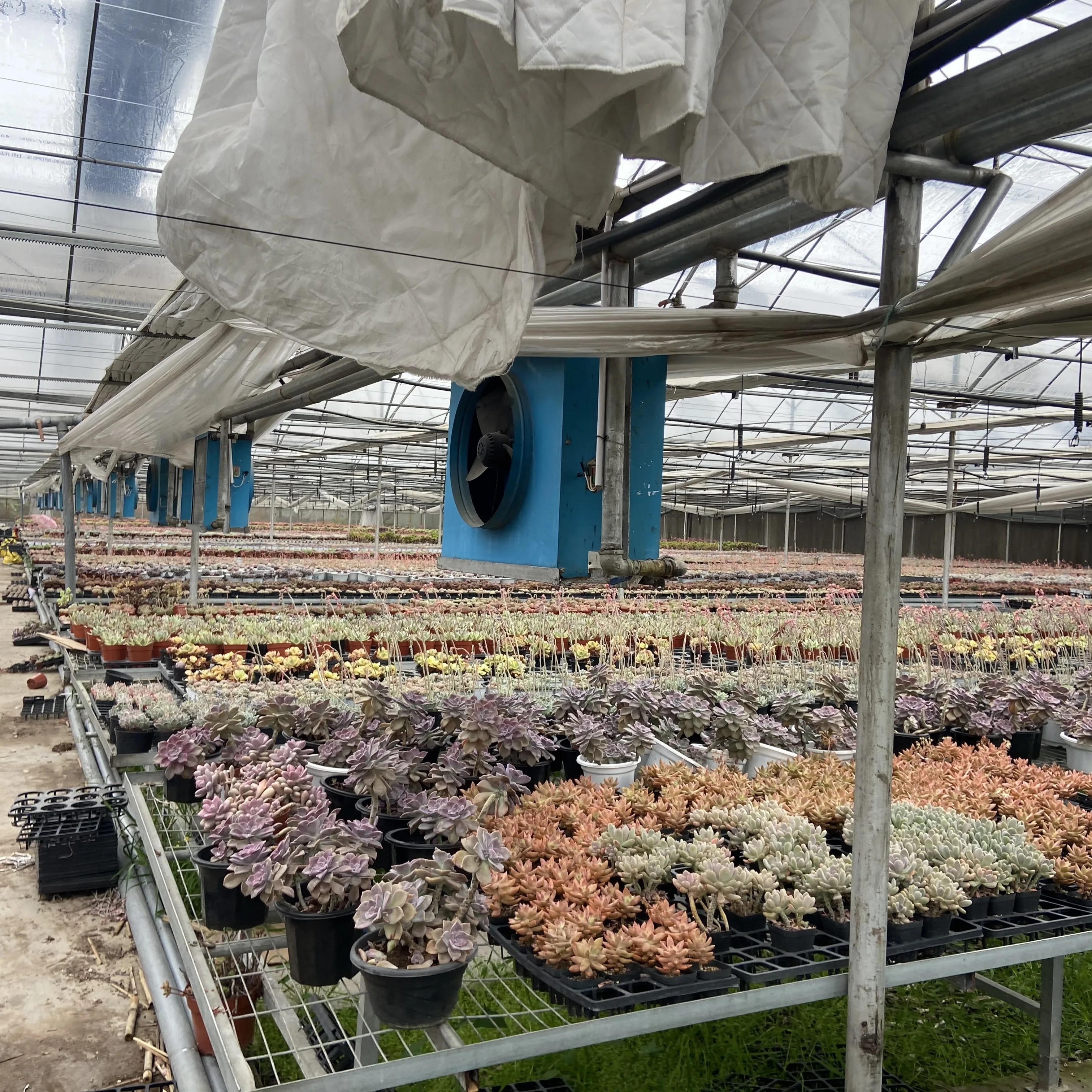
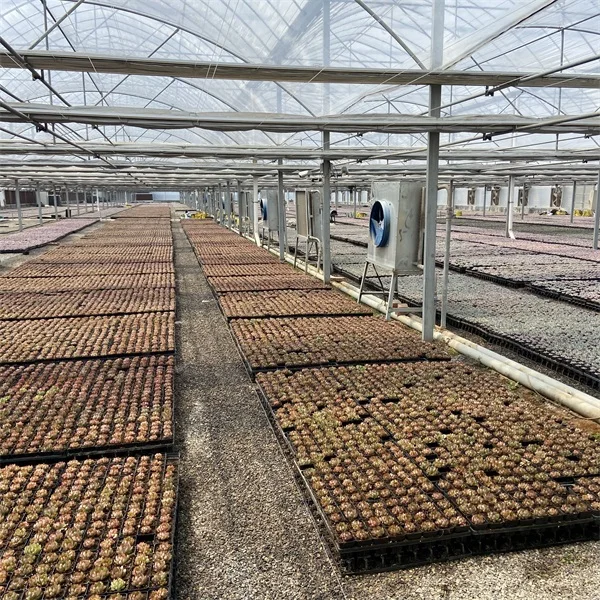
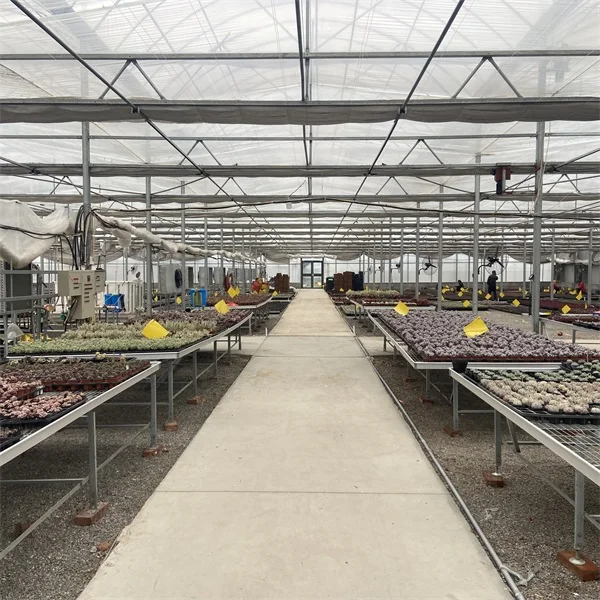
Qingzhou Poetic Garden Flower Distribution Department is a self-produced and self sold agricultural flower industry complex, with a thousand mu greenhouse production area
(arch greenhouse, intelligent greenhouse. Traditional agricultural greenhouses, etc.), the category of flower varieties has reached tens of thousands, this website is mainly engaged in meat, looking forward to cooperating with you.
Have price advantage: low price, good quality, self production and self marketing, no intermediate link
Quality advantage: one in a million, choose high-quality products phase delivery
Pre sales Optimization: professional customer service for you in time, carefully answer your questions
After sales worry free: customer service timely communicate with you about goods selection, preparation, delivery, logistics process, receiving and so on.
Wholeheartedly to provide you with the best service.
Our Advantages
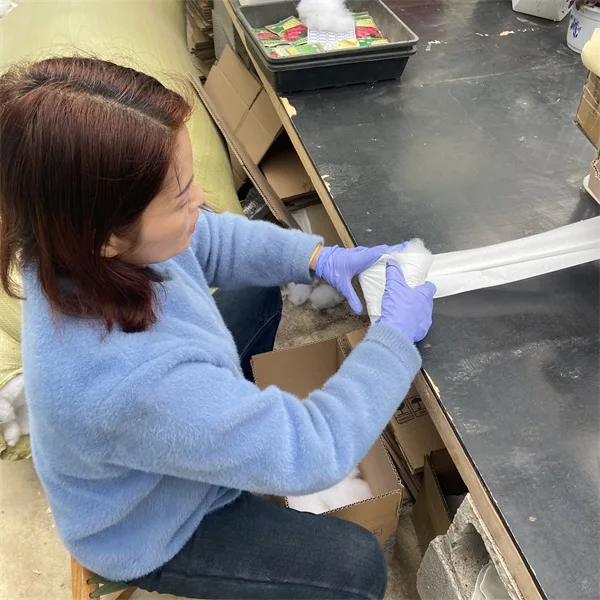
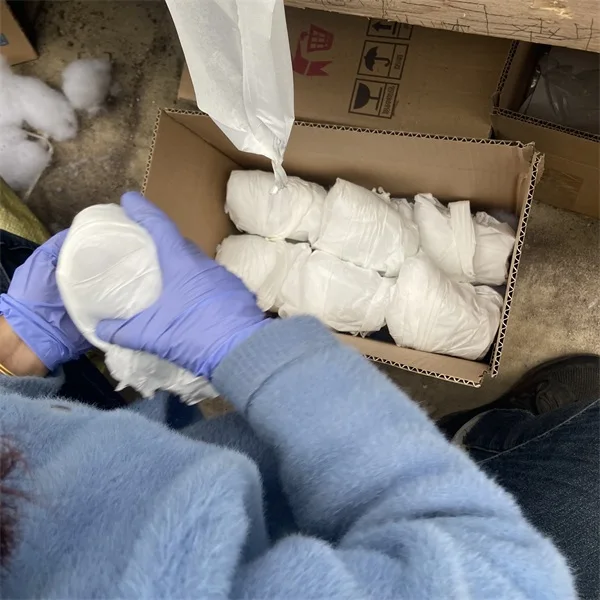
Packing & Delivery
FAQ
1. who are we? We are based in Shandong, China, start from 2020,sell to Central America(18.00%),North America(10.00%),South America(10.00%),Eastern Europe(10.00%),Southeast Asia(10.00%),Africa(10.00%),Mid East(10.00%),Northern Europe(10.00%),South Asia(10.00%). There are total about 101-200 people in our office.
2. how can we guarantee quality? Always a pre-production sample before mass production; Always final Inspection before shipment;
3.what can you buy from us? ornamental plant,decorative plant,succulent plant,flowerpot,Nutritive soil
4. why should you buy from us not from other suppliers? We are the origin of succulent plants in China and have the ability to integrate a variety of plants. With large-scale greenhouse, with uninterrupted supply capacity throughout the year!
5. what services can we provide? Accepted Delivery Terms: FOB,EXW,Express Delivery; Accepted Payment Currency:USD,EUR,JPY,CAD,AUD,HKD,CNY,CHF; Accepted Payment Type: T/T,L/C,D/P D/A,Credit Card,PayPal; Language Spoken:English,Chinese,Spanish,Japanese,Portuguese,German,Arabic,French,Russian,Korean,Hindi,Italian