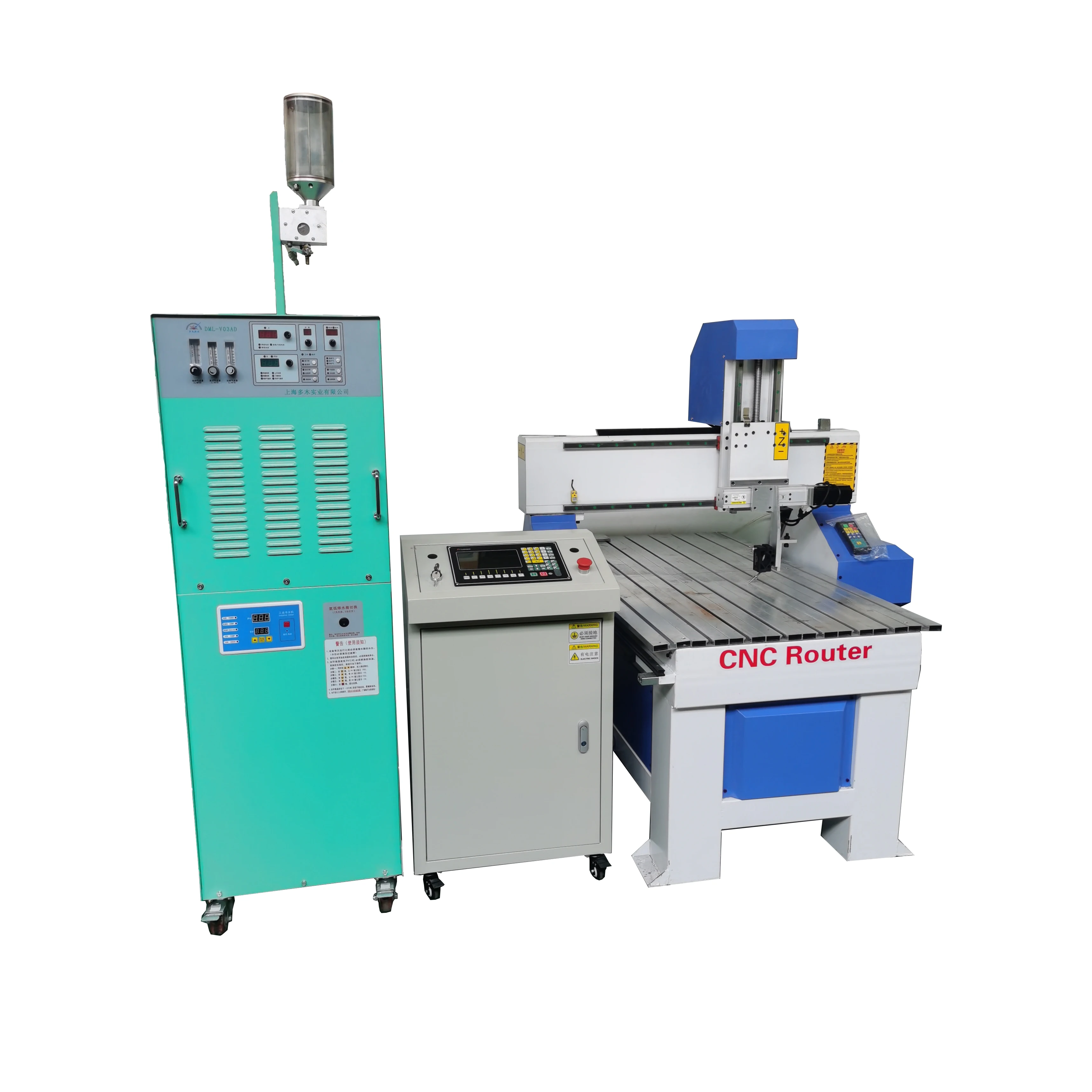
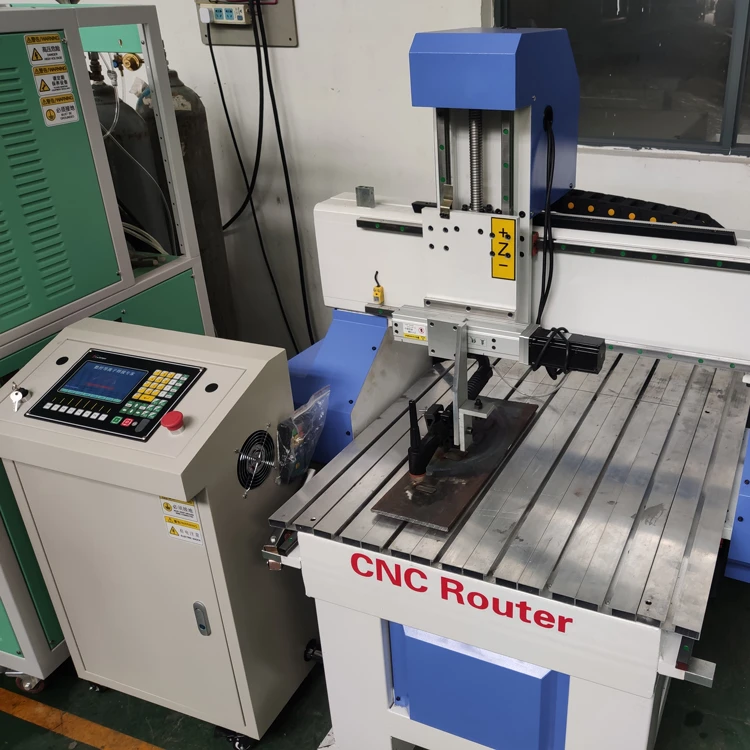
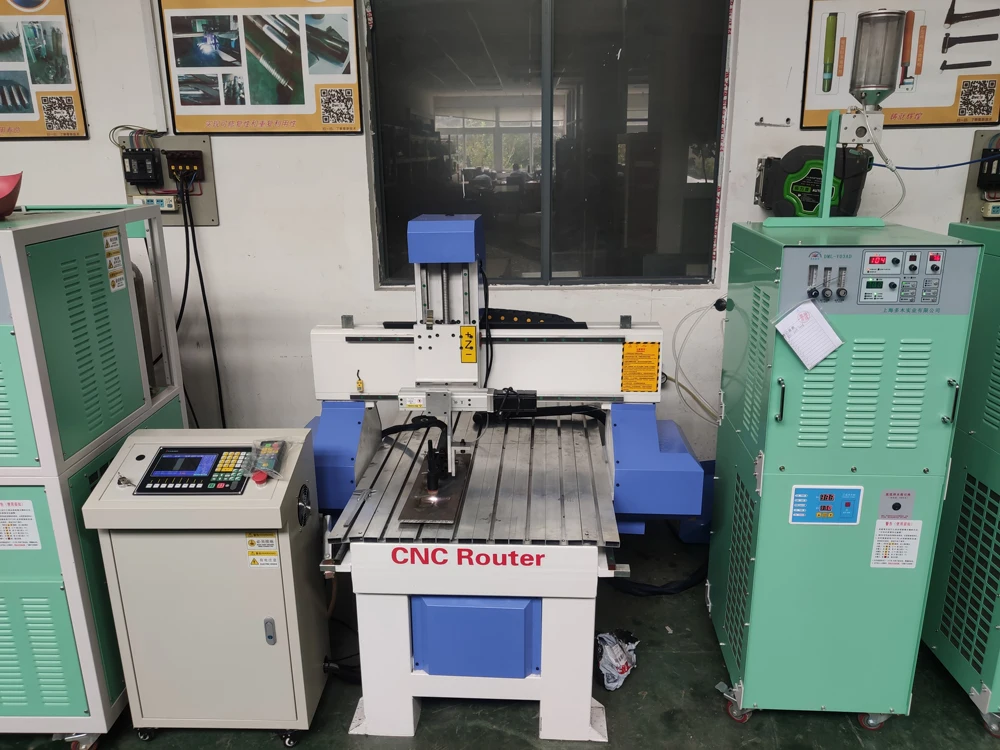
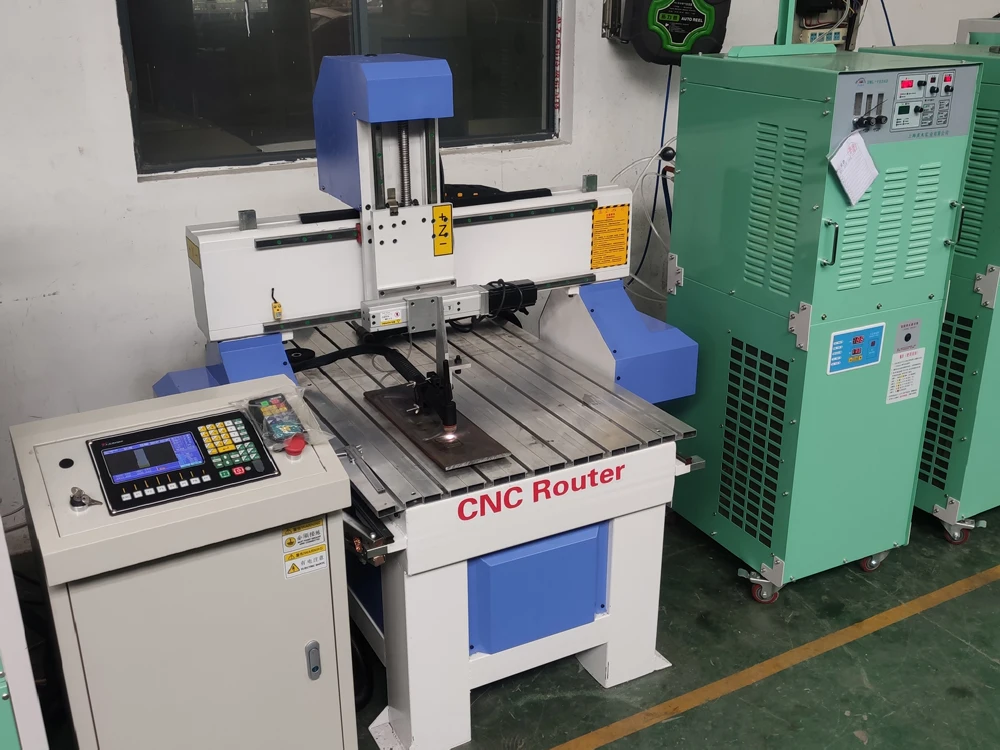
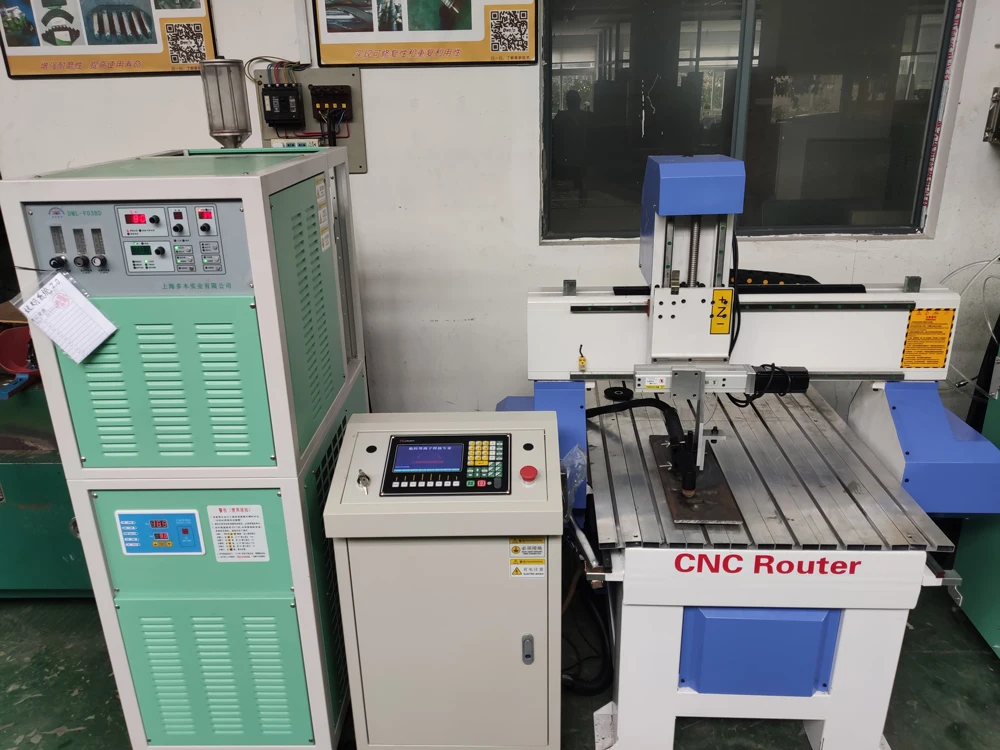
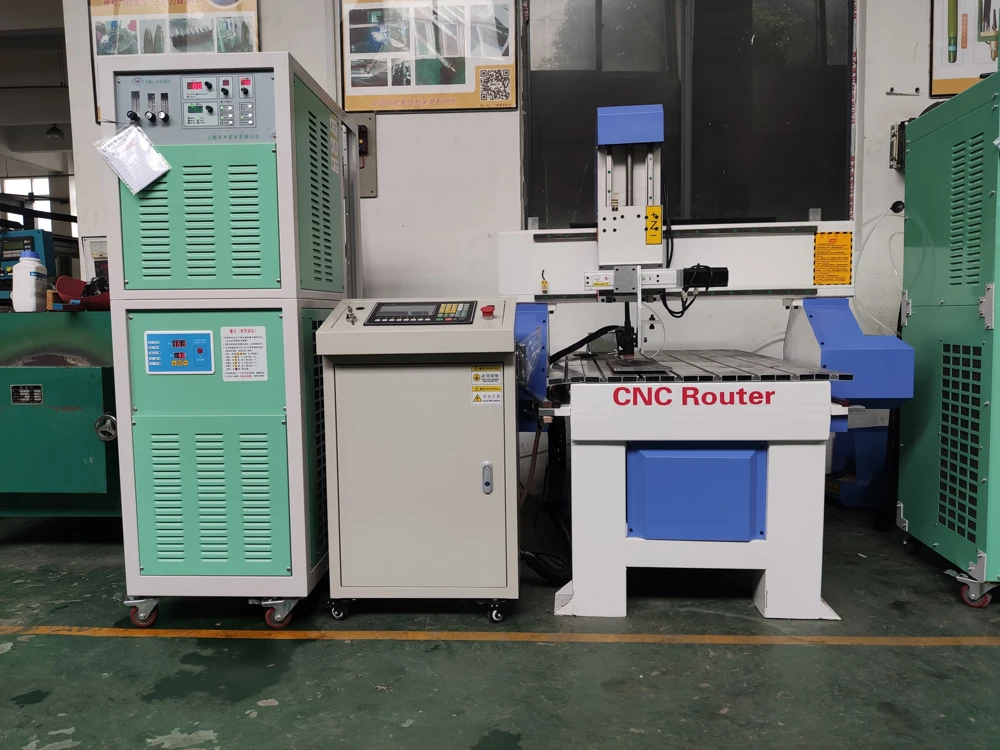
Automatic plasma surfacing equipment with Small planar gantry
- Category: >>>
- Supplier: Shanghai Duomu Insustrial Co. Ltd.
Share on (1600290958697):
Product Overview
Description
Products Description
country | China |
country model |
DML-V03CD Parameter

DML-V03CD PTA welding Power Supply
This paper provides the detailed parameters of a welder power supply. The automation part is a non-standard customized product. You need to contact us to get the detailed design scheme for free.
Introduction of PTA welding machine
Review of plasma powder surfacing technology
Plasma powder surfacing is an advanced surfacing technology, which uses argon plasma arc as heat source and powder alloy as filler.Compared with the traditional surfacing methods such as electric welding and argon arc welding, plasma powder surfacing has the characteristics of good surfacing forming, controllable penetration, high adhesion, good density and easy automation. Therefore, it is also the necessary equipment required by the relevant certification departments when valve enterprises apply for special equipment manufacturing license (TS) A-level certification.
2.Process characteristics of plasma powder surfacing
Compared with other surfacing methods, plasma surfacing has many advantages because it uses plasma arc as heat source and alloy powder as filler metal.
(2) The penetration is controllable and the dilution rate is low.
(3) The surfacing surface is flat and smooth with high density, and the surfacing surface of 0.5-5mm can be completed at one time.
(4) The stable surfacing layer can be obtained continuously for a long time, and the surfacing surface has no quality problems such as porosity and trachoma.
(5) The alloy powder is easy to prepare and can be used in a wide range of materials. Cobalt based, nickel based, iron-based and copper based powder welding materials can be selected, and the formula can be directly formulated according to the working conditions.
(6) It can be equipped with special machine, robot, etc. according to the demand, which is easy to realize automation and reduce labor intensity.
(7) The utilization rate of powder is high, and the utilization rate can reach more than 75%.
Plasma powder surfacing is an advanced surfacing technology, which uses argon plasma arc as heat source and powder alloy as filler.Compared with the traditional surfacing methods such as electric welding and argon arc welding, plasma powder surfacing has the characteristics of good surfacing forming, controllable penetration, high adhesion, good density and easy automation. Therefore, it is also the necessary equipment required by the relevant certification departments when valve enterprises apply for special equipment manufacturing license (TS) A-level certification.
1.Working process of plasma powder surfacing equipment
(1) Arc generation
There are two kinds of arc generating devices inside the equipment, which supply non transfer arc and transfer arc respectively.The negative electrodes of the two power supplies are connected in parallel and connected to the tungsten electrode (negative electrode) of the stack welding gun through a cable.The positive pole of the non transfer arc power supply is connected to the nozzle of the stack welding gun through the cable, and the positive pole of the transfer arc power supply is connected to the workpiece through the cable.The cooling water is led to the welding gun through the water-cooled cable to cool the nozzle and electrode.Argon enters the welding torch through solenoid valve and rotameter.After the power is turned on, the non transfer arc is ignited by high frequency spark.Then the transfer arc is ignited by the conductive channel between the tungsten electrode and the workpiece caused by the non transfer arc flame.After the transfer arc is ignited, the non transfer arc can be retained or cut off.It mainly uses transfer arc to produce molten pool on the surface of workpiece.
(2) Solder powder output
The alloy powder is continuously supplied by the powder feeder according to the demand, and is sent into the welding gun with the aid of powder feeding gas (generally argon) and blown into the arc.The alloy powder is heated in advance in the arc column, in a molten or semi molten state, and sprayed into the molten pool of the workpiece, where it is fully melted, and the gas and slag are discharged.
(3) Parameter adjustment
By adjusting the transfer arc and non transfer arc current, powder feeding amount and other process parameters, the heat transferred to the workpiece and melted alloy powder can be controlled.With the relative movement of the welding gun and the workpiece, the alloy pool gradually solidifies and the required alloy deposit layer is obtained on the workpiece.
(1) Arc generation
There are two kinds of arc generating devices inside the equipment, which supply non transfer arc and transfer arc respectively.The negative electrodes of the two power supplies are connected in parallel and connected to the tungsten electrode (negative electrode) of the stack welding gun through a cable.The positive pole of the non transfer arc power supply is connected to the nozzle of the stack welding gun through the cable, and the positive pole of the transfer arc power supply is connected to the workpiece through the cable.The cooling water is led to the welding gun through the water-cooled cable to cool the nozzle and electrode.Argon enters the welding torch through solenoid valve and rotameter.After the power is turned on, the non transfer arc is ignited by high frequency spark.Then the transfer arc is ignited by the conductive channel between the tungsten electrode and the workpiece caused by the non transfer arc flame.After the transfer arc is ignited, the non transfer arc can be retained or cut off.It mainly uses transfer arc to produce molten pool on the surface of workpiece.
(2) Solder powder output
The alloy powder is continuously supplied by the powder feeder according to the demand, and is sent into the welding gun with the aid of powder feeding gas (generally argon) and blown into the arc.The alloy powder is heated in advance in the arc column, in a molten or semi molten state, and sprayed into the molten pool of the workpiece, where it is fully melted, and the gas and slag are discharged.
(3) Parameter adjustment
By adjusting the transfer arc and non transfer arc current, powder feeding amount and other process parameters, the heat transferred to the workpiece and melted alloy powder can be controlled.With the relative movement of the welding gun and the workpiece, the alloy pool gradually solidifies and the required alloy deposit layer is obtained on the workpiece.
2.Process characteristics of plasma powder surfacing
Compared with other surfacing methods, plasma surfacing has many advantages because it uses plasma arc as heat source and alloy powder as filler metal.
(1) High cladding speed and high productivity.
(2) The penetration is controllable and the dilution rate is low.
Dilution ratio mainly refers to the overlap and fusion of surfacing layer and substrate, and its function is to control the bonding strength of surfacing.If the dilution ratio is too small, the strength will be low (and metallurgical bonding will be changed into mechanical bonding). If the dilution ratio is too large, the performance of the surfacing layer will be affected and the shrinkage stress of the surfacing layer will be large, resulting in cracking.It is generally controlled at about 5% - 10%.
(3) The surfacing surface is flat and smooth with high density, and the surfacing surface of 0.5-5mm can be completed at one time.
(4) The stable surfacing layer can be obtained continuously for a long time, and the surfacing surface has no quality problems such as porosity and trachoma.
(5) The alloy powder is easy to prepare and can be used in a wide range of materials. Cobalt based, nickel based, iron-based and copper based powder welding materials can be selected, and the formula can be directly formulated according to the working conditions.
(6) It can be equipped with special machine, robot, etc. according to the demand, which is easy to realize automation and reduce labor intensity.
(7) The utilization rate of powder is high, and the utilization rate can reach more than 75%.

For instance
Let me give you an example about the treatment of wear-resistant coating for oil plunger. I'd like to introduce you to the basic process of plasma cladding. Other product treatment process plan can consult our manual customer service.
Our service
Company Profile
Shanghai Duomu Industry Co., Ltd., united with manufactury, R&D, sales, has been engaged in welding power for years. Specialized in precision Argon Arc Welding machines, precision plasma welding machines(CCC authentication), powder surfacing sets. Based on digital technologies, we manufacture SOPC, long-distance communication, welding data storage, multi-functional units for automated production to achieve better quality and efficiency. Now our units have been widely applied in Aerospace Industry, nuclear power industry, petro-chemical Line, coal minery and many other fields.
With strong supports from advanced techniques and innovative teams, now we can accept DIY sets. To design and manufacture a unique line for your multiple purposes. Our institute has produced the national 863 project source of a geomagnetic survey, it’s now widely applied to Ocean & Oil exploration.
With High-tech products, high quality, high efficency service, Duomu aims to the top team in DIY Welding Machines.
With strong supports from advanced techniques and innovative teams, now we can accept DIY sets. To design and manufacture a unique line for your multiple purposes. Our institute has produced the national 863 project source of a geomagnetic survey, it’s now widely applied to Ocean & Oil exploration.
With High-tech products, high quality, high efficency service, Duomu aims to the top team in DIY Welding Machines.

Manufacturing Technique
We have our own plant and dozens of automation design engineers to design and assemble automatic welding machines for customers.


Recommend Products
We independently develop, produce and sell welding equipment, and customize the non-standard automation part according to the needs of customers. Next, we recommend common automatic equipment. If you don't have the equipment you want, you can provide us with your requirements. Engineers will design products according to the requirements.


Exhibition
We have basically participated in all the welding exhibitions held in China. If you are lucky enough to visit China, you will definitely meet us. If you have the opportunity, I hope you can come to our company to visit our company and visit our welding machine products and equipment on the spot.


Sample display
Our equipment is widely used, can replace laser cladding, argon arc welding, gas shielded arc welding and so on. It shows outstanding ability in the treatment of wear-resistant coating on metal surface. The utility model comprises a middle groove, a pick and a hydraulic rod of a mine scraper; Oil bits, PDC bits and valves in the oil industry; Guide plate and piercing plug in metallurgical industry; Rotary tiller blade, plow blade and grinder blade in agriculture; Rubber machinery inside the mixer rotor, mixing tank and so on. Welcome to consult our customers to know the solution of wear-resistant treatment of wearing parts.


Product packaging


FAQ
Q1:How can I get more information about your product?
A1:You can send us an email or ask our online representatives and we can send you the latest catalog and price list.
Q2:Do you accept OEM or ODM?
A2:Yes,But we have quantity requirements.please contact us directly.
Q3:What is the payment way of your company?
A3:T/T,sight L/C,Paypal,Western Union
Q4:What is the shipping way?
A4:By sea,air,Fedex,DHL,UPS,TNT etc.
Q5:How long for manufacturing once we place order?
A5:It's about 5-7 days after payment or disposit.
A1:You can send us an email or ask our online representatives and we can send you the latest catalog and price list.
Q2:Do you accept OEM or ODM?
A2:Yes,But we have quantity requirements.please contact us directly.
Q3:What is the payment way of your company?
A3:T/T,sight L/C,Paypal,Western Union
Q4:What is the shipping way?
A4:By sea,air,Fedex,DHL,UPS,TNT etc.
Q5:How long for manufacturing once we place order?
A5:It's about 5-7 days after payment or disposit.
We Recommend
New Arrivals
New products from manufacturers at wholesale prices