Newest kids matte texture remote control deformation dog toy robot
- Category: >>>
- Supplier: Nanjing Sms Intelligent Technology Co. Ltd.
Share on (1600302985263):
Product Overview
Description
Newest kids matte texture remote control deformation dog toy robot
Bring down the technical and cost barriers of dynamic quadruped robot to an open-source pet

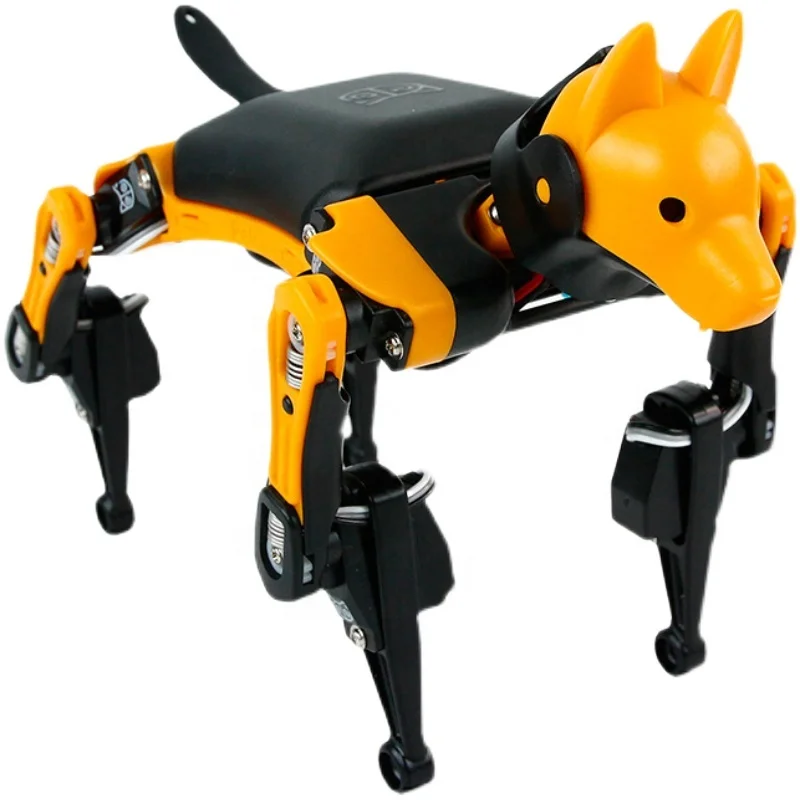
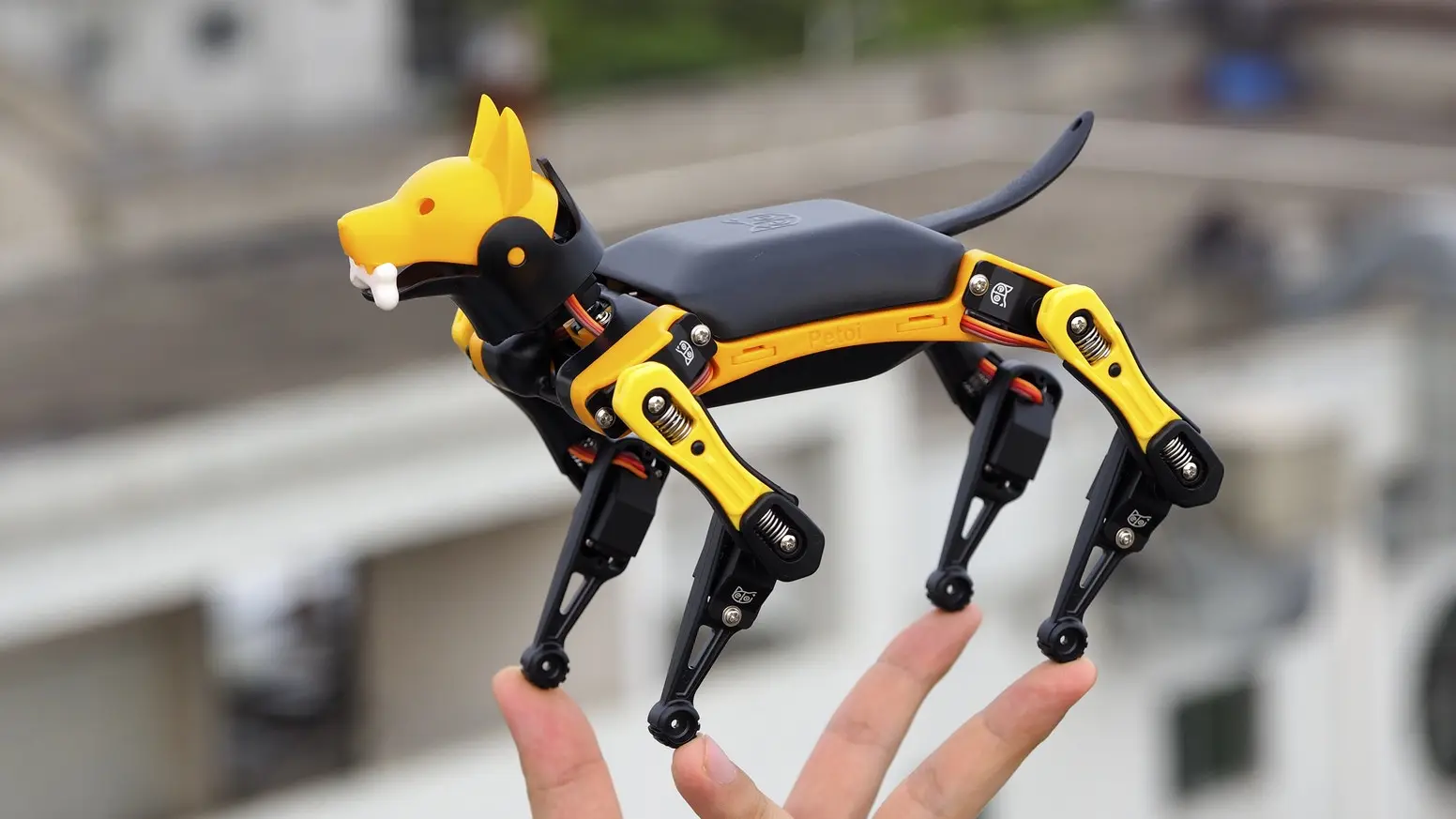
Petoi Bittle is a tiny but powerful robot that can play tricks like real animals. We fine-tuned every bit to fit agile maneuverability into a palm-sized robot pet. You can bring Bittle to life by assembling its puzzle-like frame and downloading our demo codes on GitHub. You can also teach it new skills to win prizes in our community challenges. Bittle makes a perfect tool for learning, teaching, researching, or a surprising gift to impress your family and friends. Bittle is not a toy for small kids. We recommend parental guidance to appreciate its rich content and avoid damage or injury.

Evolving with an open-source gene, Bittle is an open platform to fuse multiple makers' gadgets into one organic system. With our customized Arduino board coordinating all instinctive and sophisticated movements, you can clip on various sensors to bring in perception. You could also inject artificial intelligence capabilities by mounting a Raspberry Pi or other AI chips through wired/wireless connections.

Bittle is the second product of OpenCat, sibling of Nybble. Backed by a worldwide user group, you can find many tutorials and project ideas on the Internet. We make constant but tiny progresses every day. You can follow our social media (Instagram/Twitter @PetoiCamp) to get more frequent updates than newsletters. By posting on our forum, you can contribute to the community or simply make your wishes heard. We are always drawing the blueprint for futuristic robots!


Bittle is a palm-sized robot that moves with four legs rather than wheels. Legged motion gives it more freedom to navigate unstructured terrains, and expresses the joy of life whenever it moves. Such dynamic maneuverability was only seen on a few luxury robots from the best labs or tycoon companies previously, such as Boston Dynamics Spot or Sony Aibo. We came up with a grassroots solution to simplify the system to make it affordable and mass-producible.

Bittle is a compact system of five major components: body frame, actuator, electronics, battery, and the software to coordinate all the hardware to perform varied tasks.
Body frame
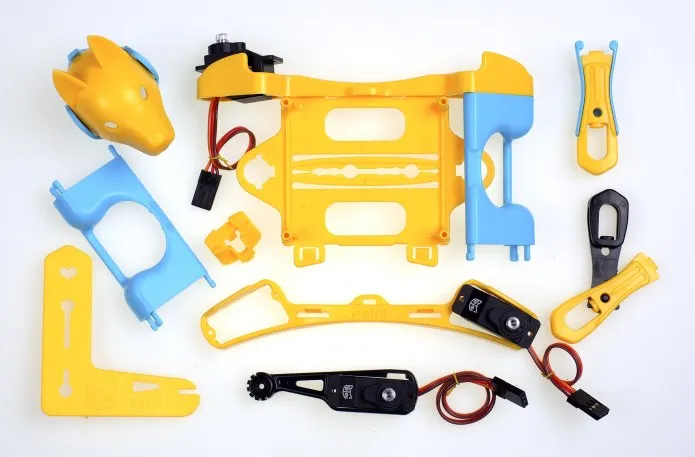
We designed Bittle's interlocking frame as a 3D puzzle with very few screws involved. Most body parts are symmetric for simplicity and aesthetics.

It's a pleasure to assemble and disassemble Bittle for teaching or maintenance. On average, it takes about one hour to put together the body from scratch.

We also designed Bittle to be soft. Besides the elasticity of the material, the spring-loaded upper legs flatten the shock on joint servos to protect their gears. Bittle usually survives regular collisions. In the extreme cases, it will disintegrate at the designated "weak link in the chain", which is easy and cheap to reinstall or replace.


We use nine P1S servos to actuate Bittle. Eight of them are for walking joints, and one is for head panning. We will also include one spare servo for replacement, as brushed motors are consumable after a certain period of wearing. You may order the "Bittle Servo Set" perk if you expect to use Bittle intensively for teaching or researching.
Electronics
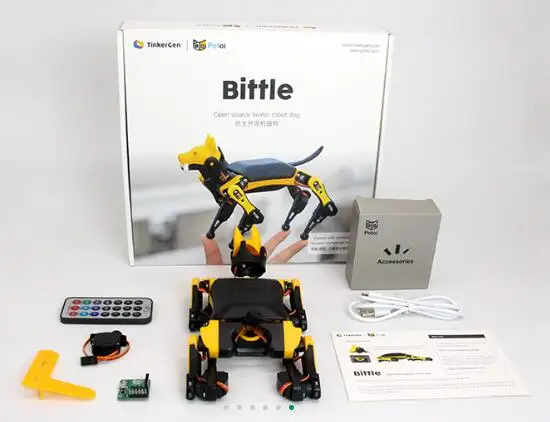
Bittle is driven by NyBoard V1, a customized Arduino board with rich peripherals. We fully utilized the chip of a regular Arduino Uno to coordinate sophisticated motions. The board can drive at least 12 PWM servos, and an IMU (Inertial Measurement Unit) is used for balancing. It stores "muscle memory" and detects body status (orientation and acceleration) for balancing. We provide an infrared remote to trigger basic movements. The board also listens to string commands from the serial port, such as "walk", "sit", or more detailed instructions for individual joints.

NyBoard V1
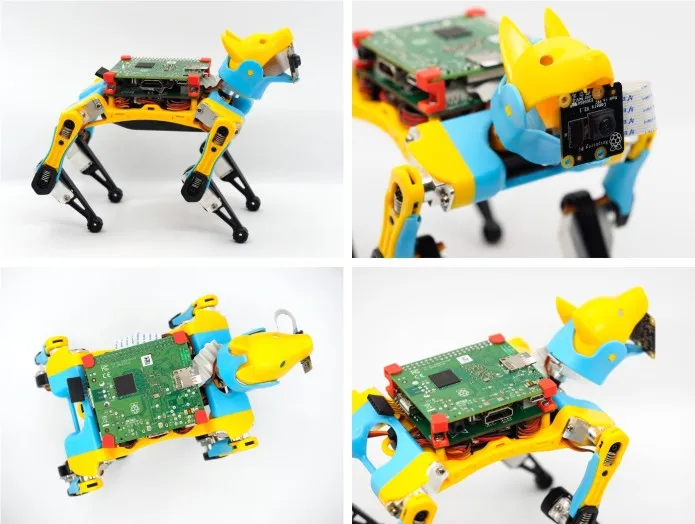
NyBoard V1 is a revision of NyBoard V0 that has been driving 2000 Nybbles all over the world. We continue to provide a 2x5 socket on NyBoard V1 for mounting Raspberry Pi. It powers the Pi and communicates with it through the serial or I2C network. The Pi gives Bittle the ability to analyze more sensory data, get connected to the Internet, and make decisions by itself. Due to Bittle's small size, it best fits Pi Zero and Pi 3A+. For larger Pi models, you will need to tilt the Pi and 3D print some supporting structures.

Raspberry Pi 3 A+ and Pi camera on Bittle
Thanks to the Arduino and Raspberry Pi community, you can find many customization ideas for Bittle. There are four Seeed Grove sockets on NyBoard V1 for extensible modules. To make installation easier, we designed Bittle's head as a clip to bite on those modules. That explains why we created a dog out of OpenCat this time. There's also a screw hole inside Bittle's head for fixing additional modules.

Extensible modules
We developed a Bluetooth dongle for wirelessly uploading codes and controlling Bittle from PC or smartphone Apps. We also developed a WiFi dongle for wirelessly communicating with Bittle. You can play with Bittle without messing around with cables. Wireless is also essential when you are studying balancing related motion planning. You can even utilize the computational power of a remote "brain" without being constrained by Bittle's size and cargo capacity. The dongles are compatible with our previous Nybble model.

Bluetooth and WiFi dongles
Furthermore, we are developing an ESP32 development board with native Bluetooth and WiFi connectivity. We have made a functional beta version called the "BiBoard V0" perk for developers. We expect a considerable performance boost, and you are welcome to join our exploration.

BiBoard V0
Software
Bittle is driven by our OpenCat code. It has 3K lines of Arduino codes excluding 3rd party libraries. It defines the minimal data structure and algorithms for performing quadruped motion. We also provide example commander and parser in Python so that you can send instructions from other devices. The code is already running on thousands of small quadruped robots, including many variants of OpenCat.

The OpenCat codes are open source on Github
You can program Bittle at different levels in various coding environments, such as C in Arduino IDE and Python in the terminal. We are collaborating with TinkerGen, a STEM education company that kindly developed Codecraft (a graphical coding environment) for Bittle. They will also provide a free curriculum for you to learn programming in Codecraft and create a wide array of educational and fun projects with it!

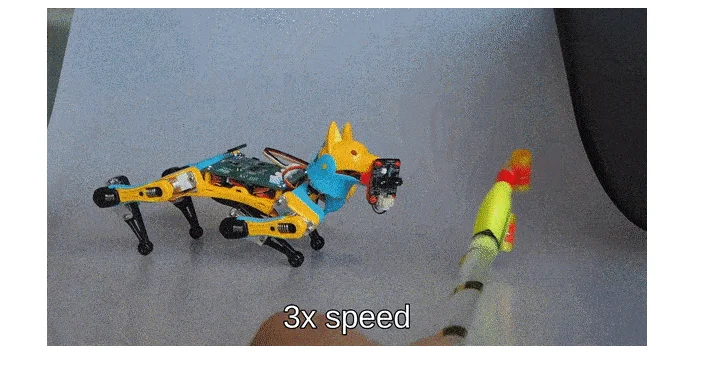
Bittle climbing up a step under realtime instructions sent through Bluetooth
Battery
We designed a Li-ion battery pack with a built-in charging and protection circuit. It can slide into the track underneath Bittle and tune its center of mass. It can power Bittle for at least one hour of continuous walking. It also has an RGB LED to indicate the battery's status.

Li-ion battery with onboard charging and protection circuit
With the slide-in installation mechanism and an anti-reverse plug, it's not too hard to switch batteries. You may order extra batteries for uninterrupted researching or playing. With some reconfiguration, it can also power our previous Nybble models.
You can check this 30-min interview by Hackster.io for all the cool features.
Newest kids matte texture remote control deformation dog toy robot
We Recommend
New Arrivals
New products from manufacturers at wholesale prices