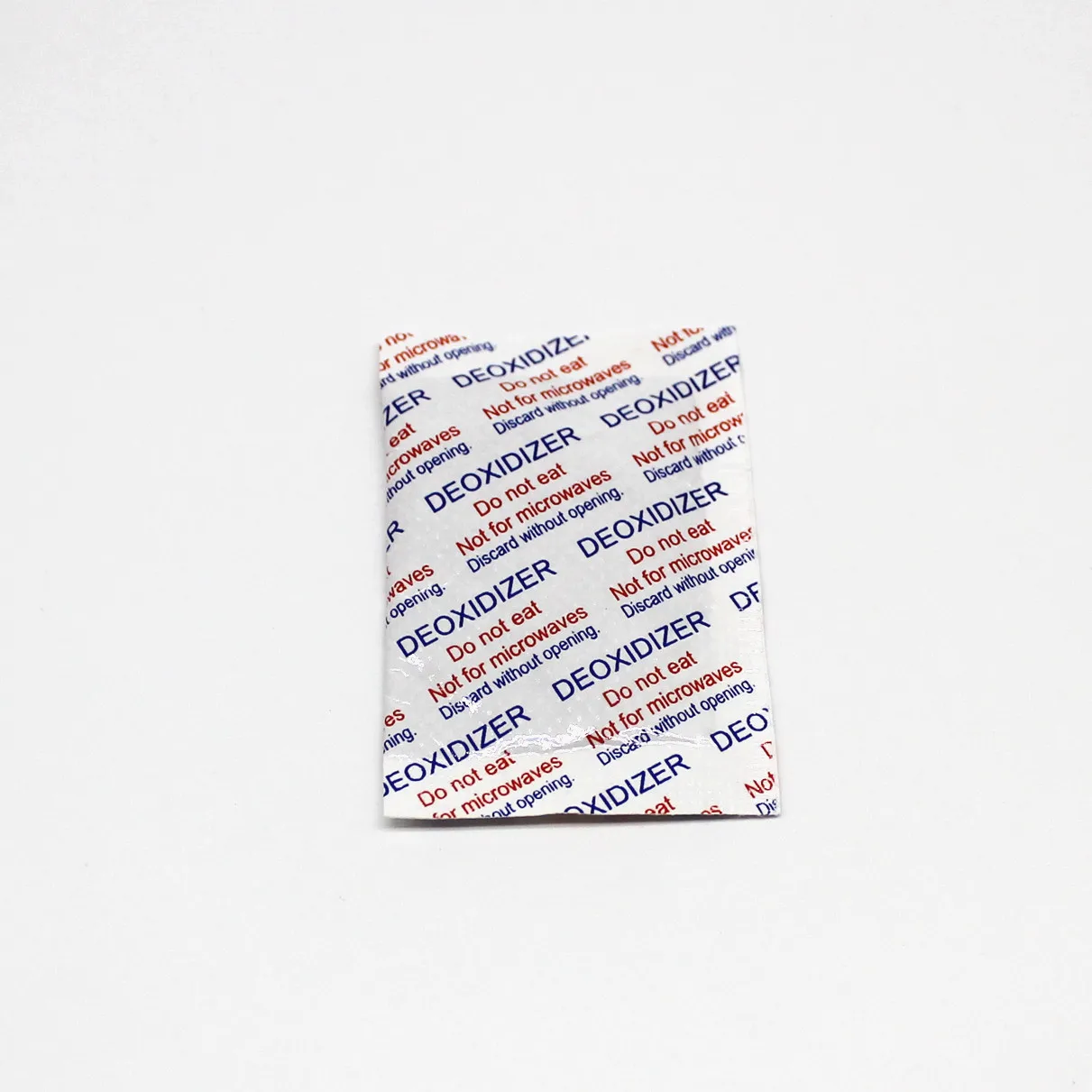
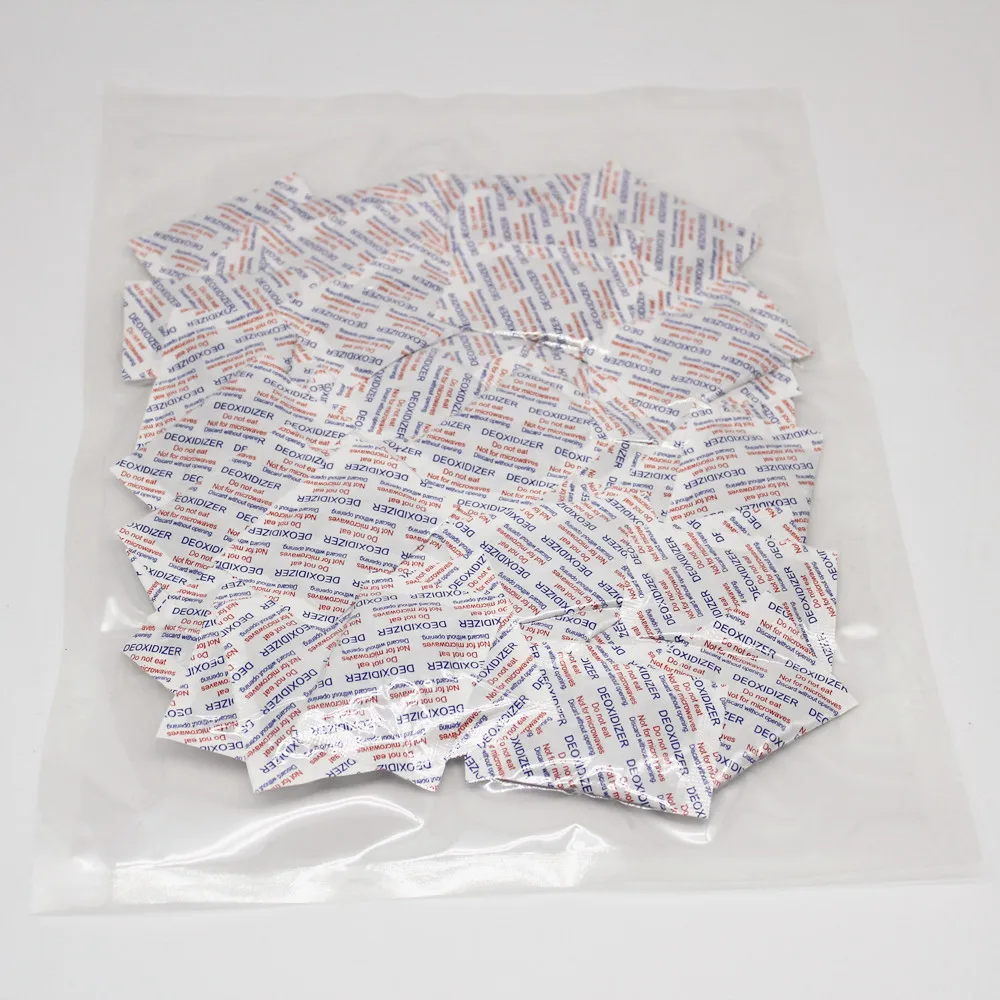
Factory price large spec food grade 500cc deoxidizer oxygen absorber used for rice
- Category: >>>
- Supplier: Jiangsu Ouk Packaging Technology Co. Ltd.
Share on (1600331361998):
Product Overview
Description
WHAT ARE OXYGEN ABSORBER?
These little parcels are filled with iron powder. The iron absorbs 99% of the oxygen that's present when placed in a sealed environment, like a jar or bag. The remaining atmospheric gases are completely inert and don't lead to food degradation through the oxidization process.
When the packets are removed from their sealed container, they immediately start absorbing O2, which reacts to with the iron powder, forming iron oxide through a catalyst.
If the packets are placed in a sealed environment such as a canning jar or bag, almost all of the oxygen will be removed (if you've used the correct quantity of packets), and the chemical reaction will stop.
The remaining atmospheric gases – mostly nitrogen – is ideal for long-term storage. This keeps food from going rancid, and also keeping bugs and insects out.
The moisture and air are absorbed, but the powder inside the packet is kept secure and separate from edible items. This means you can place the packets directly on your food in the appropriate container, without having to worry about these items becoming contaminated.
When oxygen absorbers are in use, they heat up – if you were to remove one that's activated from your jar or container of dry goods while it's doing it's thing, it would actually be warm to the touch. They work on the same chemical reaction process as disposable hand warmers.
They generally take up to four hours to remove the O2 from a sealed bag or other container.
SPEC: 15CC-3000CC AVAILABLE.
Formula to calculate the size of OUKPAK(V) oxygen absorber:
1. The first part is the residual oxygen volume in the packaging, also known as “headroom”.
Oxygen volume V1(by CC or ml)
=(packaging volume-goods volume)*oxygen content in the “headroom” or “headspace”
=(Length(cm or inch)*Width(cm)*Height(cm)-Weight of goods(g))*20%
2. The second part is the oxygen permeating into packaging during the shelf life.
Oxygen volume V2(by CC or ml)
=R*S*D
R: oxygen permeability rate(R) of packing film per day
S: surface area(cm²) or (square inch) of the packaging
D: shelf life (days)
3. The third part is oxygen absorber’s capacity lost during production and pre-using.
Oxygen volume V3(by CC or ml)
V3=(V1+V2)*50%
Total volume by cc needed for the application:
V=V1+V2+V3(CC)


We Recommend
New Arrivals
New products from manufacturers at wholesale prices