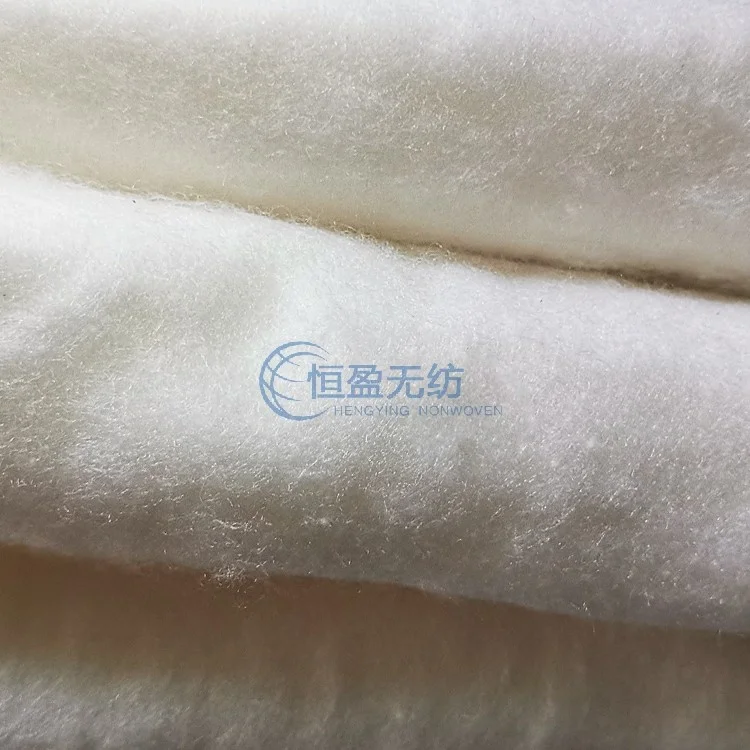
CFR1633 Flame Retardant Fiber Wadding /Batting (fire barrier) for USA Mattress
- Category: >>>
- Supplier: Dongguan Hengying Nonwoven Tech. Co. Ltd.
Share on (1600334232602):
Product Overview
Description

Product Description
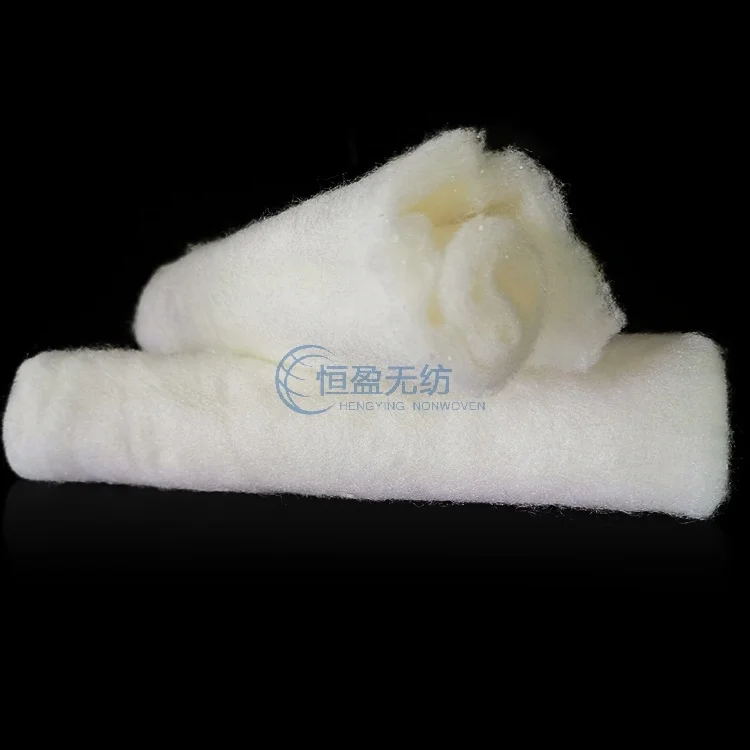
Product Name | UL CFR 1632&1633 Flame Retardant Nonwoven Batting |
Raw Materials | 80% CFR 1632&1633 viscose mix 20% low melt fiber |
Tech. | Thermal bonded or needle punched or mix both tech |
Weight | normally 100~240gsm or as per yours |
Width | normally 190~240cm or as per yours |
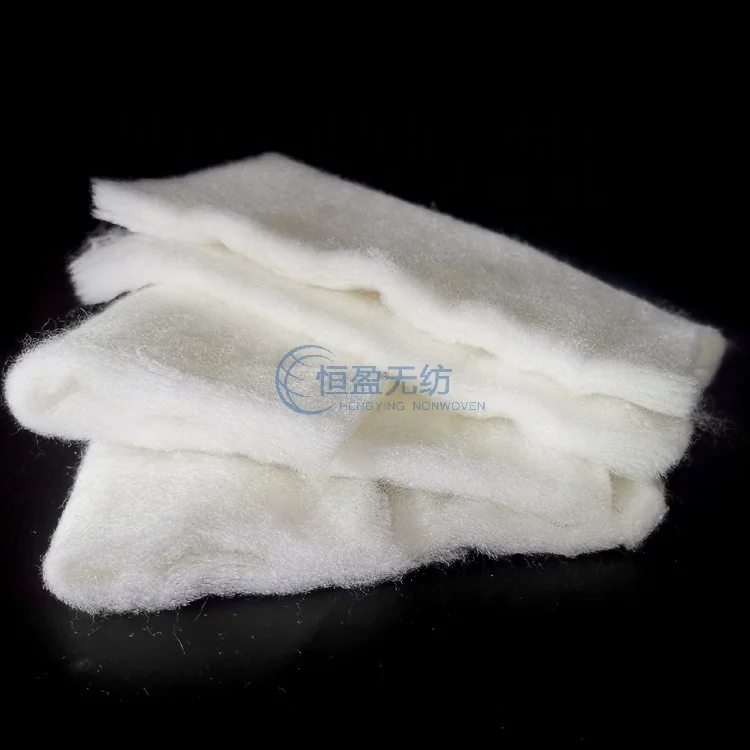
Color | Cream color |
Handfeeling | very soft and nice for mattress quilted |
Our advantage | 1. We produce this item since 2001's and start to export since 2003's 2. Rich experience to solve and avoid the wrinkles problems when mattress quilt 3. Rich experience to load max qty per container to help you save more shipping charge and cut your more cost |
Product knowledge:
16 CFR 1632 Test method
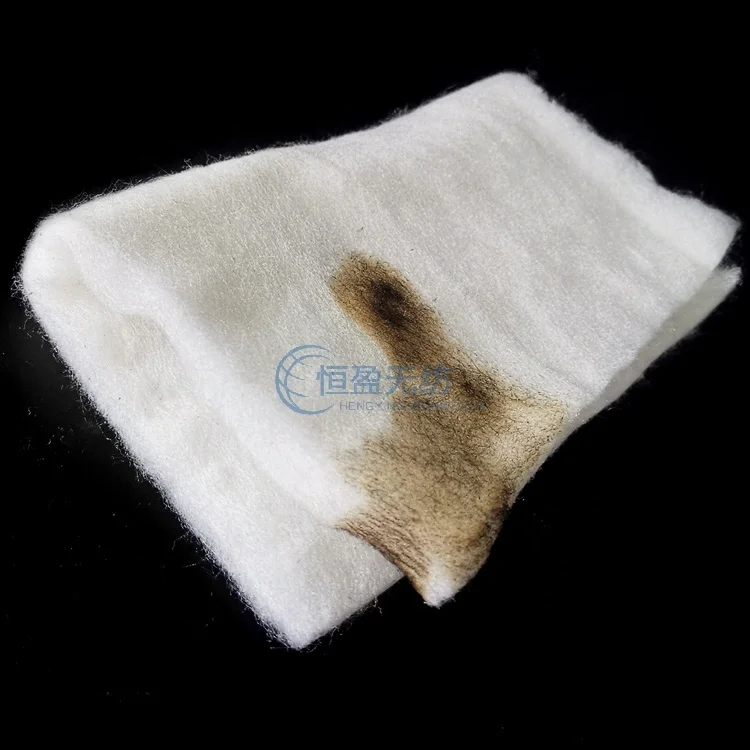
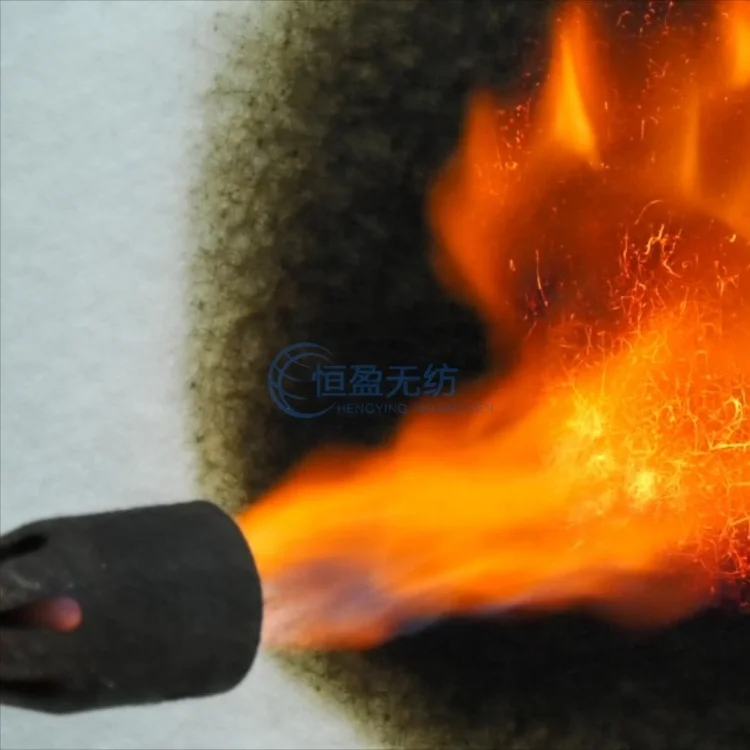
According to the regulations of 16 CFR 1632, in the experiment, first put a burning cigarette on the surface of a bare mattress to test its flammability, and then cover a bed sheet on the mattress, and roll the bed sheet under the mattress. Then put the burning fire source on the bed sheet (the middle and the edge of the mattress). After the fire source is placed, immediately cover it with another bed sheet, but at the fire source, apply a pin (or other similar) to The bed sheet is set up so that it does not come into contact with the fire source.
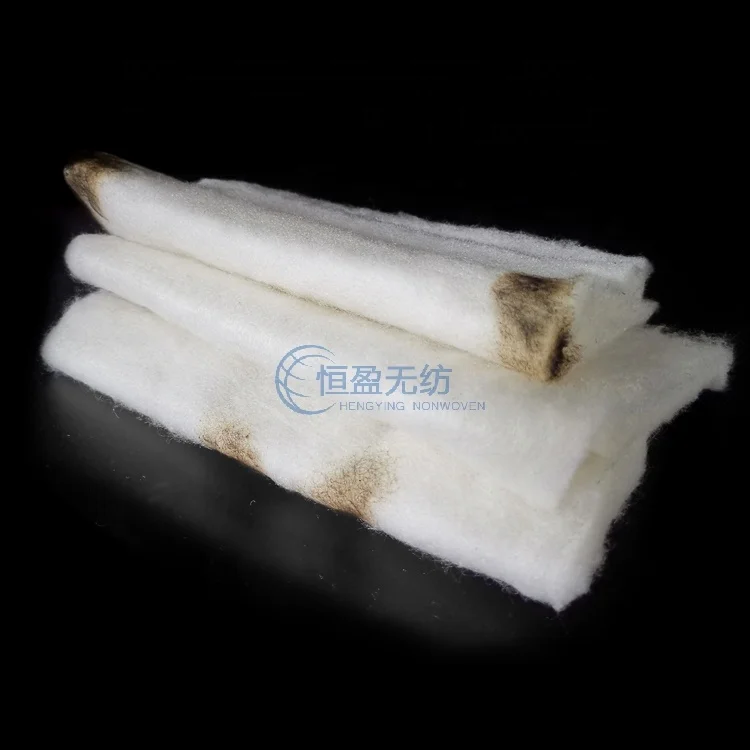
Test the carbonization of the surface
Flame-retardant batting is a new type of fire-retardant material that has a certain fire-proof effect after being processed by
special materials and processes, is not easy to burn, and automatically extinguishes after leaving the fire source, and will not re-ignite. Flame-retardant cotton has the characteristics of permanent flame-retardant, moisture absorption, breathability, soft hand feeling, long-lasting elasticity, and good heat insulation. When it burns, it has only a small amount of smoke, does not dissolve drops, does not release poisonous gas, has a self-extinguishing effect, and maintains its original shape after carbonization.
Where does flame-retardant batting originate? Flame-retardant cotton uses a new generation of fiber flame-retardant technology-the composite and interpenetration of inorganic polymers and organic polymers, so that the flame-retardant inorganic polymer is in the nano state Or it exists in the state of interpenetrating network, which not only guarantees the fiber strength and elongation, but also realizes low toxicity, low smoke, no melting and dripping, and does not cause any harm to the environment. Starting from 2007-7-1, the U.S. federal government will implement more stringent 1633 flame-retardant regulations. In order to help the domestic mattress industry enter the U.S. market smoothly, the flame-retardant and fire-retardant cotton developed by the company has reached the world's advanced level. Reduce costs so that domestic mattress products can be more competitive in the US market.
Flame-retardant fiber (GUAN LI) is a new high-tech fiber and textile material with flame-retardant and anti-droplet performance developed on the basis of the research results of the national "863" plan. The goal of this standard is to minimize or delay ignition of a mattress if it is ignited by a bedroom flame. As explained in the exceptions below, the standard requires manufacturers to take samples of each type of mattress prototype (design) before putting the mattress prototype into mass production. The standard uses a pair of T-shaped gas-heat designs to represent a burning bed cover for full-scale testing.
How does the fireproof batting pass the CFR1633 standard? It raises the threshold for entering the US market and increases the difficulty; after the 16CFR1633 standard is implemented. How can we successfully pass the 16CFR1633 test? Let us first understand the 16CFR1633 standard. The 16CFR1633 test mainly examines two data:
1. Within 10 minutes of the start of the test, the total heat release amount does not exceed 15MJ
2. Within 30 minutes of the beginning of the test, the total heat release peak value is less than 200KW. How to meet the above requirements, there are two main methods, one is to use Flame-retardant interlayer materials; now domestic flame-retardant materials mainly include flame-retardant cloth and flame-retardant cotton. The second is to perform flame retardant treatment on the combustible part of the mattress. As far as the current situation in China is concerned, most of the first method is used. The biggest advantage of this method is that it is simple and easy to operate, and it only needs to add fireproof cotton and fire-retardant thread. The specific production method is: face cloth + flame-retardant cotton stitch, and then stitch with flame-retardant thread. But pay attention to the details in the stitching process, and there should be no skipping; if there is a skipping when stitching, the supplementary thread needs to extend the supplementary thread 3cm on both sides. The second method is mainly for sponge, latex, and mattresses;

Application

Product category

Company Profile

Certifications

Cooperative customers

Packaging&transportation


FAQ

1. Whether you are a factory or trader?
We are a professional manufacturer in all kinds of fiber products since 1997's.
2. Can I get a sample?
Of course yes,free sample.Please feel free to contact us.
3. What is your lead time?
It depends on the order quantity and the season you place the order. Usually we can ship within 7-15 days for small quantity, and about 30 days for large quantity.
4. How about your production capacity?
The Normally in 30 tons each day,that means about six 40 feet high container each day.
5. What is your payment term?
T/T, Western Union, L/C, and Paypal. This is negotiable.
6. What is the shipping method?
It could be shipped by sea, by air or by express(EMS,UPS,DHL,TNT,FEDEX and ect). Please confirm with us before placing orders.
We are a professional manufacturer in all kinds of fiber products since 1997's.
2. Can I get a sample?
Of course yes,free sample.Please feel free to contact us.
3. What is your lead time?
It depends on the order quantity and the season you place the order. Usually we can ship within 7-15 days for small quantity, and about 30 days for large quantity.
4. How about your production capacity?
The Normally in 30 tons each day,that means about six 40 feet high container each day.
5. What is your payment term?
T/T, Western Union, L/C, and Paypal. This is negotiable.
6. What is the shipping method?
It could be shipped by sea, by air or by express(EMS,UPS,DHL,TNT,FEDEX and ect). Please confirm with us before placing orders.

We Recommend
New Arrivals
New products from manufacturers at wholesale prices