Liquid Carbon Dioxide Storage Tank / LCO2 Tank for Sale
- Category: >>>
- Supplier: Henan Zhongzhen Gas Co. Ltd.
Share on (1600424397790):
Product Overview
Description
Product Description
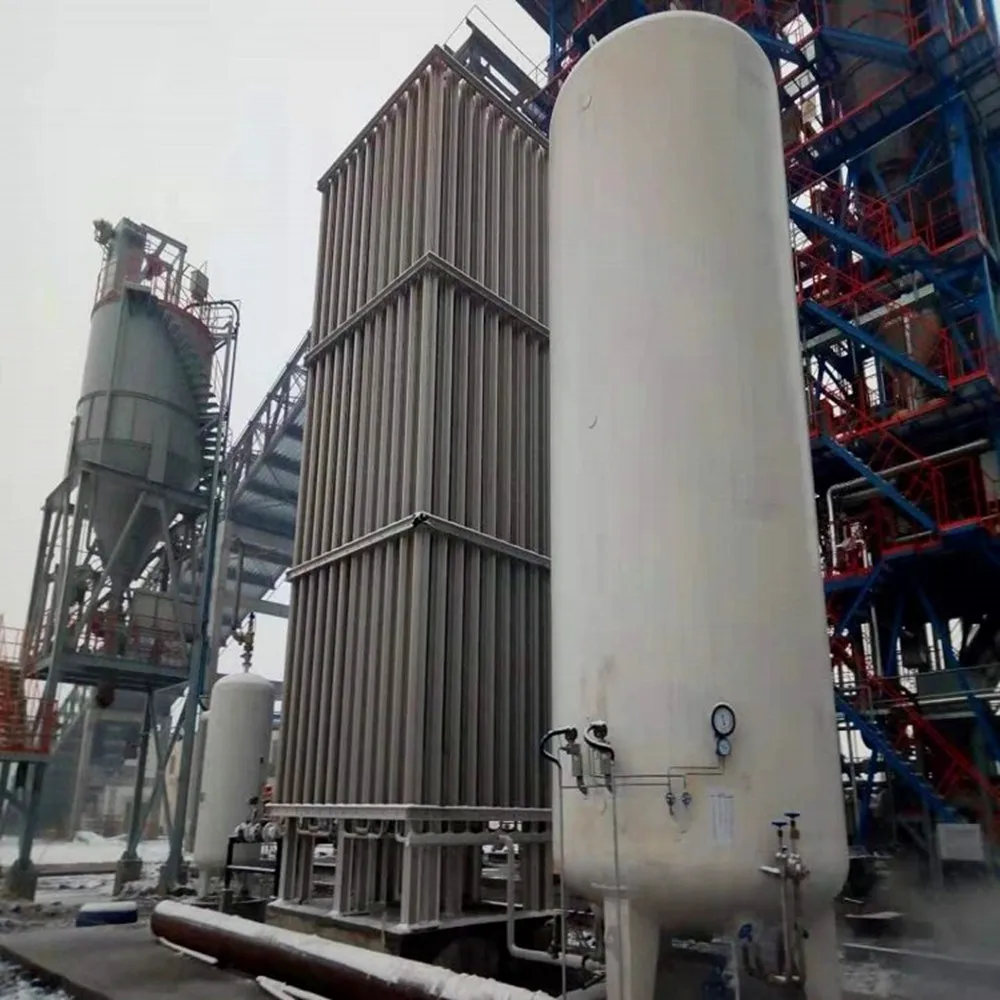
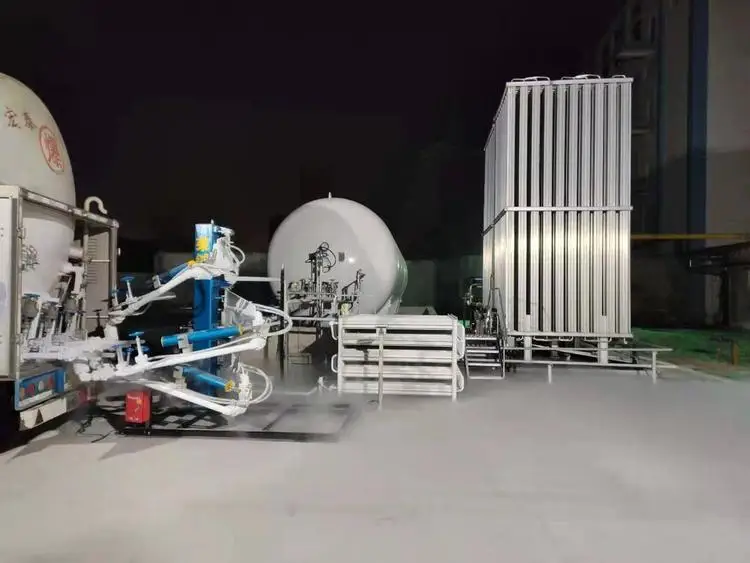
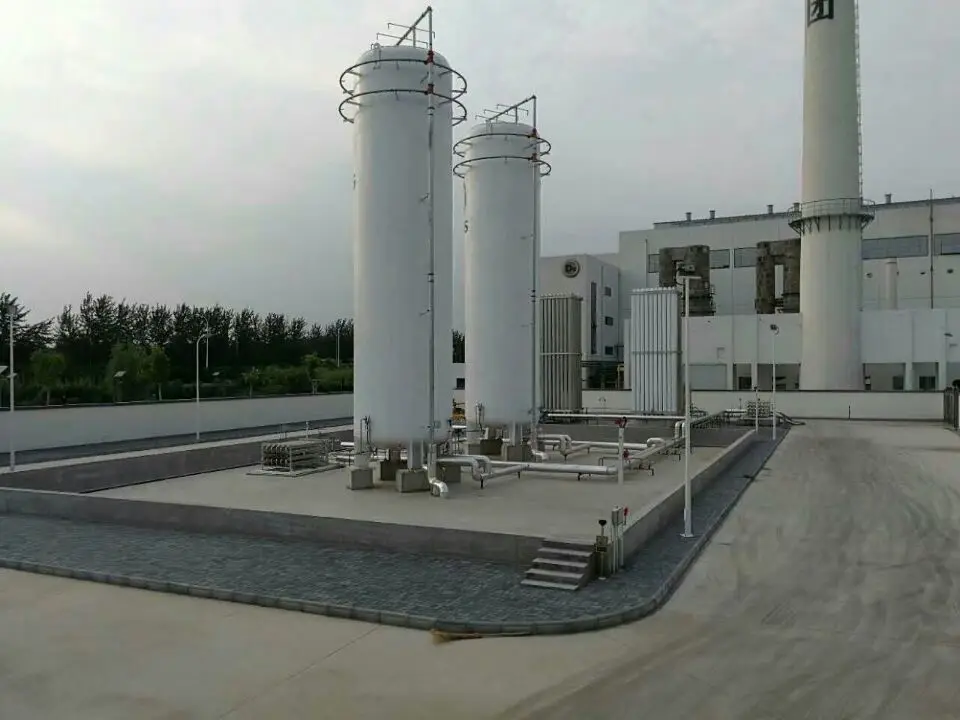
ZZ Gas Liquid Carbon Dioxide Storage Tank / LCO2 Tank with suitable design and best vacuum which can use long time.
And the capacity from 5m3---100m3.
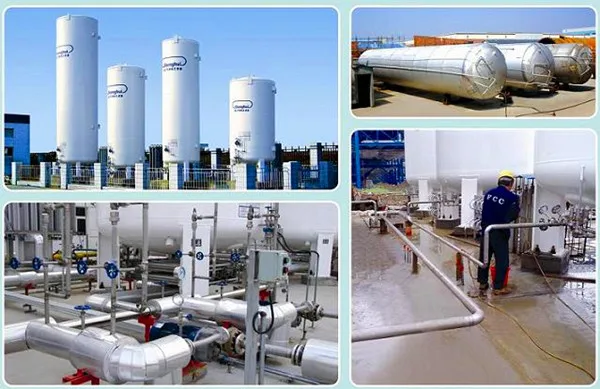
1.Cryogenic liquid storage tank is widely used in metallurgy, petrochemical engineering, machinery, electron, cable, mining, photo-electricity, defence-related science and technology, hospitalization, meteorology and so on. It is the first choice of industrial gas storage.
During the process of installing, operating, maintaining, administering the facility, the user should read the instruction carefully, so that you can get the best economic benefit from it.
2. Technical Properties
Please view as-build drawing for the technical performance and specification of the cryogenic liquid storage tank.
3. Brief Introduction of Structure
3.1 Main Structure
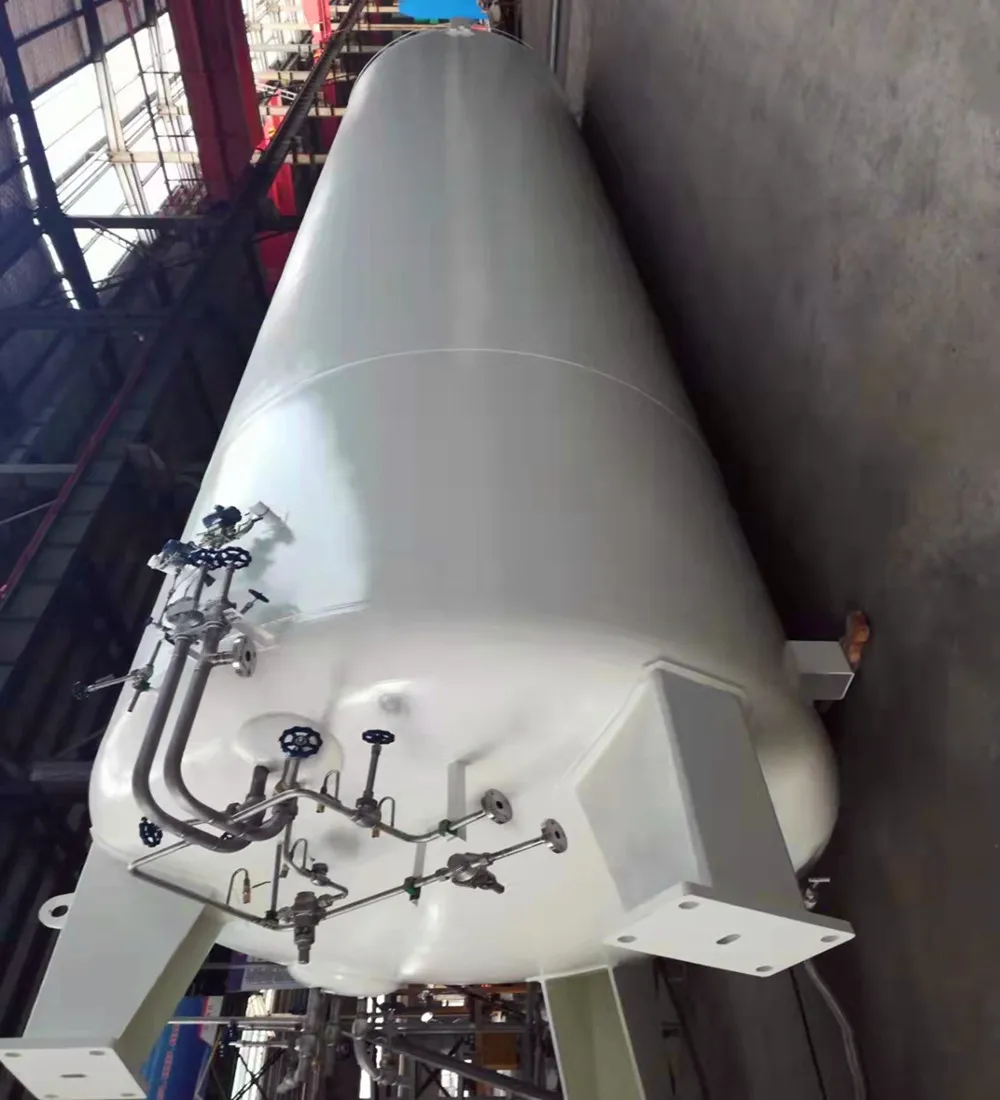
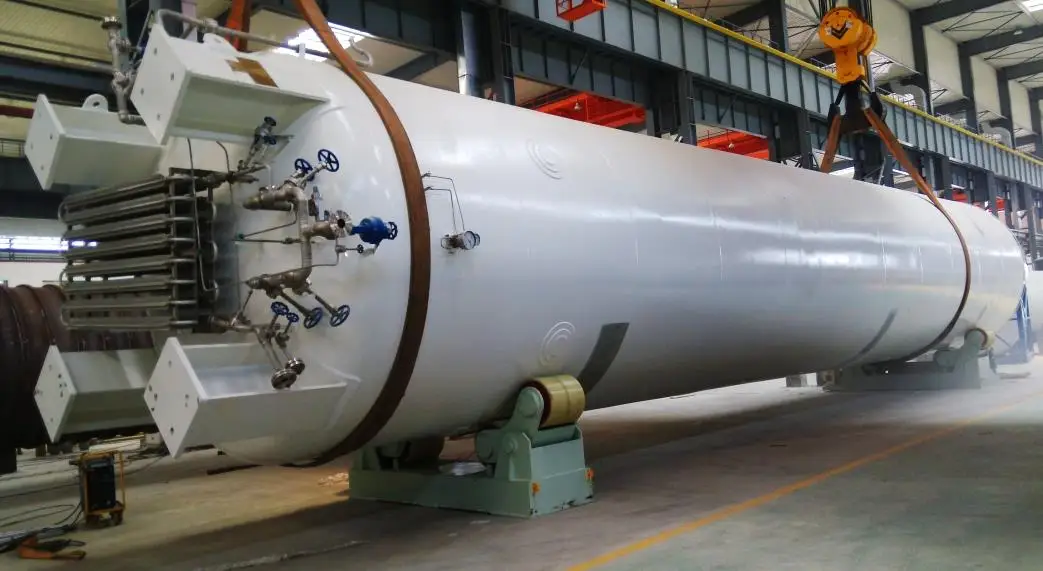
The tank is bistratal cylinder, the inner vessel and piping are made of austenitic stainless steel and the external vessel is made of Q245R Q345R and 16MnR, the interlayer is full of perlite and vacuumized to assure the heat-insulating property of tank.
The operating valves locate in the bottom of tank, and the tank is equipped with pressure gauge and liquid level gauge, which can be used to observe the pressure and liquid level of the tank.
3.2 Structure Feature
3.2.1 The tank is small occupied area.
3.2.2 The tank and pressurizer can be a closed system which can supply the liquid and gas and ensure the purity of the liquid and gas without any power.
3.2.3 The tank is equipped with pressure regulation device. When it works usually, the user can regulate the T1 to supply the liquid.
3.2.4 The tank is equipped with a connector, which can transmit the fluid to the tank car and vaporizer.
3.2.5 The perlite and adsorbent are specially disposed that can lengthen vacuum lives. At the same time, the tank is equipped with metal thermocouple regulation to measure the degree of vacuum when necessary.
4. Operation and maintenance
4.1 Operation
4.1.1 Preparation work
Firstly, the piping, valve and all kinds of meters should be checked carefully, and it needs to test the tightness before using.
4.1.1.1 Gas tightness test
Before transmitting cryogenic liquid, it should test gas-tightness of tank, testing pressure is the design pressure and the testing time should be more than 4 hours, testing gas should be dry air and nitrogen
4.1.1.2 Cleaning Treatment/Purging
After the gas-tightness, the inner vessel should be cleaned by the dry air and nitrogen in order to remove the wet air.
After that, it should be cleaned by the product gas until the exhaust gas purity meets a criterion.
4.1.1.3 Checking valves and instrumentations
Before filling cryogenic liquid, these valves should be in right closing and opening state, and making sure the instrument instruction is correct, otherwise, they should be adjusted.
4.1.2 Filling liquid
First filled and additionally filled.
4.1.2.1 First filled , The steps are as following:
a) Connecting the filling pipeline;
b) Cleaning the filling pipeline before using, closing V2 and V4.
Transmitting some liquid from the tank., at the same time, opening the valve E1,so that the wet air and dusty should be cleaned;
c) Opening E2 and MV, while open the level gauge(L1,L3---open, L2---closed.)
d) Opening V2, transmitting the liquid from the top of the tank, turn V2 down until the E2 can exhaust gas steadily. And then turn V2 up to speed up the filling speed
e) Closing V2 and opening V4, changing the upper filling into the bottom filling when the level gauge shows the liquid station ;
f) When MV ejects fluid, close V4 and E2. Then open E1 to remove the residual liquid of the pipeline.
g) After filling liquid, remove the filling pipeline.
4.1.2.2 Additional Filled.
After cleaning the pipeline, the liquid should be transmitted from V4.
In addition, from the pressure point of view, it can be divided into non-pressure fluid-filled and filled with pressure
Non-pressure fluid-filling:
During the process liquid filling, the E2 should be opened all the time to connect the inner tank and air. And the pressure gauge indicates zero.
Filling with pressure:
During the process, E2 is closed all the time , the pressure in the tank surpasses atmospheric pressure. And the pressure gauge indicates a reading. Pressure in inner vessel can not surpass the max. Operating pressure of the tank.
Non-pressure fluid-filling can be used for the first filling, and filling with pressure can be used in add filling.
The liquid level can be directly displayed in the liquid level meter, when display the volume (unit: m3), for the Digital level gauge, please enter the volume level key; for the analog level meter, we can get the answer according to the liquid level and volume control chart.
4.1.3 Pressurizing
a) Make sure the V7 fully open;
b) Open V6 slowly, so that the pressurizer can vaporize the liquid.
c) If the exhaust speed is a little higher, the pressure of inner vessel declines, V6 should be opened;
d) When it isn’t necessary to stabilize the inner pressure or stop to supply liquid, V6 should be closed.
During the process of pressurizing, the tank can keep the stable pressure automatically. For the first pressurizing, we should adjust the opening and closing pressure of T1 so that it can work normally. T1’s closing pressure should be the operating pressure. If increase the opening pressure, please compress the top adjustment bolt, whereas lower the opening pressure.
4.1.4 Exhausting liquid and gas
there are two ways of exhausting liquid:
a) Exhausting to the vaporizer
When the tank pressure attained requirement, open C3 to supply the liquid.
b) Exhausting to the V4.
Using tubes to supply fluid to the tank cars and big storage tanks, the operating process is the same with filling fluid, but the V4 is a exhausting valve not inlet valve.
4.1.5 Storage
There are two ways of liquid storage including normal pressure storage and pressurizing storage.
a) Normal pressure storage
During this process, E2 is always open, so that the pressure in the tank can not be increased because of the vaporized gas.
b) Storage with pressure
During this process, E2 is closed, and the pressure of inner vessel will increase slowly for the vaporized gas in the tank. The level gauge and pressure gage should be used to measure the pressure in it. When the pressure can satisfy the demands, open E2 at once to relieve the additional pressure.
When the liquid oxygen is stored for a long time, we should examine the amount of hydrocarbon in the liquid oxygen in order to avoid the accident. When the density of acetylene is below 0.5ppm, it’s safe.
4.2 Maintenance
4.2.1 Protecting the Insulating Performance
The most significant for cryogenic storage tank is the insulating performance, which affected by the vacuum. Under the normal temperature and pressure, the thermal conductivity of perlite is 0.03W/mK; when the vacuity is between 66.7~1.33Pa, the thermal conductivity is 0.0026W/Mk
Hence, in the same condition(capacity of heat transmission Q=KFΔtl-1), the best vacuity is, the better insulating performance is.
Once the vacuity is destroyed, the tank can not store the cryogenic liquid. Explosion-proof equipment of outer vessel and evacuation valve are connected with the vacuum layer. If the vacuity is well and needn’t to compliment the perlite, the explosion-proof equipment mustn’t be removed, and the evacuation valve is the same as the equipment.
outer casing of tanks is a kind of pressure vessel, prohibiting striking and beating and it can not be in the upon 50℃ which can destroy the vacuity and decrease insulating performance.
4.2.2 Examining Vacuum and Vacuumize again
Checking the vacuity per six months. When examining the vacuity, we should screw the protective cover off, and plug in the socket to examine the vacuity.
Few years later, the vacuity may decrease to 66.7 Pa; it’s time to vacuumize again. Before vacuumizing, the liquid of tank should be exhausted, and use the drying oil-free air and dry nitrogen to clean the tank with the temperature of 80~100℃ until the normal temperature. Then connecting the vacuum pipeline to remove the wet air for the first and then open the vacuum valve to vacuumize.
4.2.3 Checking and Troubleshooting
4.2.3.1 Normal Checking
a). Making sure the valves are in good condition to operate.
b).Making sure the level gauge and pressure gauge in well display.
c). Making sure the pipelines and valves without leaking and clogging.
d).When the tank pressure is up to the activated pressure of the relief valve, and the relief valve is not in well condition, please correct the activated pressure of it at once in order to maintain the safety of the tank.
4.2.3.2 Periodic Inspection
a). Calibrating the pressure gauge once per six months.
b). Calibrating the activated pressure once per year.
c).Calibrating the opening and closing pressure of T1 valve once per year.
d).Measuring the vacuity once every six months.


Packaging & Shipping
Storage Tank Body Water-proof Cloth
Spare Parts with Export Wooden Box
Our Services
Online support 7*24hours per week.
FAQ
1.Pls tell us where will you use.
2.Pls tell us the tank capacity will you need.
3.Pls tell us the pressure will you need.
We Recommend


New Arrivals
New products from manufacturers at wholesale prices