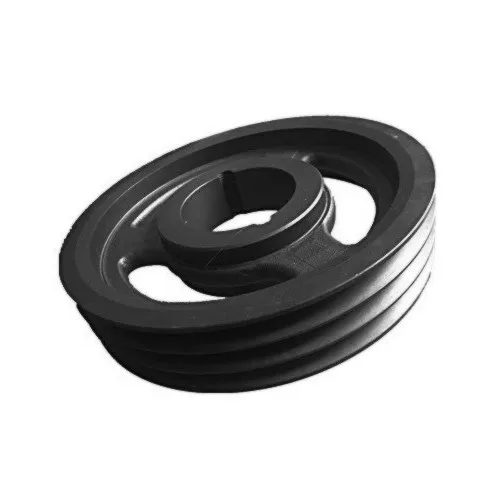
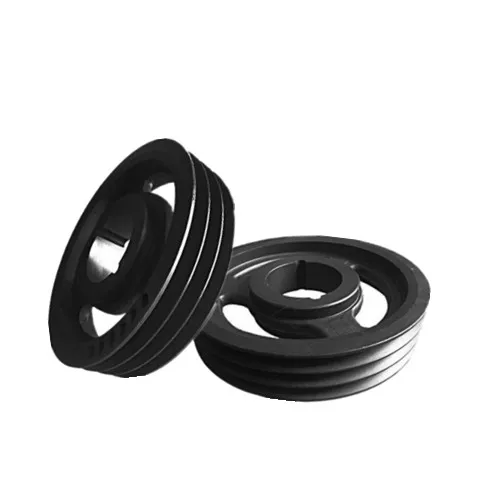
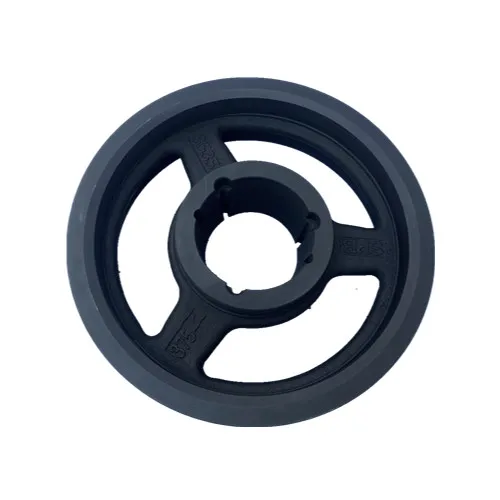
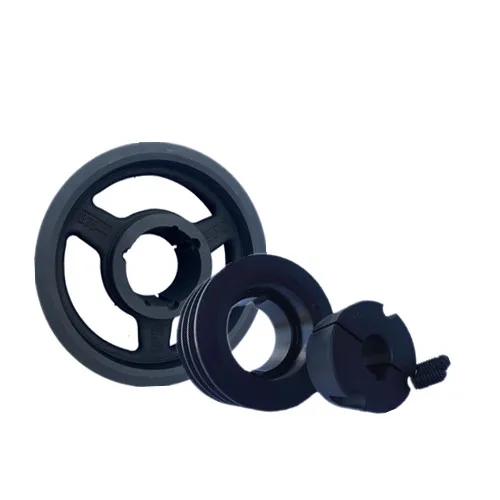
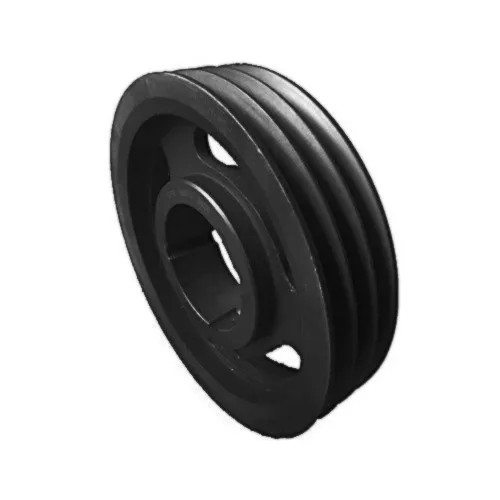
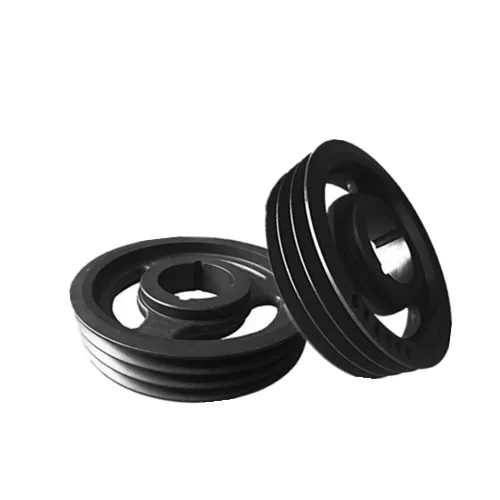
Manufacturing Plant 224 Mm 3 Grooves Belt Drive Pulley Adjustable Belt Pulley Wheel
- Category: Pulleys >>>
- Supplier: Wenling Rifeng Machinery Parts Factory
Share on (1600430267209):
Product Overview
Description

Products Description

Product name | V-belt pulley |
Pitch diameter | 224mm |
Outer diameter | 229.5mm |
Installation shaft diameter | 20-60mm |
Number of slots | 3 |
Matching bushing | 2517 |
Color | black |
Weight | 6kg |
V-belt Pulleys According To ISO 4183 And DIN 2211 The Material Usef For These Pulleys Is Cast GG25 And After The Machining All Pulleys Are Being Phosphated. Each Pulley Is Strictly Dyanmically Balanced With High Precision Dynamical Balancing Machining Tools. Unbalanced Products Will Corrected Accurately .


Standard size
Easy to load and unload
Phosphate blackening
Dynamic balance
Simple maintenance
Can be customized
SPA SPB SPC full range
Factory Outlet
Easy to load and unload
Phosphate blackening
Dynamic balance
Simple maintenance
Can be customized
SPA SPB SPC full range
Factory Outlet

V-belt Pulley
In power transmission, belts are flexible loops of material that can link two rotating shafts mechanically and transmit power between them. Belts are also the primary component in belt drives, where one or more continuous belts are fitted over two pulleys at two shafts and rotary motion is transferred from the driving pulley to the driven pulley.
As compared to chain drives and gear drives, belt drives run quietly and smoothly and do not need lubrication. Maintenance is also comparatively convenient, and the driven shaft speed can be easily altered by changing pulley sizes.
The most common types of belts are V-belts and timing belts. V-belts are the most common type of belt today, and as their name suggests, their cross-sectional shape comes in the form of a “V”. Generally endless, the “V” cross-sections of these belts lodge in the mating grooves of their corresponding V-belt pulleys, preventing slipping due to under-tensioning. In general, V-belts require less width and tension compared to flat belts.
Product Category

Company Profile

Workshop


Certifications


FAQ

We Recommend


New Arrivals
New products from manufacturers at wholesale prices