
35kV TDR Power Cable Fault Wire Locator Pipeline Pinpoint Signal Transmitter Detector de Underground Cable Tracker
- Category: >>>
- Supplier: Weshine Electric Manufacturing Co. Ltd.
Share on (1600465465424):
Product Overview
Description
Discount Benefits


What should you do when there are cable faults?

Cable fault location is required anywhere where the fault cannot be seen, this is a multi-step process that must be performed as safely and as quickly as possible because customers will be without power.
Step 1 - Cable Isolation & Safety Procedures: A cable fault is nearly always a permanent fault. This means that the cable in question will be in a condition where the protection devices at one or both ends of the cable will have tripped, leaving the cable isolated but NOT earthed (grounded).
The first task is for the Authorised Person for the site to make the cable safe by isolating and then earthing (grounding) one or both ends preferably. Only after the appropriate procedures have been carried out can any testing personnel be allowed to approach the cable and prepare for testing.
Step 2 - Cable Identification: Where multiple cables exist, cable identification testing will identify the correct cable to work on. Clear identification before a cable is cut is intrinsic to safe maintenance work. Any mistakes here can be fatal, and may cause much longer outages for the connected customers
Step 3 - Cable tracing: When an underground cable is first laid it rarely runs in a straight line, but rather meanders in depth and direction. Cable tracing is done to determine that the route of the cable is following the expected path.
Step 4 - Fault identification: The first major procedure is to determine the phase on which the fault has occurred, and if it is of low or high resistance.
This test determines the correct technique and equipment to diagnose the fault. Typically, if the fault is found to be below 100 Ohms, a low voltage pulse (e.g., 40 V) from a TDR (time domain reflectometer) can be used. If the fault is a higher resistance (> 100 Ohm), a low voltage pulse will likely not see it. For these types of faults, an Impulse generator (shock discharge) will be necessary.
Step 5 – Fault prelocation: A reliable and precise pre-location method is necessary to locate a cable fault quickly and efficiently. Good pre-location can determine the fault position to within a few percent of the cable length and will reduce pinpointing time to a few minutes.
Remember:
a). If it is a low resistance fault, pre-location was likely to be the only means necessary for location.
b). For high resistance faults, ARM (arc reflection) or ICE (impulse current) techniques on an SWG (surge wave generator) should be used. Alternatively, the decay method with an HV DC tester (bridge), can be used for pre-location.
Step 6 - Pinpointing: The aforementioned test methods will get the operator with 5% distance of the fault, acoustic pinpointing techniques must be employed to narrow the margin of error to 0.1%. In most cases, shock discharge generators are used for pinpointing in conjunction with acoustic methods. The discharge creates a loud noise, which is pinpointed precisely using an acoustic pinpointing device. This device evaluates the time difference between the acoustic signal (speed of sound) and the electromagnetic (nearly the speed of light) impulse of the shock discharge. When the shortest time difference is indicated, the exact fault location is revealed.
Step 7 - Re-energisation of the cable: Once all testing and repairs are completed, the Safety/Testing Documentation is cancelled. the cable is then handed back to the appropriate operators to reinstate the cable and re-energise the loads on the newly repaired cable.
Step 1 - Cable Isolation & Safety Procedures: A cable fault is nearly always a permanent fault. This means that the cable in question will be in a condition where the protection devices at one or both ends of the cable will have tripped, leaving the cable isolated but NOT earthed (grounded).
The first task is for the Authorised Person for the site to make the cable safe by isolating and then earthing (grounding) one or both ends preferably. Only after the appropriate procedures have been carried out can any testing personnel be allowed to approach the cable and prepare for testing.
Step 2 - Cable Identification: Where multiple cables exist, cable identification testing will identify the correct cable to work on. Clear identification before a cable is cut is intrinsic to safe maintenance work. Any mistakes here can be fatal, and may cause much longer outages for the connected customers
Step 3 - Cable tracing: When an underground cable is first laid it rarely runs in a straight line, but rather meanders in depth and direction. Cable tracing is done to determine that the route of the cable is following the expected path.
Step 4 - Fault identification: The first major procedure is to determine the phase on which the fault has occurred, and if it is of low or high resistance.
This test determines the correct technique and equipment to diagnose the fault. Typically, if the fault is found to be below 100 Ohms, a low voltage pulse (e.g., 40 V) from a TDR (time domain reflectometer) can be used. If the fault is a higher resistance (> 100 Ohm), a low voltage pulse will likely not see it. For these types of faults, an Impulse generator (shock discharge) will be necessary.
Step 5 – Fault prelocation: A reliable and precise pre-location method is necessary to locate a cable fault quickly and efficiently. Good pre-location can determine the fault position to within a few percent of the cable length and will reduce pinpointing time to a few minutes.
Remember:
a). If it is a low resistance fault, pre-location was likely to be the only means necessary for location.
b). For high resistance faults, ARM (arc reflection) or ICE (impulse current) techniques on an SWG (surge wave generator) should be used. Alternatively, the decay method with an HV DC tester (bridge), can be used for pre-location.
Step 6 - Pinpointing: The aforementioned test methods will get the operator with 5% distance of the fault, acoustic pinpointing techniques must be employed to narrow the margin of error to 0.1%. In most cases, shock discharge generators are used for pinpointing in conjunction with acoustic methods. The discharge creates a loud noise, which is pinpointed precisely using an acoustic pinpointing device. This device evaluates the time difference between the acoustic signal (speed of sound) and the electromagnetic (nearly the speed of light) impulse of the shock discharge. When the shortest time difference is indicated, the exact fault location is revealed.
Step 7 - Re-energisation of the cable: Once all testing and repairs are completed, the Safety/Testing Documentation is cancelled. the cable is then handed back to the appropriate operators to reinstate the cable and re-energise the loads on the newly repaired cable.
For further information on Weshine's Service Solutions, contact our 24/7 online sales representative on alibaba.com or you may

Products Description

Electricity networks have had to become more flexible, reacting more quickly to the changes and needs of higher performance. This demand for flexibility is especially true where multiple generation sources occur, such as the intermittent power from renewables like solar and wind energy. While modern SMART grid technology can quickly identify faults in sub-station and generating units, cable faults can still occur anywhere on the network. Quickly locating a cable fault for repair is the top priority for avoiding lengthy restoration times. In the first place, this will be especially impactful on electrical utility reliability indices. These indices include SAIDI, the System Average Interruption Duration Index, which measures the total duration of an interruption for the average customer during a certain time period, and SAIFI, the System Average Interruption Frequency Index, which is found by dividing the total number of customers interrupted by the total number of customers served.
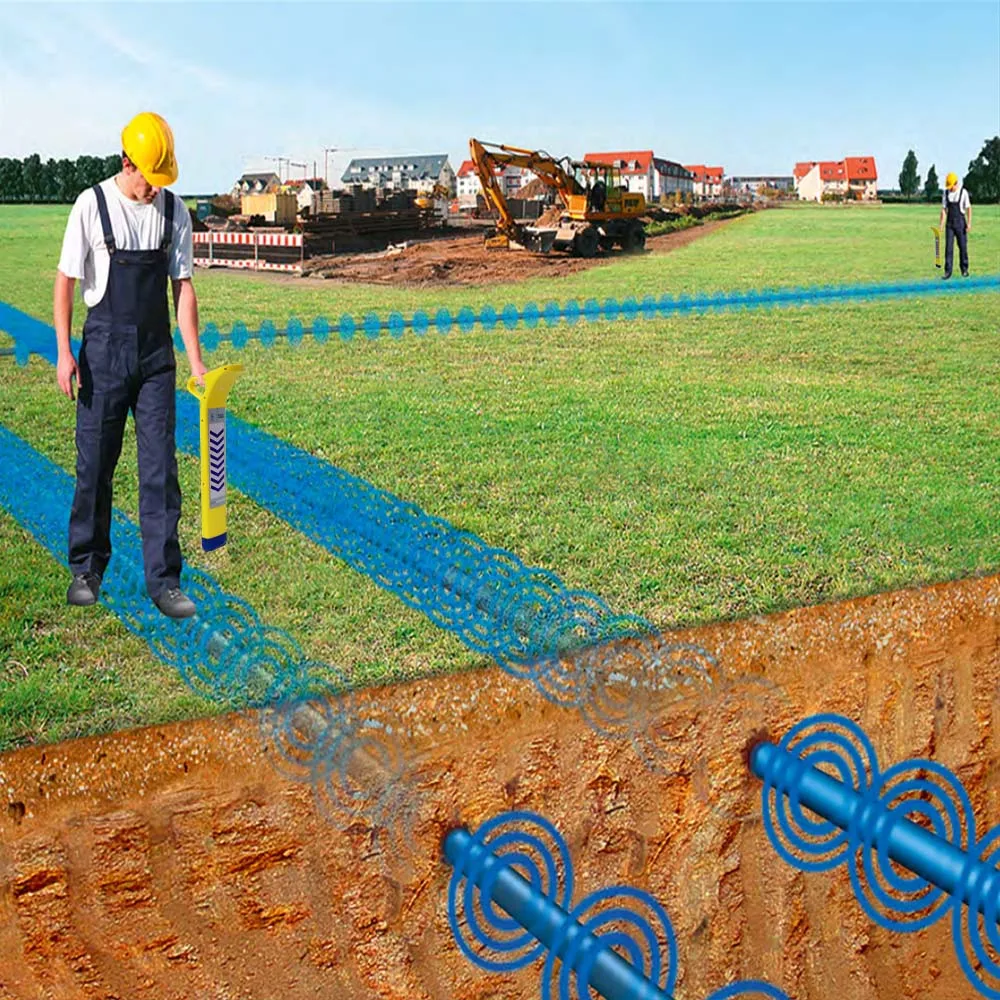
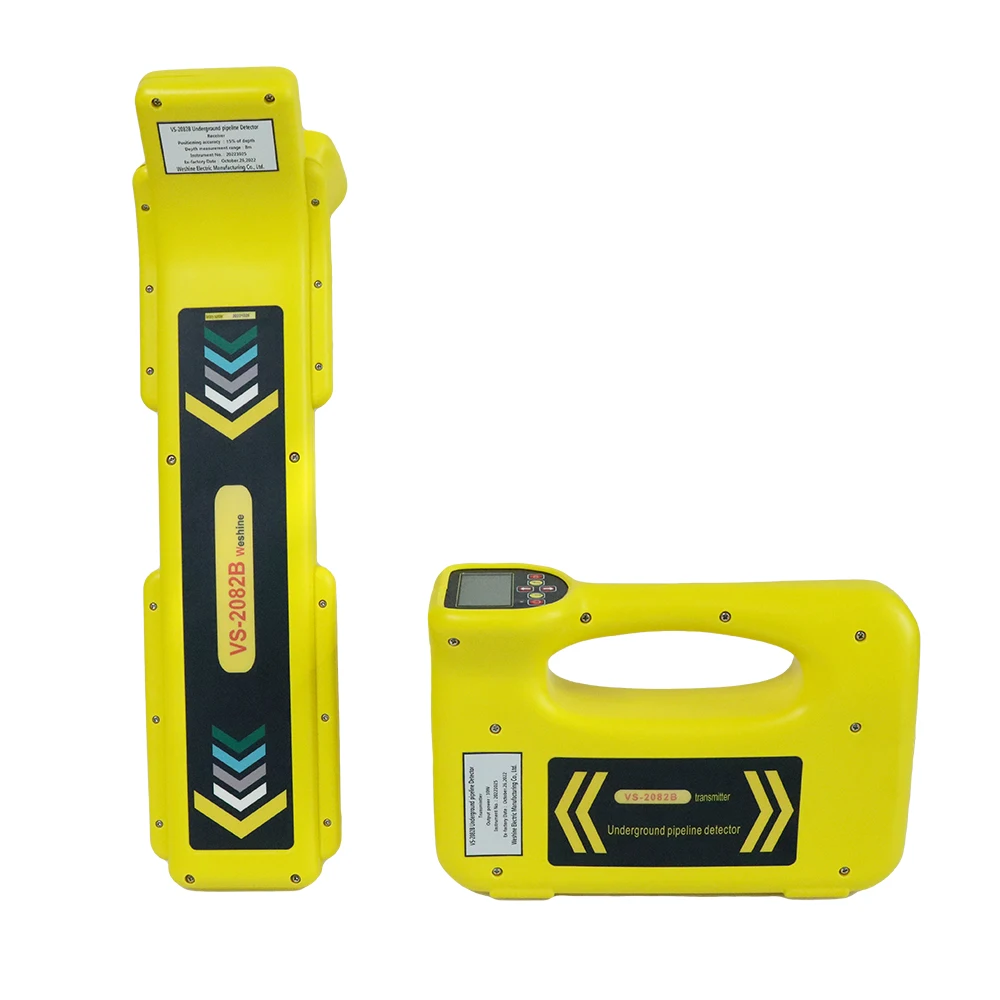
Pipe Locator is specially designed to detect pipes, sondes, telecommunication lines buried utilities. This device may detect
buried power cables, CATV cables, gas and water pipes, sewer lines, telephone cables, fiber optic cables with sheath, sondes,
inspection camera transmitters.
buried power cables, CATV cables, gas and water pipes, sewer lines, telephone cables, fiber optic cables with sheath, sondes,
inspection camera transmitters.
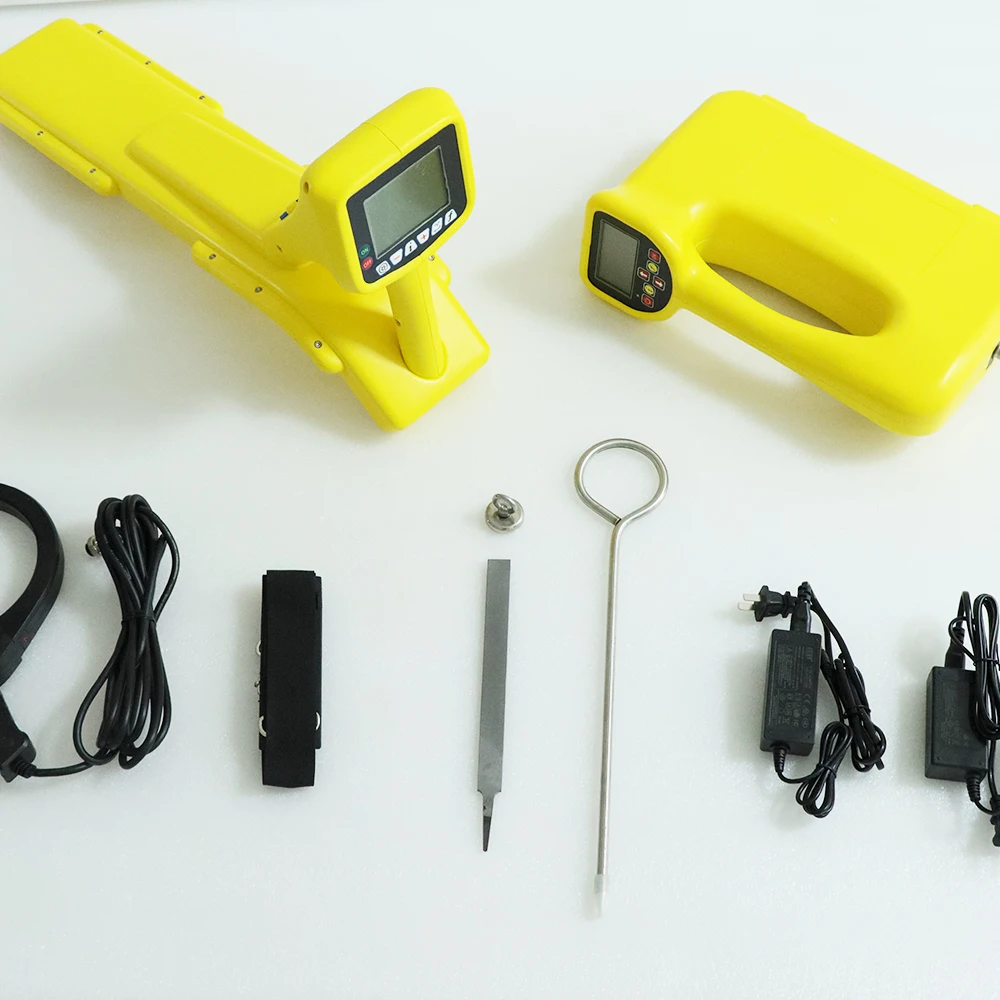
The Transmitter emits a signal. The Receiver detects the signal. You can locate the relative
position of the buried utility, sonde or camera by following the tracing signal.
position of the buried utility, sonde or camera by following the tracing signal.
For further information on Weshine's Service Solutions, contact our 24/7 online sales representative on alibaba.com or you may
Transmitter Specifications | ||
Operating Frequency | low • medium • high • radio | |
Operating Temperature | -4°F to 133º (-20ºC to +55ºC) | |
Hook-up Method | Direct Connection Inductive Coupling (with optional coupler) Transmitter Induction | |
Load Matching | automatic from 5 Ω to 25,500 Ω | |
Output Power | 10 Watts (High) 250 Milliwatts (Low) | |
Battery Types | 7.2 V lithium-ion battery pack 8 amp-hour maintenance | |
Battery Life | greater than 4-8 hours depending on load, frequency and power setting | |
Dimensions | 23 x 28 x15 cm | |
Weight | 2.6Kg | |
Receiver Specifications | ||
Operating Frequency | low • medium • high • radio• 50/60Hz | |
Antenna Mode | Null (vertical coil) Peak (horizontal coil) | |
Audio Indication | Variable pitch audio | |
Operating Temperature | -4°F to 133º (-20ºC to +55ºC) | |
Battery Types | 7.2 V lithium-ion battery pack 8 amp-hour maintenance | |
Battery Life Continuous Intermittent | 12 hours 24 hours | |
Dimensions | 68 x 25 x11 cm | |
Weight | 1.6Kg | |
Signal Strength | LCD bar graph Absolute Signal Strength readout 0-999 | |
Gain Control | up/down button for automatic centering and manual control | |
Dynamic Range | 100 dB | |
Depth Measurement Automatic Manual | Digital depth readout to 2.5m Triangulation for verification of automatic readout in congested environments | |
The steps to detect cable fault
Recommend Products


VS-2089A
CABLE IDENTIFIER
The Cable Identifier permits a fast and especially safe phase determination at the joining location.
Typical application:
* Energized or de-energized cables identification.
* Test of AC current.
* Test of AC voltage.
* Test of frequency.

VS-2082
SPLIT-BOX PIPE AND CABLE LOCATOR
Typical application:
Underground conductive networks such as water and gas mains, telephone, cable TV, and electric power cables.
It determines buried lines depth and locates underground metallic masses such as valve caps and manhole covers.

VS-2081
SHEATH FAULT LOCATOR
Typical application:
* XLPE cables sheath fault location.
* Buried-cables/all-plastic cables fault location.
* 10 kV HIPOT test.

VS-2088 Plus
VEHICLE MOUNT CABLE FAULT LOCATION SYSTEM
The VS-2088 Plus is upgraded on the basis of VS-2088, true portable outdoor-ready unit.
It is fully automated with motorised HV switches controlled by either the rotary knob or the industry-grade colour touchscreen.
Feedback
VR —— More than you see
 VR
VR
Company Profile

We Recommend
New Arrivals
New products from manufacturers at wholesale prices