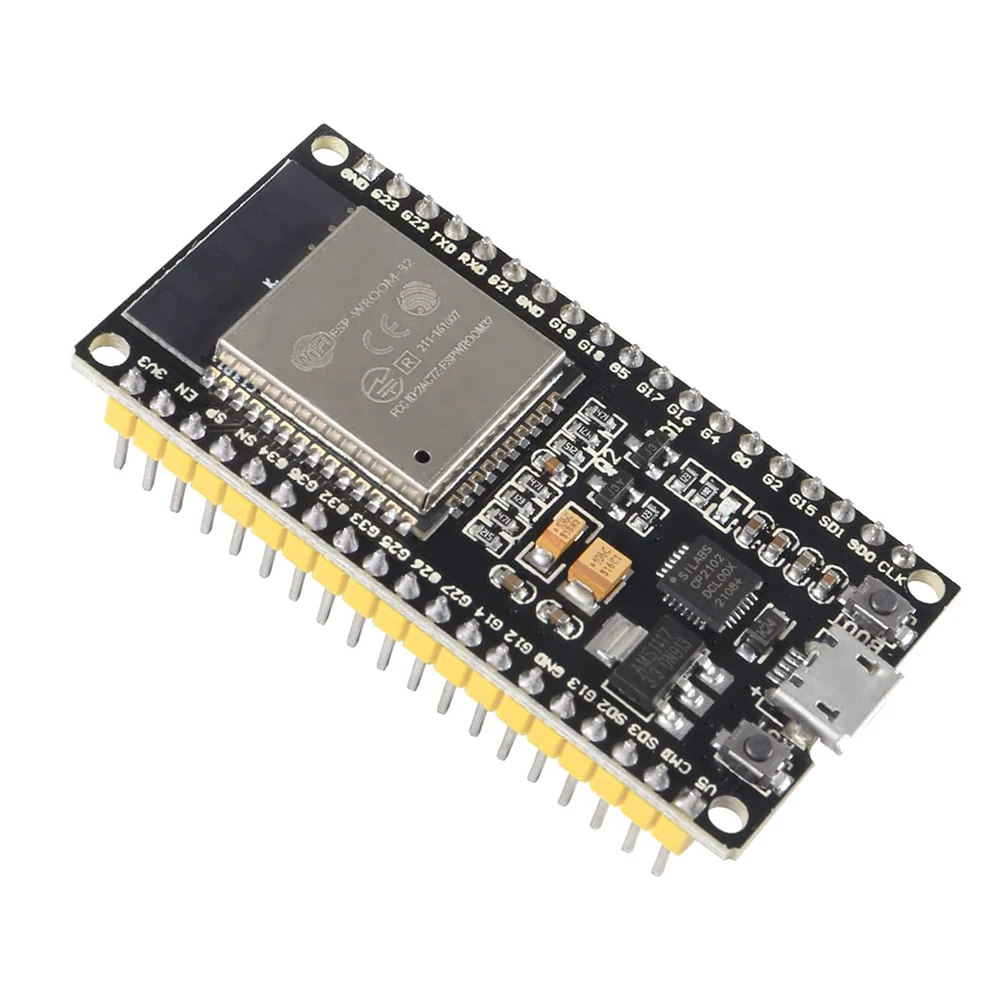
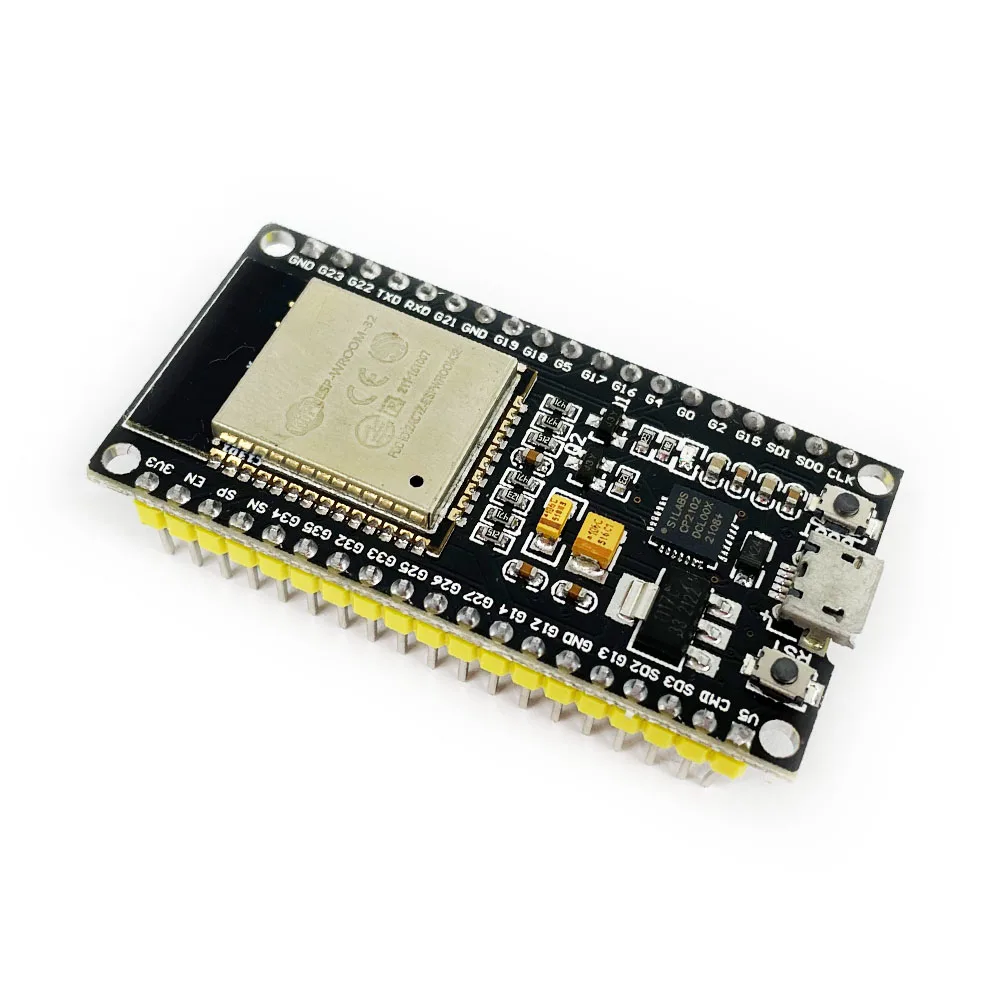
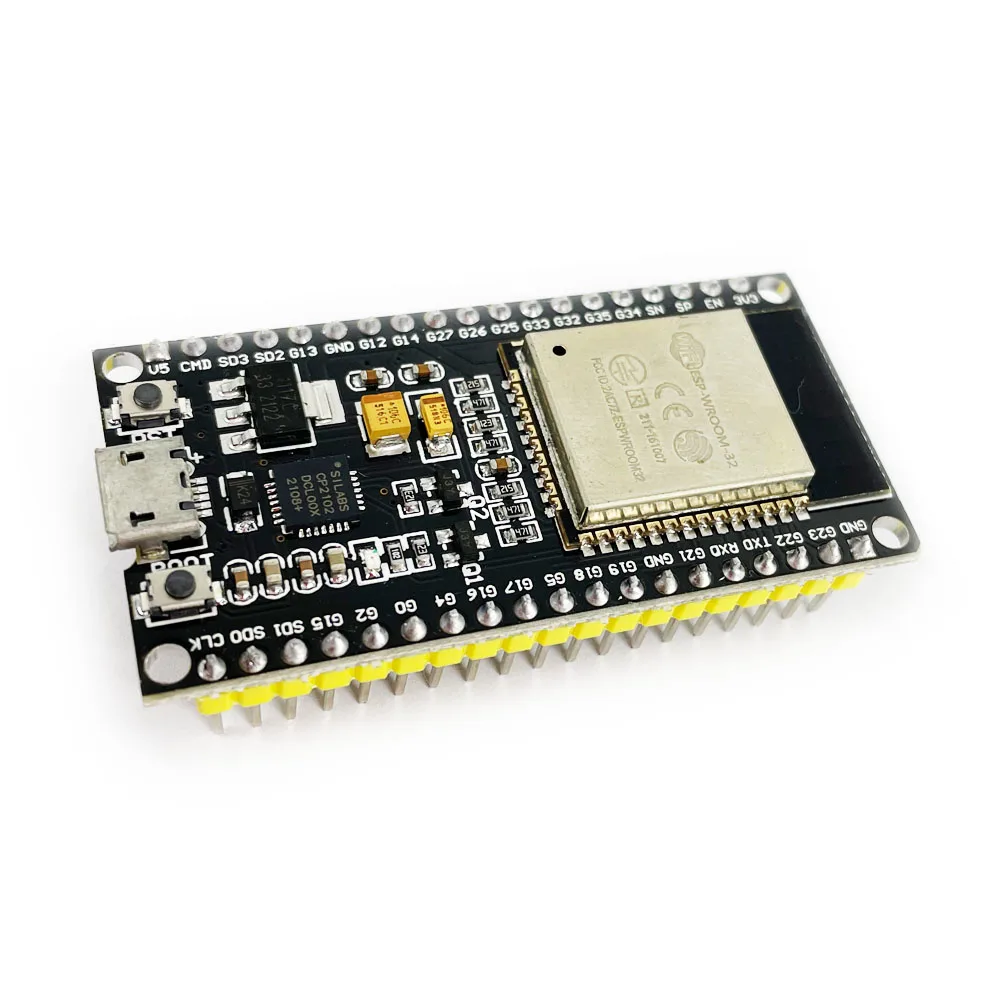
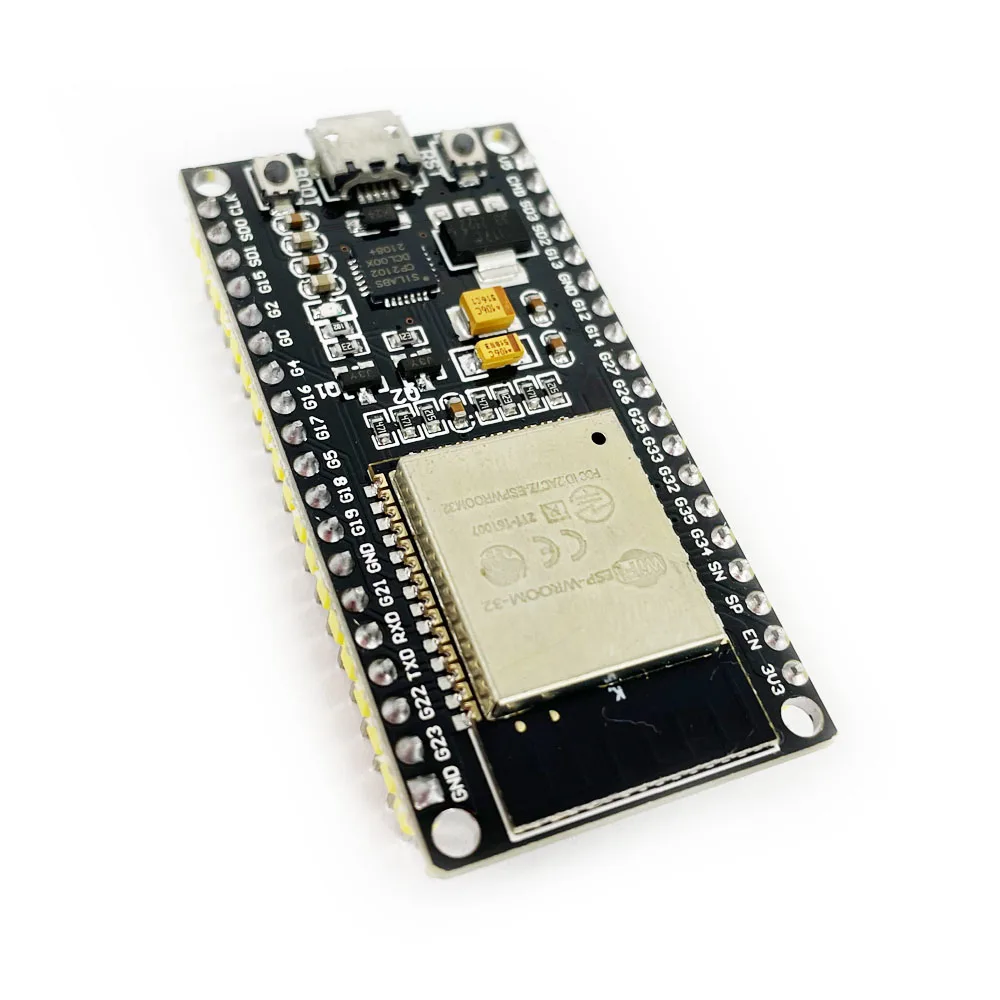
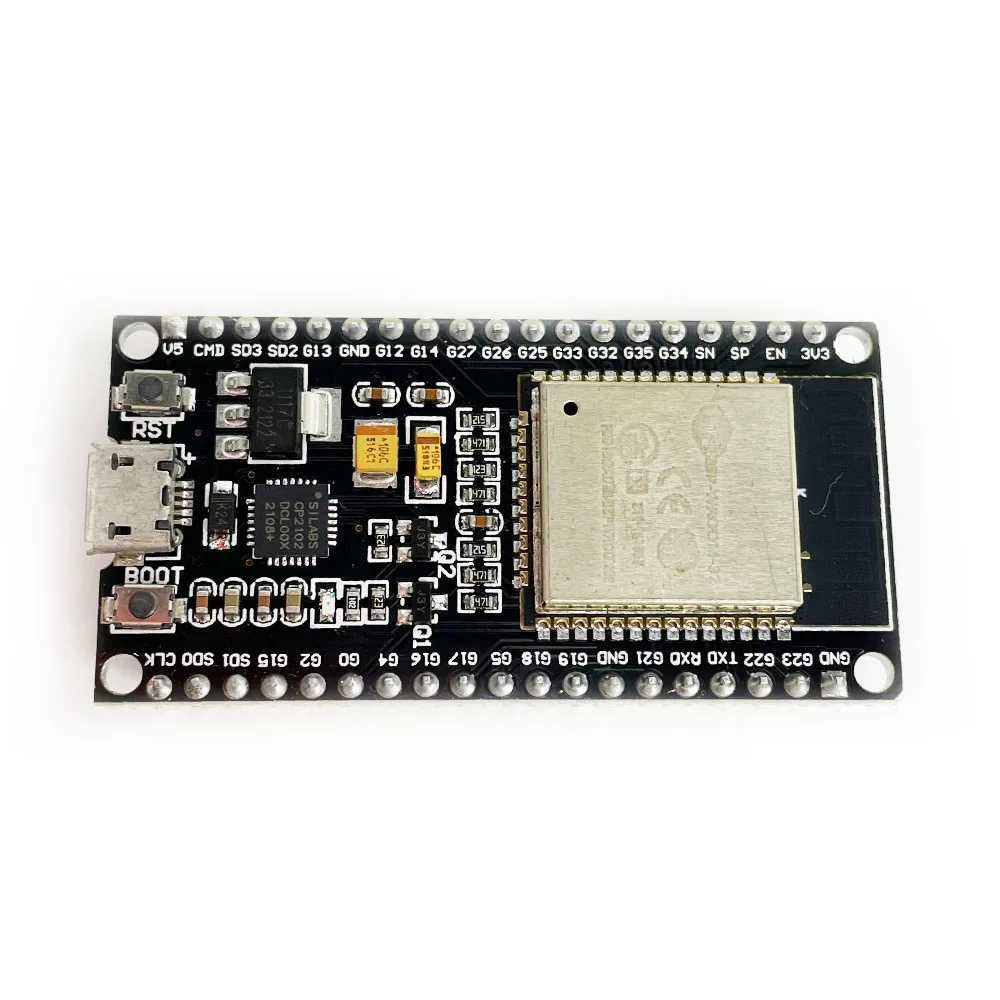
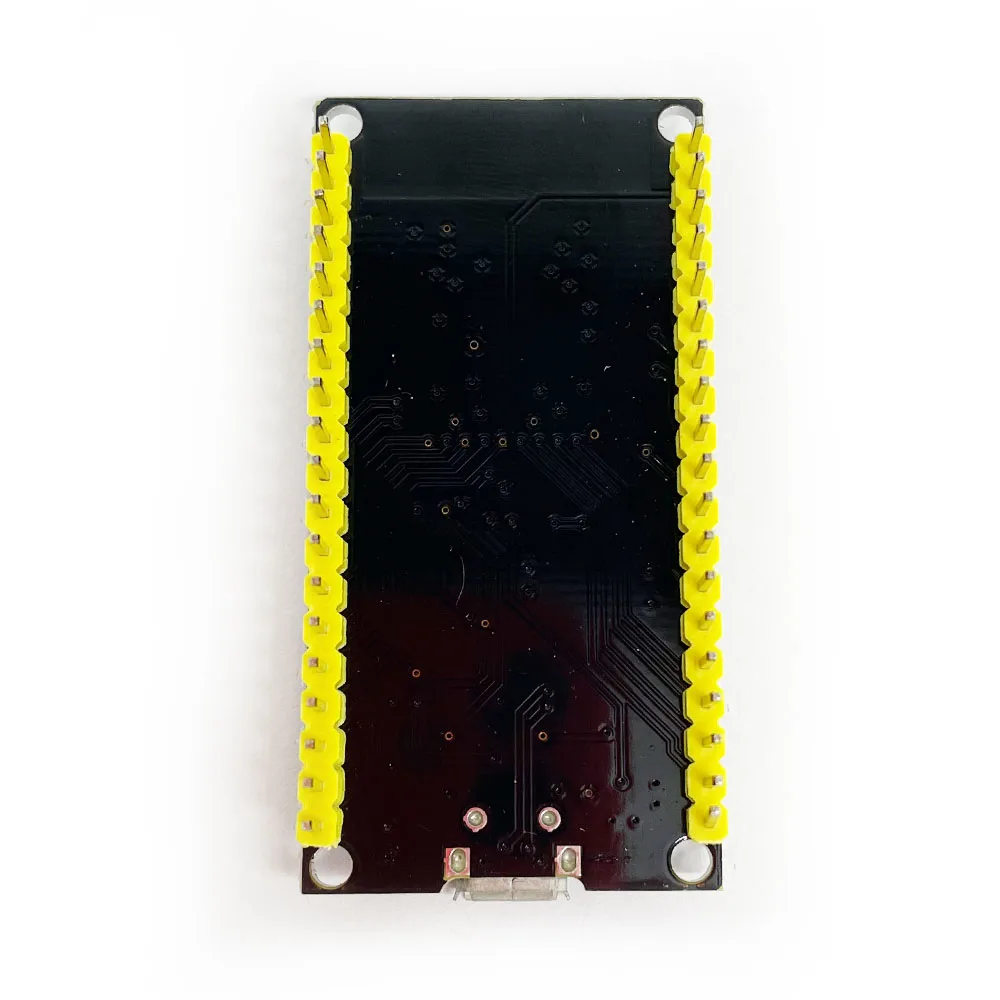
ESP32 Development Board 2.4GHz Dual Mode Wireless WiFi Bluetooth Dual Core CPU IoT for Arduino IDE DevKit
- Category: >>>
- Supplier: BeFunS Intelligent (ShenZhen) Co. Ltd.
Share on (1600475959868):
Product Overview
Description
About this item
GOOUUUU-ESP32:
1. The onboard CP2102 stable USB to TTL chip ensures the normal communication of the serial port.
2. Support automatic download, no need to manually switch between download and run modes.
3. Immersion gold process
4. Support development on Windows systems (cygwin and msys32 emulation environments) and Linux systems
5. Support ESP32-Arduino
1. The onboard CP2102 stable USB to TTL chip ensures the normal communication of the serial port.
2. Support automatic download, no need to manually switch between download and run modes.
3. Immersion gold process
4. Support development on Windows systems (cygwin and msys32 emulation environments) and Linux systems
5. Support ESP32-Arduino
ESP-WROOM-32 is a general-purpose Wi-Fi+BT+BLE MCU module, which is powerful and versatile for low-power sensor networks and demanding tasks such as speech encoding, audio streaming, and MP3 decoding, etc.
The core of this module is the ESP32-D0WDQ6 chip*, which is scalable and adaptive. The two CPU cores can be controlled or powered up independently. The clock frequency can be adjusted from 80 MHz to 240 MHz. The user can cut off the power to the CPU and use the low-power co-processor to continuously monitor the state changes of peripherals or whether some analog quantities exceed thresholds. ESP32 also integrates a wealth of peripherals, including capacitive touch sensors, Hall sensors, low-noise sense amplifiers, SD card interface, Ethernet interface, high-speed SDIO/SPI, UART, I2S and I2C, etc.
CPU and memory
The ESP32-D0WDQ6 contains two low-power Xtensa® 32-bit LX6 MCUs. On-chip storage includes:
• 448 KB of ROM for program startup and kernel function calls.
• 520 KB of on-chip SRAM for data and instruction storage.
• 8 KB of SRAM in the RTC, the RTC slow memory, can be accessed by the coprocessor in Deep-sleep mode.
• 8 KB of SRAM in the RTC, the RTC fast memory, can be used for data storage and accessed by the main CPU when the RTC starts up in Deep-sleep mode.
• 1 kbit of eFuse, of which 256 bits are dedicated to the system (MAC address and chip settings); the remaining 768 bits are reserved for user applications including Flash encryption and chip ID.
• ESP-WROOM-32 integrates 4MB SPIFlash
The ESP32-D0WDQ6 contains two low-power Xtensa® 32-bit LX6 MCUs. On-chip storage includes:
• 448 KB of ROM for program startup and kernel function calls.
• 520 KB of on-chip SRAM for data and instruction storage.
• 8 KB of SRAM in the RTC, the RTC slow memory, can be accessed by the coprocessor in Deep-sleep mode.
• 8 KB of SRAM in the RTC, the RTC fast memory, can be used for data storage and accessed by the main CPU when the RTC starts up in Deep-sleep mode.
• 1 kbit of eFuse, of which 256 bits are dedicated to the system (MAC address and chip settings); the remaining 768 bits are reserved for user applications including Flash encryption and chip ID.
• ESP-WROOM-32 integrates 4MB SPIFlash
Product Description
Our Advantages

BeFuns Intelligence (Shen Zhen) Ltd.
1、We have a strong R&D team, including hardware engineers, software engineers, algorithm engineers, 3D structure engineers.
2、We have several fully automatic production lines, production equipment including high-speed placement machine, reflow machine, wave soldering machine, 3D scanner, visual inspection machine, laser marking machine.
3、We can support product customization, quick response and fast delivery.
2、We have several fully automatic production lines, production equipment including high-speed placement machine, reflow machine, wave soldering machine, 3D scanner, visual inspection machine, laser marking machine.
3、We can support product customization, quick response and fast delivery.
Certifications

Why Choose Us

FAQ
Q1: Are you manufacturer ?
A1: Yes, we are manufacturer.
A1: Yes, we are manufacturer.
Q2: Do you accept OEM design?
A2: Yes,we do.We can design according to your requirement, MOQ usually >1000.
A2: Yes,we do.We can design according to your requirement, MOQ usually >1000.
Q3: How long is your delivery time?
A3: Normally 3-6 working days after payment; Special requirement orders, delivery time is negotiable.
Q4: How can we get samples from you ?
A4: Samples are available. Normally we take 2 days to arrange samples. If we have no business record with you before, we need to charge boot samples cost and post courier freight.
Q5: Do you accept pay 30% in advance?
A5: Yes,we do.We can start to prepare your goods when receive 30% payment, and send them after get the rest 70% payment.
Q6: What payment terms you accept?
A6: We accept Paypal, T/T, Alibaba Trade Assuarce, Western Union, Wechat, Alipay, in Cash (RMB or USD)..
We Recommend
New Arrivals
New products from manufacturers at wholesale prices