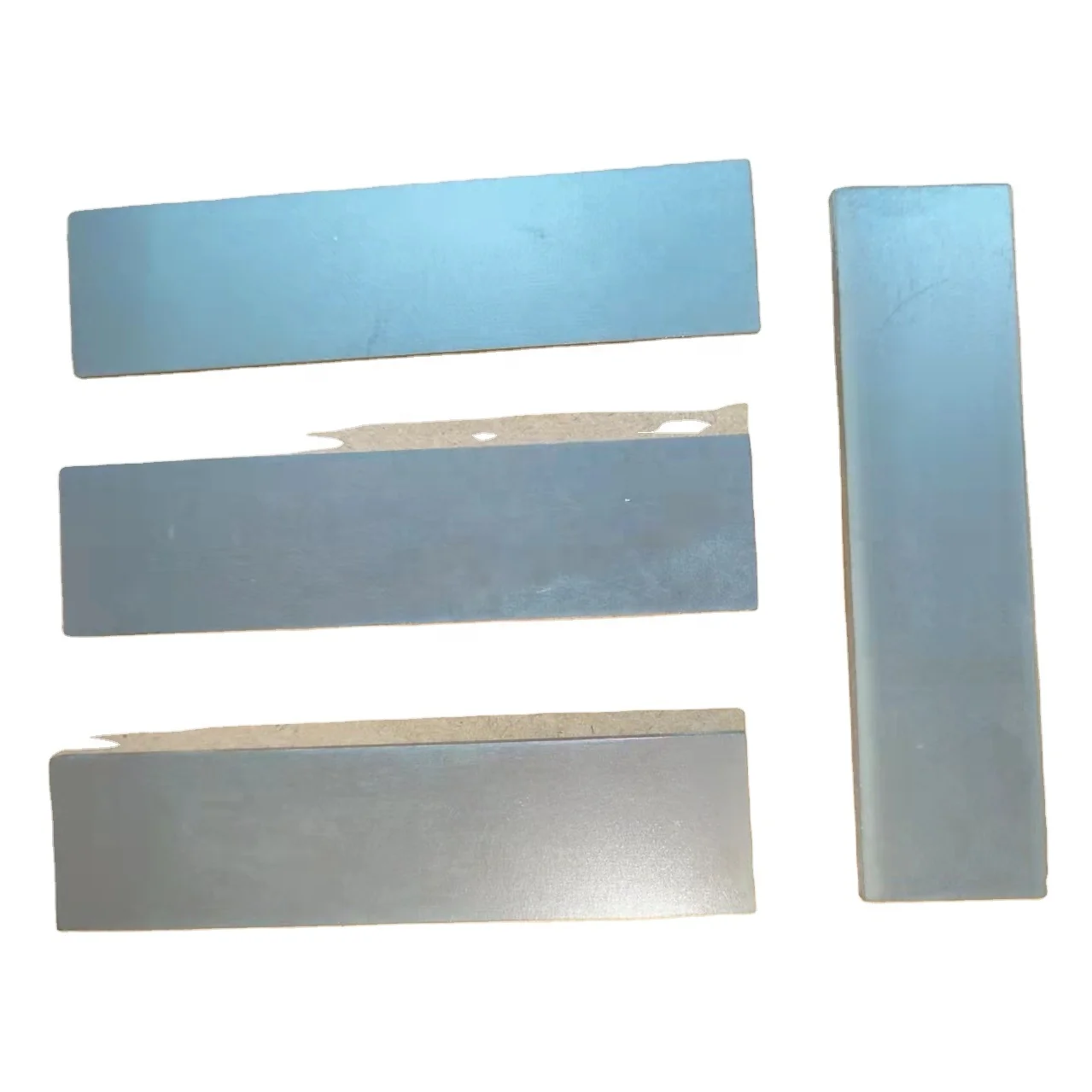
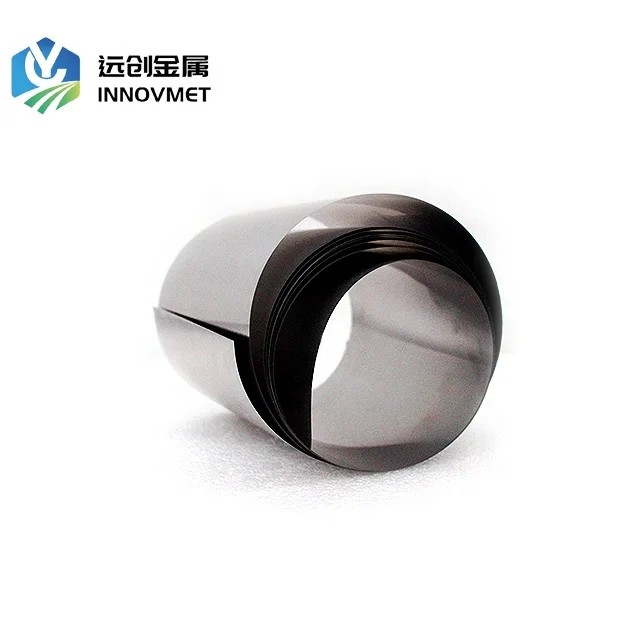
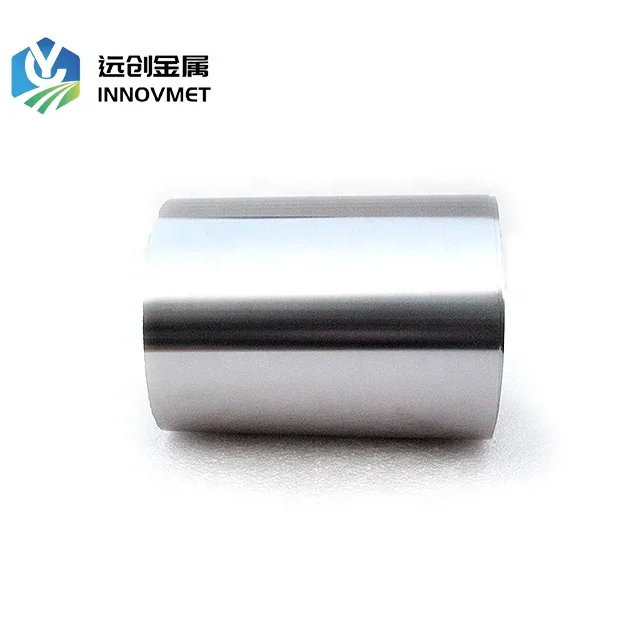
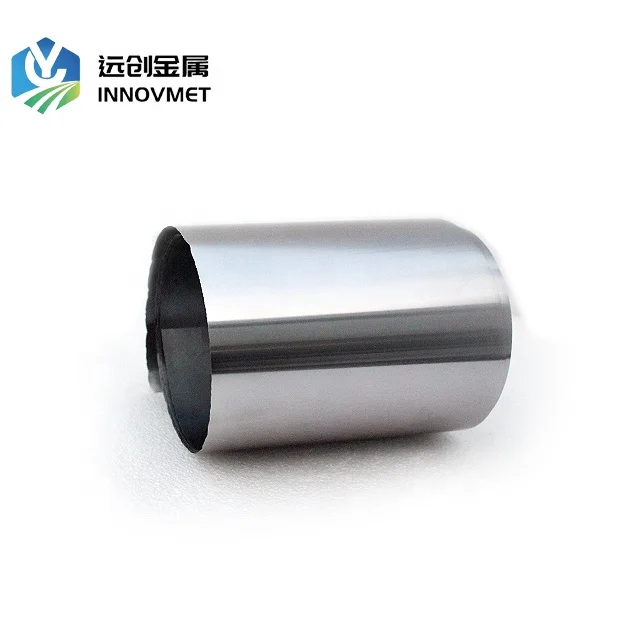
Nickel Titanium Shape Alloy Sheet,Nitinol Plate Nitnol Foils
- Category: Titanium Sheets >>>
- Supplier: Shaanxi Innovmet Co. Ltd.
Share on (1600488239139):
Product Overview
Description
WE ARE NITINOL
Nitinol is a shape memory alloy, which is a special alloy that can automatically restore its own plastic deformation to its
original shape at a certain temperature. Its expansion rate is more than 20%, its fatigue life is up to 1*10 to the 7th power, its damping characteristics are 10 times higher than that of ordinary springs, and its corrosion resistance is better than the current best medical stainless steel, so it can meet various engineering and It is a very excellent functional material for medical application requirements.In addition to its unique shape memory function, memory alloys also have excellent characteristics suchas wear resistance, corrosion resistance, high damping and superelasticity.
Product Description
Nickel content | Above 50.4% |
Technique | Forged |
Whether powder | Not Powder |
Standard | ASTM |
Surface oxidation | Pickling |
shape | Flat |
Size | Thinckness: 6mm |
characteristic | Superelastic or Shape memory |
material | Nitinol alloy |
Brand Name | Innovmet |
Surface Treatment | Polished or Black |
Sample | Available |
Logo | Available |
Place of Origin | Shaanxi, China |
AF Temperature | AF=90C |
Nitnol Performance and Features
1. Phase transformation and properties of nickel-titanium alloys
As the name suggests, Nitinol is a binary alloy composed of nickel and titanium. Due to the change of temperature and mechanical pressure, there are two different crystal structure phases, namely austenite phase and martensite phase. The phase transformation sequence of Nitinol when cooling is parent phase (austenite phase)-R phase-martensite phase. R-phase is rhombus, and austenite is when the temperature is higher (greater than the same: the temperature at which austenite begins), or when the load is removed (deactivation by external force), cube, hard. The shape isrelatively stable. The martensite phase is a state in which the temperature is relatively low (less than Mf: that is, the temperature at which martensite ends) or when it is loaded (activated by external force), hexagonal, ductile, repeatable, lessstable, easier deformed.
As the name suggests, Nitinol is a binary alloy composed of nickel and titanium. Due to the change of temperature and mechanical pressure, there are two different crystal structure phases, namely austenite phase and martensite phase. The phase transformation sequence of Nitinol when cooling is parent phase (austenite phase)-R phase-martensite phase. R-phase is rhombus, and austenite is when the temperature is higher (greater than the same: the temperature at which austenite begins), or when the load is removed (deactivation by external force), cube, hard. The shape isrelatively stable. The martensite phase is a state in which the temperature is relatively low (less than Mf: that is, the temperature at which martensite ends) or when it is loaded (activated by external force), hexagonal, ductile, repeatable, lessstable, easier deformed.
2. Special properties of nickel-titanium alloys
1.) Shape memory (shape memory) Shape memory is when the parent phase of a certain shape is cooled from above the Af temperature to below the Mf temperature to form martensite, the martensite is deformed at a temperature below Mf, and heated to below the Af temperature, With the reverse phase transition, the material automatically returns to its shape in the parent phase. In fact, the shape memory effect is a thermally induced phase transformation process in Nitinol.
2.) Superelasticity The so-called superelasticity refers to the phenomenon that the sample produces a strain far greater than the elastic limit strain under the action of external force, and the strain can automatically recover when unloaded. That is, in thestate of the parent phase, due to the action of external stress, the stress-induced martensitic transformation occurs, so that the alloy exhibits mechanical behavior different from ordinary materials, its elastic limit is much larger than that of ordinary materials, and it no longer obeys Hu. Gram's Law. In contrast to shape memory properties, superelasticity has no thermal involvement. All in all, hyperelasticity means that the stress does not increase with the increase of strain within a certain deformation range, and hyperelasticity can be divided into linear hyperelasticity and nonlinear hyperelasticity. In the former stress-strain curve, the relationship between stress and strain is close to linear.Nonlinear superelasticity refers to the result of stress-induced martensitic transformation and its inverse transformation during loading and unloading in a certain temperature range above Af, so nonlinear hyperelasticity is also called transformation pseudoelasticity. The phase transformation pseudoelasticity of Nitinol can reach about 8%. The superelasticity of Nitinol can vary with the heat treatment conditions, and when the archwire is heated above 400ºC, the superelasticity begins to decrease.
3.) Sensitivity to intraoral temperature changes: The orthodontic force of stainless steel wire and CoCr alloy orthodontic wire is basically not affected by intraoral temperature. The orthodontic force of superelastic nickel-titanium alloy orthodontic wire varies with oral temperature. When the amount of deformation is constant. As the temperature increases, the healing power increases. On the one hand, it can accelerate the movement of the teeth, because the temperature change in the oral cavity will stimulate the blood flow in the stagnant blood flow caused by the capillary stagnation caused by the orthodontic device, so that the repair cells are fully nourished during the movement of the teeth, maintain its vitality and normal function. Orthodontists,on the other hand, cannot precisely control or measure orthodontic forces in the oral environment.
4.) Corrosion resistance:Studies have shown that the corrosion resistance of nickel-titanium wire is similar to that of stainless steel wire.
5.) Anti-toxicity: The special chemical composition of nickel-titanium shape memory alloy, that is, it is an atomic alloy such as nickel and titanium, containing about 50% nickel, and nickel is known to have carcinogenic and cancer-promoting effects. In general, the titanium oxide on the surface layer acts as a kind of barrier, making Ni-Ti alloys have good biocompatibility. The TiXOy and TixNiOy in the surface layer can inhibit the release of Ni.
6.) Soft orthodontic force: Currently commercially used or thodontic metal wires include austenitic stainless steel wire,
cobalt-chromium-nickel alloy wire, nickel-chromium alloy wire, Australian alloy wire, gold alloy wire and ß-titanium alloy wire. Load-displacement curves for these orthodontic wires under tensile test and three-point bending test conditions. Nitinol has the lowest and flattest unloading curve platform, indicating that it can provide the most durable and gentle orthodontic force.
7.) Good shock absorption characteristics: The greater the vibration of the arch wire caused by chewing and night grinding, the greater the damage to the root and periodontal tissue. Through the results of different arch wire attenuation experiments, it isfound that the vibration amplitude of the stainless steel wire is larger than that of the superelastic NiTi wire, and the initial vibration amplitude of the superelastic NiTi arch wire is only half of that of the stainless steel wire. Tooth health is very important, and traditional arch wires, such as stainless steel wires, tend to aggravate root resorption.
Company Profile

Shaanxi Innovmet Co., Ltd. was established in 2009 and is located in "China Titanium Valley-Baoji". We are specialized in manufacturing and exporting various non-ferrous metals in China, such as pure titanium and titanium alloys, Nitinol, zirconium, tungsten, molybdenum, tantalum, niobium, and nickel products. Especially in these years we have focused on the production and research of nitinol memory alloy products. They are widely used in aerospace, military, automotive, electronics, precision manufacturing, ordnance, ships, shipbuilding, chemistry, oil and gas, power plants, construction and medical. Customers from more than 60 countries are using our products. Relying on "China Titanium City-Baoji" (also the hometown of my boss) and "Tungsten and Molybdenum Hometown-Luoyang" in non-ferrous metal resources and scientific research and manufacturing advantages, we export more than 1,000 kinds of non-ferrous metal products non-ferrous metal products once a year.We are ready to be your sincere friend and trustworthy business partner at any time!
Workshop


Nitinol Sheets Ntinol Plates


Packing & Delivery


Why Choose Us
Over the years, we have focused on the production and research of titanium screws and nickel-titanium memory alloy products, motorcycle modification screws, bicycle modification screws and car modification accessories, titanium outdoor products, etc.

FAQ
Q1. What is the advantage about your company? |
A1. Our company has professional team and professional production line. |
Q2. Why should I choose your products? |
A2. Our products are high quality and low price. |
Q3. The logo and the color can be customized? |
A3. Yes, we welcome you to sample custom. |
Q4. Any other good service your company can provide? |
A4. Yes,we can provide good after-sale and fast delivery. |
We Recommend

Titanium shape memory alloy nitinol plate sheet
US $150.00-$250.00


ASTM B265 Grade 2 Grade 5 Titanium plate / Titanium sheet
US $15.00-$38.00

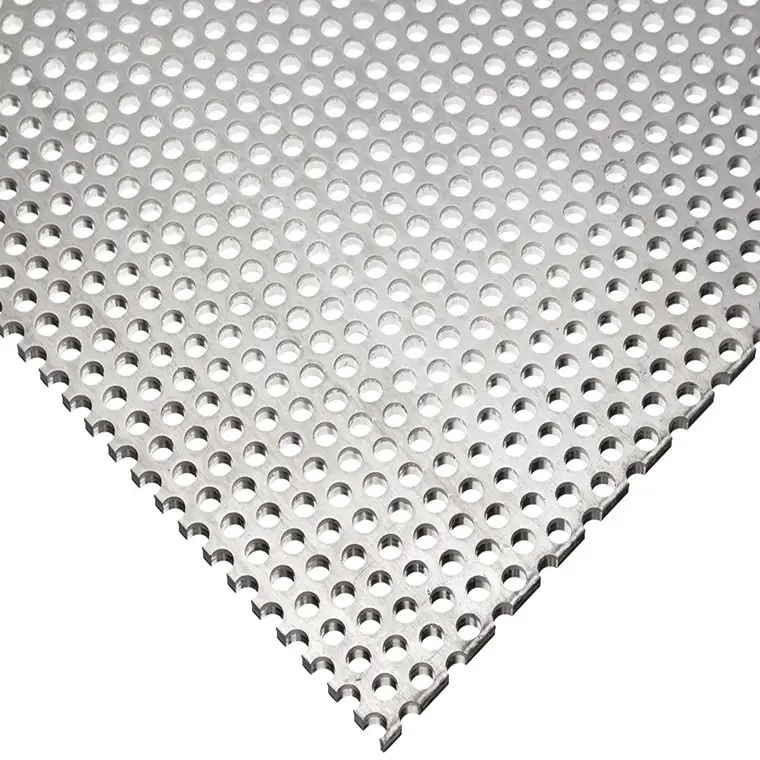
1*2mm mesh size Ti mesh titanium expanded metal mesh
US $18.00-$34.00
New Arrivals
New products from manufacturers at wholesale prices