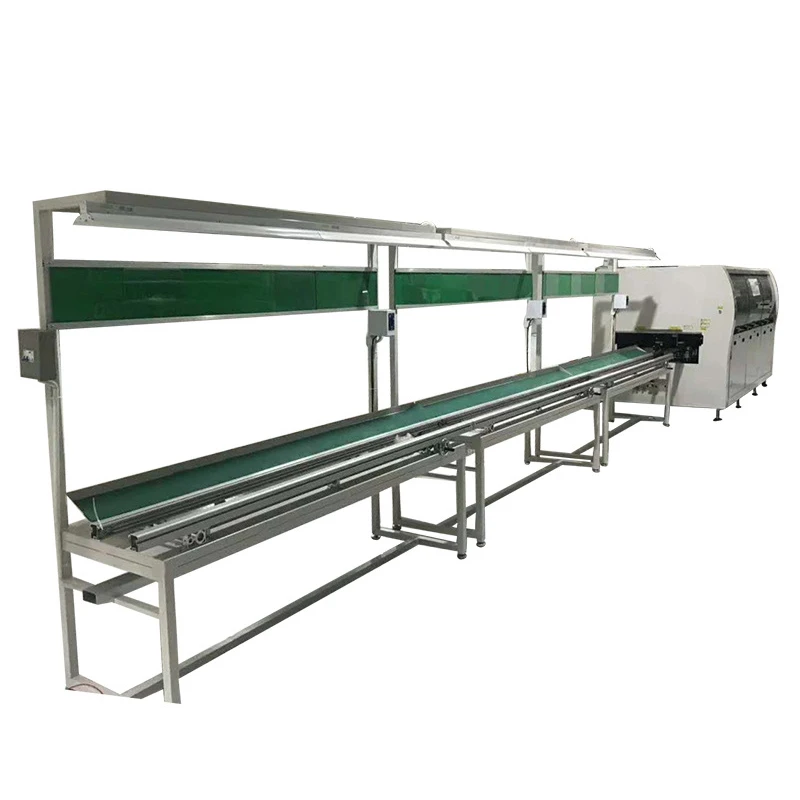
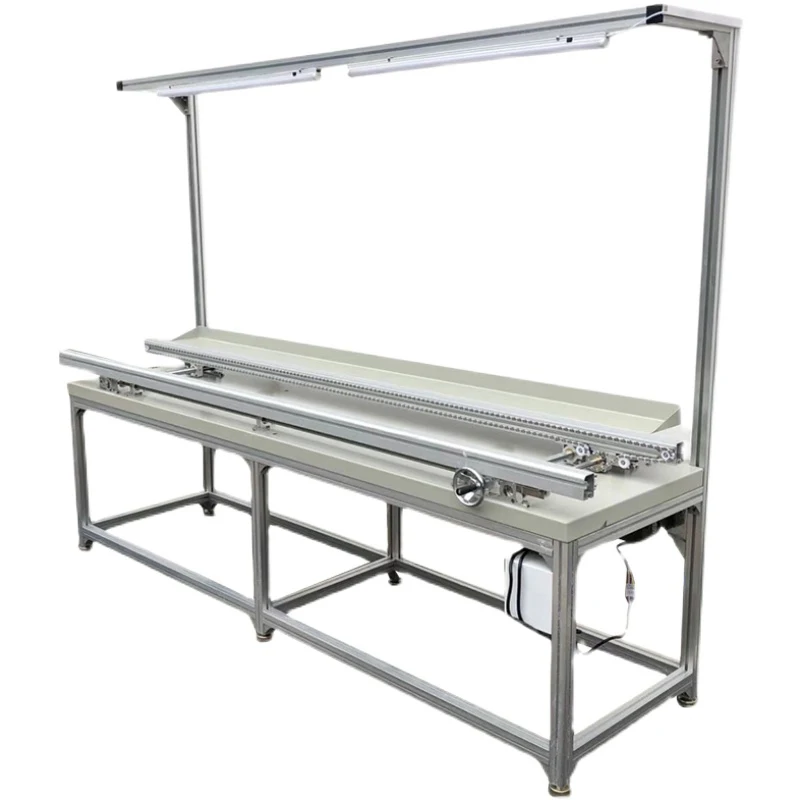
Guangzhou Factory High quality Electronic Assembly Production Line Led Light Automatic Assembly Line
- Category: >>>
- Supplier: Dongguan Taihong Industrial Equipment Co. Ltd.
Share on (1600526760924):
Product Overview
Description
Products Description
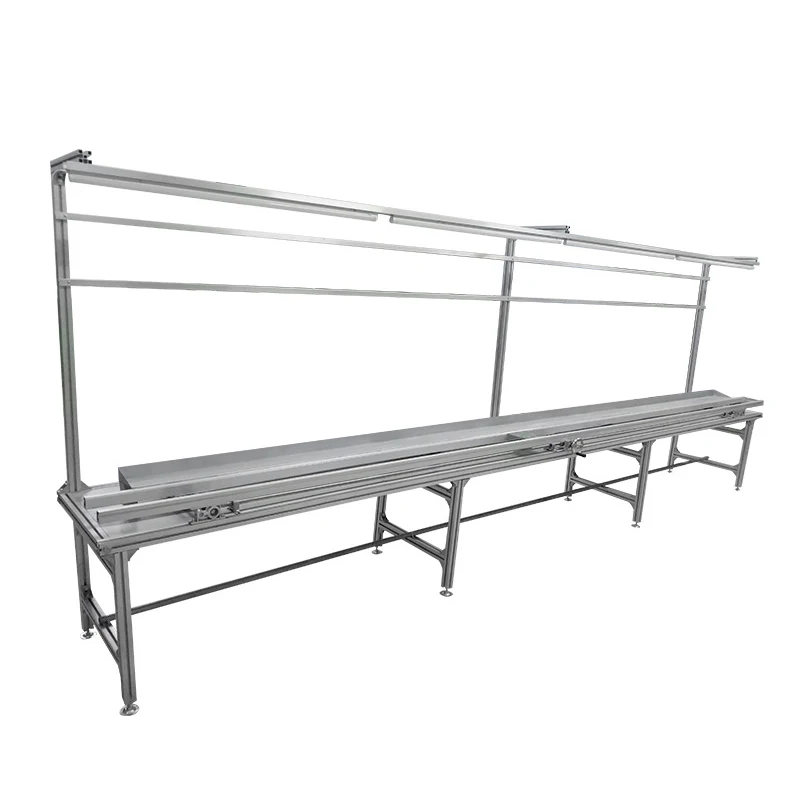
Plugin Pipeline Definition | Plug-in pipelines are sometimes called patch cords or patch cords. It mainly refers to that on the production line, in order to improve efficiency, some components are connected by plugging, thereby greatly reducing the man-hour and improving the production efficiency of the product. It can save a lot of labor costs for enterprises. | ||
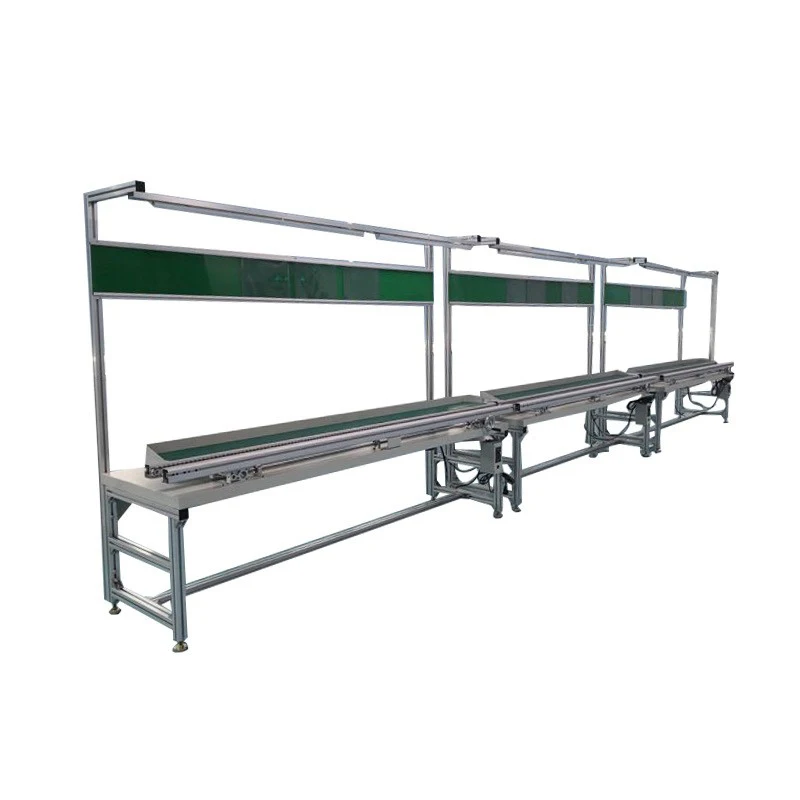
Classification of plug-in lines | According to the shape can be divided into | Straight plug-in wire and ring plug-in wire | |
According to function can be divided into | Manual plug-in line and automatic plug-in line | ||
Divided by control method | Frequency conversion, stepless speed regulation, electronic speed regulation. | ||
Divided by operation mode | Mandatory and free festivals. | ||
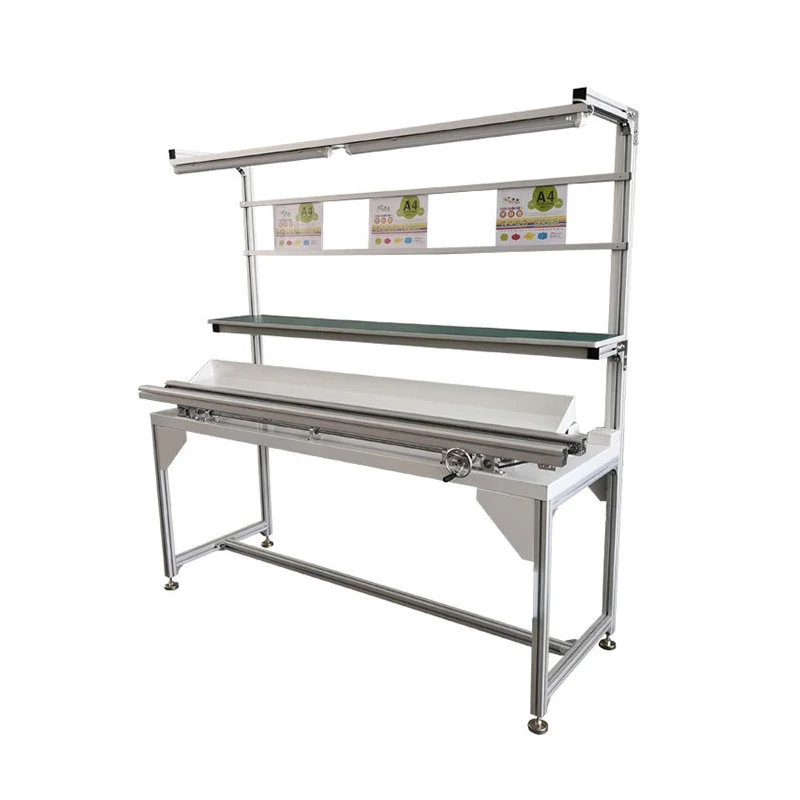
Equipment structure | The bracket is made of steel welded and then sprayed with powder, and the periphery is made of special aluminum profiles. | ||
Other accessory options | Gas pipes, lamps, light stands, craft cards, instrument panels, sockets, tool boxes, etc. | ||
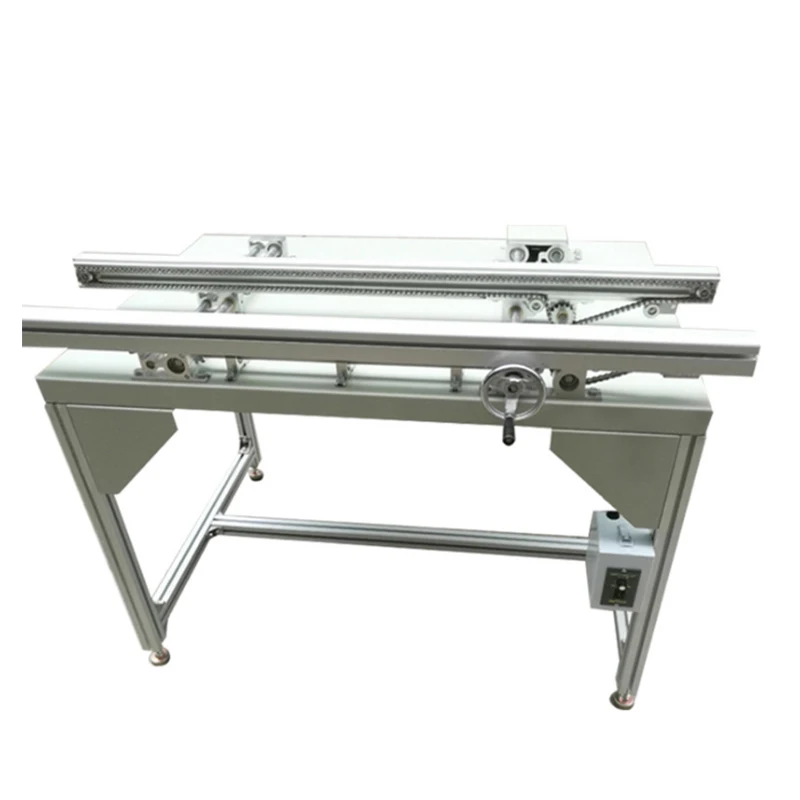
Features of Manual Plugin Pipeline | The conveying medium of the manual plug-in line adopts a special aluminum profile as the guide rail, so the friction between the line body and the product is small, there is no noise, and there is no need to add any lubricant, and it will not cause any pollution to the conveyed PCB board. | ||
Features of automatic plug-in line | The automatic plug-in line adopts special aluminum alloy and special nylon chain as the conveying medium, and adjusts the conveying speed, the width and the height of the product through the screw amplitude modulation mechanism. | ||
Scope of application | It is widely used in the plug-in process of PCB boards in electronic and electrical factories. | ||
Recommend Products
Company Profile

Dongguan Taihong Industrial Equipment Co., Ltd. is a professional manufacturer of various automatic conveying equipment, assembly lines, conveyors, double-speed lines, assembly lines, production belt lines, climbing lines, chain plate mesh chain conveyors, turning lines, plug-in lines, Workbench, tunnel drying furnace, roller line, stainless steel assembly line, oil injection, paint spraying, powder spraying cabinet, stainless steel water curtain cabinet. Since the establishment of our company, our company has been continuously researching and developing products and technical transformation, arranging the specialization of debugging and technical support. Through years of unremitting efforts and pursuits, all our staff have won the trust and support of our customers with good reputation, excellent products and sincere service attitude. Since its establishment, we have not only absorbed advanced technology and experience at home and abroad, but also continued to innovate, combined with the actual situation of customers, and pragmatically provide customers with suitable industrial equipment. The tenet of Taihong Industrial Equipment. High-quality products, reasonable prices, and perfect after-sales service are our tireless pursuits! Friends from all walks of life are welcome to visit, guide and negotiate business.
Advantage

Factory

Logistics

Home

We Recommend
New Arrivals
New products from manufacturers at wholesale prices