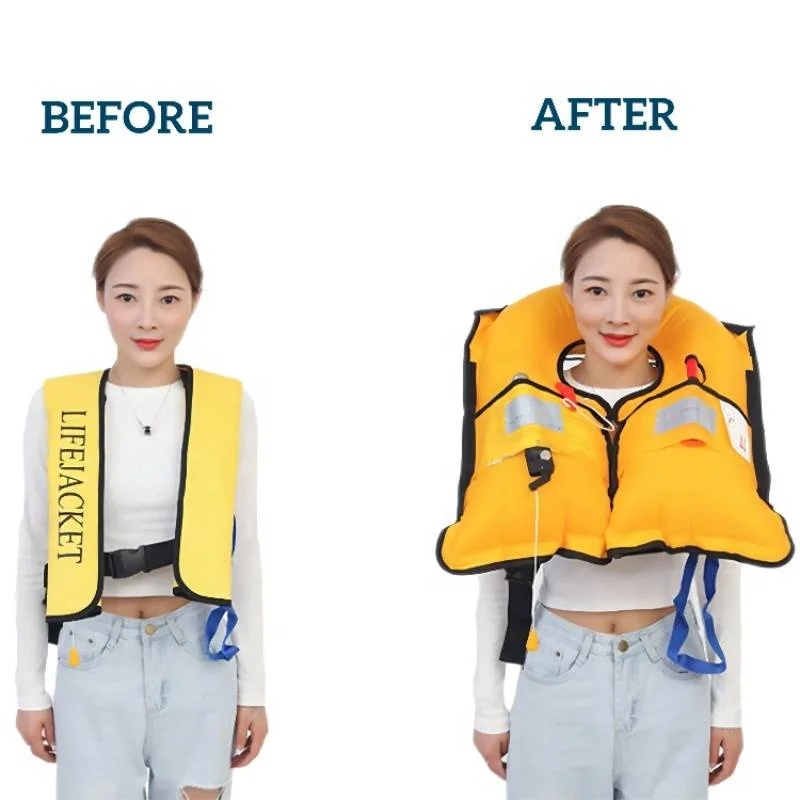
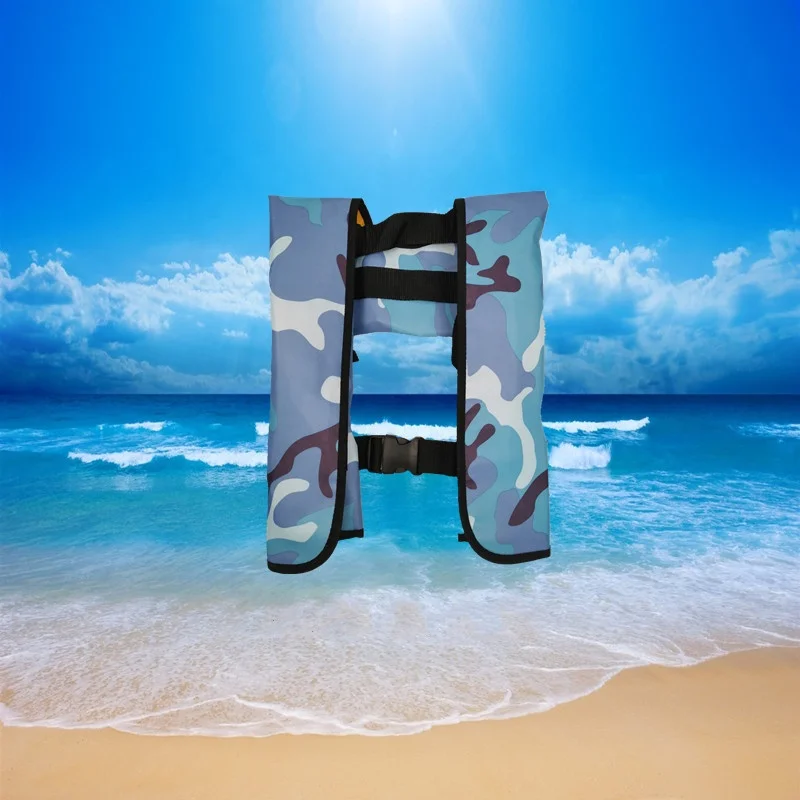
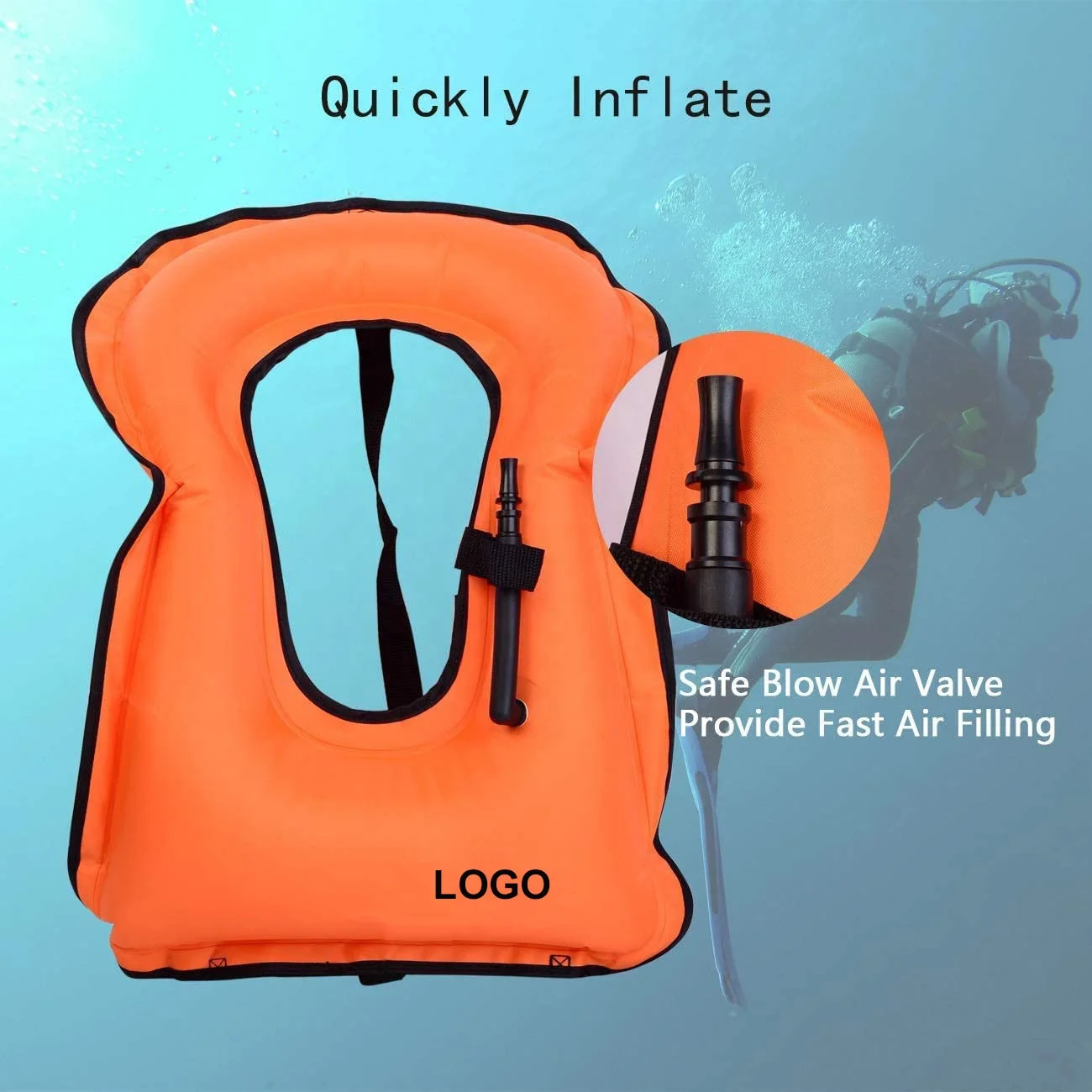


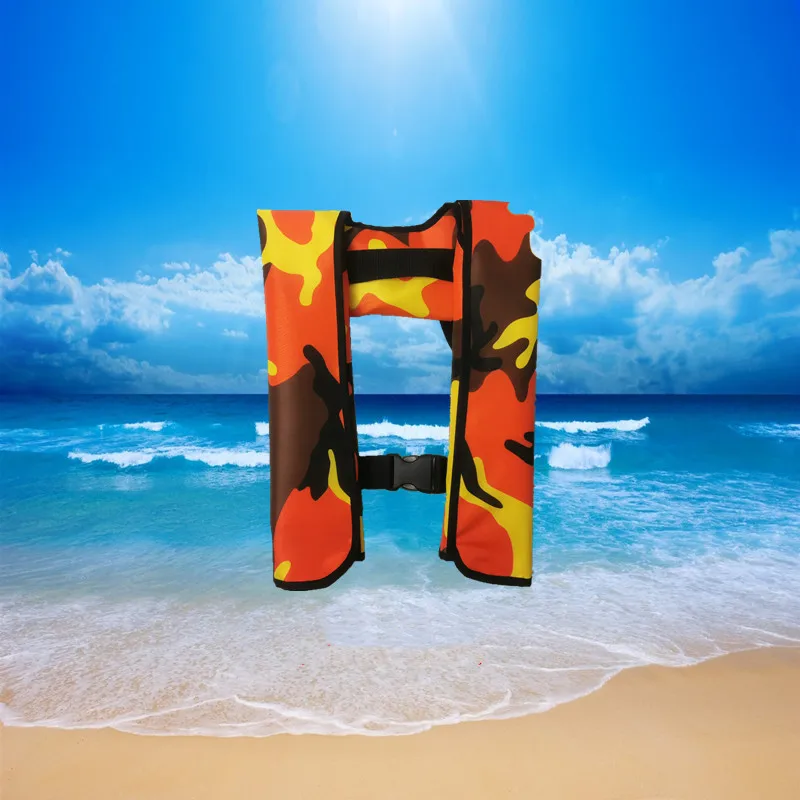
High Quality Inflatable Reflective Safety Life Jacket Adult PFD Automatic Manual Inflatable Hi vis Life Jacket for Sale
- Category: >>>
- Supplier: Beijing Far Blue Ocean Import & Export Co. Ltd.
Share on (1600540941878):
Product Overview
Description
QUICK ACCESS-TALK TO ME NOW!


Product Description
PVC Foam Working Life Jacket
A personal flotation device—also known as a PFD—gives you more buoyancy to help you stay afloat in water. A PFD is an essential
piece of gear for every kayaker, canoer and stand up paddle boarder. (Note that a life jacket or life vest denotes a certain type
of PFD, though many people use the terms interchangeably.)
Pros of inflatable PFDs:
* Comfortable: The slim profile is very comfortable and is less likely to obstruct your range of motion while paddling.
* Cool: They cover less of your body than a standard PFD, which can help keep you comfortable on a hot day.
Cons of inflatable PFDs:
* Inflation required: Remember that inflatable PFDs are not inherently buoyant, so you need to inflate the PFD before it will
provide any flotation. If you’re injured or unconscious and wearing a manual-style inflatable PFD, this poses an obvious
problem.
* Maintenance required: Regular maintenance is required to ensure proper operation and you need to replace the CO2 cartridge after each inflation.
* Not for everyone: Inflatable PFDs are not for use during high-impact activities, such as whitewater kayaking, whitewater
canoeing, river rafting or other sports like waterskiing. Also, they are not recommended for children under the age of 16 or
for nonswimmers.
piece of gear for every kayaker, canoer and stand up paddle boarder. (Note that a life jacket or life vest denotes a certain type
of PFD, though many people use the terms interchangeably.)
Standard PFDs vs. Inflatable PFDs
The majority of PFDs on the market are standard, non-inflatable ones, however, an inflatable PFD might be right for you depending on your needs.
The majority of PFDs on the market are standard, non-inflatable ones, however, an inflatable PFD might be right for you depending on your needs.
Standard PFDs
These are PFDs that you’ll see most recreational kayakers, canoers and stand up paddle boarders wearing. They look like a vest and rely on flotation material, often foam, to create buoyancy. These are labeled as Type III USCG-approved PFDs.
Pros of standard PFDs:
* Low-maintenance: Other than keeping it clean, dry and out of the sun when not in use, a standard PFD requires very little care.
* Inherently buoyant: Other than putting it on properly, you don’t need to activate a standard PFD in any way for it to provide
flotation.
* Versatile: A standard PFD can be used for many different water sports, such as kayaking, canoeing, paddle boarding, waterskiing and fishing.
* Pockets: Most standard PFDs provide pockets for stashing snacks, tools, sunscreen, emergency gear and fishing equipment, something you won’t find on inflatable PFDs.
Cons of standard PFDs:
* Bulk: Some find these PFDs to be bulky and restrictive while paddling, especially when stand up paddle boarding.
* Hot: On a hot summer day, a standard PFD can be quite warm.
These are PFDs that you’ll see most recreational kayakers, canoers and stand up paddle boarders wearing. They look like a vest and rely on flotation material, often foam, to create buoyancy. These are labeled as Type III USCG-approved PFDs.
Pros of standard PFDs:
* Low-maintenance: Other than keeping it clean, dry and out of the sun when not in use, a standard PFD requires very little care.
* Inherently buoyant: Other than putting it on properly, you don’t need to activate a standard PFD in any way for it to provide
flotation.
* Versatile: A standard PFD can be used for many different water sports, such as kayaking, canoeing, paddle boarding, waterskiing and fishing.
* Pockets: Most standard PFDs provide pockets for stashing snacks, tools, sunscreen, emergency gear and fishing equipment, something you won’t find on inflatable PFDs.
Cons of standard PFDs:
* Bulk: Some find these PFDs to be bulky and restrictive while paddling, especially when stand up paddle boarding.
* Hot: On a hot summer day, a standard PFD can be quite warm.
Inflatable PFDs
This newer subcategory of PFDs includes vests and waistpacks. These can be used for kayaking, canoeing or stand up paddle boarding. Their slim profile when uninflated makes them very comfortable to wear. These are labeled as Type III or Type V, USCG-approved PFDs, depending on their design.
These PFDs inflate one of two ways: manually or automatically. With the manual style, you pull a cord, which activates a CO2 gas cartridge and inflates the vest. The automatic design inflates when submerged in water. The manual design is usually best for active sports like kayaking, canoeing and stand up paddle boarding because of the likelihood of getting wet.
This newer subcategory of PFDs includes vests and waistpacks. These can be used for kayaking, canoeing or stand up paddle boarding. Their slim profile when uninflated makes them very comfortable to wear. These are labeled as Type III or Type V, USCG-approved PFDs, depending on their design.
These PFDs inflate one of two ways: manually or automatically. With the manual style, you pull a cord, which activates a CO2 gas cartridge and inflates the vest. The automatic design inflates when submerged in water. The manual design is usually best for active sports like kayaking, canoeing and stand up paddle boarding because of the likelihood of getting wet.
Pros of inflatable PFDs:
* Comfortable: The slim profile is very comfortable and is less likely to obstruct your range of motion while paddling.
* Cool: They cover less of your body than a standard PFD, which can help keep you comfortable on a hot day.
Cons of inflatable PFDs:
* Inflation required: Remember that inflatable PFDs are not inherently buoyant, so you need to inflate the PFD before it will
provide any flotation. If you’re injured or unconscious and wearing a manual-style inflatable PFD, this poses an obvious
problem.
* Maintenance required: Regular maintenance is required to ensure proper operation and you need to replace the CO2 cartridge after each inflation.
* Not for everyone: Inflatable PFDs are not for use during high-impact activities, such as whitewater kayaking, whitewater
canoeing, river rafting or other sports like waterskiing. Also, they are not recommended for children under the age of 16 or
for nonswimmers.


Company Profile


We Recommend
New Arrivals
New products from manufacturers at wholesale prices