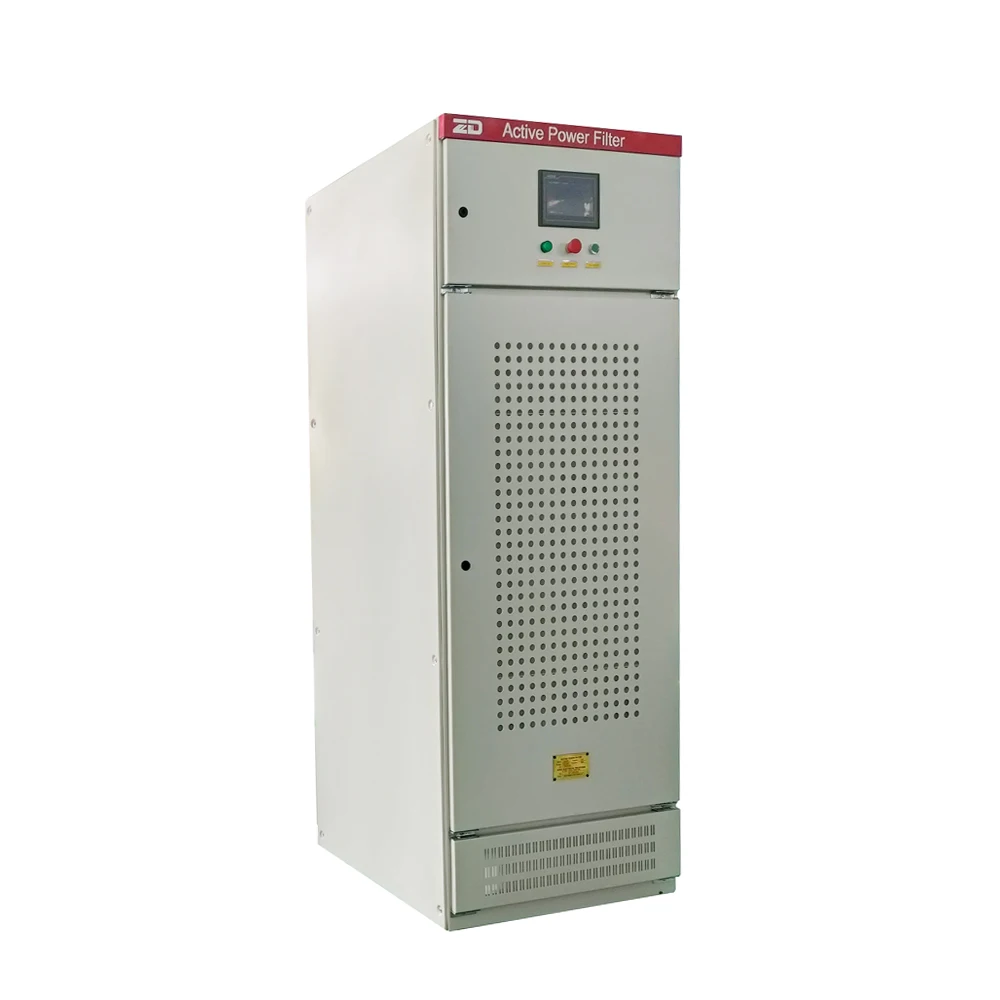
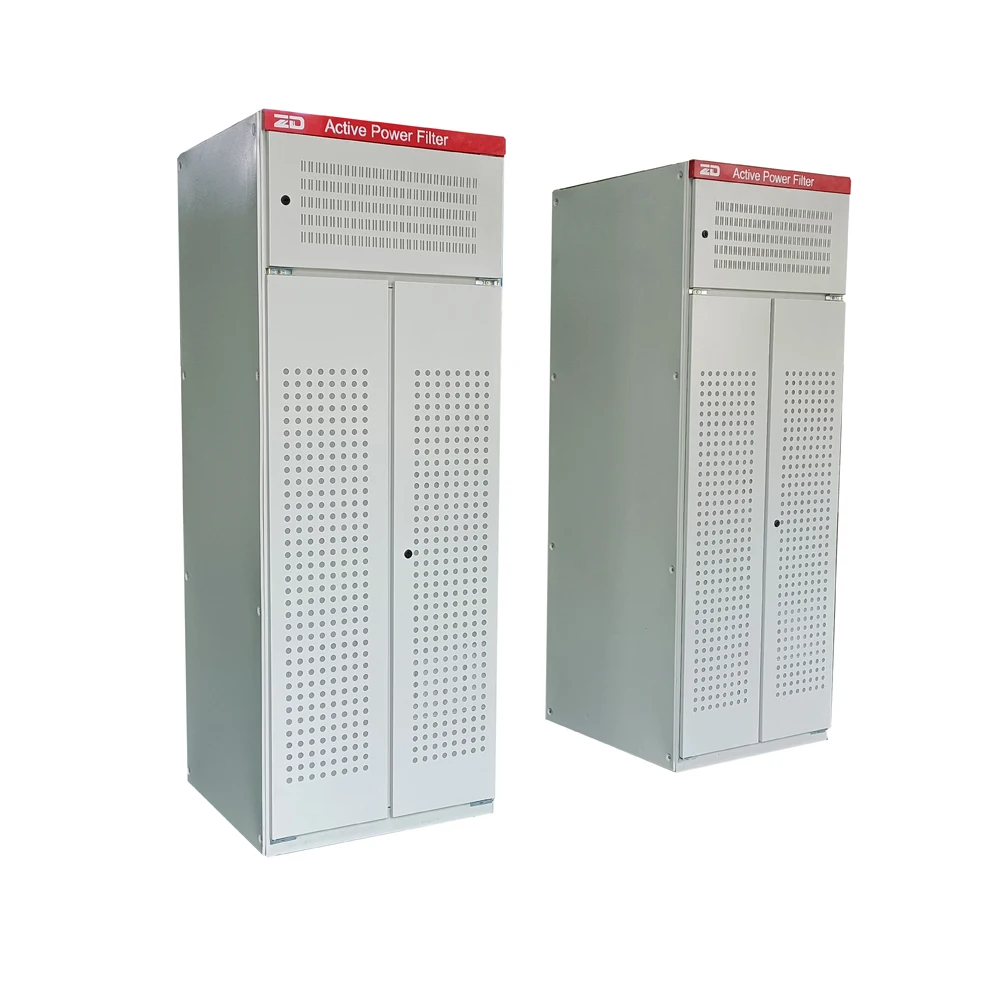
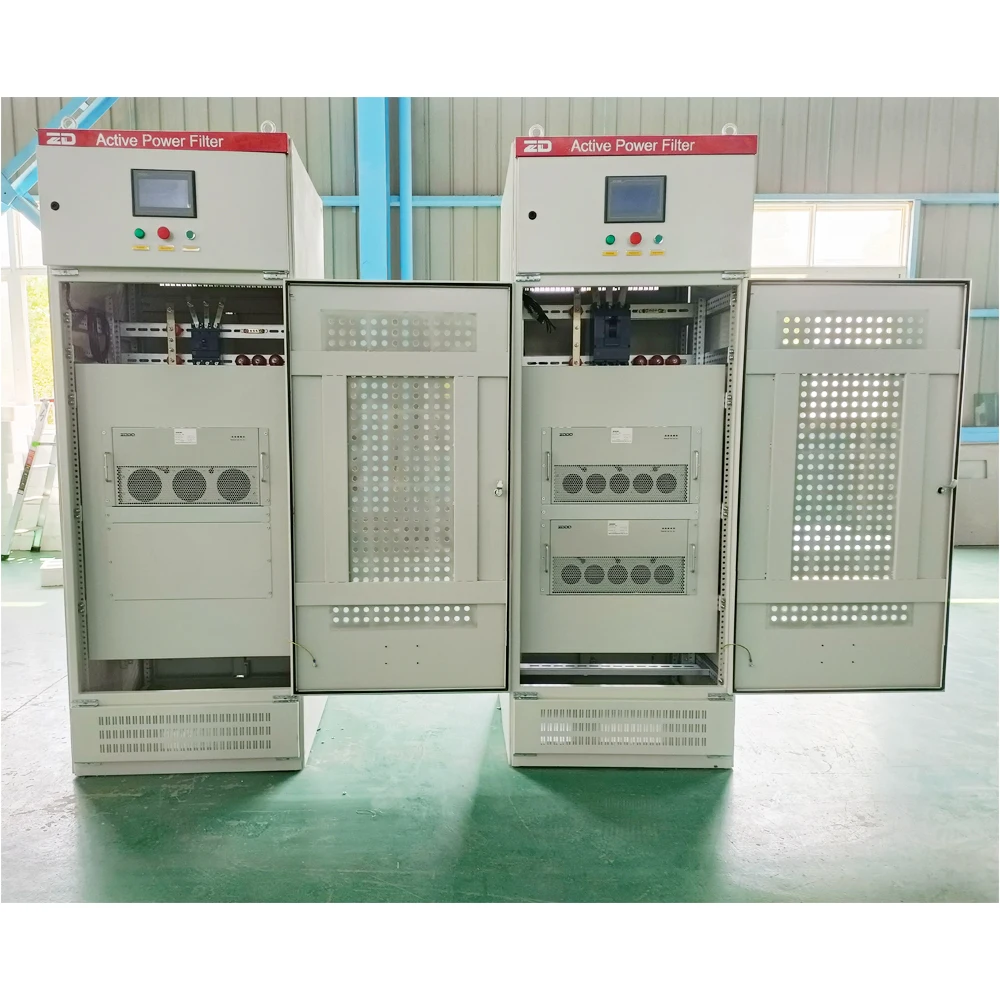
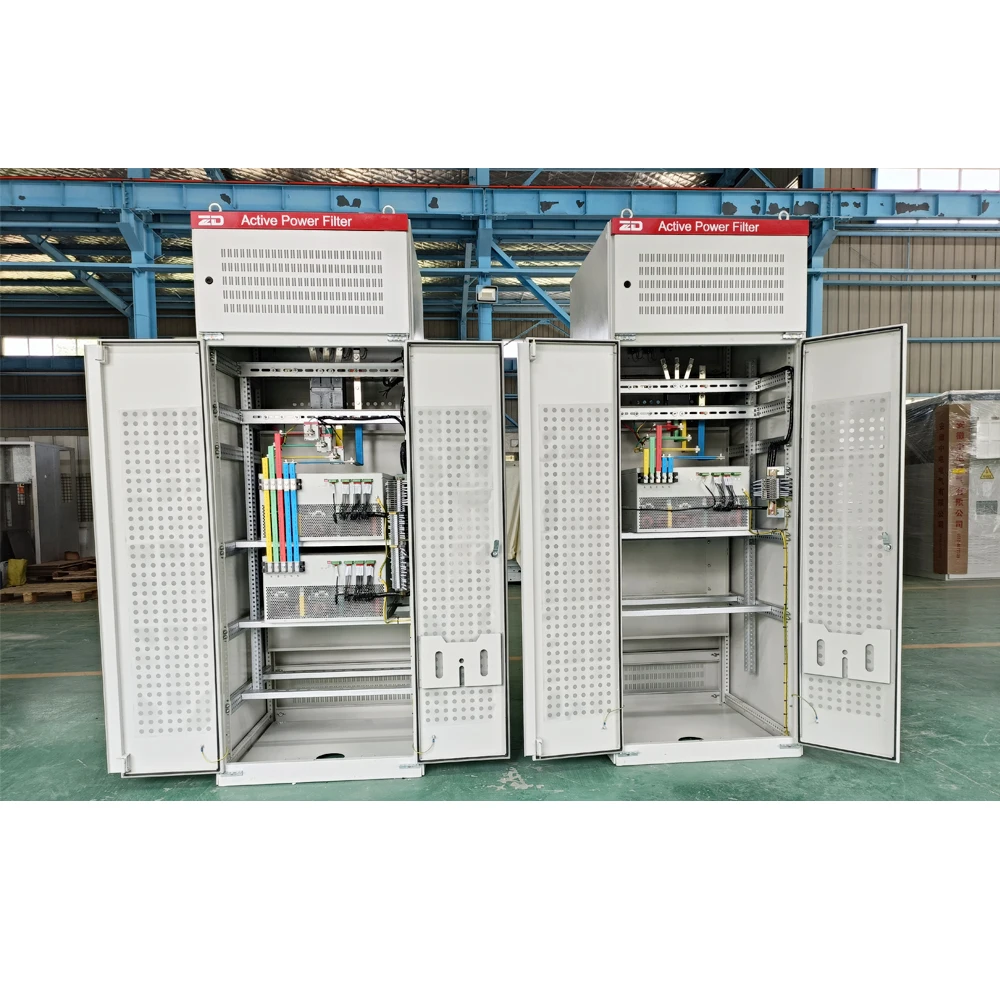
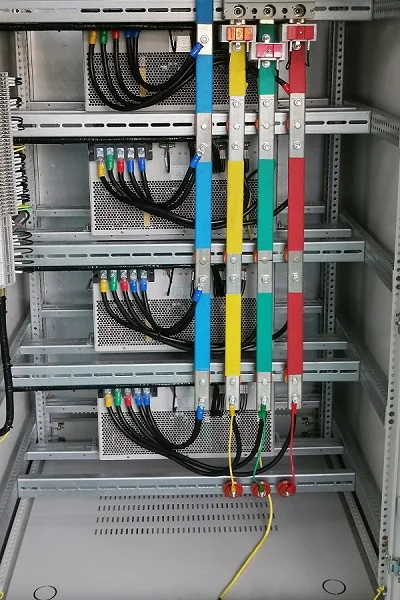
Active power filter low voltage power system harmonic current mitigation
- Category: >>>
- Supplier: Anhui Zhongdian Electric Co. Ltd.
Share on (1600548652233):
Product Overview
Description
Factory
Anhui Zhongdian(ZDDQ) Electric Co., Ltd. established in 2001. ZDDQ Technology Park locates in Bengbu City of Anhui Province. We're a professional and leading manufacture, focus on advanced power quality improvement and power factor correction. APF, SVG, APFC are our main products. ZDDQ has a leading independent R&D team and quality supervision system, and maintain long-term cooperative relations with China University of Science and Technology, Zhejiang University and a number of well-known institutions.
We insists on customers’ demand as the guide, with the technology innovation as the drive, through 20 years technology
accumulation, has already owned a series of power quality products including:
Which are widely used in many countries and industries such as power grid, hospital, sewage plant, railway, subway, airport, seaport, oil and chemical industry, metallurgy, coal mine, tele-communication and high buildings.
Our products has been installed in Australia, EU, Asia, South America and Africa.


Product Description
APF/AHF active power harmonic filters
The wide application of nonlinear power equipment produces a lot of distorted current harmonics, which cause harmonic voltage when flowing in power grid. This harmonic pollution threatens the safety and stability of power system seriously. Together with electromagnetic interference, power factor reduction, are the three major public hazards for power system.
ZD-AMS active power filter(APF/AHF for short) is a perfect comprehensive solution to power quality problems with power grid such as harmonic wave(can filter 2nd to 50th harmonic interference completely), reactive power, and 3 phase load unbalance.


APF is connected in parallel in power grid, to detect the harmonic wave in power grid in real time, generate the reverse-phase compensation current through the converter, and dynamically filter the harmonic wave in power grid. The operation of APF is unaffected by power grid structure and load type, and it will not produce harmonic oscillation with the system, thus perfectly realizing harmonic wave control of various loads. APF can also realize dynamic reactive compensation, and control the capacitor switching, to improve the power factor of power grid. Meanwhile, APF has the function of controlling the 3 phase load current unbalance, thus comprehensively solving various power quality problems with power grid.
Working Principle
APF Series is connected in parallel with non-linear loads, and uses one set of current transformers (CT) to detect the load
current. It calculates each order harmonic current , and then generates a compensating current with the same amplitude but opposite phase angles to the detected harmonic current, which cancels out the original load harmonics.
The APF not only eliminates harmonic current from the load side, but it also mitigates harmonic voltage caused by harmonic currents. The APF system can also improve power factor (PF) and correct load imbalances in the power system.


Typical APF Connection to Networks
Technical Data Sheet
Electrical properties | Rated voltage | AC, low voltage |
Operating frequency | 50Hz/60Hz | |
Electrical connection | Three-phase Four-wire(3P4W) | |
Filter range | 2nd~50th order harmonics (selective) | |
Filtering control effeciency | Harmonic filtering rate ≥99%; THDi<5% after systematic control | |
Rated Capacity | 30A/50A/75A/100A/150A | |
Compensation mode | Harmonics compensation, Three-phase load unbalance compensation | |
Three-phase unbalance compensation effect | The degree of unbalance of three-phase active current of the system is less than 5% after compensation within the rated capacity. | |
Response time | <5ms | |
Active loss of system | <3% | |
Output current limit | Automatically limited within 100% of rated capacity to output | |
Number of units connected in parallel | ≤10 units (single CT) | |
MTBT | >100,000 hours | |
Control characteristics | Controller | IGBT |
Control algorithm | Self-adaptive control algorithm | |
Communication mode | Adopt Modbus remote communication protocol; communication interface adopts RS485 and CAN bus, supporting mobile phone APP operation. | |
Structural characteristics | Level of protection | IP20 |
Noise | <60db (<45db during low-speed operation) | |
Installation method | Module embedded installation | |
Environmental requirements | Ambient temperature | -20~55℃ |
Relative humidity | Maximum 95%, without condensation | |
Altitude above sea level | ≤1,500m at rated capacity |


Central Management
AHF Configuration Capacity (A) | |||||||||
Manufacturing factory/ New energy/ Automobile | Performing arts center /Silicon manufacture / Oil exploitation | ||||||||
THDi | 10% | 15% | 20% | 25% | 30% | ||||
200 | 35 | 50 | 50 | 60 | 100 | ||||
250 | 35 | 50 | 75 | 75 | 100 | ||||
315 | 50 | 60 | 100 | 100 | 125 | ||||
400 | 50 | 75 | 100 | 125 | 150 | ||||
500 | 60 | 100 | 125 | 150 | 180 | ||||
630 | 100 | 125 | 160 | 200 | 250 | ||||
800 | 100 | 150 | 200 | 250 | 300 | ||||
1000 | 125 | 200 | 250 | 300 | 350 | ||||
1200 | 160 | 250 | 300 | 400 | 450 | ||||
1600 | 200 | 300 | 400 | 500 | 550 | ||||
2000 | 250 | 360 | 500 | 600 | 700 | ||||
2500 | 300 | 450 | 600 | 700 | 850 | ||||
Main function
■Ultra-fast reactive power compensation(Inductive and capacitive).
■Harmonic Compensation up to 50th harmonic(Individual selectable).
■Load balancing between phases and unloaded neutral wire.
■Voltage Flicker compensation.
■Reduce overheating/Reduce nuisance tripping/ Reduce overloading/Reduce equipment failure.
■Improve Reliability.
■Compact Design and Modular system.
■Grid resonance detection.
■User-friendly HMI menu operation.
■Ethernet and ethercat system for interconnection.
■High performance and reliability.
■Insensitive to network/grid conditions.
■Simple installation.
Our Service
Pre-Sales Service
* Inquiry and consulting support.
* Sample testing support.
* View our Factory.
After-Sales Service
* Training how to instal the machine, training how to use the machine.
* Engineers available to service machinery overseas.
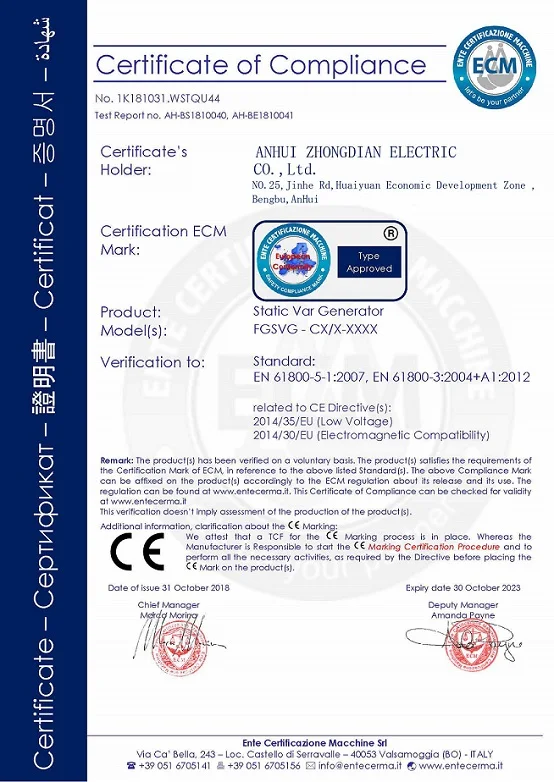
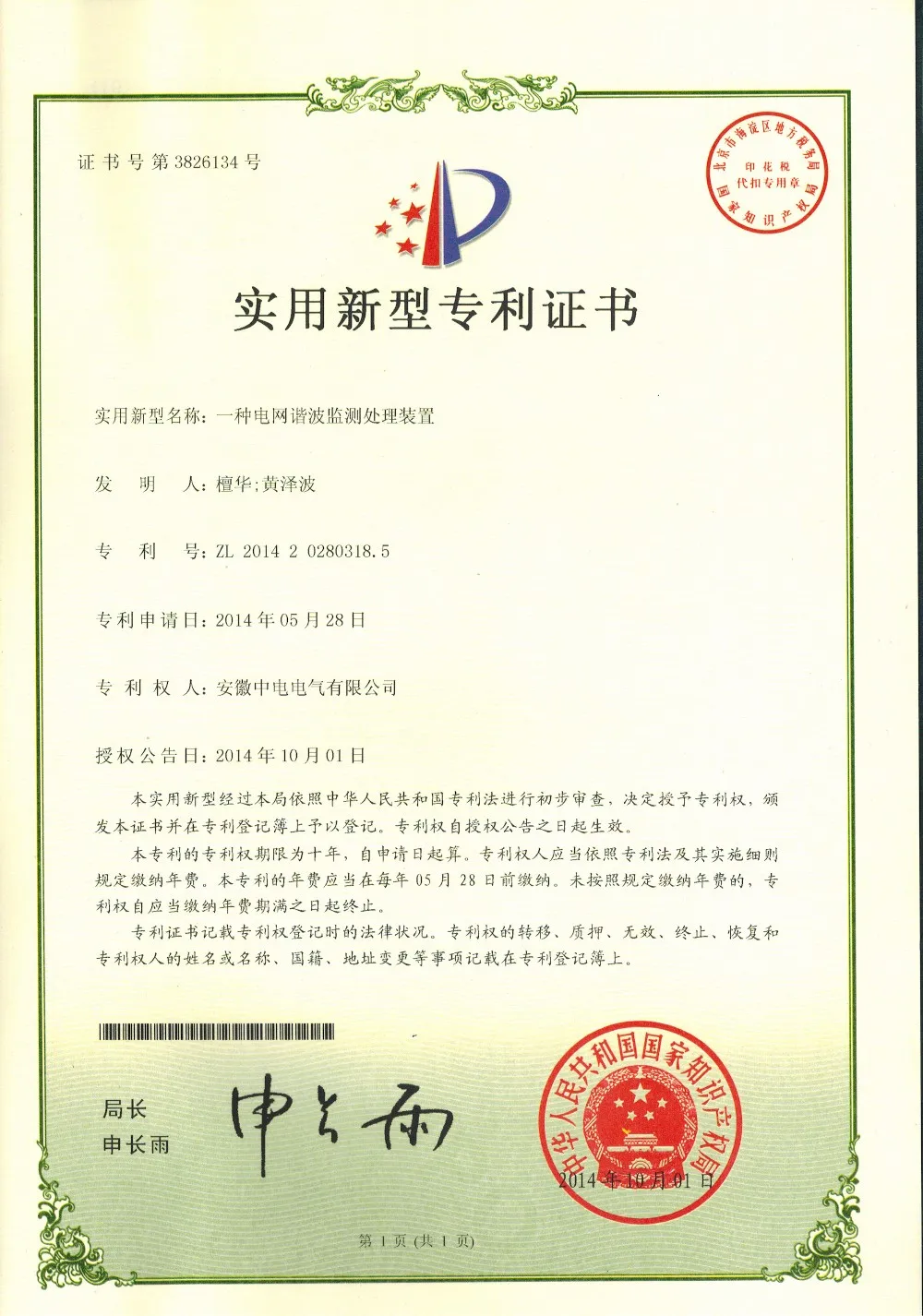
Certifications


Projects Performance


We Recommend
New Arrivals
New products from manufacturers at wholesale prices