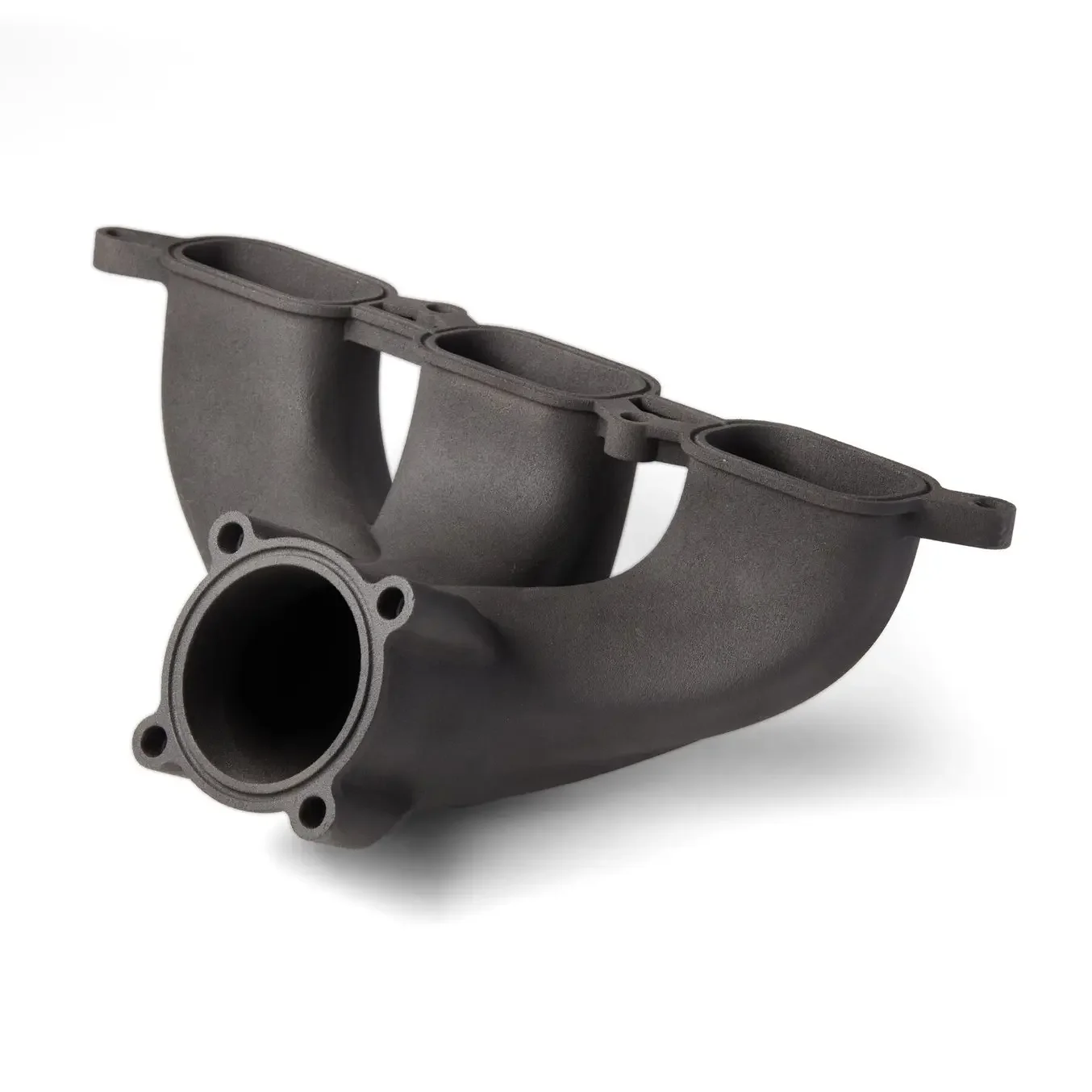
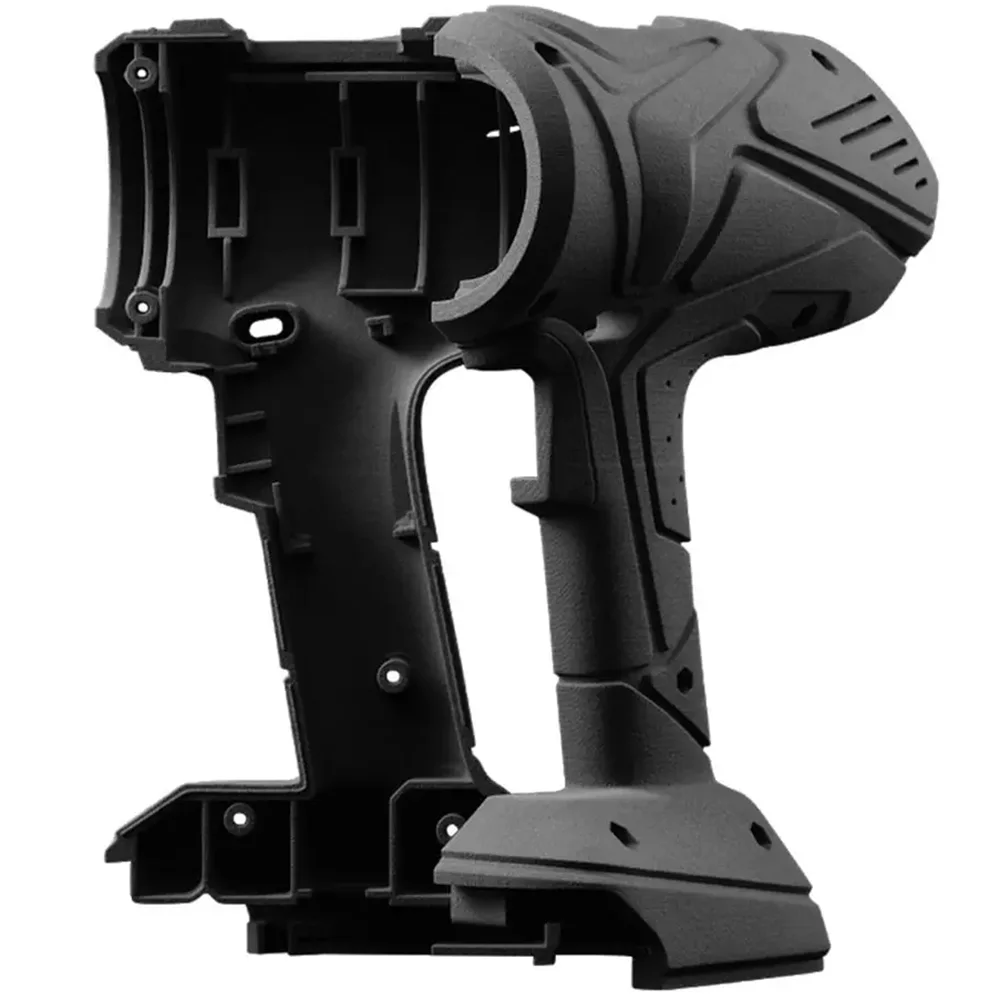
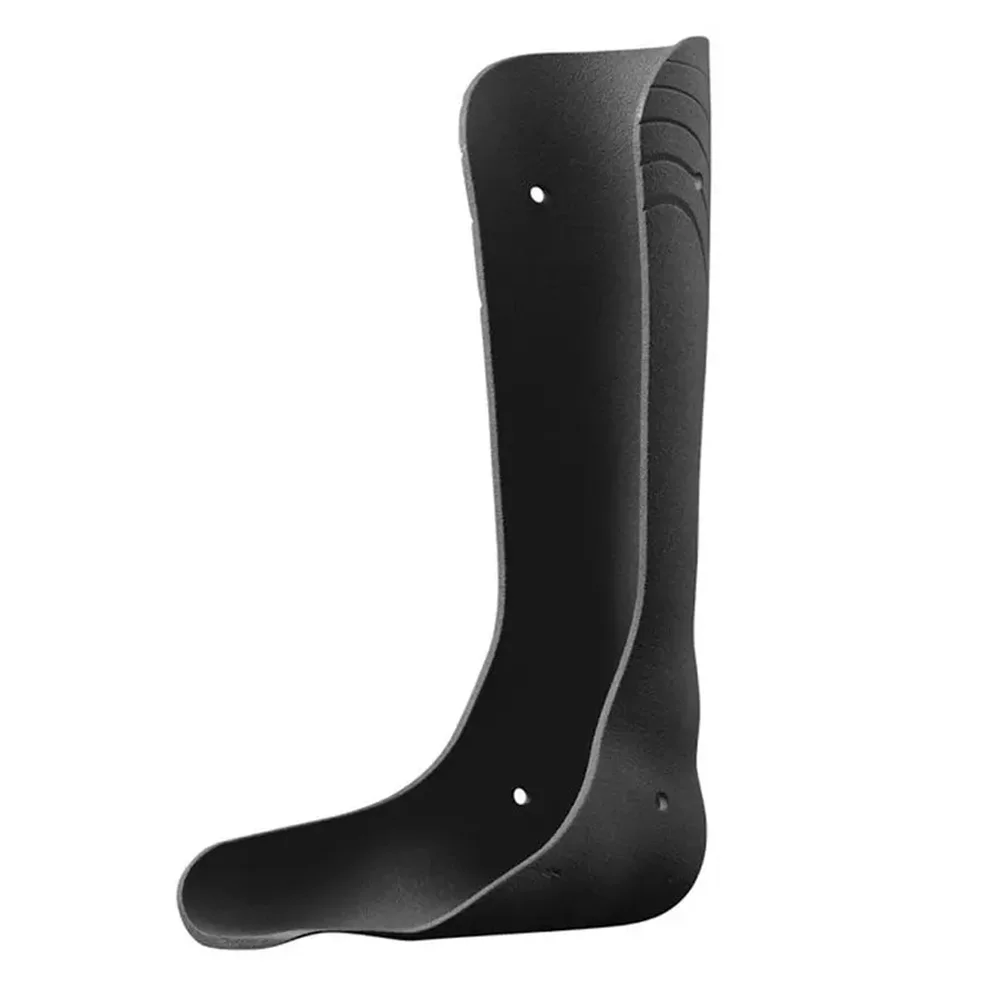
SLS 3D Printing Service with nylon 12 GF nylon 11 CF Nylon 3200 Glass filled 3D printing material for 3d model
- Category: >>>
- Supplier: Dongguan Linghang 3d Prototype Co. Ltd.
Share on (1600569730581):
Product Overview
Description
Product Description

Selective laser sintering (SLS) 3D printing is trusted by engineers and manufacturers across different industries for its ability to produce strong, functional parts.
In this extensive guide, we’ll cover the selective laser sintering process, the different systems and materials available on the market, the workflow for using SLS printers, the various applications, and when to consider using SLS 3D printing over other additive and traditional manufacturing methods.
In this extensive guide, we’ll cover the selective laser sintering process, the different systems and materials available on the market, the workflow for using SLS printers, the various applications, and when to consider using SLS 3D printing over other additive and traditional manufacturing methods.
Introduction to Selective Laser Sintering (SLS) 3D Printing
Rapid SLS Production of High Performance Parts
SLS 3D printing has been a popular choice for engineers and manufacturers for decades. Low cost per part, high productivity, and established materials make the technology ideal for a range of applications from rapid prototyping to small-batch, bridge, or custom manufacturing.
Recent advances in machinery, materials, and software have made SLS printing accessible to a wider range of businesses, enabling more and more companies to use these tools that were previously limited to a few high-tech industries.

1. Printing: The powder is dispersed in a thin layer on top of a platform inside of the build chamber. The printer preheats the powder to a temperature somewhat below the melting point of the raw material, which makes it easier for the laser to raise the temperature of specific regions of the powder bed as it traces the model to solidify a part. The laser scans a cross-section of the 3D model, heating the powder to just below or right at the melting point of the material. This fuses the particles together mechanically to create one solid part. The unfused powder supports the part during printing and eliminates the need for dedicated support structures. The platform then lowers by one layer into the build chamber, typically between 50 to 200 microns, and the process repeats for each layer until parts are complete.
2. Cooling: After printing, the build chamber needs to slightly cool down inside the print enclosure and then outside the printer to ensure optimal mechanical properties and avoid warping in parts.
3. Post-processing: The finished parts need to be removed from the build chamber, separated, and cleaned of excess powder. The powder can be recycled and the printed parts can be further post-processed by media blasting or media tumbling.
2. Cooling: After printing, the build chamber needs to slightly cool down inside the print enclosure and then outside the printer to ensure optimal mechanical properties and avoid warping in parts.
3. Post-processing: The finished parts need to be removed from the build chamber, separated, and cleaned of excess powder. The powder can be recycled and the printed parts can be further post-processed by media blasting or media tumbling.


A Brief History of SLS 3D Printing
Selective laser sintering was one of the first additive manufacturing techniques, developed in the mid-1980s by Dr. Carl Deckard and Dr. Joe Beaman at the University of Texas at Austin. Their method has since been adapted to work with a range of materials, including plastics, metals, glass, ceramics, and various composite material powders. Today, these technologies are collectively categorized as powder bed fusion—additive manufacturing processes in which thermal energy selectively fuses regions of a powder bed.
The two most common powder bed fusion systems today are plastic-based, commonly referred to as SLS, and metal-based, known as direct metal laser sintering (DMLS) or selective laser melting (SLM). Until recently, both plastic and metal powder bed fusion systems have been prohibitively expensive and complex, limiting their use to small quantities of high-value or custom parts, such as aerospace components or medical devices.
Innovation in the field has surged recently, and plastic-based SLS is now poised to follow other 3D printing technologies like stereolithography (SLA) and fused deposition modeling (FDM) to gain widespread adoption with accessible, compact systems.
Selective laser sintering was one of the first additive manufacturing techniques, developed in the mid-1980s by Dr. Carl Deckard and Dr. Joe Beaman at the University of Texas at Austin. Their method has since been adapted to work with a range of materials, including plastics, metals, glass, ceramics, and various composite material powders. Today, these technologies are collectively categorized as powder bed fusion—additive manufacturing processes in which thermal energy selectively fuses regions of a powder bed.
The two most common powder bed fusion systems today are plastic-based, commonly referred to as SLS, and metal-based, known as direct metal laser sintering (DMLS) or selective laser melting (SLM). Until recently, both plastic and metal powder bed fusion systems have been prohibitively expensive and complex, limiting their use to small quantities of high-value or custom parts, such as aerospace components or medical devices.
Innovation in the field has surged recently, and plastic-based SLS is now poised to follow other 3D printing technologies like stereolithography (SLA) and fused deposition modeling (FDM) to gain widespread adoption with accessible, compact systems.
Types of SLS 3D Printers
Selective laser sintering requires a high level of precision and tight control throughout the printing process. The temperature of the powder along with the (incomplete) parts must be controlled within 2 °C during the three stages of preheating, sintering, and storing before removal to minimize warping, stresses, and heat-induced distortion.
Traditional Industrial SLS 3D Printers
Selective laser sintering has been one of the most popular 3D printing technologies for professionals for decades, but its complexity, requirements, and high price have limited its use to service bureaus and large enterprises.
Selective laser sintering has been one of the most popular 3D printing technologies for professionals for decades, but its complexity, requirements, and high price have limited its use to service bureaus and large enterprises.
These machines require special HVAC and industrial power, and even the smallest industrial machines take up at least 10 m² of installation space. Setting them up takes multiple days with on-site installation and training. The complex workflow and the steep learning curve also mean that these systems require a skilled technician in-house to operate and maintain.
With a starting price of around $200,000 that goes well beyond that for complete solutions, traditional industrial SLS has been inaccessible for many businesses.
Fuse Series: The First Benchtop Industrial SLS 3D Printers
Just like with other 3D printing technologies like FDM or SLA, lower-cost, compact SLS systems have recently started to emerge on the market, but initially, these solutions came with considerable trade-offs, including lower part quality and complex, manual workflows resulting from the lack of post-processing solutions, which limited their use in industrial and production settings.
Just like with other 3D printing technologies like FDM or SLA, lower-cost, compact SLS systems have recently started to emerge on the market, but initially, these solutions came with considerable trade-offs, including lower part quality and complex, manual workflows resulting from the lack of post-processing solutions, which limited their use in industrial and production settings.
The Formlabs Fuse 1 bridged that gap and created its own category as the first benchtop industrial SLS 3D printer that offered high quality, compact footprint, and a complete, simplified workflow at a fraction of the cost of traditional industrial SLS systems. Now, the next generation Fuse 1+ 30W extends that category with a more powerful laser, improved powder handling features, and new material capabilities for industrial quality parts and high throughput.

A drill prototype printed on the Chinese machine (left) and on an EOS printer (right), with comparable quality but a vastly different machine price point.
SLS 3D Printing Materials
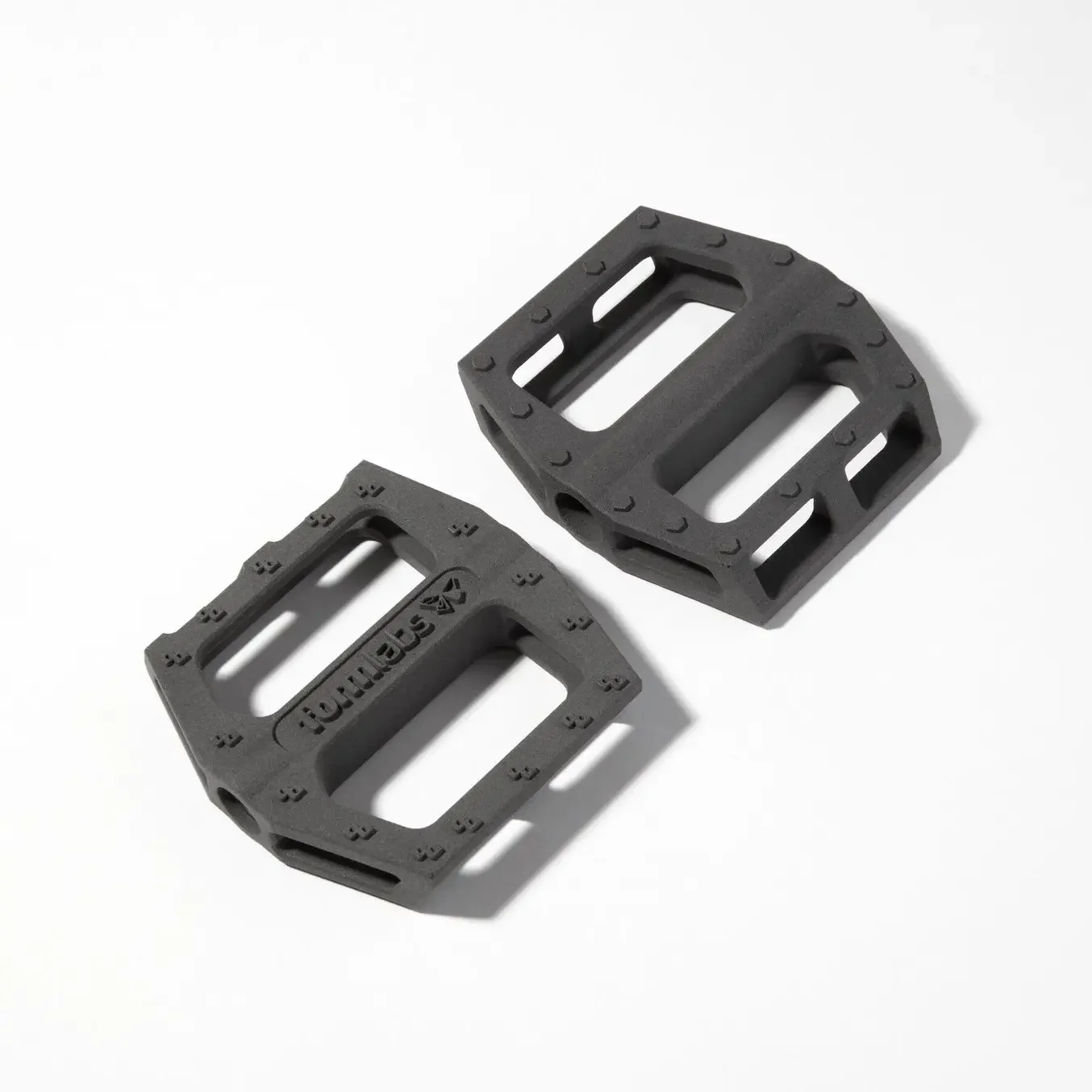
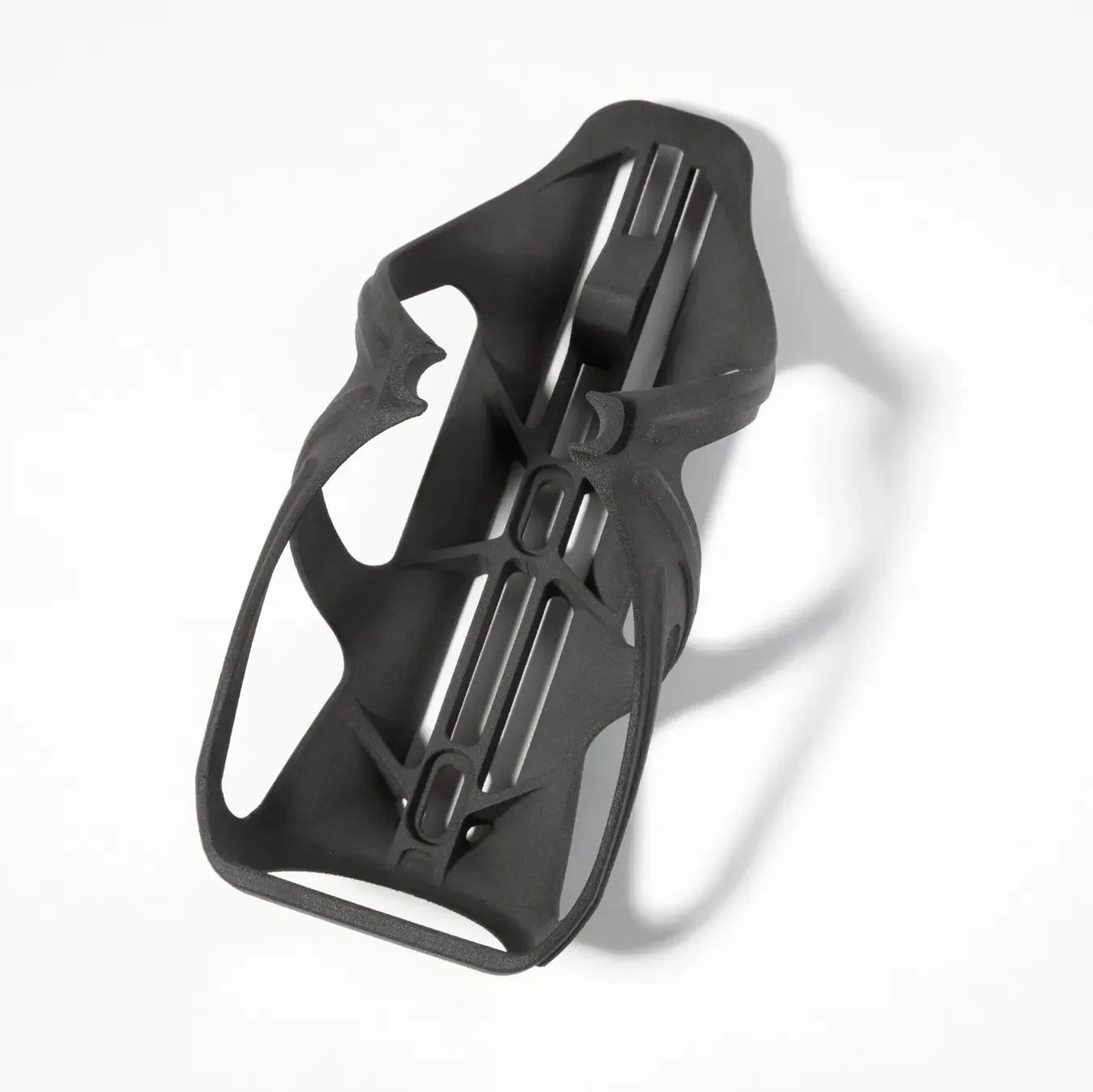
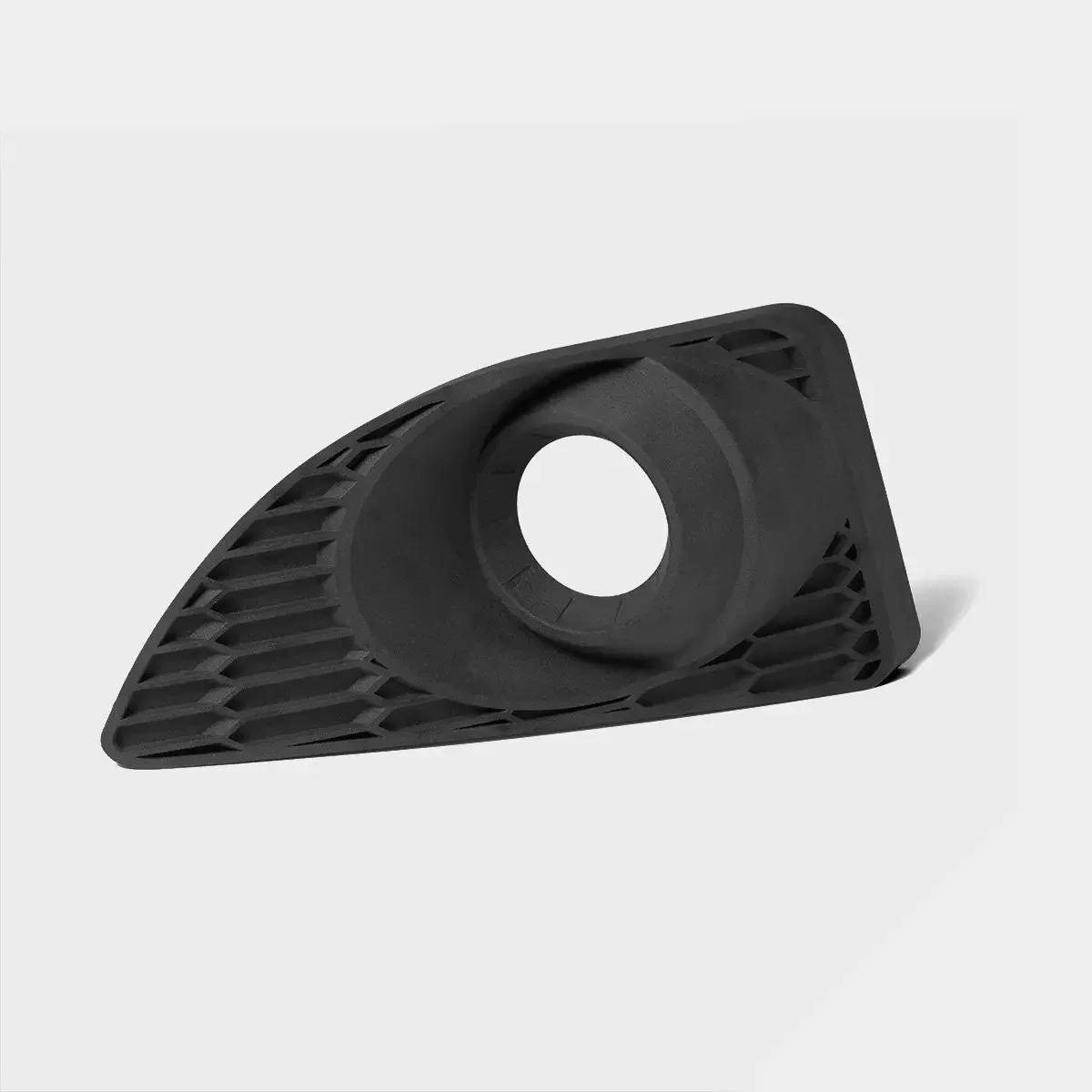
SLS 3D printed nylon parts are strong, stiff, sturdy, and durable. The final parts are impact-resistant and can endure repeated wear and tear. Nylon is resistant to UV, light, heat, moisture, solvents, temperature, and water. 3D printed nylon parts can also be biocompatible and not sensitizing, which means that they are ready to wear and safe to use in many contexts.

Nylon is ideal for a range of functional applications, from engineering consumer products to healthcare.
Nylon is a synthetic thermoplastic polymer that belongs to the family of polyamides. It is available in multiple variants, each tailored to different applications. Nylon 12 Powder and Nylon 11 Powder are single-component powders, while Nylon 12 GF Powder is a glass-filled composite, and Nylon 11 CF Powder is a carbon fiber reinforced composite. These composite materials are developed to optimize parts for higher strength, stiffness, or flexibility. With these two-component powders, only the component with the lower glass transition point is sintered, binding both components.

Nylon 12 Powder
* High performance prototyping
* Small batch manufacturing
* Permanent jigs, fixtures, and tooling
* General SLS parts

Nylon 11 Powder
Ductile, strong, flexible material for when durability and performance are key.
* Impact-resistant prototypes, jigs, and fixtures
* Thin-walled ducts and enclosures
* Snaps, clips, and hinges
* Orthotics and prosthetics*

Nylon 12 GF
* Robust jigs and fixtures and replacement parts
* Parts undergoing sustained loading
* Threads and sockets
* Parts subjected to high temperature

Nylon 1A CF
* Replacement and spare alternatives to metal parts
* Tooling, jigs, fixtures
* High-impact equipment
* Functional composite prototypes
Specification
Product name | OEM high quality SLA 3D printing prototype services /3D printer PLA prototype manufacturing |
Processing | SLA/PLA/ 3D printer CNC machining, CNC milling and turning, laser cutting,drilling, grinding, bending, stamping, welding and so on |
Material | Aluminum:2024/5052/6061-T6/6063/6082/7075… |
Stainless Steel: 304/303/316/420/430… | |
Steel 1214L/1215/1045/4140/SCM440/40CrMo/… | |
Titanium: TC4/Gr2/Gr5... | |
Plastic:POM/Acetal/Delrin/PEEK/ABS/Nylon/PTFE/Acrylic/PP/PC | |
Brass 3602 / 2604 / H59 / H62 / ...Bronze/Aluminum Bronze | |
Finish | polishing/ brush/ sand blasting, Normal anodize/harden anodize, black oxide, plating(Chrome/Nickel/zinc/gold/silver…)... |
Tolerance | +/-0.1mm |
Lead Time | 2 weeks for samples,3-4 weeks for mass production |
Drawing Accepted | Solid Works,Pro/Engineer, AutoCAD(DXF,DWG), PDF,TIF , IGS , STP... |
Inspection | 100% inspection before shipping |
Payment Terms | Trade Assurance, TT/Paypal/WestUnio |
Company Profile

Our Company
Dongguan Linghang 3D Prototype Co.,Ltd. is a professional manufacturer specialized in rapid prototyping, 3D printing, model making and model design. Our rapid prototyping services include: CNC & SLA & SLS rapid prototyping; vacuum casting for low-volume production, production design and development; 3D printing as well as high precision machining. Products of Linghang related to household appliance, automobile, sculpture,medical device, digital product, electronics, appliances, auto parts, toys, and many other industries. The company is located in Changan Town, Dongguan, founded in 2018. After 4 years'

development, the factory has a construction area of 20,000 square meters and has 500 self-owned printing equipment. Our equipment
have more than 100 SLA printers, nylon printers, metal printers, red wax printers,CNC machining center, automatic lathe, surface
grinding machine, meter lathe, CNC lathe, milling machine, plastic injection machine and stamping machine etc. Also we have
successfully established a professional team with superb technique, excellent quality, and enthusiastic service. All these helped
us receive numerous reputations from home and abroad.
have more than 100 SLA printers, nylon printers, metal printers, red wax printers,CNC machining center, automatic lathe, surface
grinding machine, meter lathe, CNC lathe, milling machine, plastic injection machine and stamping machine etc. Also we have
successfully established a professional team with superb technique, excellent quality, and enthusiastic service. All these helped
us receive numerous reputations from home and abroad.

Our teams
We have a strong R&D and design team, they are a group of lively, lovely and passionate young people, skilled technicians and operators, and professional quality control personnel to ensure the quality of our product development and production. The best support for customers, sincerely look forward to your trust and cooperation, come and contact us!


Packing & Delivery

To better ensure the safety of your goods, professional, environmentally friendly, convenient and efficient packaging services will be provided.
FAQ
1.How can I customize my products?
Attach your drawings with details(Suface treatment,material,quantity and special requirements etc).
2.How long can I get the quaotation?
We will give you the quotation within 24 hours(Considering the time difference).
3.How can I get a sample for testing?
We will offer free or charged samples depends on the products.
4.How long will you produce the parts?
Normally two weeks,we will arrange the produce schedule depends on the quantity and the delivery.
5.What's your payment terms?
We accept Western Union/ T/T/Trade Assrance /Paypal
6.How about the transportation?
Samples by air (if not too heavy),otherwise by sea or air.
7.What if the products we received are not good?
contact us without hesitation,our special after-sales service will take the responsibility
Attach your drawings with details(Suface treatment,material,quantity and special requirements etc).
2.How long can I get the quaotation?
We will give you the quotation within 24 hours(Considering the time difference).
3.How can I get a sample for testing?
We will offer free or charged samples depends on the products.
4.How long will you produce the parts?
Normally two weeks,we will arrange the produce schedule depends on the quantity and the delivery.
5.What's your payment terms?
We accept Western Union/ T/T/Trade Assrance /Paypal
6.How about the transportation?
Samples by air (if not too heavy),otherwise by sea or air.
7.What if the products we received are not good?
contact us without hesitation,our special after-sales service will take the responsibility
Nylon is ideal for a range of functional applications, from engineering consumer products to healthcare.
We Recommend
New Arrivals
New products from manufacturers at wholesale prices