Ningxia Humate factory price agrochemicals potassium humate powder soil conditioner compound fertilizer
- Category: >>>
- Supplier: Ningxia Humate Biotechnology Co. Ltd
Share on (1600575687230):
Product Overview
Description
Ningxia Humate factory price agrochemicals potassium humate powder soil conditioner compound fertilizer

Products Display

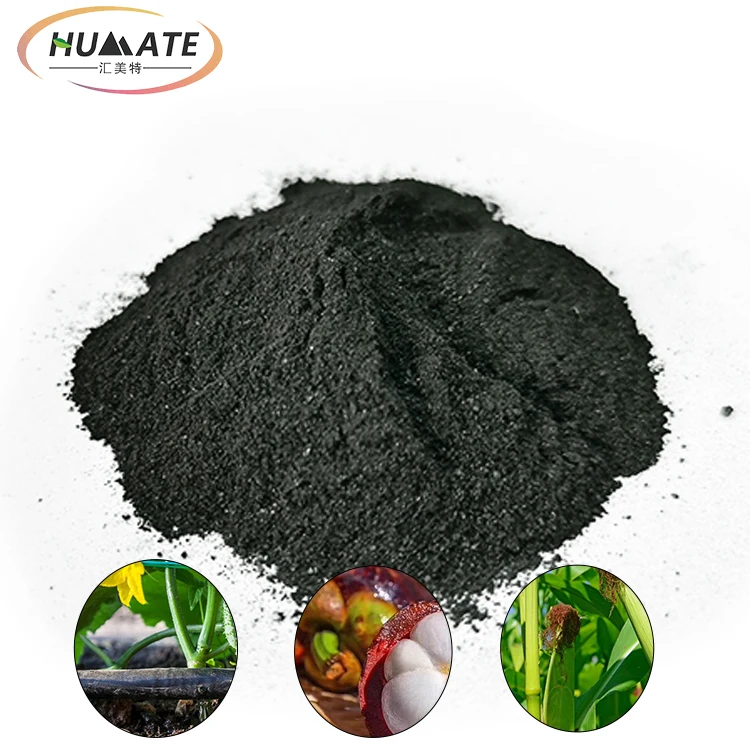
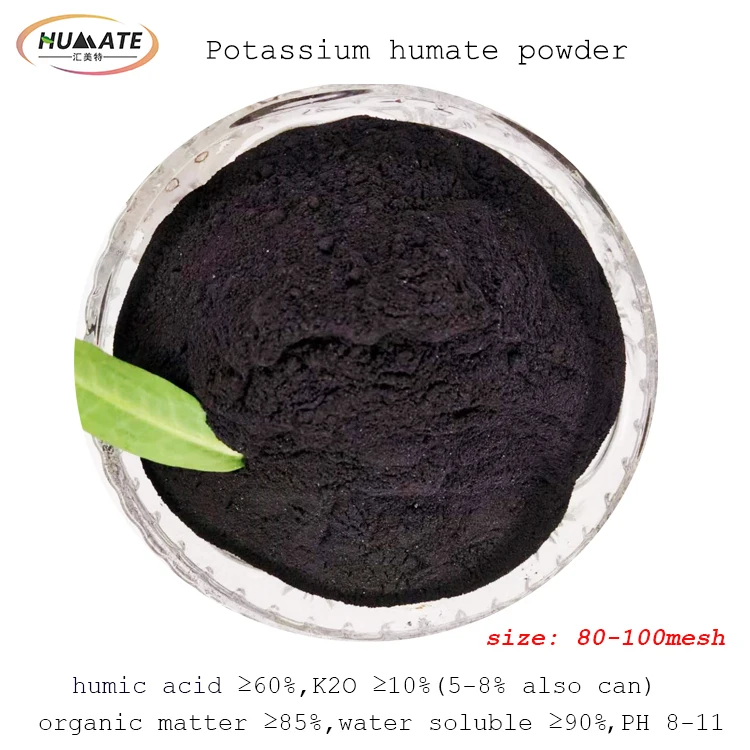
Potassium Humate Powder
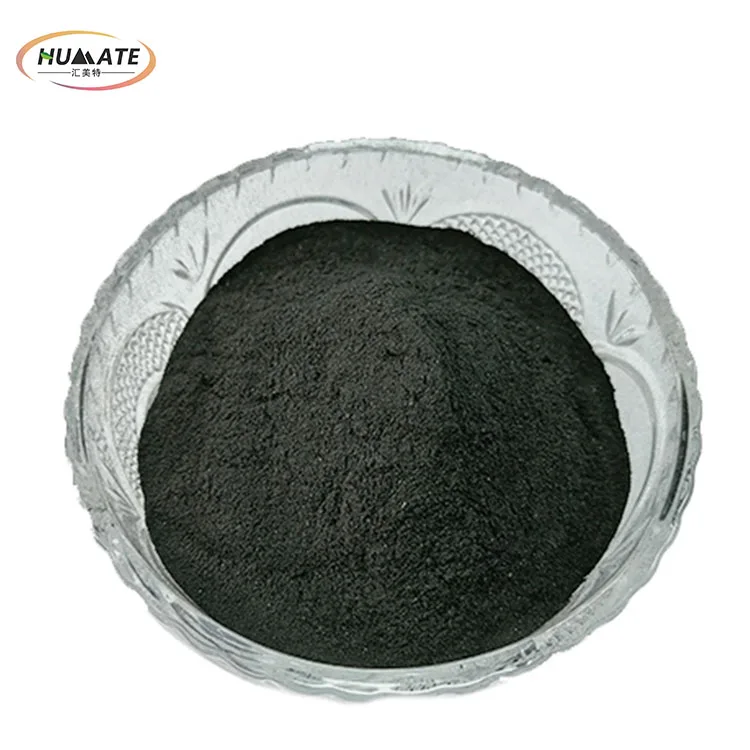
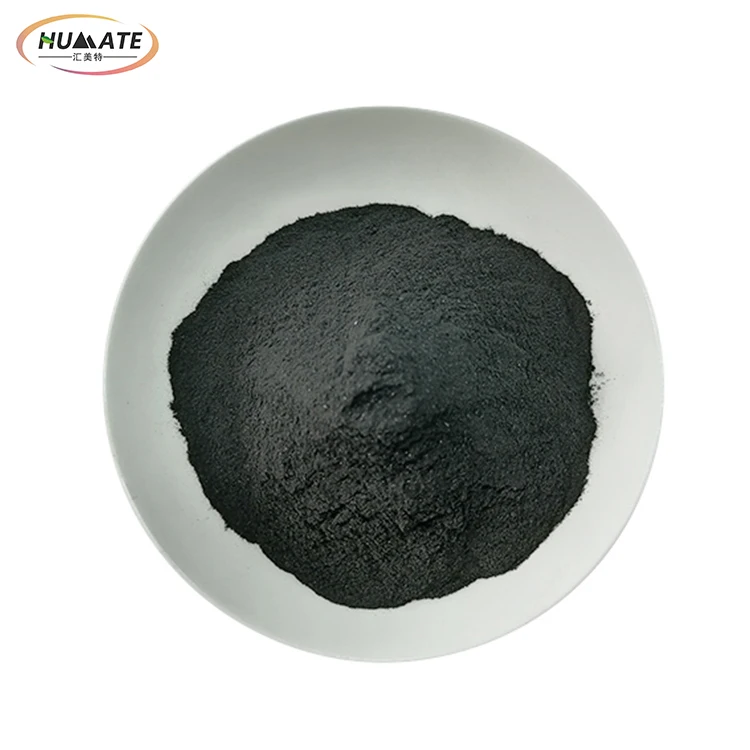
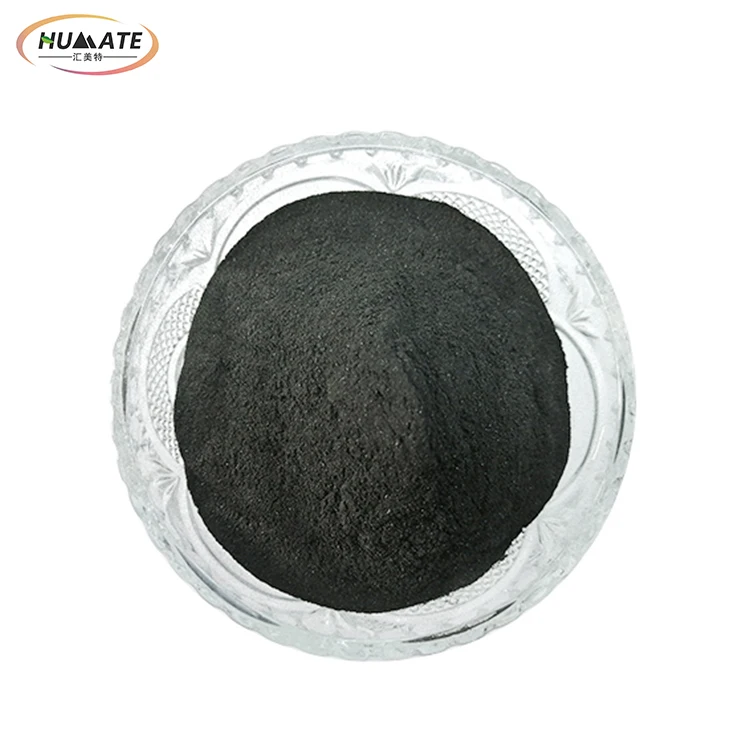
Potassium humate is a high molecular non-homogeneous aromatic hydroxy carboxylate with the appearance of black granules or powdered solids, which is extracted from lignite by reaction with KOH liquid, soluble in water, alkaline, containing active groups such as carboxyl and phenolic hydroxyl groups. The basic structure of humic acid macromolecule is aromatic and alicyclic, with carboxyl, hydroxyl, carbonyl, quinone, methoxy and other functional groups attached to the ring. It has the functions of exchange, adsorption, complexation and chelation with metal ions; it is used as polyelectrolyte in the dispersion system and has the functions of coalescence, colloid and dispersion. Humic acid also has a certain number of free radicals on its molecules, which are physiologically active.
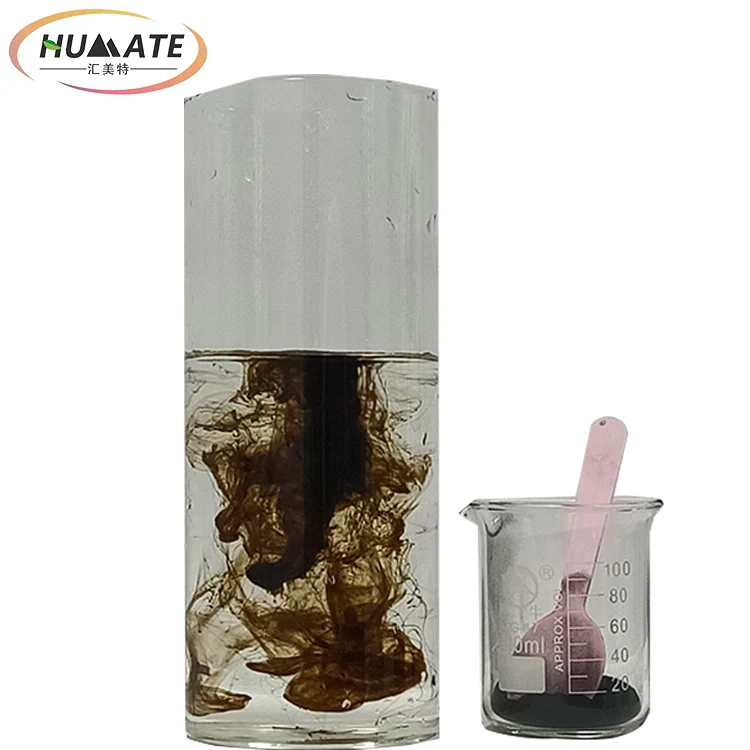
Black natural organic powder. It is easily soluble in water and is an organic macromolecular compound containing a large number of intricate functional groups, which is more resistant to microbial decomposition and its slow decomposition effect is the best of all organic solid fertilizers. It can also provide a variety of plant needs of large, medium and trace elements, and organic matter including humic acid, fulvic acid, humic amino acids, glycans, etc. High quality organic raw materials for the production of organic compound fertilizers.
Product Paramenters
Application | Organic Fertilizer |
Source | 100% Leonardite |
Apperance | Black |
State | powder |
humic acid(dry basis) | 65%(±3%) |
K2O(dry basis) | ≥10%(also can do 5% 8% 12% etc) |
Water solubility | 95%-100% (90% etc) |
Organic matter | ≥85% ≥90% |
Moisture | ≤18% |
PH | 9-11 |
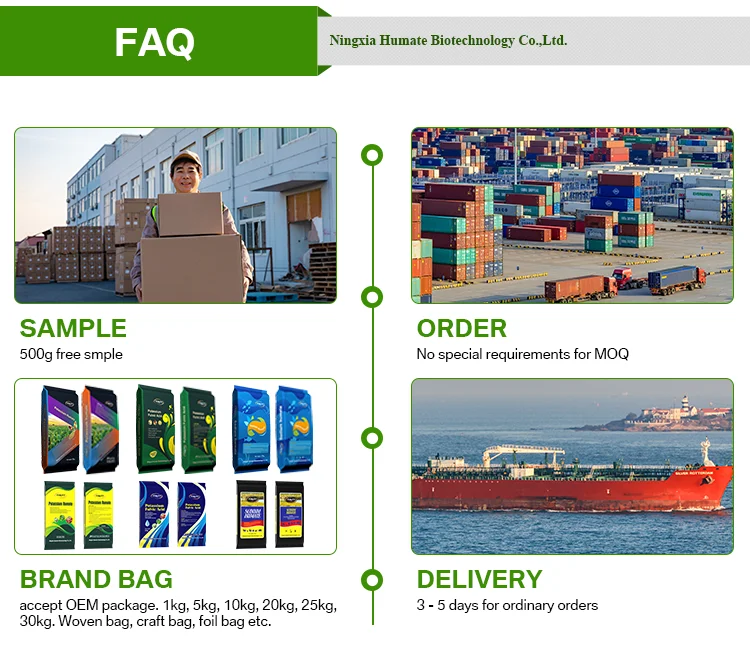
Packing | 5kg, 10kg, 20kg, 25kg Woven bag, Kraft bag, or OEM packing |
Supply Ability | 30000 Tons per year |
Port of loading | Tianjin Port |
MOQ | 1*20GP(25ton) |
Delivery time | 3-7 days conventional products 7-15 days custom products |
Payment term | TT, 30% deposit in advance, 70% balance against copy of B/L |
Notice | Store in a cool, dry, well-ventilated place away from sources of light and strong oxidizing substances |
Price | Pls inform us your contents standard and packing firstly, then we quote to you |
Detailed Images


Efficacy

Potassium humate features:
1) Loosen the soil: it can improve the physical characteristics of soil, promote the formation of soil aggregates, loosen the soil, and enhance the dissolved oxygen in the soil.
2) Activate the soil: increase the cation exchange capacity of the soil, adsorb and exchange plant nutrients, promote the free movement of nutrients in the soil, improve the slow efficiency of fertilizers, and improve the ability of soil to retain water and fertilizer.
3) Improve fertilizer utilization rate: it can adsorb nitrogen and potassium, improve the slow release of fertilizer and prevent nutrient loss.
4) Improve phosphorus utilization rate: It can activate the phosphorus fixed by trace elements in the soil and improve the utilization rate of phosphorus.
5) Water retention: It has a strong adsorption effect on water molecules, which can improve the water retention ability of soil.
6) Beneficial bacteria: provide soil carbon and promote the activity of beneficial microorganisms in the soil.
7) Detoxification: Promotes the breakdown of man-made (such as pesticides) or natural toxic substances.
8) Adjust PH: can increase slow equilibrium ability of soil, neutralize the soil PH.
9) Root rot treatment: can release negative oxygen ions in the soil, anti-inflammatory, sterilize, repair the cells, treat the crop root rot.
10) Improving quality: it can regulate carbon and nitrogen ratio of plant, make root strong, rich and well developed, high yield, improve crop quality, promote fruits swelling and coloring, and improve fruit sweetness.
11) Improve stress resistance: it directly affects cell metabolism of plant, improves respiration and photosynthesis of crops, and enhances crop resilience, such as drought resistance, cold resistance and disease resistance.
1) Loosen the soil: it can improve the physical characteristics of soil, promote the formation of soil aggregates, loosen the soil, and enhance the dissolved oxygen in the soil.
2) Activate the soil: increase the cation exchange capacity of the soil, adsorb and exchange plant nutrients, promote the free movement of nutrients in the soil, improve the slow efficiency of fertilizers, and improve the ability of soil to retain water and fertilizer.
3) Improve fertilizer utilization rate: it can adsorb nitrogen and potassium, improve the slow release of fertilizer and prevent nutrient loss.
4) Improve phosphorus utilization rate: It can activate the phosphorus fixed by trace elements in the soil and improve the utilization rate of phosphorus.
5) Water retention: It has a strong adsorption effect on water molecules, which can improve the water retention ability of soil.
6) Beneficial bacteria: provide soil carbon and promote the activity of beneficial microorganisms in the soil.
7) Detoxification: Promotes the breakdown of man-made (such as pesticides) or natural toxic substances.
8) Adjust PH: can increase slow equilibrium ability of soil, neutralize the soil PH.
9) Root rot treatment: can release negative oxygen ions in the soil, anti-inflammatory, sterilize, repair the cells, treat the crop root rot.
10) Improving quality: it can regulate carbon and nitrogen ratio of plant, make root strong, rich and well developed, high yield, improve crop quality, promote fruits swelling and coloring, and improve fruit sweetness.
11) Improve stress resistance: it directly affects cell metabolism of plant, improves respiration and photosynthesis of crops, and enhances crop resilience, such as drought resistance, cold resistance and disease resistance.

Applications

Potassium Humate was used as multi-functional compound fertilizer,combined with Nitrogen and Phosphorus, also used as basal fertilizer, top dressing,seed fertilizer,foliar fertilizer and spray fertilizer.
Application:
1.Soil Conditioner
2.Plant growth stimulant
3.Seeds Activator
4.Root Booster
5.Fruit Quality improver
2.Plant growth stimulant
3.Seeds Activator
4.Root Booster
5.Fruit Quality improver
• Plant growth stimulant, promote root development and stimulates seed germination.
• Enhance nutrient uptake by combining nutrients and humic acids and keep a well-balanced nutrition.
• Enhance the resilience of crops. such as cold, drought, pest, disease and toppling resistance.
• Promotes healthier, stronger plants and enhance appearance
• Potassium is an important component of chlorophyll, speed up the photosynthesis.
Recommend Products

Company Profile
Ningxia Humate Biotechnology Co., Ltd mainly produces potassium humate, sodium humate and potassium fulvic acid. We are one of the top three humic acid manufacturers in China.
Our general factory located in Ningxia, covering an area of 100,000 square meters, with 6 production lines and 60 drying rollers, mainly producing flake and powder products. Our branch factory is located in Xinjiang, covering an area of 80,000 square meters, mainly producing granule and powder products. Xinjiang branch is very near coal mines and with high quality and low price of raw material coal so that our products have strong market competitiveness. In addition, we can produce humic acid products in different forms and indexes , such as flakes, granules, powders and liquids. Regarding the potassium content of potassium humate, we also accept customer customization.
Our company integrates R&D, production and sales. Products mainly service in agricultural planting, organic fertilizers, aquaculture, feed additives, livestock and poultry medicines, aquaculture, binders, mineral processing, etc. The products are not only sold well internal, but also exported to all over the world, such as Southeast Asia, India, Egypt and other countries.
Our advantages:
-Self produced and sold, no middlemen to earn price difference, to ensure the quality and competitive price.
-National testing equipment, raw material truck testing, products daily testing , strict quality control.
-Continuously introduce energy-saving and environmental protection equipment, constantly cultivate excellent team to enhance the strength of the enterprise.
Our general factory located in Ningxia, covering an area of 100,000 square meters, with 6 production lines and 60 drying rollers, mainly producing flake and powder products. Our branch factory is located in Xinjiang, covering an area of 80,000 square meters, mainly producing granule and powder products. Xinjiang branch is very near coal mines and with high quality and low price of raw material coal so that our products have strong market competitiveness. In addition, we can produce humic acid products in different forms and indexes , such as flakes, granules, powders and liquids. Regarding the potassium content of potassium humate, we also accept customer customization.
Our company integrates R&D, production and sales. Products mainly service in agricultural planting, organic fertilizers, aquaculture, feed additives, livestock and poultry medicines, aquaculture, binders, mineral processing, etc. The products are not only sold well internal, but also exported to all over the world, such as Southeast Asia, India, Egypt and other countries.
Our advantages:
-Self produced and sold, no middlemen to earn price difference, to ensure the quality and competitive price.
-National testing equipment, raw material truck testing, products daily testing , strict quality control.
-Continuously introduce energy-saving and environmental protection equipment, constantly cultivate excellent team to enhance the strength of the enterprise.
Contact Us
We Recommend

New Arrivals
New products from manufacturers at wholesale prices