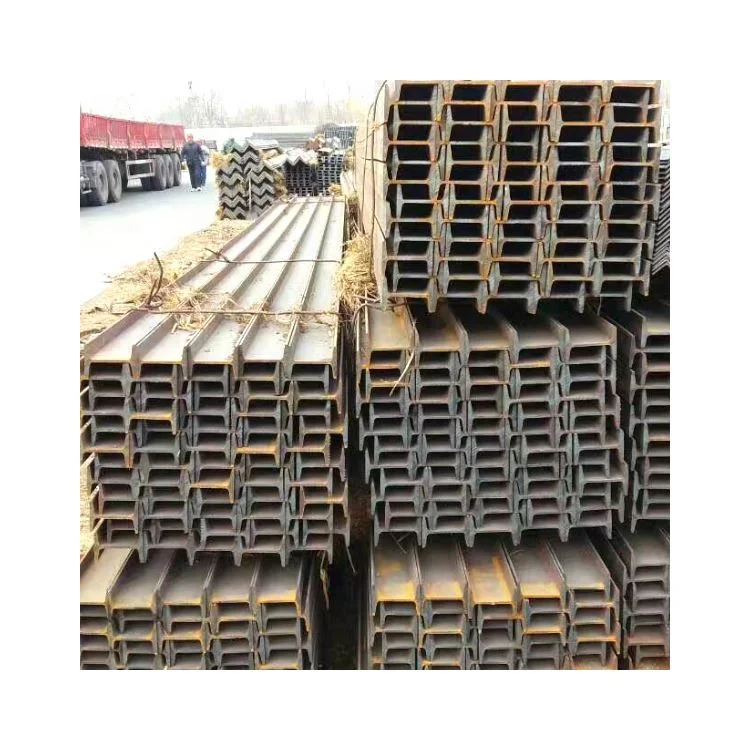
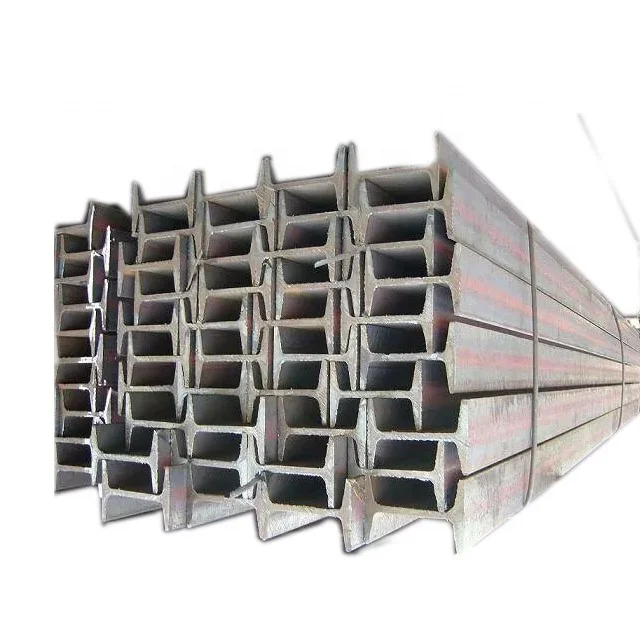
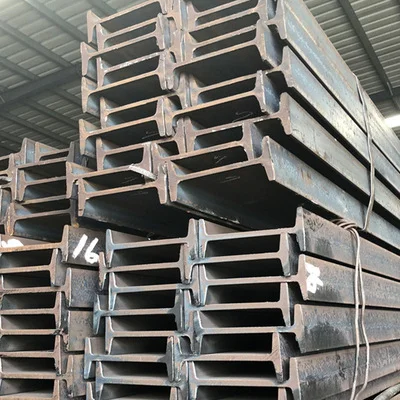
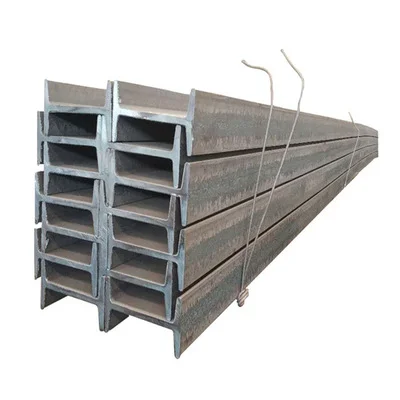
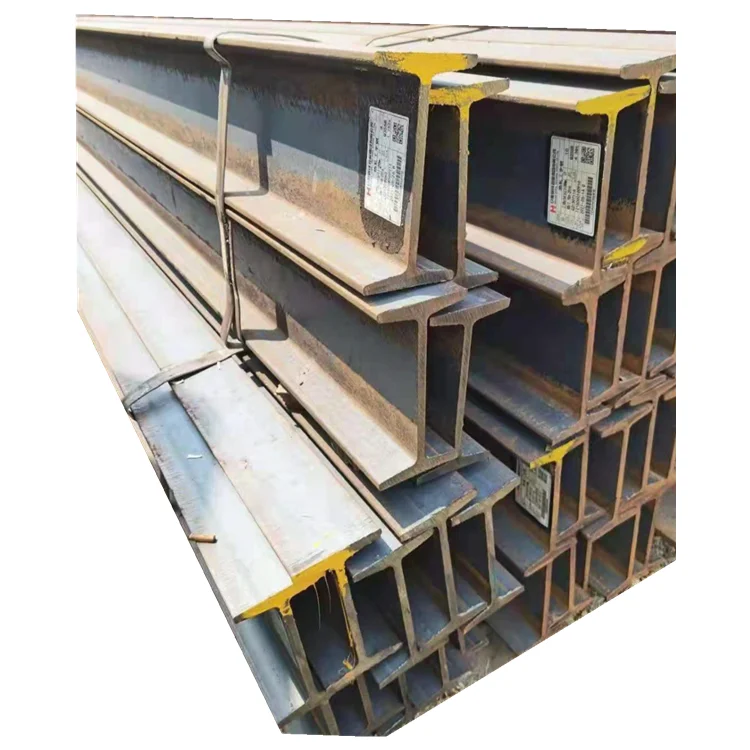
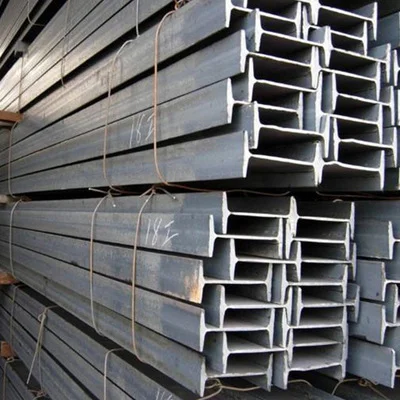
Hot Sale H beam/ IPE 80 Steel Beams IPEA IPEAA HEA HEB
- Category: >>>
- Supplier: Tianjin Zhongting International Trade Co. Ltd.
Share on (1600580304446):
Product Overview
Description
Product Description

Difference of H beam and I beam
H-shaped steel is a high-efficiency and economical cutting profile (others include cold-formed thin-walled steel, profiled steel, etc.). Due to the reasonable cross-sectional shape, they can make the steel more effective and improve the cutting capacity. Different from ordinary I-shaped steel, the flange of h-shaped steel has been widened, and the inner and outer surfaces are usually parallel, which can facilitate the connection with high-strength bolts and other components. Its size constitutes a reasonable series, and the models are complete, which is convenient for design and selection. (Except for I-shaped steel for crane beams)
1. The side length of I-beam is small and the height is large, so it can only bear unidirectional force. The H-shaped steel channel is deep and thick, and can withstand forces in two directions.
2. I-beams can only be used for beams, while H-beams can be used for structural load-bearing columns.
3. H-beam is an economical cross-section steel with better mechanical properties than I-beam. It is named because the shape of the cross-section is the same as the English letter "H". The flanges of hot-rolled H-beams are wider than I-beams, with greater lateral rigidity and stronger bending resistance. Under the same specifications, H-beams are lighter in weight than I-beams.
4. I-steel flanges are variable-wearing surfaces that are thicker on the web and thinner on the outside; H-beam flanges are equal-wearing surfaces.
2. I-beams can only be used for beams, while H-beams can be used for structural load-bearing columns.
3. H-beam is an economical cross-section steel with better mechanical properties than I-beam. It is named because the shape of the cross-section is the same as the English letter "H". The flanges of hot-rolled H-beams are wider than I-beams, with greater lateral rigidity and stronger bending resistance. Under the same specifications, H-beams are lighter in weight than I-beams.
4. I-steel flanges are variable-wearing surfaces that are thicker on the web and thinner on the outside; H-beam flanges are equal-wearing surfaces.
Regardless of whether the I-shaped steel is ordinary or light, because the cross-section size is relatively high and narrow, the moment of inertia of the two main sleeves of the cross-section is quite different. Therefore, it can generally only be used directly in the plane of its web. Bending members or combine them into lattice-type force-bearing members. It is not suitable to use axial compression members or members that are perpendicular to the plane of the web and have bending, which makes the application range very limited.
H-shaped steel is a high-efficiency and economical cutting profile (others include cold-formed thin-walled steel, profiled steel, etc.). Due to the reasonable cross-sectional shape, they can make the steel more effective and improve the cutting capacity. Different from ordinary I-shaped steel, the flange of h-shaped steel has been widened, and the inner and outer surfaces are usually parallel, which can facilitate the connection with high-strength bolts and other components. Its size constitutes a reasonable series, and the models are complete, which is convenient for design and selection. (Except for I-shaped steel for crane beams)
H BEAM
I BEAM

hot rolled Q235 ipe200 steel beam/I beam galvanized steel
Grade:Q235,Q345,SS400,SS490,S235/S275,A36,A992,A572gr50
Type:
GB standard(10#-40# 100*68mm--400*144mm)
European standard(IPE&IPEAA)
European standard(IPE&IPEAA)
Application:
Widely used in various building structures, construction, vehicles, bracket, machinery, etc
Widely used in various building structures, construction, vehicles, bracket, machinery, etc
Length:6M,9M,12M or as requirement
Surface: Bare, Oil on surface ,Painting ,Hot dipped galvanized


Standard Size

hot rolled Q235 ipe200 steel beam/I beam galvanized steel
IPE IPEAA IPEAAAA
Size | Depth xFlange width | Web Thickenss | Flange Thickness | Weight |
(mm) | (mm) | (mm) | (kg/m) | |
IPE100 | 100x55 | 4.1 | 5.7 | 8.1 |
IPE120 | 120x64 | 4.4 | 6.3 | 10.4 |
IPE140 | 140x73 | 4.7 | 6.9 | 12.9 |
IPE160 | 160x82 | 5 | 7.4 | 15.8 |
IPE180 | 180x91 | 5.5 | 8 | 18.8 |
IPE200 | 200x100 | 5.6 | 8.5 | 22.4 |
IPE220 | 220x110 | 5.9 | 9.2 | 36.2 |
IPE240 | 240x120 | 6.2 | 9.8 | 30.7 |
IPE270 | 270x135 | 6.6 | 10.2 | 36.1 |
Size | Depth xFlange width | Web Thickenss | Flange Thickness | Weight |
(mm) | (mm) | (mm) | (kg/m) | |
IPEAA80 | 80x46 | 3.2 | 4.2 | 4.95 |
IPEAA100 | 100x55 | 3.6 | 4.5 | 6.72 |
IPEAA120 | 120x64 | 3.6 | 4.8 | 8.36 |
IPEAA140 | 140x73 | 3.8 | 5.2 | 10.05 |
IPEAA160 | 160x82 | 4 | 5.6 | 12.31 |
Designation | H×B | Tw | Tf | Weight (kg/m) |
IPE 100 AAAA | 95x55 | 2.9 | 3.2 | 5.2 |
IPE 120 AAAA | 113.8x64 | 2.9 | 3.3 | 5.8 |
IPE 140 AAAA | 134x73 | 3.2 | 4.2 | 8.28 |
IPE 160 AAAA | 165x82 | 3.7 | 5.3 | 11.7 |
IPE 180 AAAA | 172x91 | 3.75 | 4.7 | 12.55 |
IPE 200 AAAA | 195.5x99.5 | 3.75 | 6.3 | 15.5 |
IPE 220 AAAA | 213x110 | 4 | 6.3 | 19.75 |
IPE 240 AAAA | 235.1x119.5 | 4 | 6.9 | 22.85 |
Workshop Display


I Beam
Height Inspection
I Beam
Thickness Inspection
I Beam
Width inspection
Packaging and Shipment


I BEAM
6M Loading into 20GP Sideway
I BEAM
I BEAM ,U BEAM ,Angle bar load together
H BEAM
12m Length by 40'GP Sideway
H BEAM
5.85M Length By 20'GP
H BEAM
Big quantity by Bulk vessel

Application

hot rolled Q235 ipe200 steel beam/I beam galvanized steel is Widely used in 1.Industrial structure of the steel structure bearing bracket.
2.Underground engineering steel pile and retaining structure.
3.Petrochemical and electric power and other industrial equipment structure
4.Large span steel bridge components
5.Ships, machinery manufacturing frame structure
6.The train, automobile, tractor beam bracket
7.Port of conveyor belt, high speed damper bracket
2.Underground engineering steel pile and retaining structure.
3.Petrochemical and electric power and other industrial equipment structure
4.Large span steel bridge components
5.Ships, machinery manufacturing frame structure
6.The train, automobile, tractor beam bracket
7.Port of conveyor belt, high speed damper bracket


FAQ
Q1. Where is your factory ?
A1: Our company’s processing center is located in Tianjin ,China
Q2. How do you control quality ?
A3: Mill Test Certification is supplied with shipment, Third Party Inspection is available.
Q3. What are the advantages of your company ?
A4: We have many professionals, technical personnel, more competitive prices and best after-dales service .
Q4. How many coutries you already exported ?
A5: Exported to more than 50 countries mainly from America, Russia, UK, Kuwait, Egypt,Turkey, Jordan,India, etc.
Q5. Can you provide sample ?
A6: Small samples in store and can provide the samples for free.
Customized samples will take about 5-7days.
A1: Our company’s processing center is located in Tianjin ,China
Q2. How do you control quality ?
A3: Mill Test Certification is supplied with shipment, Third Party Inspection is available.
Q3. What are the advantages of your company ?
A4: We have many professionals, technical personnel, more competitive prices and best after-dales service .
Q4. How many coutries you already exported ?
A5: Exported to more than 50 countries mainly from America, Russia, UK, Kuwait, Egypt,Turkey, Jordan,India, etc.
Q5. Can you provide sample ?
A6: Small samples in store and can provide the samples for free.
Customized samples will take about 5-7days.

We Recommend

New Arrivals
New products from manufacturers at wholesale prices