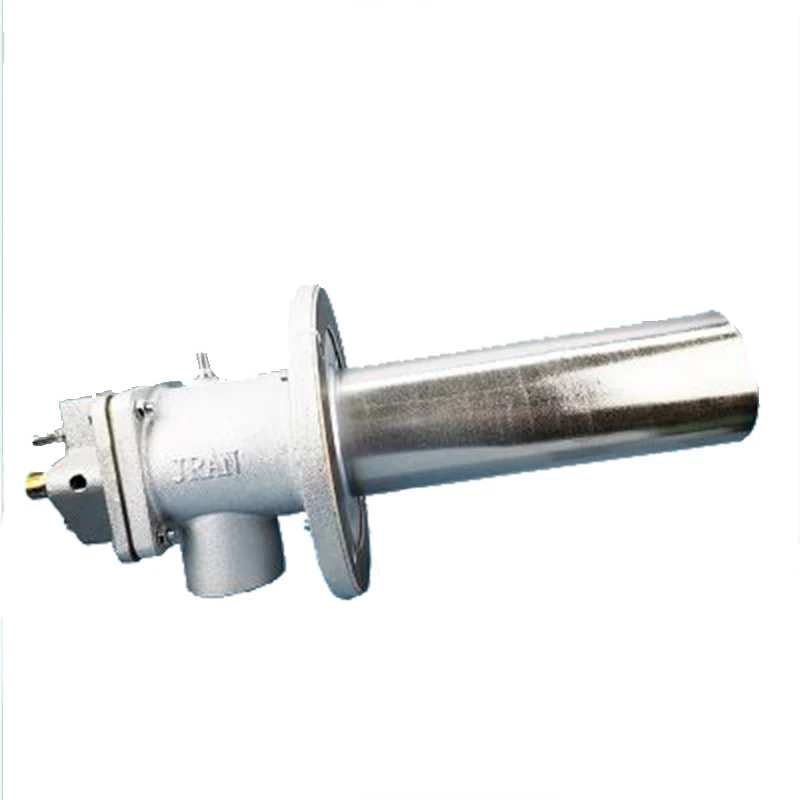
Top Selling Rotary Kiln Burner Industrial Gas Burner In Good Quality
- Category: >>>
- Supplier: Shanghai Feiyan Industrial Co. Ltd.
Share on (1600599294104):
Product Overview
Description


Structural Gas System
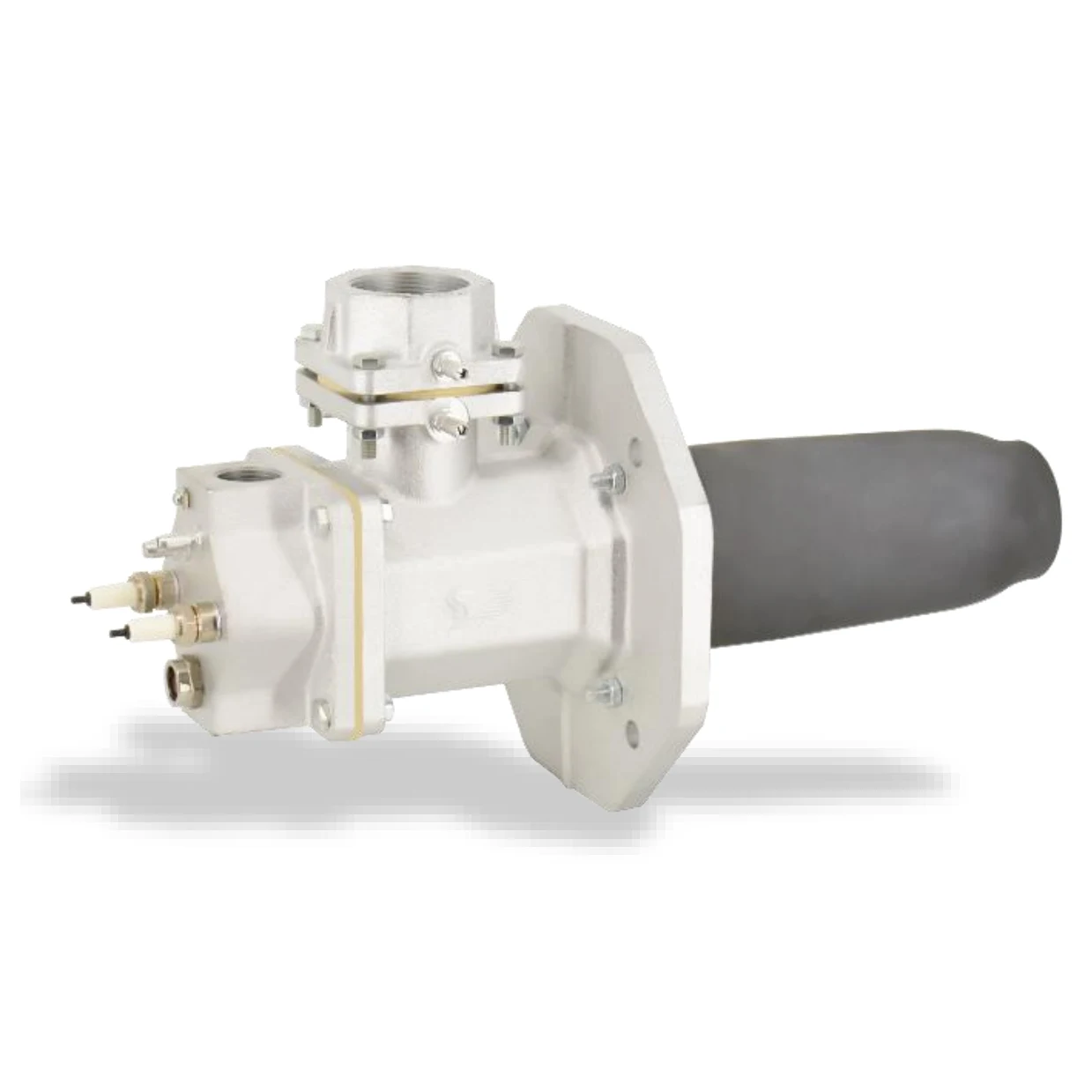
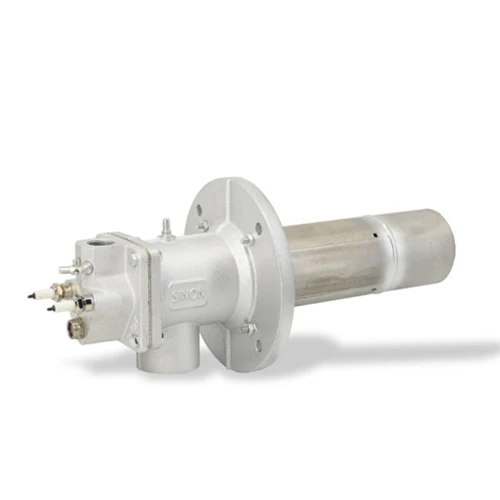
The gas system consists of a gas casing and a burner core. The gas casing is equipped with a gas orifice plate (standard for SCEM 65-140; a gas orifice plate for SCEM165~380 needs to be ordered separately and installed on the gas pipeline), pressure measuring holes, observation Accessories such as holes and grounding bolts. The burner core consists of a gas pipe and a burner head, which is used to mix air and gas, ignite and stabilize the flame.
The electrodes are fixed on the gas system, and generally use two-electrode ignition detection, that is, one electrode is used to generate high-voltage sparks, and the other is used for ion detection.
Air shell
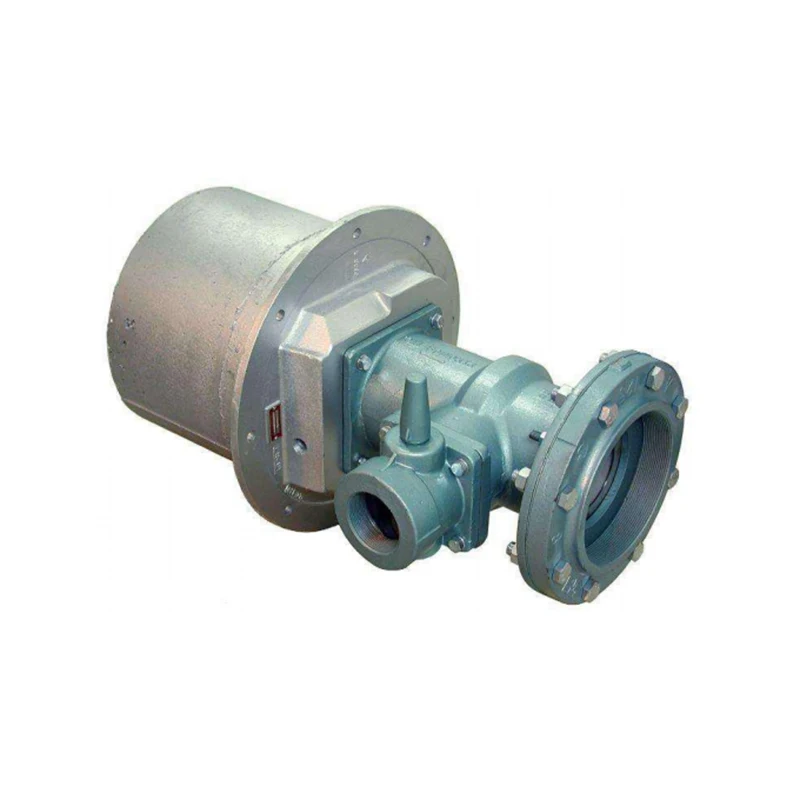
The air housing is used for air distribution. The gas system and the flame guide are installed on the air casing, and the burner is installed on the furnace wall through the mounting flange on the air casing. The air inlet on the air casing is equipped with an orifice plate (aluminum casing and SCEM240-380 need to be equipped with an air orifice plate separately), which is used to detect air parameters.
Flame tube
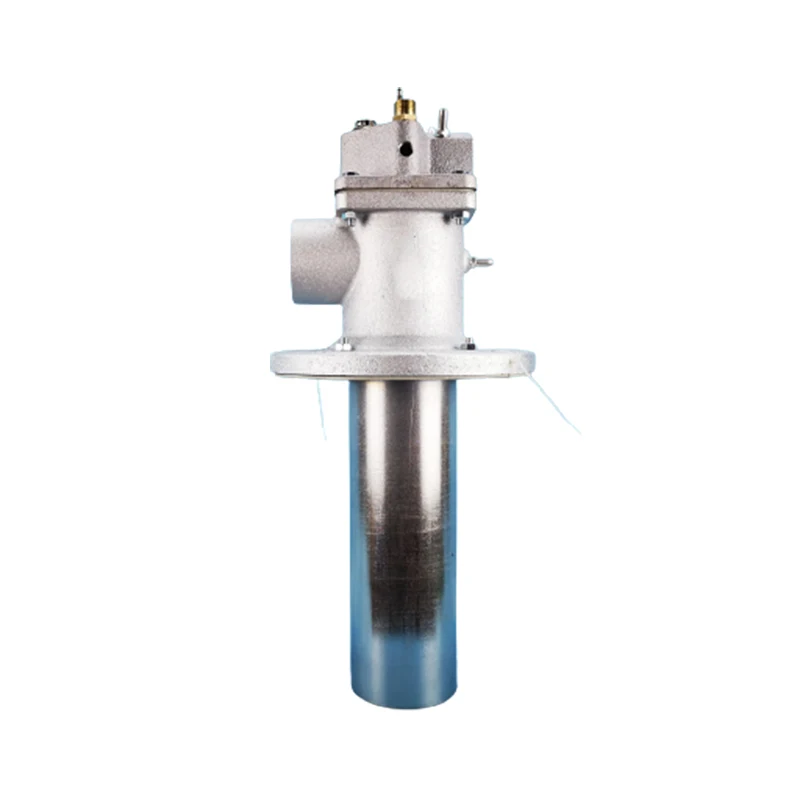
The burner head is installed in the flame guide tube and installed in the burner brick. The flame guide tube is used to ensure the mixing of air and gas and the shaping effect of the flame.
Features
SCEM series burners are forced air sub-high-speed burners; Burner power range is 20~7500kW optional;
Applicable gas types: liquefied gas, natural gas, city gas, coke oven gas,
Mixed gas and low calorific value gas, etc.;
.External mixing method, air and gas are supplied separately, no risk of backfire; .The flame form has three options: long flame, short flame and flat flame;
Adapt to most open flame heating requirements.
Application
SCEM series gas burners are suitable for various industrial kilns heated by open flames, and meet the needs of open flame heating in various industries such as iron and steel industry, non-ferrous metal industry, machinery industry, ceramic industry and food processing industry. It can also be used for special purposes such as hot blast stoves or as safety burners and ignition burners for high-power burners.

| Flame form | Code | Applicable air preheating temperature ℃ | Applicable furnace temperature °C* | Turndown ratio | Air excess coefficient** |
| long flame | L | 20~450 | 500~1600 | 1:10 | 0.8~1.5 |
| short flame | S | 20~150 | 50~1350 | 1:10 | 0.8~1.3 |
| flat flame | F | 20~400 | 50~1200 | 1:03 | 0.9~1.2 |
| *240~380 and aluminum air casing can not be used for combustion air preheating occasions, 240~380 is suitable for furnace temperature up to 1100C; ** in the state of large fire. | |||||


Zhengzhou Bona Heat Energy Equipment Co., Ltd is an innovative technology enterprise, which is focusing on the production, R & D and technical consulting services of burner, burner accessories, hot air furnace, and boiler related products. Zhengzhou Bona Heat Energy Equipment Co., Ltd upholds the development and innovation consciousness, produces products with high-performance combustion technology.Our Main products is various boiler burners, and industial burners. Such as natural gas burners, liquefied gas burners, industrial gas burners, light oil burners (diesel burners), heavy oil burners, waste oil burners, pulverized coal burners, rotary kiln burners, hot air furnace(hot blast stoves), and related products.


1. How to choose suitable burner for myself?
Usually according to combustion output capacity. You can provide relevant parameters of combustion output such as:
104xkcal/h
kW/h
m³/h (for gas)
Kg/h (for oil)
Then we will recommend the model which is most suitable for you, as the combustion output you provide.
2. What is included in the burner purchased? Do I need to purchase additional accessories?
The burner you buy usually contains the burner body, fan part, electric control part, and valve combination. Generally speaking, you do not need to purchase additional accessories. Therefore, you only need to provide fuel, such as gas source, oil, and the required power supply. Remarks: According to your needs, you can choose whether you need to buy a temperature controller.
3. What parts of the burner are wearing parts?
Gas series: ignition needle, fire detection needle, high voltage cable, gas filter. Oil series: solenoid valves, oil pumps, ignition needles, oil sparying nozzles, filters, usually greatly affected by the purity of the oil.
4. How long is the burner warranty?
According to the standard, one year warranty. The warranty period of some electrical appliances is in accordance with the quality assurance regulations of electrical appliances manufacturers.
5.Can the burner burn two fuels at the same time?
It is not possible to burn at the same time, but it can be switched using a dual-material burner, burning two different fuels at different times.
6. What parts of the burner are wearing parts?
Gas series: ignition needle, fire detection needle, high voltage cable, gas filter.
Oil series: solenoid valves, oil pumps, ignition needles, oil sparying nozzles, filters, usually greatly affected by the purity of the oil.

We Recommend
New Arrivals
New products from manufacturers at wholesale prices