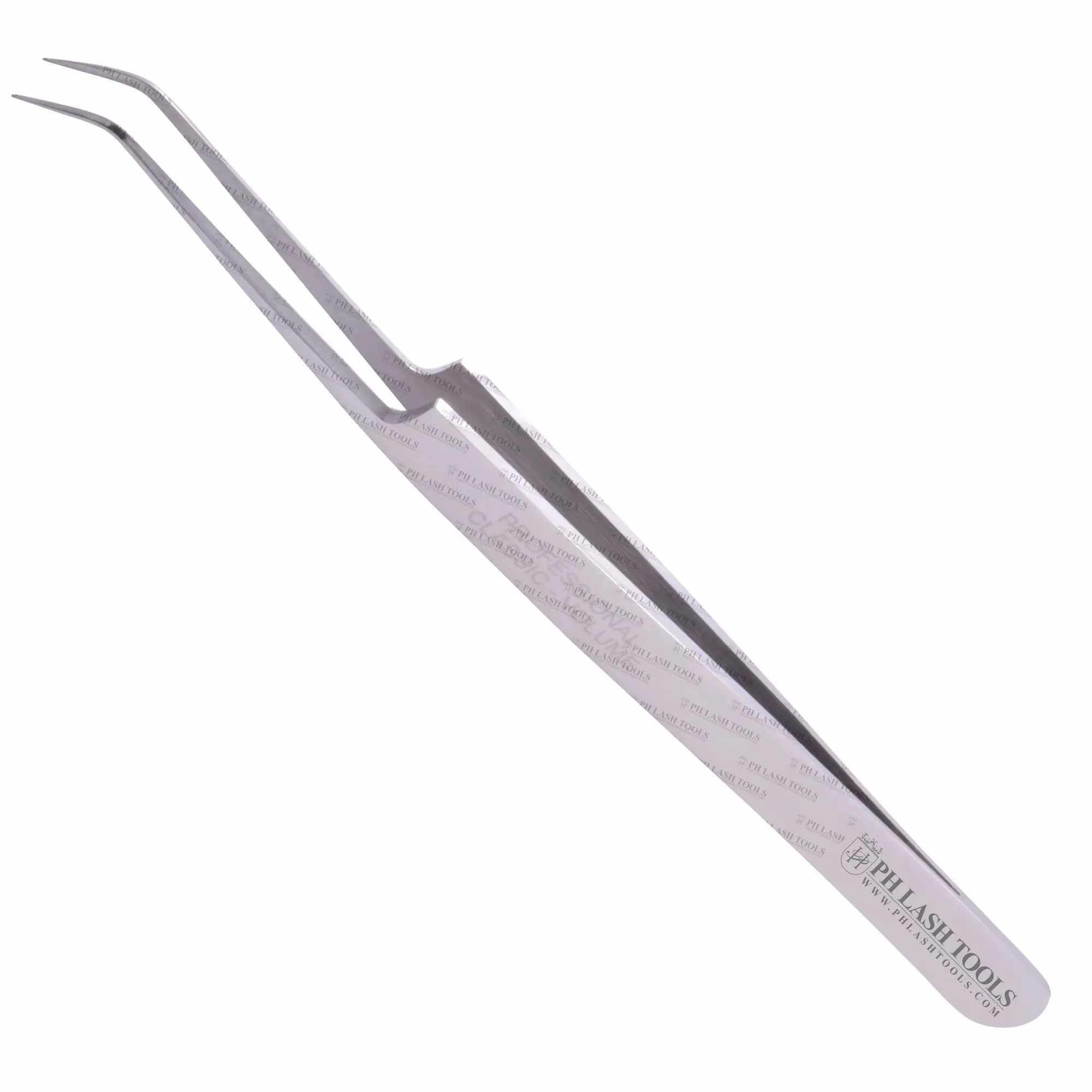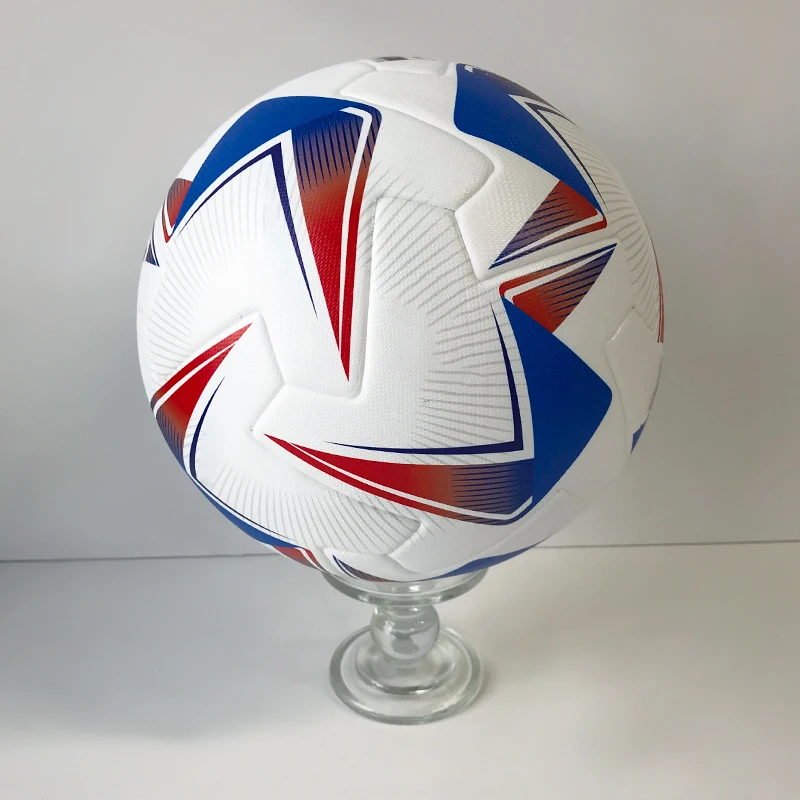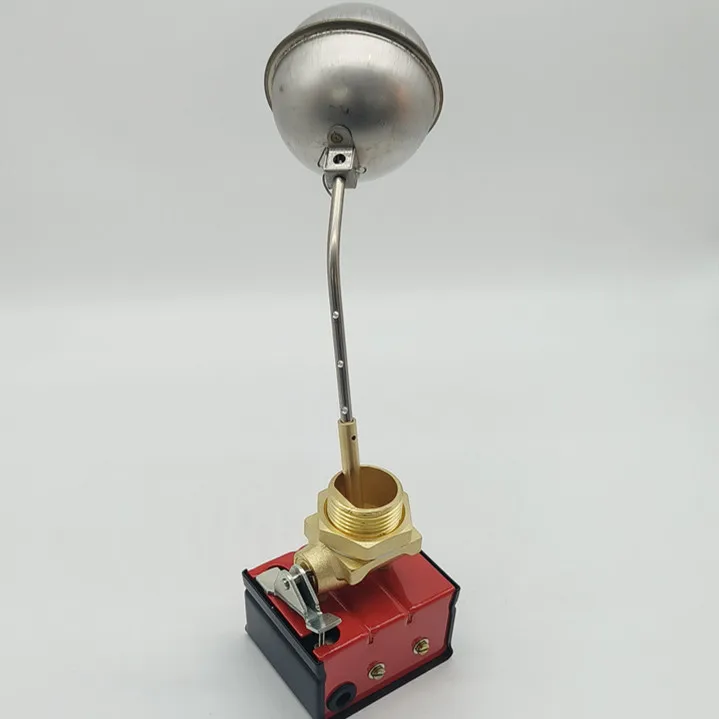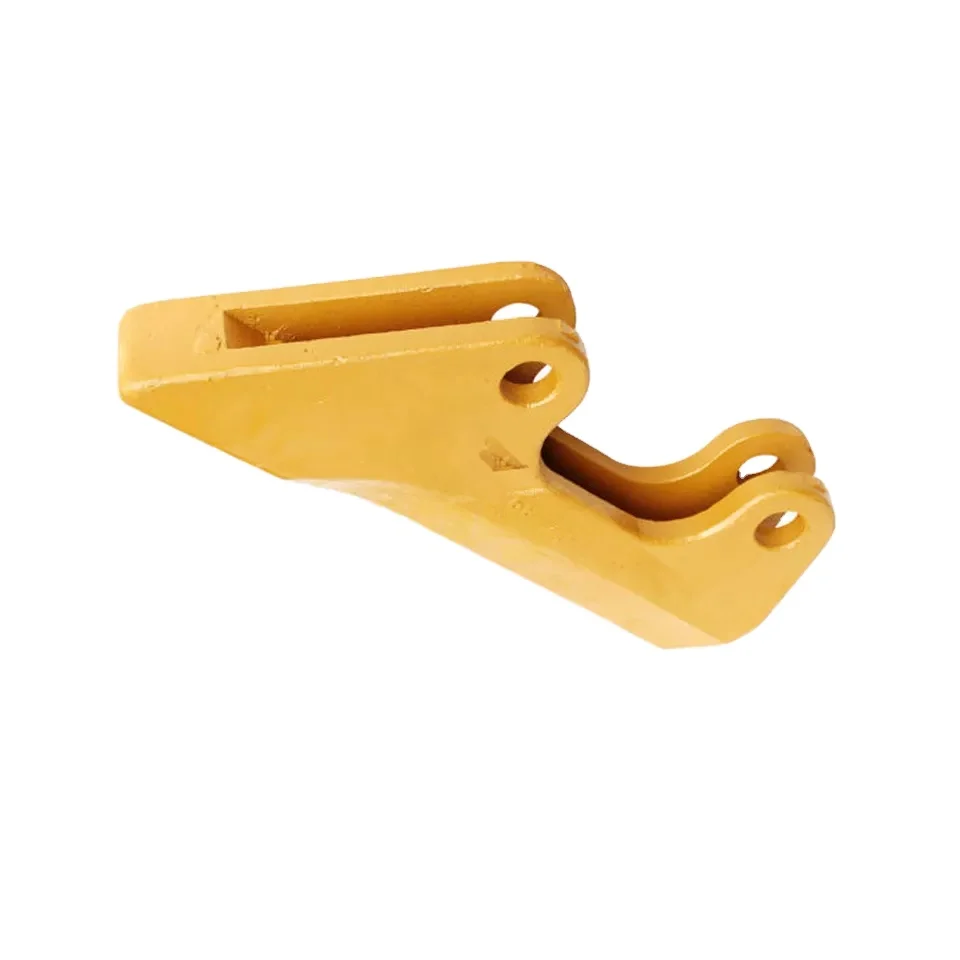
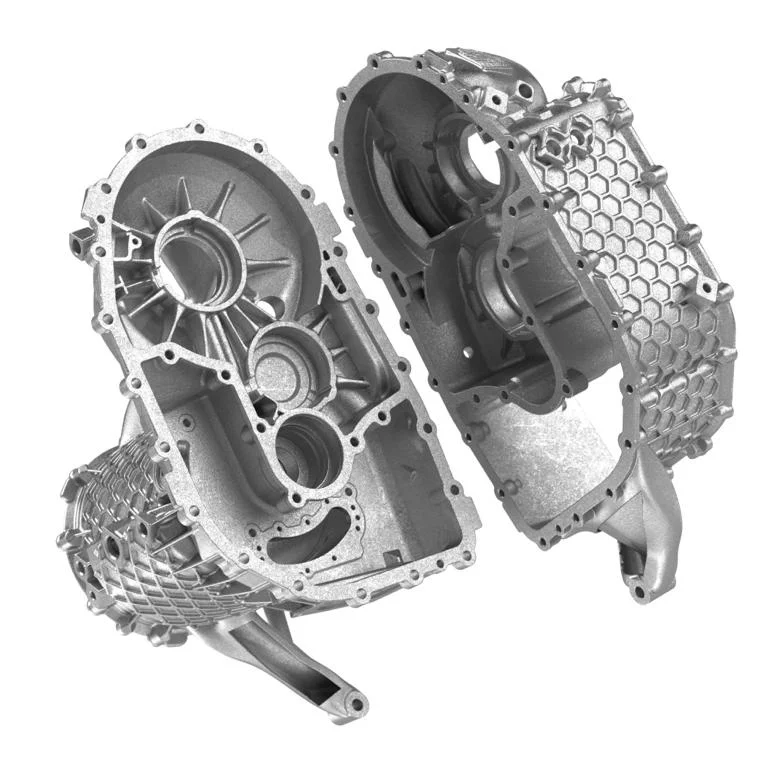
Высокая механическая прочность, высокая прочность к весу и лучшая коррозия, любимая металлическая титановая 3d печать
- Category: Fabrication Services >>>
- Supplier: Dongguan Linghang 3d Porototype Co. Ltd.
Share on (1600617879732):
Product Overview
Description
Products Description

What is metal 3D printing and how does it work?
What are SLM & DMLS? How are they different?

Selective Laser Melting (SLM) and Direct Metal Laser Sintering (DMLS) are two metal additive manufacturing processes that belong to the powder bed fusion 3D printing family. The two technologies have a lot of similarities: both use a laser to scan and selectively fuse (or melt) the metal powder particles, bonding them together and building a part layer-by-layer. Also, the
materials used in both processes are metals that come in a granular form.
The differences between SLM and DMLS come down to the fundamentals of the particle bonding process (and also patents): SLM uses metal powders with a single melting temperature and fully melts the particles, while in DMLS the powder is composed of materials
with variable melting points that fuse on a molecular level at elevated temperatures.
materials used in both processes are metals that come in a granular form.
The differences between SLM and DMLS come down to the fundamentals of the particle bonding process (and also patents): SLM uses metal powders with a single melting temperature and fully melts the particles, while in DMLS the powder is composed of materials
with variable melting points that fuse on a molecular level at elevated temperatures.

Essentially:
SLM produces parts from a single metal, while DMLS produces parts from metal alloys.
Both SLM and DMLS are used in industrial applications to create end-use engineering products. In this article, we use the term
metal 3D printing to refer to both processes in general and we describe the basic mechanisms of the fabrication process that are
necessary for engineers and designers to understand the benefits and limitations of the technology.
There are other additive manufacturing processes that can be used to produce dense metal parts, such as Electron Beam Melting
(EBM) and Ultrasonic Additive Manufacturing (UAM). Their availability and applications are limited though, so they won't be
presented here. Click here for more information on metal Binder Jetting.
How does metal 3D printing work?
1. The build chamber is first filled with inert gas (for example argon) to minimize the oxidation of the metal powder and then it is heated to the optimal build temperature.
2. A thin layer of metal powder is spread over the build platform and a high power laser scans the cross-section of the component, melting (or fusing) the metal particles together and creating the next layer. The entire area of the model is scanned, so the part is built fully solid.
3. When the scanning process is complete, the build platform moves downwards by one layer thickness and the recoater spreads another thin layer of metal powder. The process is repeated until the whole part is complete.
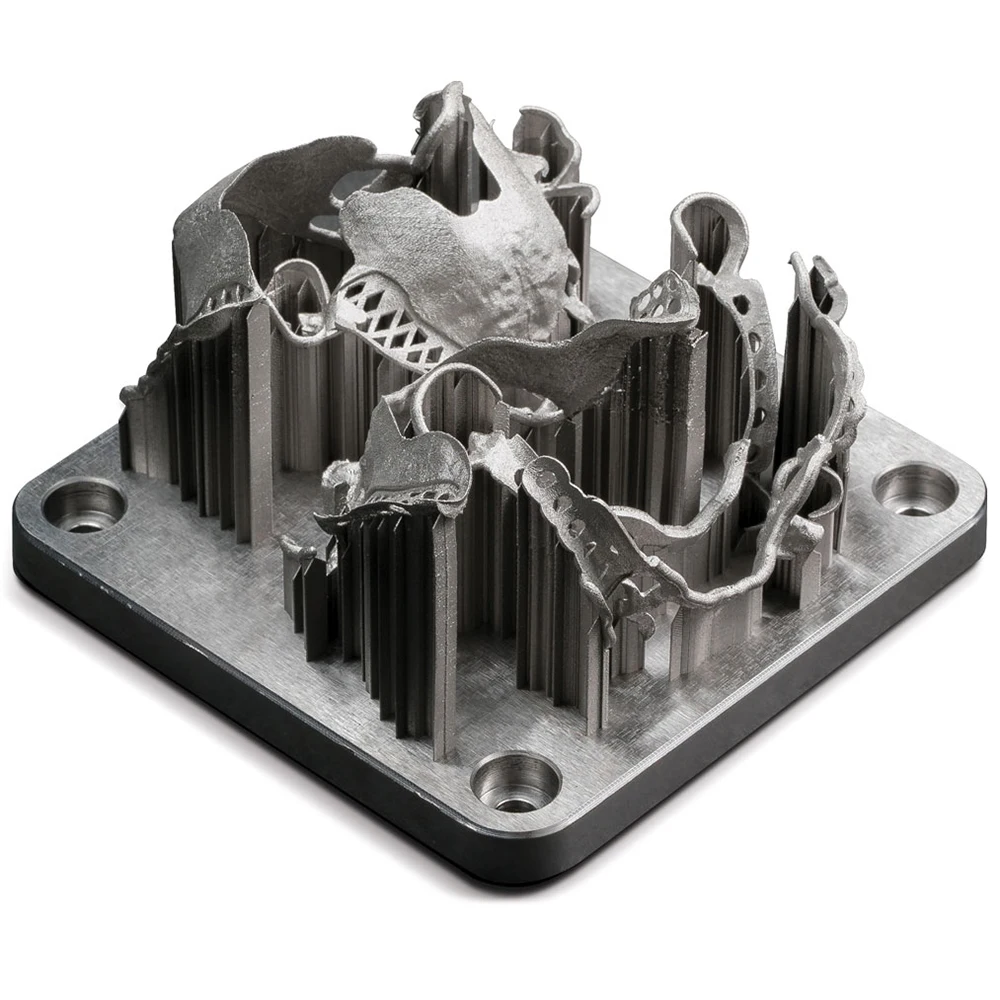
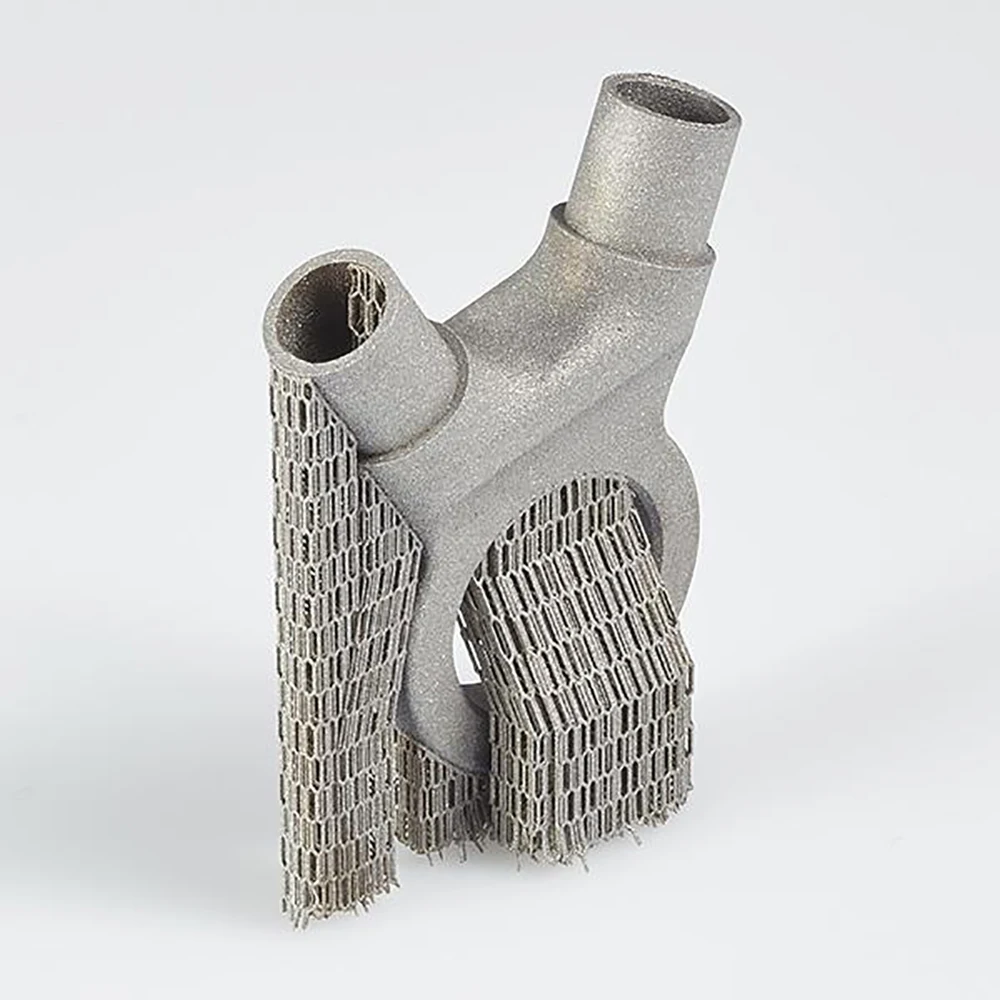
When the build process is finished, the parts are fully encapsulated in the metal powder. Unlike polymer powder bed fusion process (such as SLS), the parts are attached to the build platform through support structures. Support in metal 3D printing is built using the same material as the part and is always required to mitigate the warping and distortion that may occur due to the high processing temperatures.
When the bin cools to room temperature, the excess powder is manually removed and the parts are typically heat treated while still attached to the build platform to relieve any residual stresses. Then the components are detached from the build plate via cutting, machining or wire EDM and are ready for use or further post-processing.


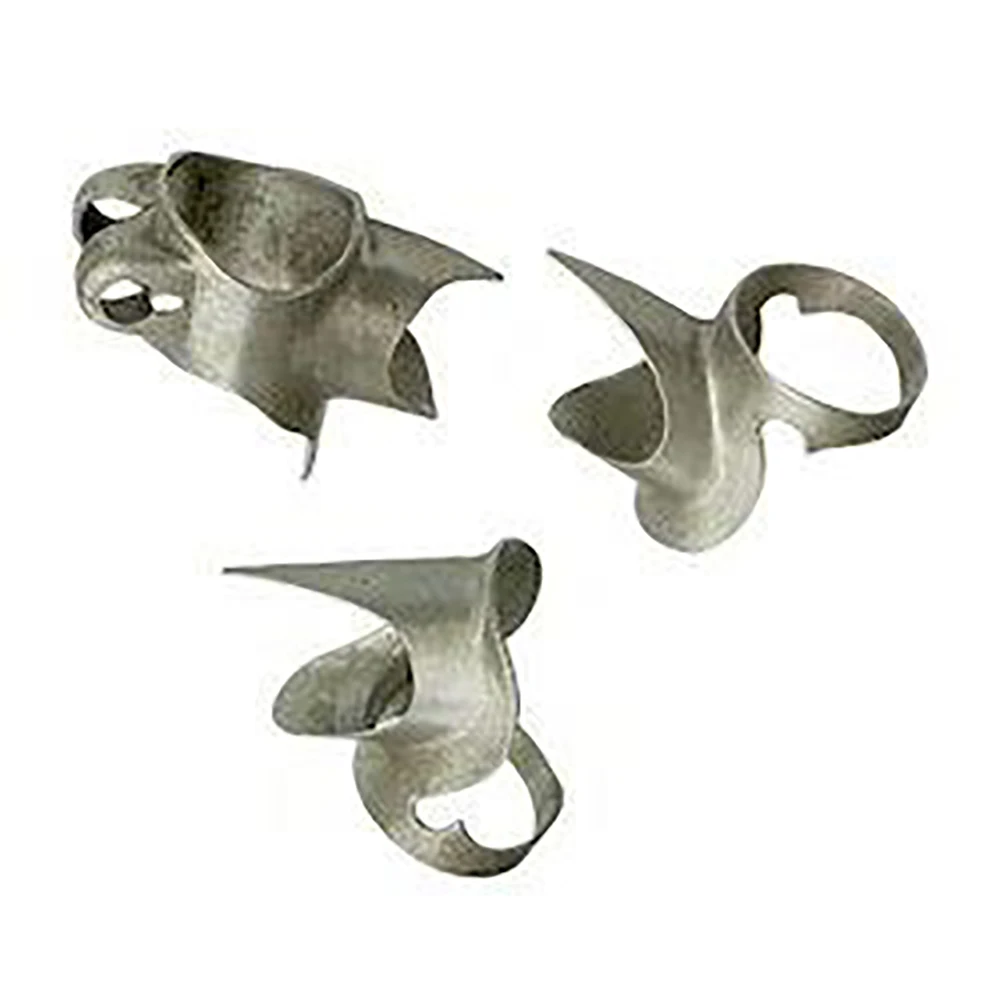
Small batch manufacturing of some parts using SLM

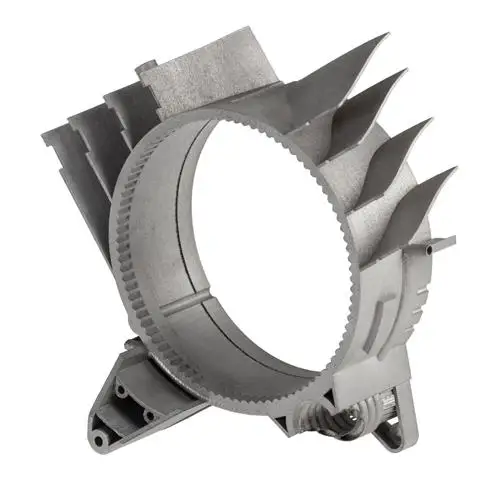
Small batch manufacturing of Titanium parts using SLM


Hollow sections & lightweight structures
For internal channels larger than Ø 8 mm, it is recommended to use diamond or tear-drop cross sections instead of a circular, as they require no support structures. More design guidelines on SLM & DMLS can be found in this this article.
As an alternative to hollow sections, parts can be designed with skin and cores. Skin and cores are processed using different laser power and scan speed, resulting in different material properties. Using skin and cores is very useful when manufacturing parts with large solid section, as they significantly reduce the print time and the likelihood of warping and produce parts with high stability and excellent surface quality.
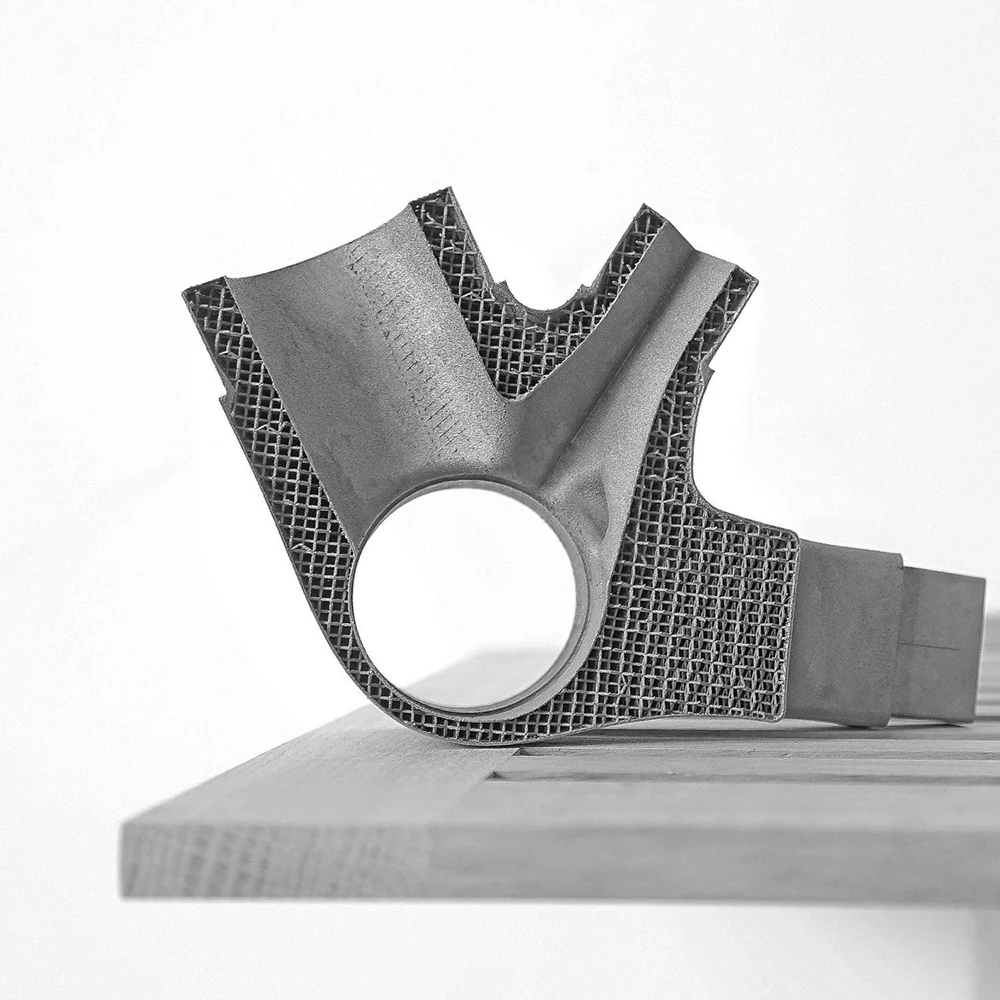
Using a lattice structure is also a common strategy in metal 3D printing for reducing the weight of a part. Topology optimization algorithms can also aid in the design of organic light-weight form.

Removing the powder around metal parts produced by the SLM printing process
Post-processing methods for metal 3D printing
Compulsory post-processing steps include the removal of the loose powder and the support structures, while heat treatment (thermal annealing) is commonly used to relieve the residual stresses and improve the mechanical properties of the part.
CNC machining can be employed for dimensionally crucial features (such as holes or threads). Media blasting, metal plating, polishing, and micro-machining can improve the surface quality and fatigue strength of a metal printed part.


Metal 3d printing service
Metal 3D printing provides a proven menu of benefits to a growing number of industries. Not only can you create parts with shapes
and internal structures that could not be cast or otherwise machined, but metal 3D printing can create parts within parts soengineers can design a complex assembly in one piece. This saves the time and labor of assembling parts or performing processes,
such as welding, and increases the efficiency of the final part.
and internal structures that could not be cast or otherwise machined, but metal 3D printing can create parts within parts soengineers can design a complex assembly in one piece. This saves the time and labor of assembling parts or performing processes,
such as welding, and increases the efficiency of the final part.
Details Images
Company Profile

Our Company
Dongguan Linghang 3D Prototype Co.,Ltd. is a professional manufacturer specialized in rapid prototyping, 3D printing, model making and model design. Our rapid prototyping services include: CNC & SLA & SLS rapid prototyping; vacuum casting for low-volume production, production design and development; 3D printing as well as high precision machining. Products of Linghang related to household appliance, automobile, sculpture,medical device, digital product, electronics, appliances, auto parts, toys, and many other industries. The company is located in Changan Town, Dongguan, founded in 2018. After 4 years'

development, the factory has a construction area of 20,000 square meters and has 500 self-owned printing equipment. Our equipment
have more than 100 SLA printers, nylon printers, metal printers, red wax printers,CNC machining center, automatic lathe, surface
grinding machine, meter lathe, CNC lathe, milling machine, plastic injection machine and stamping machine etc. Also we have
successfully established a professional team with superb technique, excellent quality, and enthusiastic service. All these helped
us receive numerous reputations from home and abroad.
have more than 100 SLA printers, nylon printers, metal printers, red wax printers,CNC machining center, automatic lathe, surface
grinding machine, meter lathe, CNC lathe, milling machine, plastic injection machine and stamping machine etc. Also we have
successfully established a professional team with superb technique, excellent quality, and enthusiastic service. All these helped
us receive numerous reputations from home and abroad.

Our teams
We have a strong R&D and design team, they are a group of lively, lovely and passionate young people, skilled technicians and operators, and professional quality control personnel to ensure the quality of our product development and production. The best support for customers, sincerely look forward to your trust and cooperation, come and contact us!


Why Choose Us
3D Printing line


FAQ
FAQ
1.How can I customize my products?
Attach your drawings with details(Suface treatment,material,quantity and special requirements etc).
2.How long can I get the quaotation?
We will give you the quotation within 24 hours(Considering the time difference).
3.How can I get a sample for testing?
We will offer free or charged samples depends on the products.
4.How long will you produce the parts?
Normally two weeks,we will arrange the produce schedule depends on the quantity and the delivery.
5.What's your payment terms?
We accept Western Union/ T/T/Trade Assrance /Paypal
6.How about the transportation?
Samples by air (if not too heavy),otherwise by sea or air.
7.What if the products we received are not good?
contact us without hesitation,our special after-sales service will take the responsibility
Attach your drawings with details(Suface treatment,material,quantity and special requirements etc).
2.How long can I get the quaotation?
We will give you the quotation within 24 hours(Considering the time difference).
3.How can I get a sample for testing?
We will offer free or charged samples depends on the products.
4.How long will you produce the parts?
Normally two weeks,we will arrange the produce schedule depends on the quantity and the delivery.
5.What's your payment terms?
We accept Western Union/ T/T/Trade Assrance /Paypal
6.How about the transportation?
Samples by air (if not too heavy),otherwise by sea or air.
7.What if the products we received are not good?
contact us without hesitation,our special after-sales service will take the responsibility
We Recommend


New Arrivals
New products from manufacturers at wholesale prices