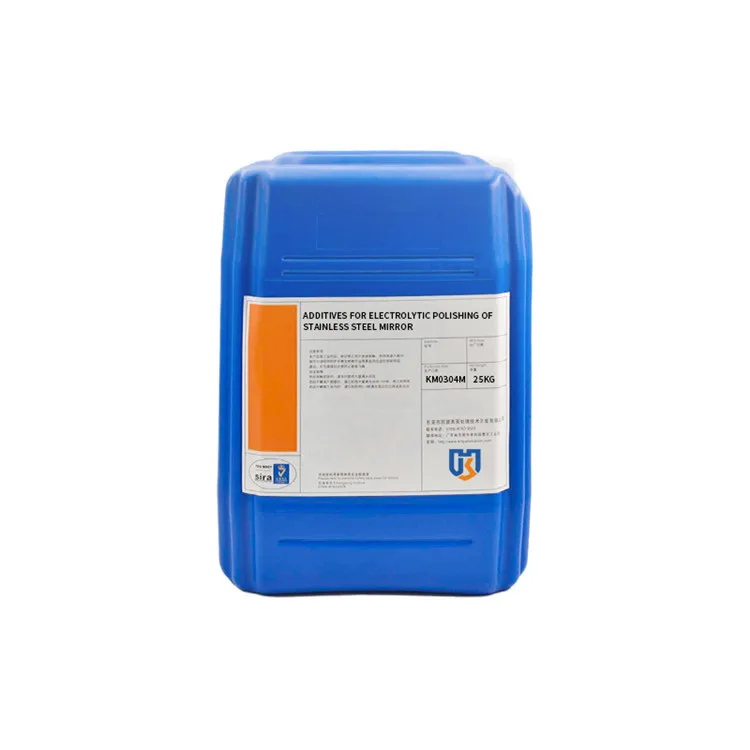
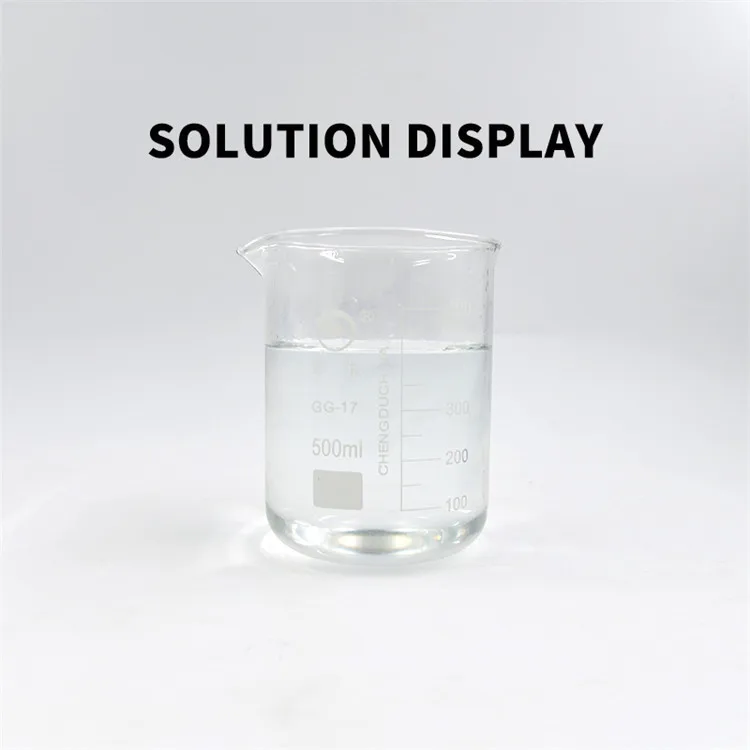
Хорошая цена, новый продукт, добавки для электролитического полировального раствора из нержавеющей стали, жидкая добавка
- Category: >>>
- Supplier: Guangdong EST Chemical Group
Share on (1600628562115):
Product Overview
Description
Specification
Model | KM0304m |
name | Additives for stainless steel electrolytic polishing solution |
Main purpose | A small amount of additives added to the electrolyte to improve the electrochemical performance of the electrolyte and improve the quality of cathodic deposition |
advantage | It is only necessary to add the product without changing the electrolyte frequently, so as to reduce the cost |
PH value | <1 |
Application industry | Precision hardware, semiconductor components, nuclear power materials, auto parts |
Precautions | 1. Before the stainless steel workpiece enters the polishing groove, the residual water on the workpiece surface shall be removed as much as possible. Because the workpiece carries too much water, it may cause serious pitting and local erosion on the polished surface, resulting in workpiece scrapping. 2. When the power is off for a long time, the lead plate or stainless steel plate of the cathode shall be taken out for cleaning to remove the acid solution. 3. As the solution contains sulfuric acid, appropriate protective measures (covering) should be taken when the tank solution is idle and in standby state to prevent sulfuric acid from absorbing water in the air, which will reduce the solution density and cause abnormal quality. 4. During the electrolytic polishing process, the iron and chromium elements contained in the stainless steel workpiece as the anode are continuously transferred into metal ions dissolved in the polishing solution instead of being deposited at the cathode. With the polishing process, the concentration of metal ions increases continuously. When it reaches a certain value, these metal ions are precipitated from the polishing solution in the form of organic salts and settled at the bottom of the polishing tank. Therefore, the polishing solution must be filtered regularly to remove these solid deposits. |
Instructions | Heat the electrolyte to 60 ~ 70 ℃, hang the lead plate on the cathode, fix the workpiece to be electropolished on the anode with a suitable hanger and keep the workpiece opposite to the cathode, then adjust the voltage to about 2 ~ 15V, polish for 3 ~ 5 minutes, and take out the workpiece to complete the electropolishing process. For the first use of electrolytic polishing solution, it is better to select a larger voltage and current to make the solution aging. When the electrolyte is slightly green, it indicates that a certain amount of nickel and chromium ions have been dissolved in the electrolyte, and the polishing effect is good at this time. |
Equipment requirements | 1. According to the volume and production capacity of the workpiece to be processed, the corresponding size of the polishing solution electrolyzer shall be established and the corresponding power of the electrolytic rectifier shall be selected (such as 1000A, 2000A or higher power, voltage 0~12v, 0~15v, 0~24v thyristor or high-frequency pulse). 2. Liquid level of polishing tank In the process of electrochemical polishing, foam will float on the liquid surface. In order to prevent foam from overflowing out of the tank and facilitate the adjustment of the relative density of the tank liquid, space should be reserved on the liquid surface Therefore, the high liquid level of the polishing tank should be 100~150mm lower than the total height of the tank. When designing the height of the groove, according to the maximum length (a) of polished parts, 250mm from the bottom of the groove, 50mm from the liquid level, and 150mm from the liquid level to the notch, the height of the groove can be calculated as h=250+50+a+150=a+450 (mm). |
Product Description
Company Profile


Packing & Delivery

FAQ


We Recommend
New Arrivals
New products from manufacturers at wholesale prices