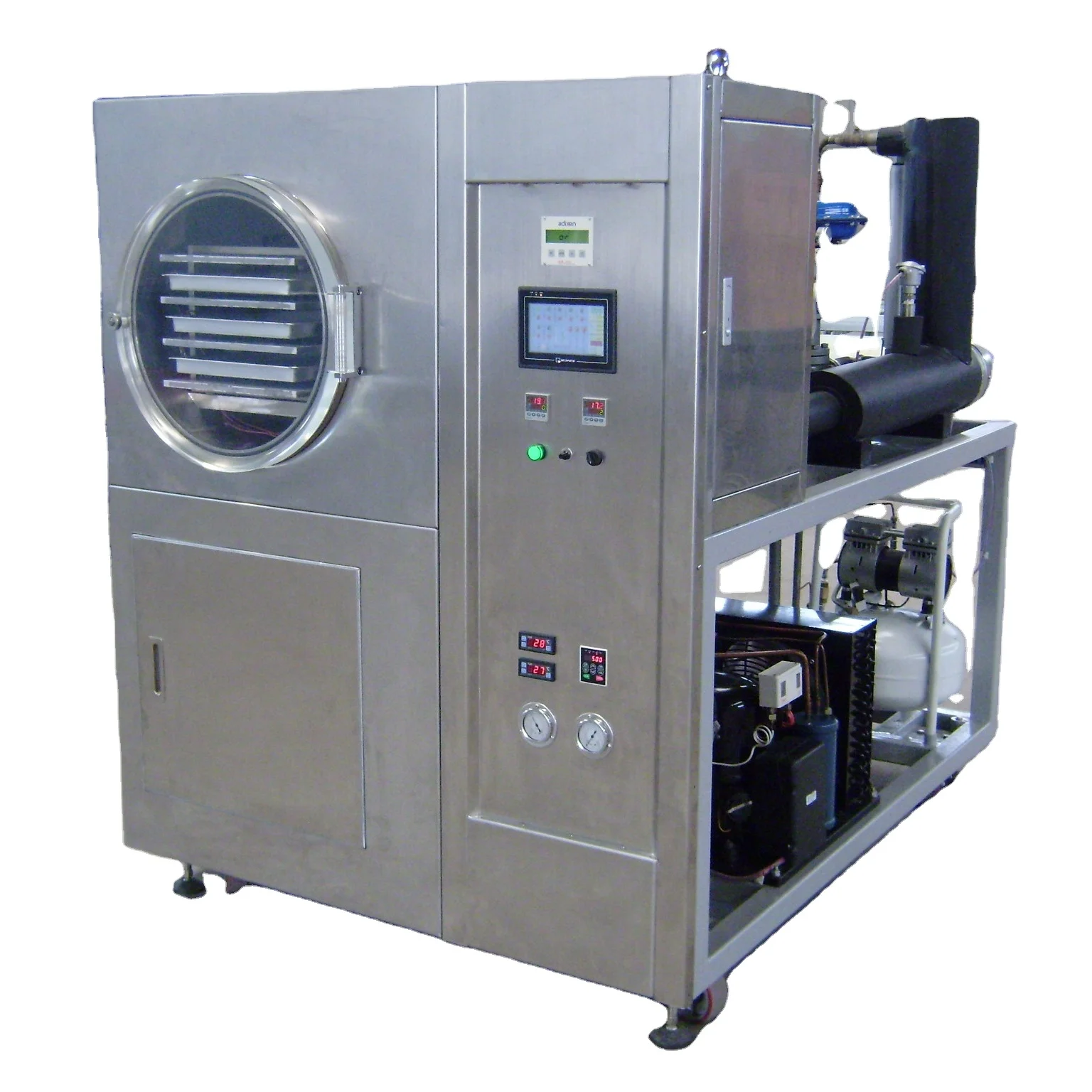
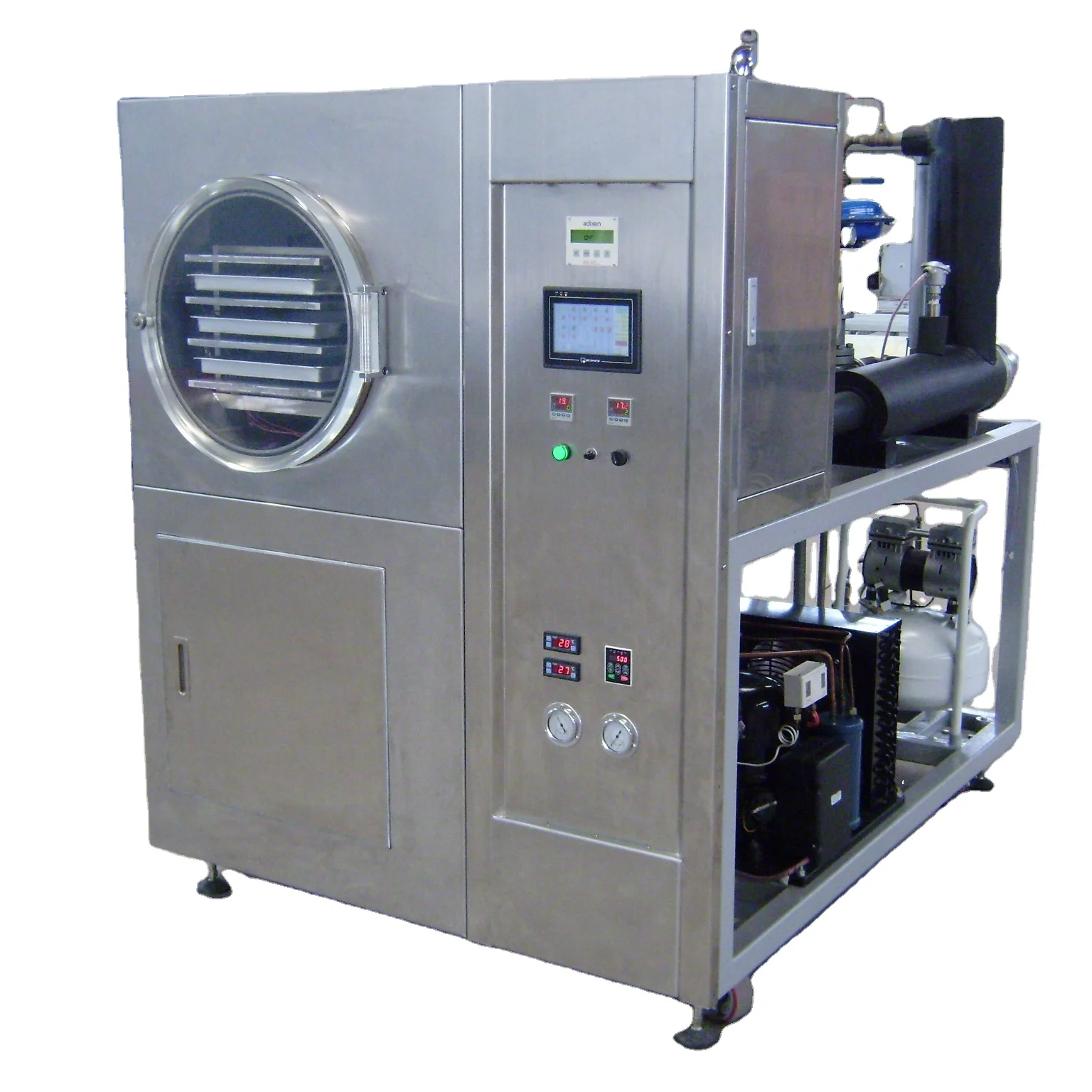
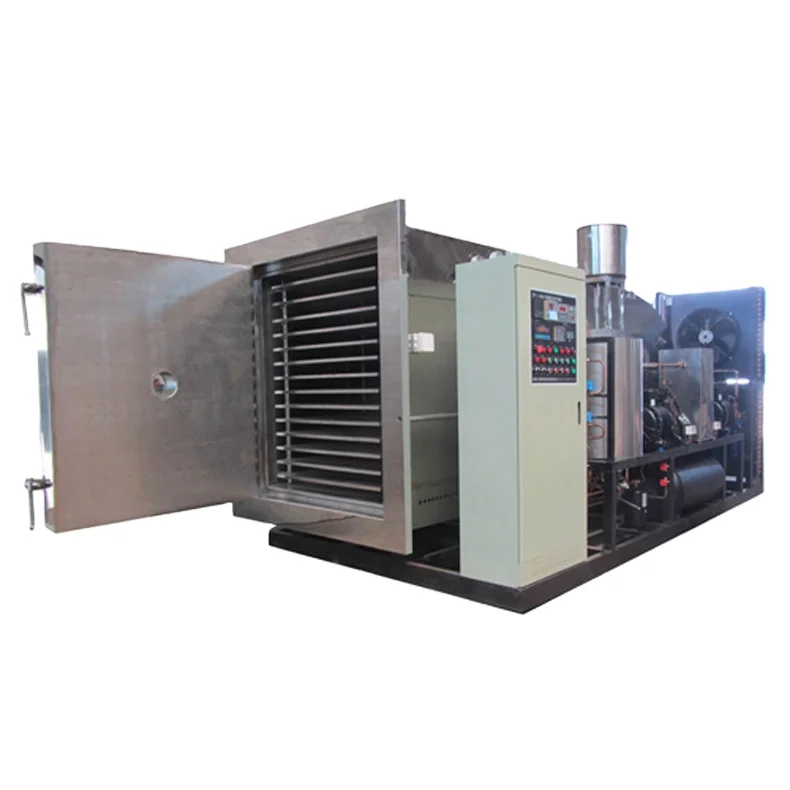
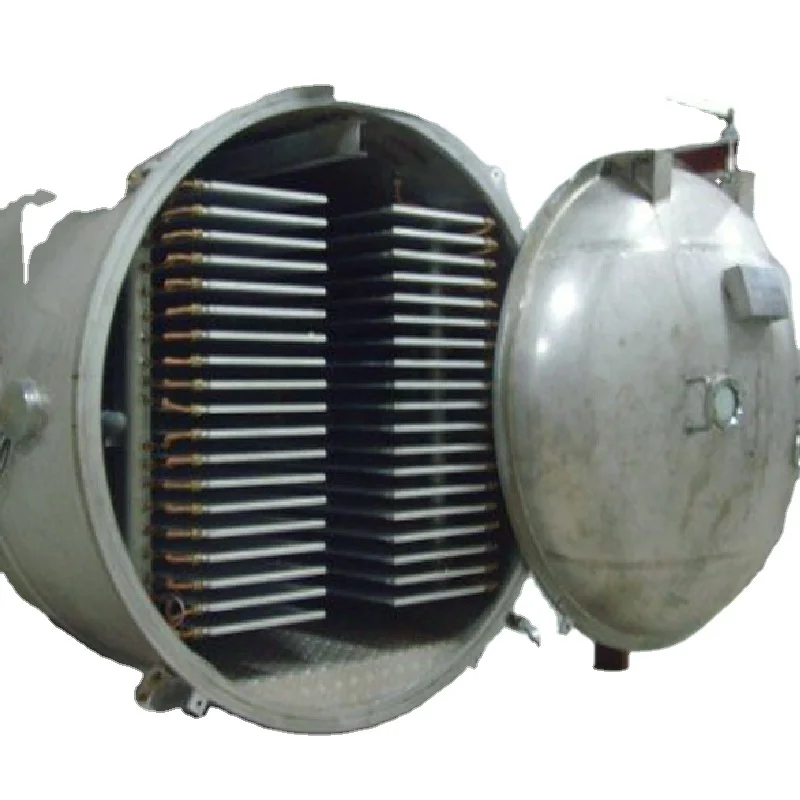
Dry Area 1 Square Meter Small Size Food Freeze Dryer For Industry Use
- Category: >>>
- Supplier: Hangzhou Ouhui Machinery Co. Ltd.
Share on (1600697353382):
Product Overview
Description
Product Description
We are committed to providing our customers worldwide with a one-stop solution for food,fruit and vegetable freeze dryers.
Hangzhou Ouhui Machinery is located near the beautiful West Lake,with convient location and transportation.It is a
technology-based enterprise integrating design,research and development,manufacturing and trade.We are specialized in
manufacturing various specifications of food vacuum freeze dryer,with area from 0.5 to 500 square meters.We will work with you and
your User Requirements and Specifications to provide the best solution for your needs.
Our offer is to supply a turn-key freeze drying machine service and includes the following: 1.Design and manufacture at our
manufacturing plant 2.Shipped world-wide to your nearest international seaport 3.Installation, commissioning and staff training
completed by Ouhui engineers 4.12-month warranty, plus extensive after-sales service 5.Each Ouhui freeze dryer is manufactured
under ISO 9001 accreditation, and Installation Qualification/Operation Qualification validation can be supplied. 6.With stringent
quality controls, reliable performance is assured at cost-effective prices. Manufacturing costs of a freeze dry machine in China
are often significantly lower compared to some of our competitors and we supply our freeze dryers worldwide.
Ouhui 20 years Quality Assured
Customization Acceptable
Fast Delivery
Factory Supplied
Manufacturer Supplied
Affordable Price
Hangzhou Ouhui Machinery is located near the beautiful West Lake,with convient location and transportation.It is a
technology-based enterprise integrating design,research and development,manufacturing and trade.We are specialized in
manufacturing various specifications of food vacuum freeze dryer,with area from 0.5 to 500 square meters.We will work with you and
your User Requirements and Specifications to provide the best solution for your needs.
Our offer is to supply a turn-key freeze drying machine service and includes the following: 1.Design and manufacture at our
manufacturing plant 2.Shipped world-wide to your nearest international seaport 3.Installation, commissioning and staff training
completed by Ouhui engineers 4.12-month warranty, plus extensive after-sales service 5.Each Ouhui freeze dryer is manufactured
under ISO 9001 accreditation, and Installation Qualification/Operation Qualification validation can be supplied. 6.With stringent
quality controls, reliable performance is assured at cost-effective prices. Manufacturing costs of a freeze dry machine in China
are often significantly lower compared to some of our competitors and we supply our freeze dryers worldwide.
Ouhui 20 years Quality Assured
Customization Acceptable
Fast Delivery
Factory Supplied
Manufacturer Supplied
Affordable Price


Specification

Ouhui Freeze Dryer Product Range Of Specification
Small is production ability of 0.5-2 square meters,medium is 5-30 square meters and large is 50-500 square meters.


Packing & Delivery

Company Profile


We provide complete after-sales service system,supply complete instructions for operation and maintenance of equipment,building customer files,regular return visits and inspections,tracking services,remote guidance,on-site command installation and commissioning and spare parts warranty other services.Meanwhile we provide complete technology, construction and design solutions to customers,what you need what we supplied.

Certification


Customer


Freeze Drying Introduction
Stages of freeze drying
There are four stages in the complete freeze drying process: pretreatment, freezing, primary drying, and
secondary drying.
secondary drying.
Pretreatment
Pretreatment includes any method of treating the product prior to freezing. This may include concentrating the product,
formulation revision (i.e., addition of components to increase stability, preserve appearance, and/or improve processing),
decreasing a high-vapor-pressure solvent, or increasing the surface area. Food pieces are often IQF treated to make them free flowing prior to freeze drying. Freeze dried pharmaceutical products are in most cases parenterals administered after
reconstitution by injection which need to be sterile as well as free of impurity particles. Pre- treatment in these cases consists of solution preparation followed by a multi-step filtration. Afterwards the liquid is filled under sterile conditions into the final containers which in production scale freeze dryers are loaded automatically to the shelves. In many instances the decision to pretreat a product is based on theoretical knowledge of freeze-drying and its requirements, or is demanded by cycle time or product quality considerations.
formulation revision (i.e., addition of components to increase stability, preserve appearance, and/or improve processing),
decreasing a high-vapor-pressure solvent, or increasing the surface area. Food pieces are often IQF treated to make them free flowing prior to freeze drying. Freeze dried pharmaceutical products are in most cases parenterals administered after
reconstitution by injection which need to be sterile as well as free of impurity particles. Pre- treatment in these cases consists of solution preparation followed by a multi-step filtration. Afterwards the liquid is filled under sterile conditions into the final containers which in production scale freeze dryers are loaded automatically to the shelves. In many instances the decision to pretreat a product is based on theoretical knowledge of freeze-drying and its requirements, or is demanded by cycle time or product quality considerations.
Freezing and annealing
During the freezing stage, the material is cooled below its triple point, the temperature at which the solid, liquid, and gas
phases of the material can coexist. This ensures that sublimation rather than melting will occur in the following steps. To
facilitate faster and more efficient freeze drying, larger ice crystals are preferable. The large ice crystals form a network
within the product which promotes faster removal of water vapor during sublimation.To produce larger crystals, the product should be frozen slowly or can be cycled up and down in temperature in a process called annealing. The freezing phase is the most critical in the whole freeze-drying process, as the freezing method can impact the speed of reconstitution, duration of freeze-drying cycle, product stability, and appropriate crystallization. Amorphous materials do not have a eutectic point, but they do have a critical point, below which the product must be maintained to prevent melt-back or collapse during primary and secondary drying.
phases of the material can coexist. This ensures that sublimation rather than melting will occur in the following steps. To
facilitate faster and more efficient freeze drying, larger ice crystals are preferable. The large ice crystals form a network
within the product which promotes faster removal of water vapor during sublimation.To produce larger crystals, the product should be frozen slowly or can be cycled up and down in temperature in a process called annealing. The freezing phase is the most critical in the whole freeze-drying process, as the freezing method can impact the speed of reconstitution, duration of freeze-drying cycle, product stability, and appropriate crystallization. Amorphous materials do not have a eutectic point, but they do have a critical point, below which the product must be maintained to prevent melt-back or collapse during primary and secondary drying.
Structurally sensitive goods
In the case of goods where preservation of structure is required, like food or objects with formerly-living cells, large ice crystals will break the cell walls which can result in increasingly poor texture and loss of nutritive content. In this case, the freezing is done rapidly, in order to lower the material to below its eutectic point quickly, thus avoiding the formation of large ice crystals.Usually, the freezing temperatures are between 50 °C (58 °F) and 80 °C (112 °F).
Primary drying
During the primary drying phase, the pressure is lowered (to the range of a few millibars), and enough heat is
supplied to the material for the ice to sublimate. The amount of heat necessary can be calculated using the sublimating molecules' latent heat of sublimation. In this initial drying phase, about 95% of the water in the material is sublimated. This phase may be slow (can be several days in the industry), because, if too much heat is added, the material's structure could be altered. In this phase, pressure is controlled through the application of partial vacuum. The vacuum speeds up the sublimation, making it useful as a deliberate drying process. Furthermore, a cold condenser chamber and/or condenser plates provide a surface(s) for the water vapour to re-liquify and solidify on. It is important to note that, in this range of pressure, the heat is brought mainly by conduction or radiation; the convection effect is negligible, due to the low air density.
supplied to the material for the ice to sublimate. The amount of heat necessary can be calculated using the sublimating molecules' latent heat of sublimation. In this initial drying phase, about 95% of the water in the material is sublimated. This phase may be slow (can be several days in the industry), because, if too much heat is added, the material's structure could be altered. In this phase, pressure is controlled through the application of partial vacuum. The vacuum speeds up the sublimation, making it useful as a deliberate drying process. Furthermore, a cold condenser chamber and/or condenser plates provide a surface(s) for the water vapour to re-liquify and solidify on. It is important to note that, in this range of pressure, the heat is brought mainly by conduction or radiation; the convection effect is negligible, due to the low air density.
Secondary drying
The secondary drying phase aims to remove unfrozen water molecules, since the ice was removed in the primary
drying phase. This part of the freeze-drying process is governed by the material's adsorption isotherms. In this phase, the
temperature is raised higher than in the primary drying phase, and can even be above 0 °C (32 °F), to break any physico-chemical interactions that have formed between the water molecules and the frozen material. Usually the pressure is also lowered in this stage to encourage desorption (typically in the range of microbars, or fractions of a pascal). However, there are products that benefit from increased pressure as well.After the freeze-drying process is complete, the vacuum is usually broken with an inert gas, such as nitrogen, before the material is sealed. At the end of the operation, the final residual water content in the product is extremely low, around 1% to 4%.
drying phase. This part of the freeze-drying process is governed by the material's adsorption isotherms. In this phase, the
temperature is raised higher than in the primary drying phase, and can even be above 0 °C (32 °F), to break any physico-chemical interactions that have formed between the water molecules and the frozen material. Usually the pressure is also lowered in this stage to encourage desorption (typically in the range of microbars, or fractions of a pascal). However, there are products that benefit from increased pressure as well.After the freeze-drying process is complete, the vacuum is usually broken with an inert gas, such as nitrogen, before the material is sealed. At the end of the operation, the final residual water content in the product is extremely low, around 1% to 4%.
Freeze drying of food
The primary purpose of freeze drying within the food industry is to extend the shelf-life of the food while
maintaining the quality.Freeze-drying is known to result in the highest quality of foods amongst all drying techniques because structural integrity is maintained along with preservation of flavors.Because freeze drying is expensive, it is used mainly with high-value products.Examples of high-value freeze-dried products are seasonal fruits and vegetables because of their limited availability, coffee; and foods used for military rations, astronauts/cosmonauts, and/or hikers.
maintaining the quality.Freeze-drying is known to result in the highest quality of foods amongst all drying techniques because structural integrity is maintained along with preservation of flavors.Because freeze drying is expensive, it is used mainly with high-value products.Examples of high-value freeze-dried products are seasonal fruits and vegetables because of their limited availability, coffee; and foods used for military rations, astronauts/cosmonauts, and/or hikers.


FAQ

Question 1: What price and delivery terms you offer ?
We can offer Ex-Works,FOB, FCA, CFR, CIF delivery terms
Question 2: What payment terms you take ?
Telegraphic transfer T/T; Letter of Credit L/C, other terms are also workable
Question 3: Do you provide service of installation and stuff training ?
Absolutely, we arrange to send our engineers to your place to guide the installation and train your workers if you need, Our
technician's round tickets, accomodation, food and subsidiary are beared by buyer
technician's round tickets, accomodation, food and subsidiary are beared by buyer
Question 4: Why choose us ?
1.Quality assured
2.Customization acceptable
3.Fast delivery
4.Factory supplied
5.Manufacturer supplied
6.Affordable price
7.All freeze-drying machines, from design, cutting, to the production and assembly of various systems, are all completed by our company, not by outsourcing processing. Can control the quality of each link more
8.The large freeze-drying machine (more than 30 square meters) is traditionally round. The square developed by our company has been put into use, which has higher space utilization rate, more energy-saving, and occupies a small area, which is more suitable for transportation
9.On the shelf, we have a patented product double radiant panel, which is more than 1.5 times of the ordinary single-layer shelf
10.The compressor is imported from frascold of Italy, GEA bock of Germany and Shengang of Japan
11.The refrigeration accessories using Denmark Danfoss, Emerson, fask and other international well-known brands
24 Hours hot line:
(+86) 13989452306
Whatsapp/Wechat: (+86) 13989452306
(+86) 13989452306
Whatsapp/Wechat: (+86) 13989452306
We Recommend
New Arrivals
New products from manufacturers at wholesale prices