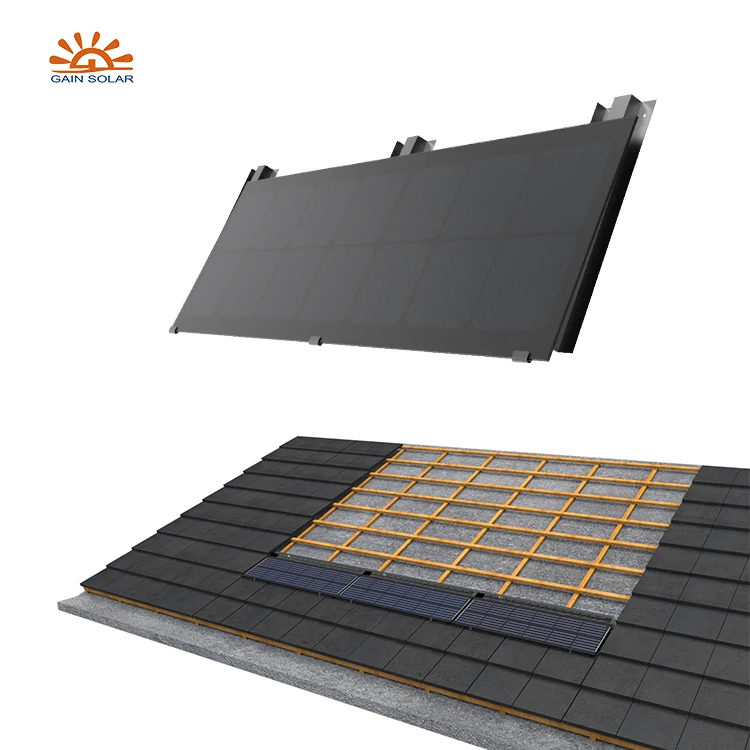
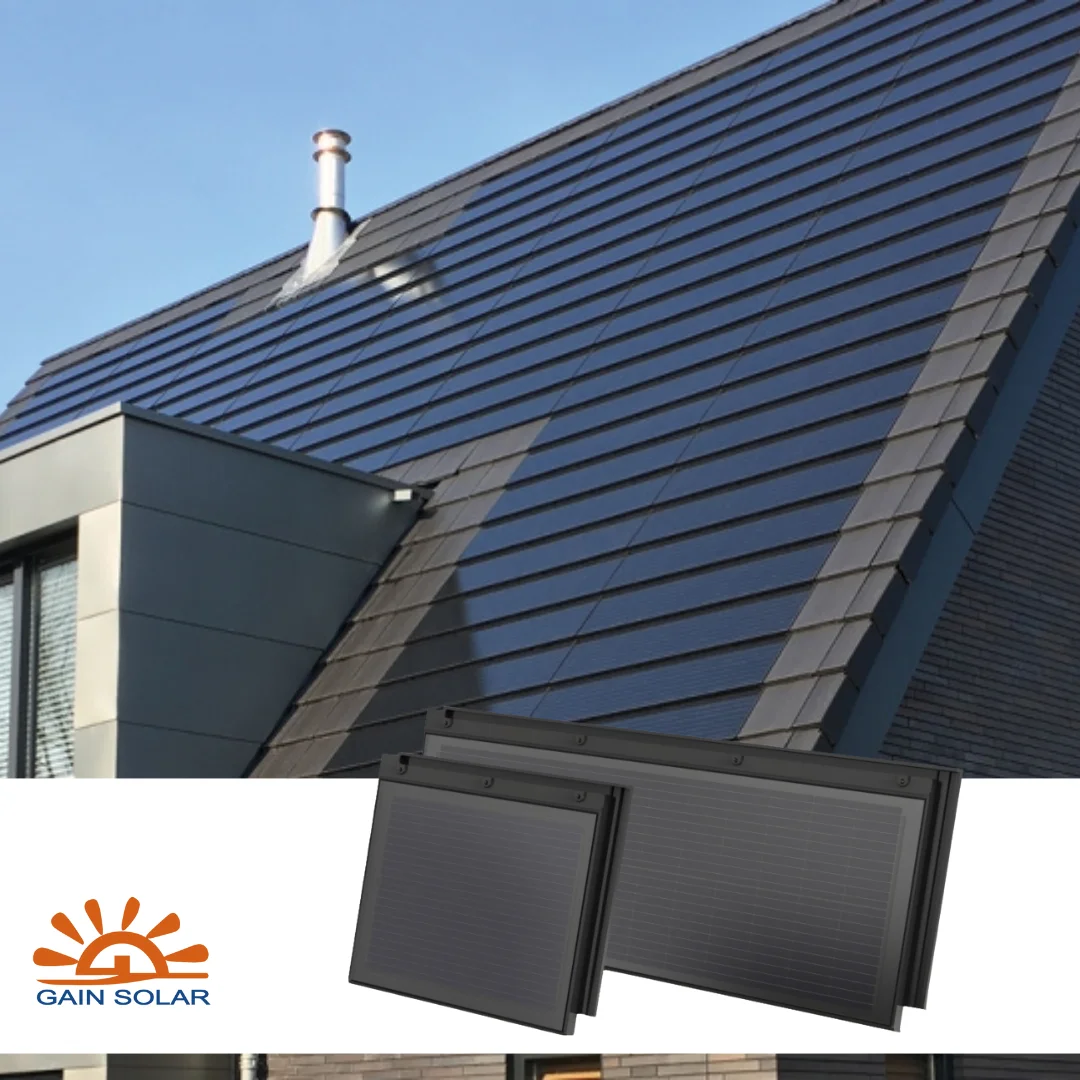
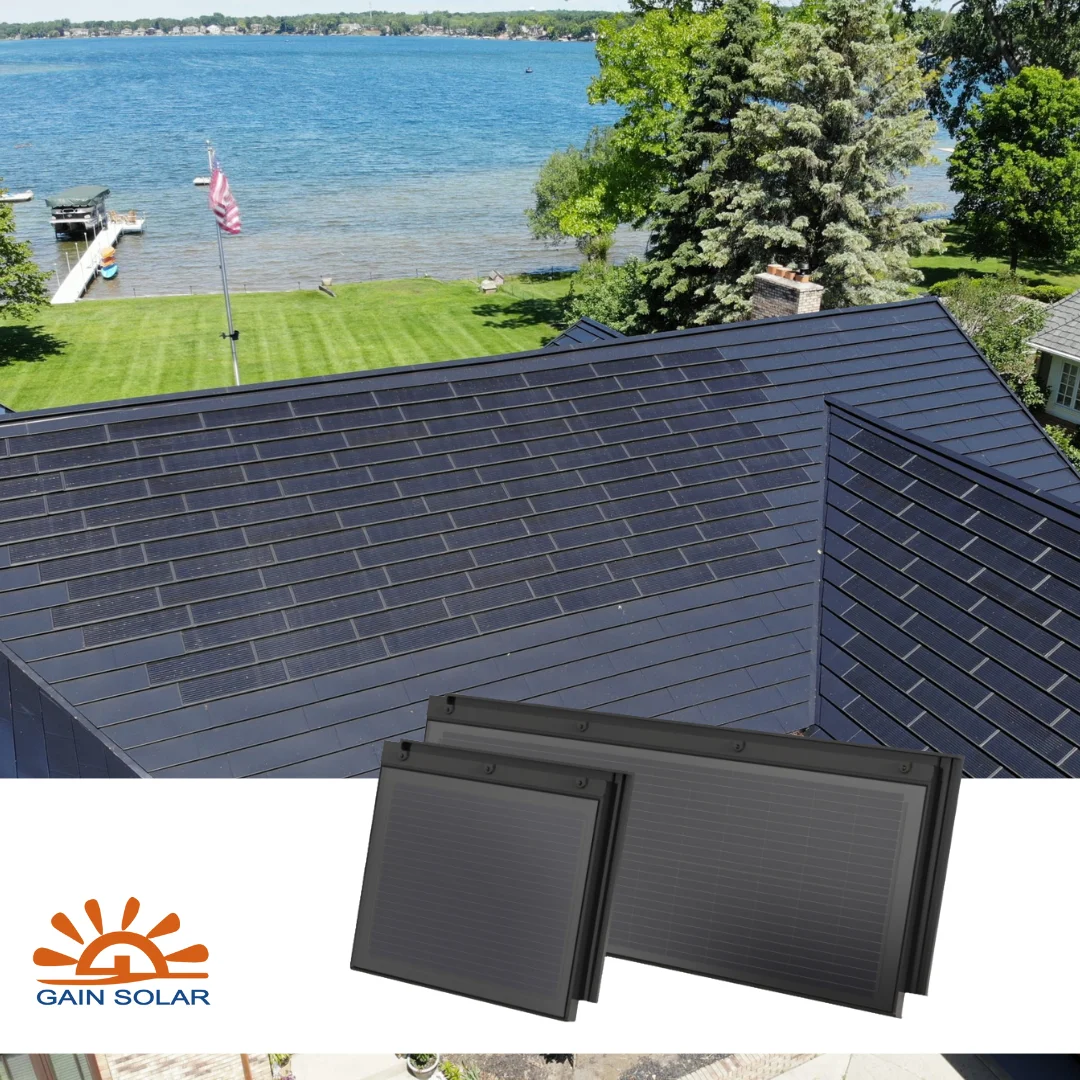
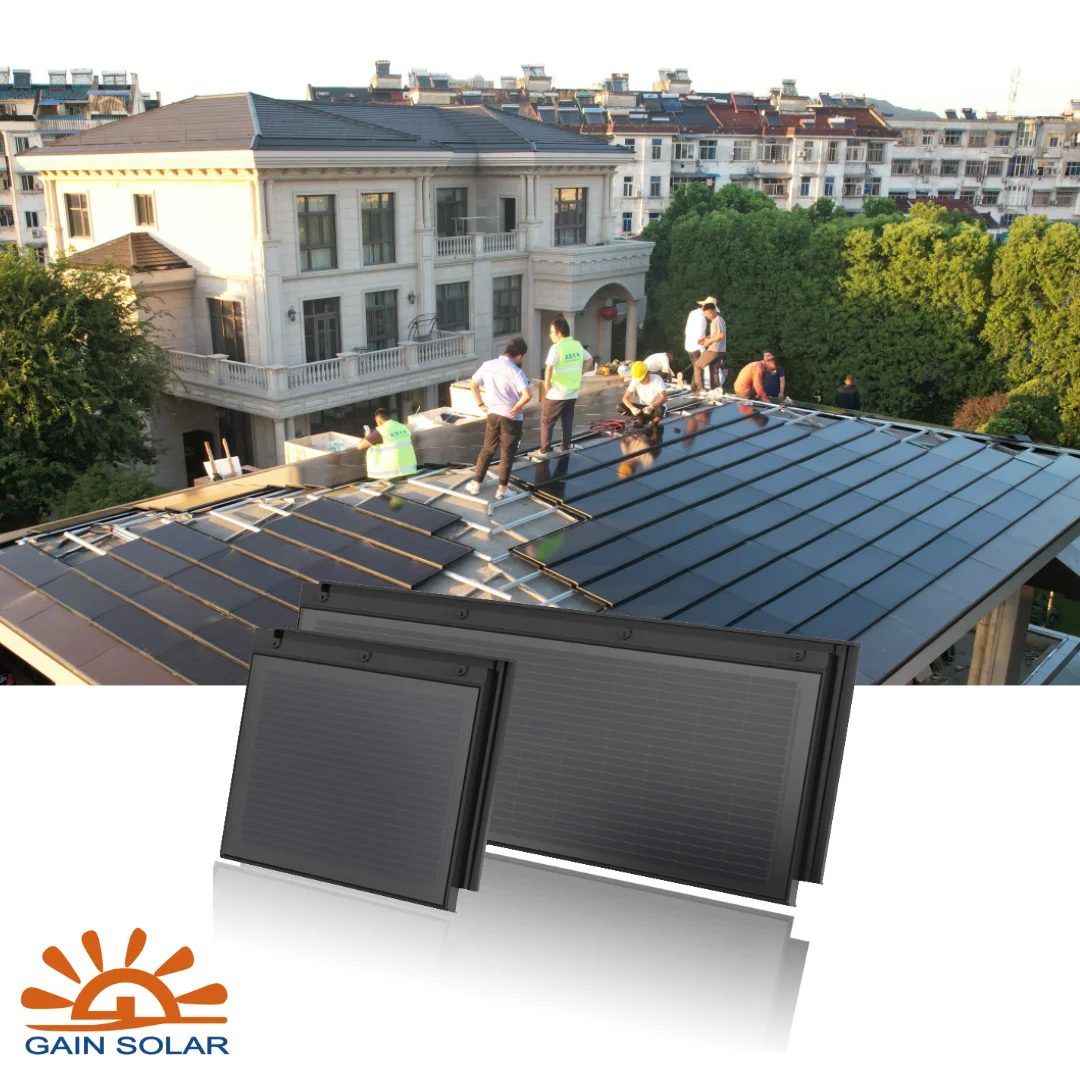
New arrival solar residential roof tiles spanish style shake type tile solar panels tile roof for UK market
- Category: >>>
- Supplier: Zhejiang San-Gobuild Jiasheng New Energy Co. Ltd.
Share on (1600714630516):
Product Overview
Description
Product Description

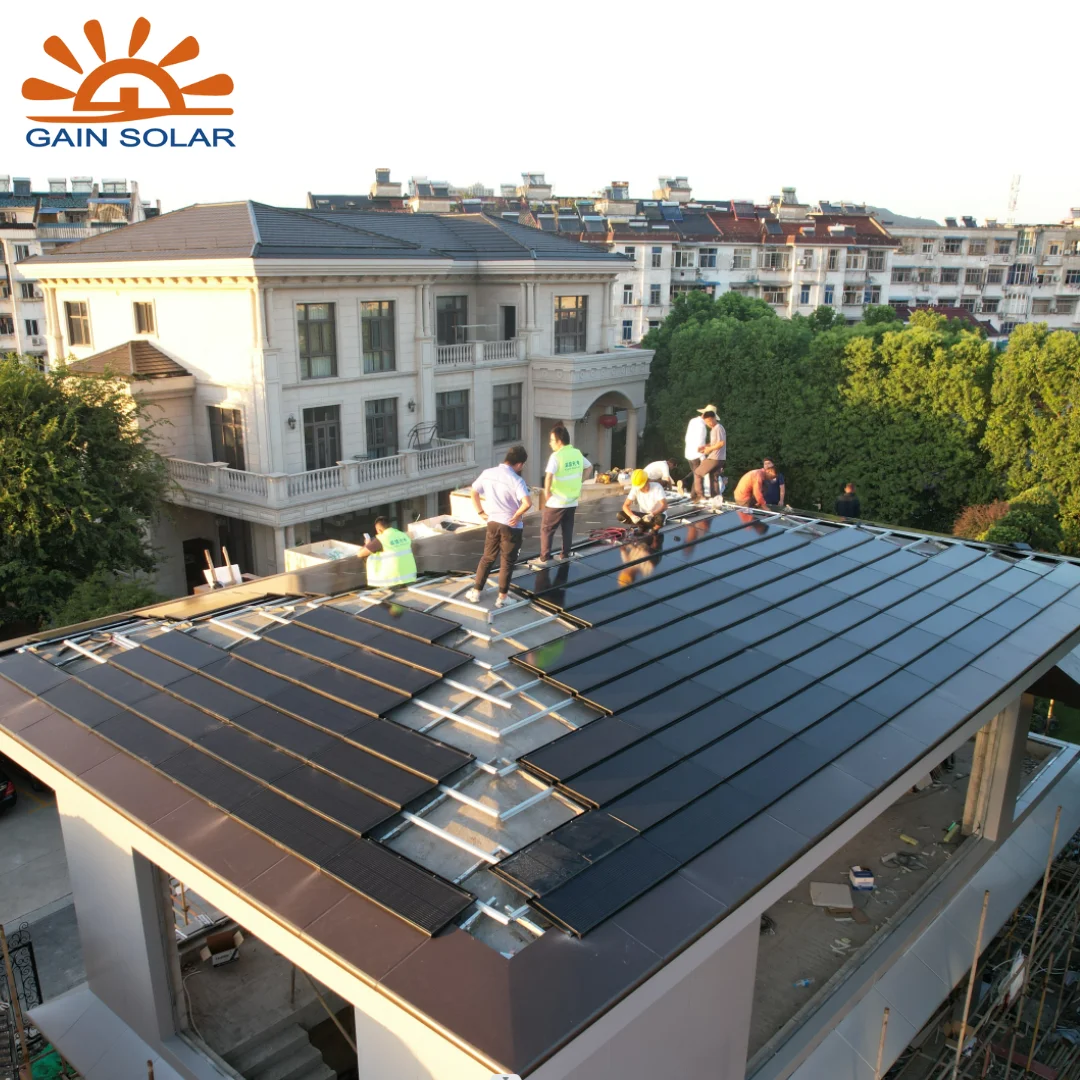
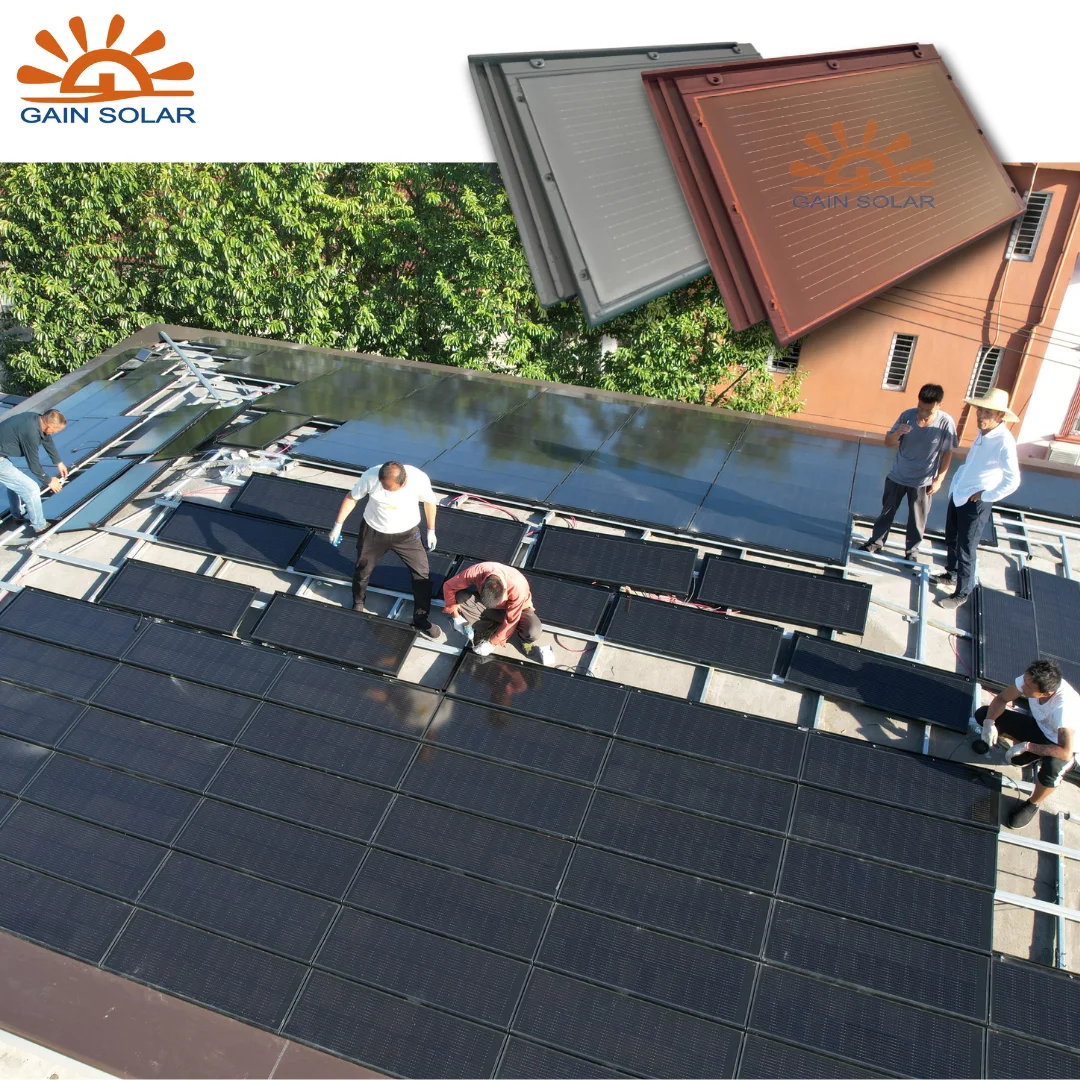
Gain Solar Roof Tile is a kind of roofing material just like conventional roof tiles. It not only can generate electricity power, but also can work as your roof cover to protect your house from rain, wind, hail, etc. It saves your roofing cost. You don't need to install any traditional roofing materials. And you don't need to set up mounting racks on the roof to install solar tiles, which could affect the roof beauty to some extent.
Superior quality on-grid system solar roof tiles photovoltaic system solar energy battery storage system
Specification:
| MODEL | S-1 (Small Size) | S-2 |
| SIZE | 630*480mm | 1260*480mm |
| Weight | 9kg | 16.5kg |
| GLASS(Materials/Thickness) | Low-iron tempered glass/3.2mm | Low-iron tempered glass/3.2mm |
| Battery Size | 182*91mm (2*5) | 182*91mm (2*12) |
| Junction Box | ≥IP67 | ≥IP67 |
| Cable Type | 450mm / 4mm² | 900mm / 4mm² |
| Cable Joiner | MC4 | MC4 |
| Lifespan | >30 years | >30 years |
| Power output | -40°C to +85°C | -40°C to +85°C |
Clean energy sloped roof solar systems tile c for eco roof covering solar roof tiles photovoltaic system
BIPV Roofing tile on the Background of Energy Crisis

Comparison of BAPV and BIPV
| Solar Tile Compare Index | BAPV (Building Applied Photovoltaics) | BIPV (Building Integrated Photovoltaics) |
| Installation Method | Fitting modules to existing surfaces | Replacement of the traditional construction element with materials incorporating solar modules |
| Function | Power generation without destroying or impairing the original building function | Replacing the original building roof components, becoming a part of the integral building |
| Appearance | The roof is messy and the integrity is poor | Beautiful, simple and elegant, with the characteristics of modern industrial buildings |
| Lifespan | 20 Years | 60+ Years |
| Security | Complex stress that affects structural safety | The structural force is clear and the structural safety is high, which is in line with the national construction |
| Waterproof | Higher leakage risk | Premium waterproofing resistance |
| Difficulty in construction | Construction in two phases, long construction period | Easy construction and fast installation |
| Maintenance | Large roof deformation, there are many hidden dangers of water leakage, and maintenance is difficult | Large roof deformation, there are many hidden dangers of water leakage, and maintenance is difficult |

Superior quality on-grid system solar roof tiles photovoltaic system solar energy battery storage system
Company Information


Zhejiang San-gobuild Jiasheng New Energy Co.,ltd. ( Here by "GAIN SOLAR"), is a carbon-neutral solutions expert company. Gain Solar is a professional solution provider with the support of the entire industry chain for building integrated photovoltaic (BIPV) and photovoltaic + applications, it can provide professional building energy conservation, photovoltaic + solutions and one stop services including BIPV products, customi-zed photovoltaic + product R&D, design, production, installation, O&M for the global customers.
Under the support of four National R&D and innovation platforms, including the State Key Laboratory of Photovoltaic Materials and Technology and the National Key Laboratory of Energy Photovoltaic Technology, Gain Solar has invested nearly ten(10) billion RMB in R&D funds, cultivated over 2.000 professionals in related fields, and launched a total of 12 Generation of BIPV products, hundreds of photovoltaic+products, applied in thousands of PV green buildings. Also Gain Solar has accumulatively applied for 323 patents edited and participated in the compilation of 16 various standards, the number of patent authorizations and participation in standards ranked first in the industry. Gain Solar's carbon neutral projects and products have covered nearly 100+ countries and regions
in the world including the United Kingdom, the Netherlands, Germany, the Middle East and so on.
Superior quality on-grid system solar roof tiles photovoltaic system solar energy battery storage system
FAQ
1.The Procedure of Order Solar Roofing Tile is?

2. What Kind of Certification that You Have?
Up to now, our company's BIPV and solar modules have obtained lots of certification, such as:
CE:CONFORMITE EUROPEENNE
ISO9001, ISO14001, ISO45001
CCC: China Compulsory Certification
TUV:TUV Rheinland.
CGC:China General certification.etc.
Superior quality on-grid system solar roof tiles photovoltaic system solar energy battery storage system


3.Where Can You Install Building Integrated Photovoltaics (BIPV)?
Essentially, anywhere that sunlight directly hits the exterior surface of your home, homeowners can potentially incorporate BIPV products into the building design. Companies that operate in the BIPV market continue to find ingenious ways to integrate BIPV products into the building envelope seamlessly. They can be part of standard building components such as façades, roofs, or windows. Though you could not generate electricity by placing solar panels on your home foundation, virtually anywhere that sunlight is present, you may be able to find a BIPV product to install.
4.What Types of Building-Integrated Photovoltaics(BIPV) Can You Buy?
BIPV products used to be exclusively for roofing. This feature makes sense since our roofs generally receive the most direct solar radiation. Most early innovators in BIPV technology focused on replacing traditional roofing with panels, tiles, or shingles that could generate renewable solar energy while protecting the home from the elements. The impetus for this innovation stemmed from asimple economic calculation. Suppose the average cost of a roofing replacement in the USA costs between $5,500 and $11,500. In that case, solar panels that doubled as a roof could essentially "subsidize" part of the cost of going solar.
BIPV products are systems that can function as a component of the building skin or envelope while simultaneously converting solar energy into electricity by serving a dual purpose. Instead of attaching solar panels to a separate roof or façade, BIPV products can offer weather protection, thermal insulation, noise protection, daylight illumination, and even increased safety, along with an independent, clean source of renewable energy for your home. According to one financial analysis, building-integratedphotovoltaic products' total global market size will grow to an astounding $59.5 billion by 2028. As more and more companies rush to enter the BIPV industry, the market could see a compound annual growth rate of at least 20 percent! In practical terms, this means that the options for building-integrated photovoltaics currently available to homeowners and builders will only continue to expand. Prices should also continue to drop as competition stiffens and more innovative products become available. The combination of the plummeting cost of solar energy and innovative technologies in solar energy production (such as thin-film technologies, solar cell efficiency, open-circuit voltage, short circuit current, maximum effect, and fill factor) will almost certainly continue to drive innovation in BIPV products.
5.How Much Energy Can BIPVs Produce?
The exact amount of energy that BIPV products or systems can produce is contextual. The total amount of energy will depend on several environmental factors related to your home location, including: Insolation/Solar Radiation: The average amount of solar radiation your home receives, as calculated by kWh/m2/day, is the most common way to describe the amount of solar resources in a particular area. Check out this tool provided by the US Department of Energy to determine your home's solar radiation potential.
Climate and other Weather Conditions: Both scorching summer temperatures and continuously cloudy/rainy conditions can negatively affect the system output for all types of BIPVs. Also, urban areas with high levels of air pollution may increase cleaning and maintenance requirements to ensure the BIPV systems operate at maximum efficiency. Shading Conditions: Though solar technologies today deal better with shady conditions, the presence of trees, buildings, and other structures that block the sun from your home for long periods of the day will reduce the BIPV system energy production.
6.Are BIPVs Worth It?
The primary appeal of BIPV products is twofold. BIPV systems increase the space on and around that home where you can turn solar radiation into usable energy for your home. More importantly, is the economic factor because BIPV products serve a double function. They provide renewable energy while also protecting the house, reducing the cost of autonomous solar energy generation for homeowners. By using solar shingles instead of asphalt panels, homeowners can essentially "discount" the roofing price from their solar installation. The same "discount" could also be applied to skylights, railings, skylights, and other places where manufacturers could design BIPV systems.
7.How Long do BIPVs Last?
Another added economic benefit with some BIPV systems is that they could potentially be much more durable than the building systems/elements they replace. For example, most asphalt shingle roofs have an average lifespan of 15 years. Conversely, most solar shingles will last 25-30 years with only a small drop in efficiency towards the end of that lifespan. The total economic savings associated with a BIPV roof, then, should take into consideration the cost of two roof installations. You could apply the same principle to solar facades and other BIPV systems.
8.What Is a Solar Shingle(BIPV)?
Like solar panels, solar roofing is designed to capture the energy from the sun that is shining on your roof and turn that energy into a usable power source for your home. Though different types of solar roofing products are available, they are all essentially mini solar panels designed to look like and function as conventional roofing materials. The main market driver of solar roofing products was consumer demand for solar panels that were less noticeable and conspicuous. Though some people appreciate the "futuristic" look of a roof clad in solar panels, others lament the loss of traditional roofing appearance. Solar roofing, then, is made to resemble asphalt shingles or slate tiles while also producing electricity. All of the different types of solar roofing are known as building-integrated photovoltaics (BIPV).
9.How Long Does Solar Roofing(BIPV) Last?
Solar shingles and other solar roofing products are lightweight and easy to install. Like all types of roofing alternatives, they are designed to withstand rain, wind, and hail and should easily last for 25 years or more. For example, Tesla's Solar Roof comes with the following specifications/warrantees:
* Tile warranty: 25 years
* Power warranty: 25 years
* Weatherization warranty: 25 years
* Wind rating: ASTM D3161 Class F
* Fire rating: Class A (highest rating)
* Hail rating: ANSI FM 4473 Class 3
Superior quality on-grid system solar roof tiles photovoltaic system solar energy battery storage system
9.How Does Solar Roofing Pack?
It is packed by wooden box
26piece/box (1340*1080*660)
We Recommend


New Arrivals
New products from manufacturers at wholesale prices