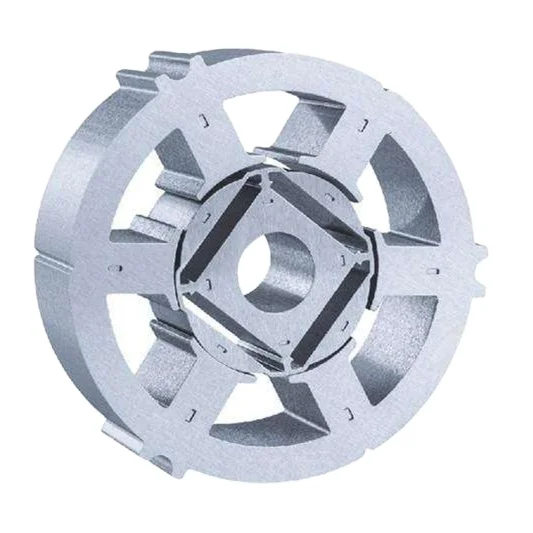
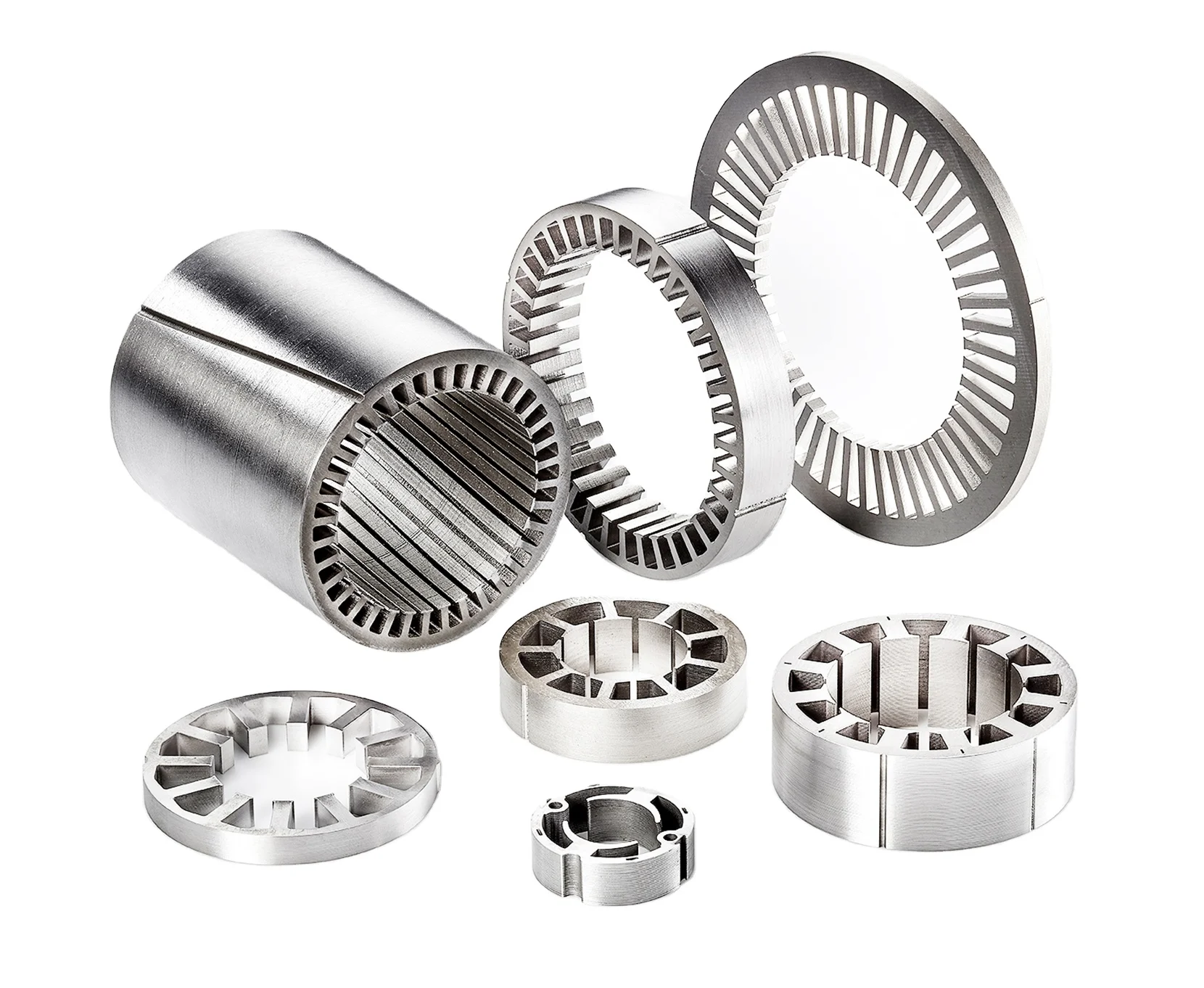
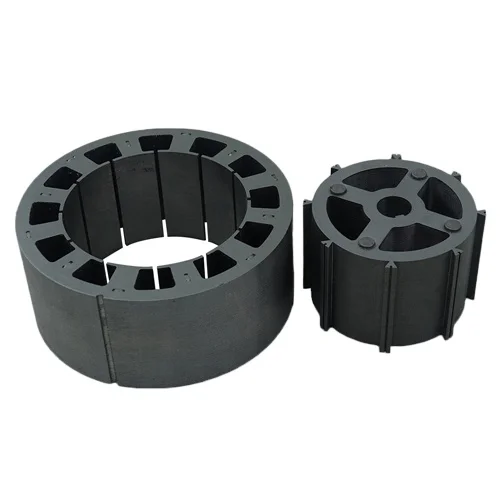
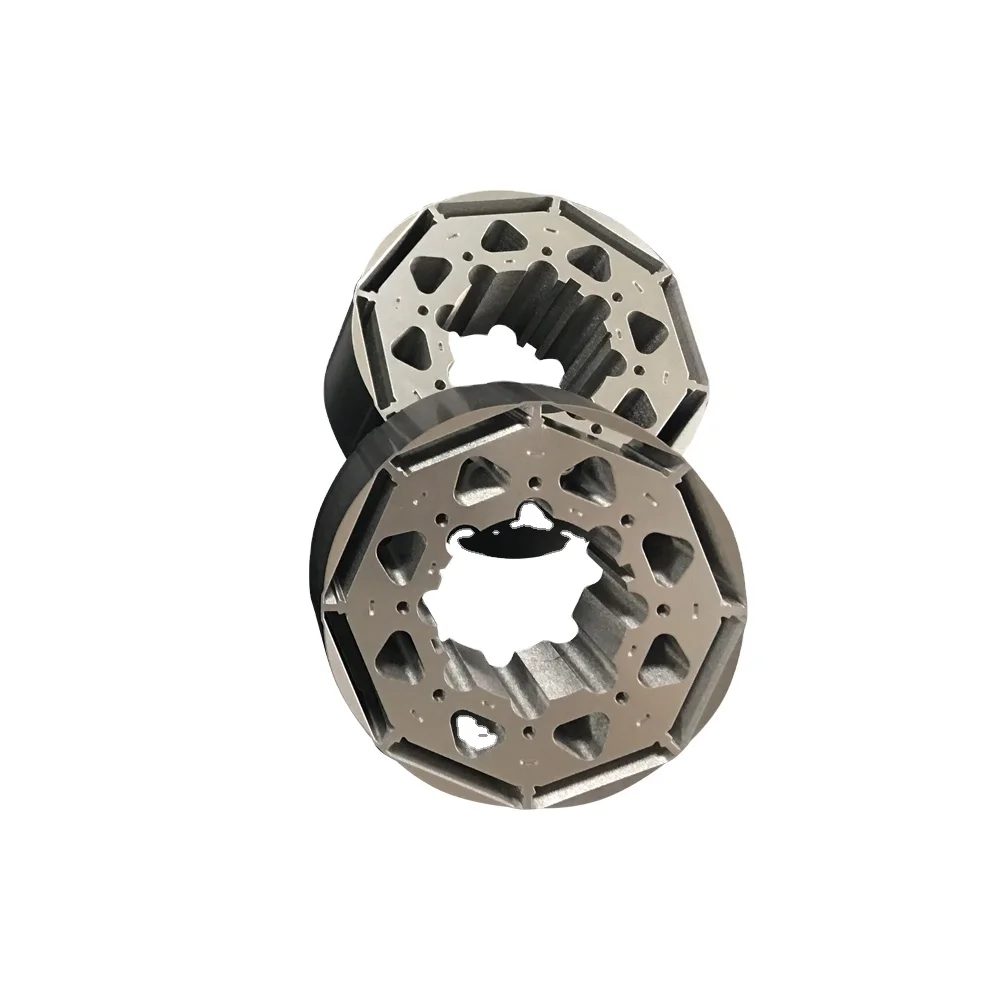
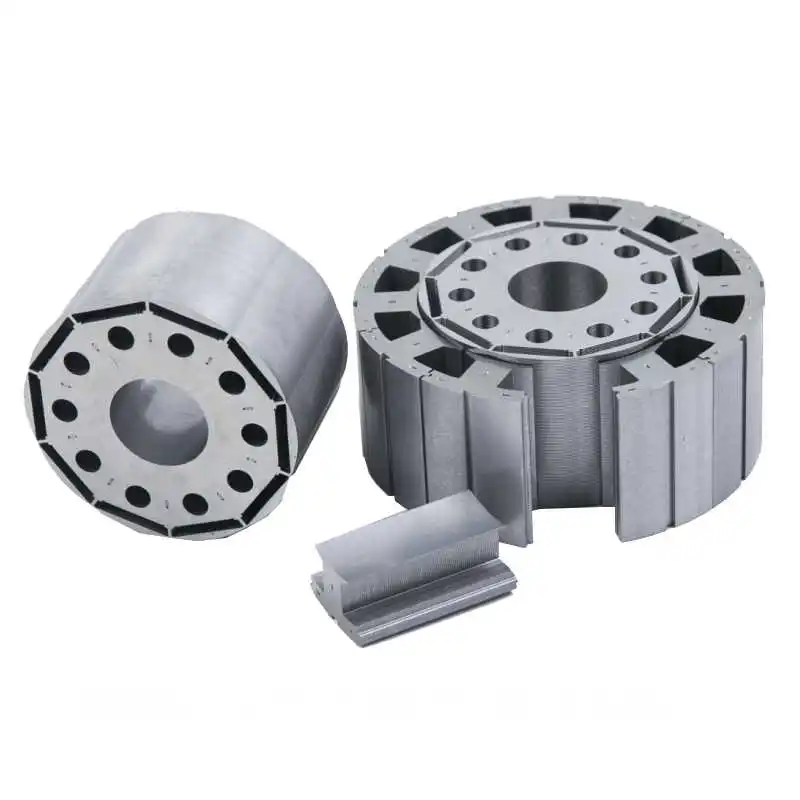
AC motor stator and rotor silicon steel sheet customized motor accessories
- Category: >>>
- Supplier: Jiangyin Gator Precision Mould Co. Ltd.
Share on (1600720976455):
Product Overview
Description
Our Company


MOULD
We have single-slot punching, compound punching, and high-speed punching corresponding molds to meet the needs of different motor stators and rotors. About 90% of our motor laminations are customized from drawings. During the mold design process, ourprofessional designers will Drawings put forward some constructive suggestions to better satisfy customers.


STAMPING
We have different types of presses to meet your different purchasing needs.
Single Slot Stamping
Presses: 10T-16T
Compound Stamping
Presses: 40T-550T
Progressive (High Speed) Stamping
Presses :630T,550T,315T(Schulcr), 300T(AIDA),160T,120T,80T
Presses: 10T-16T
Compound Stamping
Presses: 40T-550T
Progressive (High Speed) Stamping
Presses :630T,550T,315T(Schulcr), 300T(AIDA),160T,120T,80T
STAMPING WORKSHOP & ADVANTAGE
1. lntroduccd the advanced SCHULER Equipment& Technology from Germany and AIDA from Japan, which let us in the motor laminations
industry loading lever now.
2. Achicvc batch production of 0.1mm thickness silicon steel and 0.03mm thickness non-alloy material stamping.
3. Thc single slot press can stamp OD2000mm Max.
industry loading lever now.
2. Achicvc batch production of 0.1mm thickness silicon steel and 0.03mm thickness non-alloy material stamping.
3. Thc single slot press can stamp OD2000mm Max.


STACKING
welding may be both used when
RIVET
WELDING
GLUE
INTERLOCK
could be either rectangle or round circular. Progressive stamping all use interlock process to save the stator and rotor stackcost and time
Self-adhesive
The material has coating on its surface, it will melt and attach every single rotor and stator lamination together during heating.
Self-adhesive will make products smoother and more solid.
BOLT
BUCKLE
Buckle stacking is used for stator lamination, there arc straight or skew buckles.


Factory
Office area
Products Show


Certifications


Inspection Facility


Packing & Delivery


Exhibition


FAQ
Q: Are you trading company or manufacturer ?
A: We are 15 years manufacturer with advanced technology and professional teams.
Q: How long is Mould-Make time?
A: According to your drawings, the time is from 30-45 days.
Q: What's the Mould cost?
A: According to your budgets&demands, we have different solutions(Low,Medium,High) to satisfy your requirements.
Q: What is the products quality and how is your company's reputation?
A: precision Mould, CMM & Project testing, 100%inspection for ensuring the quality.
B: We have many customers who could become our endorse, In Europe, North America, Southeast markets.
A: We are 15 years manufacturer with advanced technology and professional teams.
Q: How long is Mould-Make time?
A: According to your drawings, the time is from 30-45 days.
Q: What's the Mould cost?
A: According to your budgets&demands, we have different solutions(Low,Medium,High) to satisfy your requirements.
Q: What is the products quality and how is your company's reputation?
A: precision Mould, CMM & Project testing, 100%inspection for ensuring the quality.
B: We have many customers who could become our endorse, In Europe, North America, Southeast markets.
- Motor has been running then fails to start,what to do?
Likely cause: Fuse or circuit breaker is tripped.
What to do: Replace the fuse or reset the breaker.
Likely cause: Armature is shorted. Motor may make a humming noise and the circuit breaker or fuse will trip.
What to do: Disassemble motor and inspect the armature for a burnt coil. Inspect the commutator for burnt bars. If this condition
exists, the motor needs to be replaced.
Likely cause: The brushes may be worn down too far and no longer make contact with the commutator.
What to do: Check the brushes to make sure that they are still making contact with the commutator. Contact manufacturer for
brushes.
Likely cause: Controller may be defective.
What to do: Verify voltage is coming out of the controller.
- On initial installation, motor fails to start up,what to do?
Likely cause: Motor is incorrectly wired
What to do: Verify that the motor is wired correctly.
Likely cause: No output power from controller.
What to do: Measure voltage coming from the controller.
Likely cause: Motor is damaged and the armature is rubbing against the magnets.
What to do: Disassemble motor and see if the armature can be realigned by reassembly. Motor may have to be replaced.
- Motor takes too long to accelerate,what to do?
Likely cause: Motor controller not properly set.
What to do: Adjust the acceleration trim pot of the controller.
Likely cause: Brushes are worn.
What to do: Verify brush length.
Likely cause: Bearings may be defective.
What to do: Inspect bearings. Noisy or rough bearings should be replaced.
- Motor runs in the wrong direction,what to do?
Likely cause: Incorrect wiring
What to do: Interchange the two motor leads.
- Motor runs OK but has a clicking noise,what to do?
Likely cause: Suspect a burr on the commutator.
What to do: Remove burr from commutator using a commutator stone.
Likely cause: Fuse or circuit breaker is tripped.
What to do: Replace the fuse or reset the breaker.
Likely cause: Armature is shorted. Motor may make a humming noise and the circuit breaker or fuse will trip.
What to do: Disassemble motor and inspect the armature for a burnt coil. Inspect the commutator for burnt bars. If this condition
exists, the motor needs to be replaced.
Likely cause: The brushes may be worn down too far and no longer make contact with the commutator.
What to do: Check the brushes to make sure that they are still making contact with the commutator. Contact manufacturer for
brushes.
Likely cause: Controller may be defective.
What to do: Verify voltage is coming out of the controller.
- On initial installation, motor fails to start up,what to do?
Likely cause: Motor is incorrectly wired
What to do: Verify that the motor is wired correctly.
Likely cause: No output power from controller.
What to do: Measure voltage coming from the controller.
Likely cause: Motor is damaged and the armature is rubbing against the magnets.
What to do: Disassemble motor and see if the armature can be realigned by reassembly. Motor may have to be replaced.
- Motor takes too long to accelerate,what to do?
Likely cause: Motor controller not properly set.
What to do: Adjust the acceleration trim pot of the controller.
Likely cause: Brushes are worn.
What to do: Verify brush length.
Likely cause: Bearings may be defective.
What to do: Inspect bearings. Noisy or rough bearings should be replaced.
- Motor runs in the wrong direction,what to do?
Likely cause: Incorrect wiring
What to do: Interchange the two motor leads.
- Motor runs OK but has a clicking noise,what to do?
Likely cause: Suspect a burr on the commutator.
What to do: Remove burr from commutator using a commutator stone.
We Recommend

New Arrivals
New products from manufacturers at wholesale prices