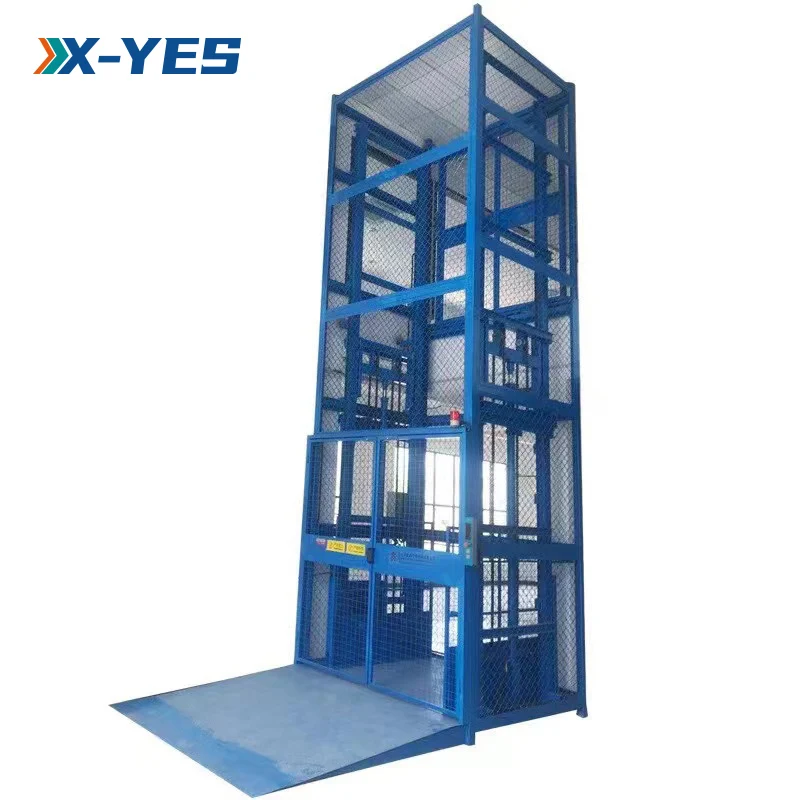
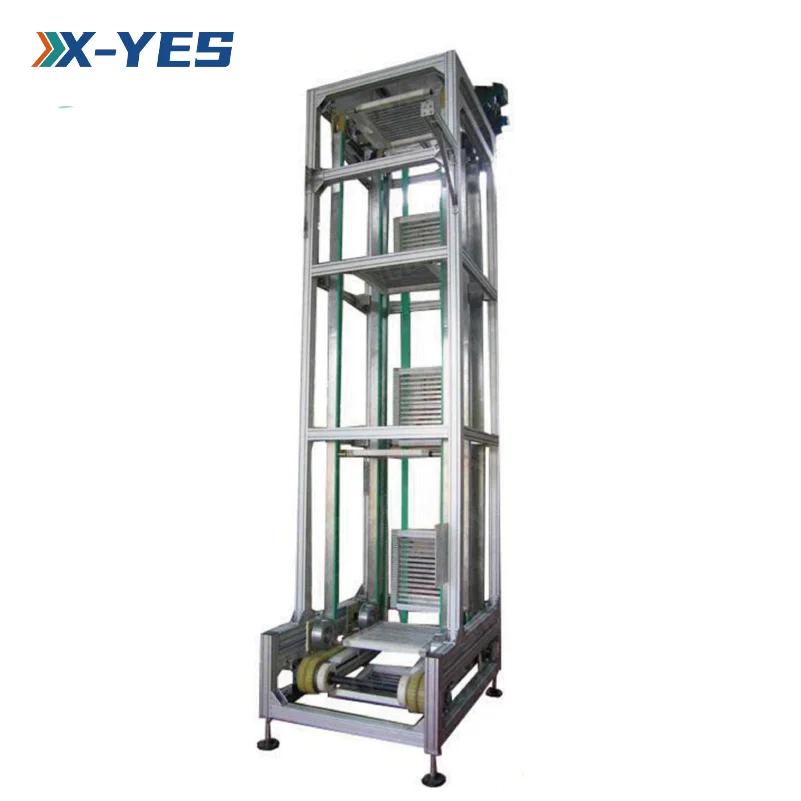
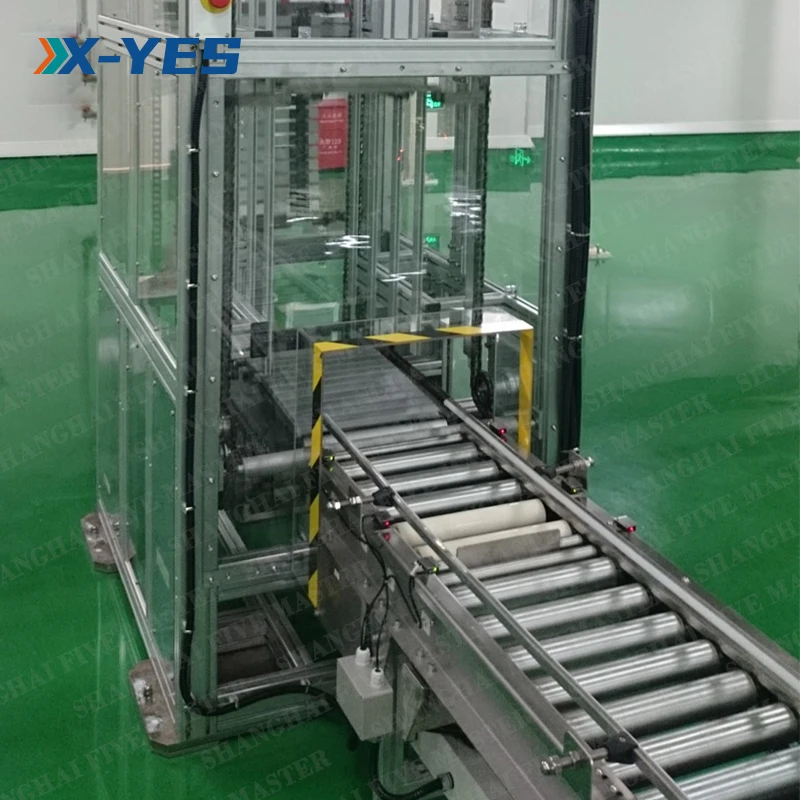
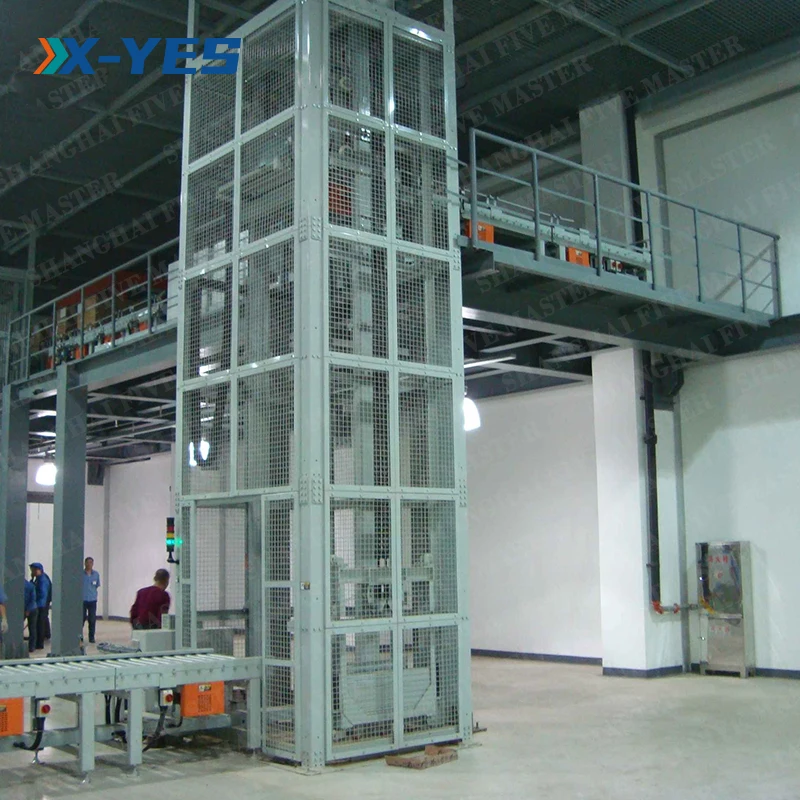
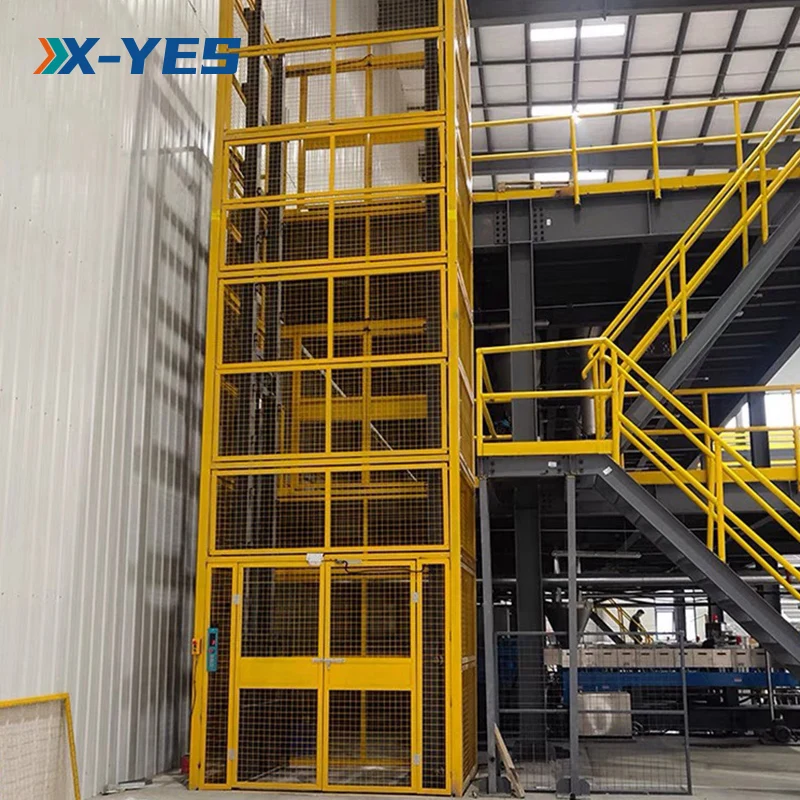
Z Type Vertical Reciprocating Lift Conveyor Continuous Vertical Conveyor Industry Conveyor Manufacturers Lift Cargo Warehouses
- Category: >>>
- Supplier: Shanghai Five Master Automation Technology Co. Ltd.
Share on (1600721580321):
Product Overview
Description

Load Capacity | 2000kg |
Work Platform Size | Customizable |
Pit Size Required | Customizable |
Lifting Height | Customizable |
Motor Power | 4.0 kw |
Power Supply | Three-phase power |
Painting | Powder coating. Color is customizable. |
Customize | Customize according to Lifting height, platform size and load capacity. |
Reciprocating Elevator
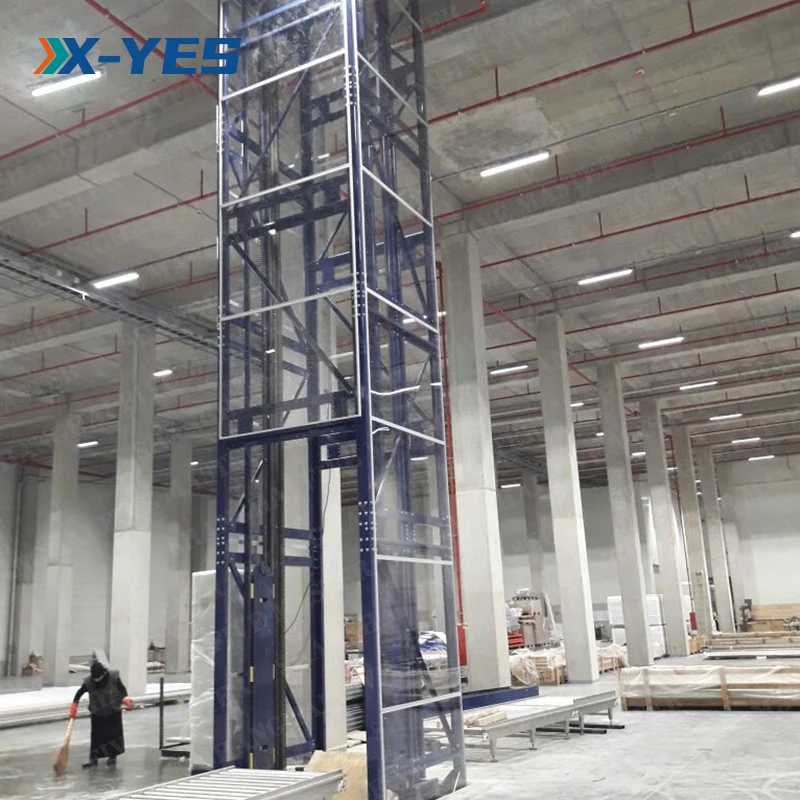
A reciprocating elevator, also known as a lifting machine or vertical lift, is a type of lifting equipment that moves items up and down in a reciprocating motion.
The Characteristics Of A Reciprocating Elevator
A reciprocating elevator is driven by chains and uses a variable frequency drive to control the motor, enabling the elevator car to move up and down in a reciprocating motion. The elevator car is equipped with a transmission mechanism to allow the transported goods to automatically enter the elevator car. This type of elevator is known for its advanced control, reliable performance, and high positioning accuracy of the elevator car.
Product Features
1. Reciprocating elevators can be classified into Z-type, C-type, and E-type based on the direction of entry and exit.
2. Lifting speed: <60m/min (chain-driven).
3. Lifting stroke: 0-20m.
4. Maximum conveying cycle: >15s/item (depends on stroke).
5. Load capacity: <4000kg.
6. Automated operation with multiple safety devices to ensure the safety of people and goods.
7. The elevator car can convey materials in both upward and downward directions, allowing material flow in both directions during one cycle of the elevator car.
8. The lifting stroke range is large, but the conveying capacity decreases as the stroke increases within the same time frame.
9. Reciprocating elevators use the vertical movement of the elevator car to achieve the vertical conveying of materials. Different types of conveying equipment can be installed on the elevator car, which works in conjunction with the entry and exit conveying equipment, enabling fully automated conveying and improving production efficiency.
10. Reciprocating elevators come in various forms (fixed or mobile) and offer flexible layout options. Materials can enter and exit the elevator from different directions, facilitating production equipment layout.
11. Reciprocating elevators save space compared to inclined elevators, but have a lower conveying capacity.
12. Types of materials conveyed: packaging boxes, pallets, cardboards.
13. Custom design and manufacturing according to customer requirements.
FAQ
Q: Are you trading company or manufacturer ?
A: We are manufacturer.
Q: Are you trading company or manufacturer ?
A: We are manufacturer.
Q: How long is your delivery time?
A: Generally it is 5 days for spare parts,it will take 2 weeks for customized conveyor machine.
Q: Can you design according to our requirement?
A: Of course, we can design automation solution according to your technical drawing and requirement. Please tell us your
requirement and production process.
Q: How to visit your factory?
A: Welcome to visit our factory and we can pick you up from Airport.
Q: When can i get your reply after inquiry?
A: Within 24 hours.
Q: Which seaport near you?
A: Shanghai port,China.
A: Generally it is 5 days for spare parts,it will take 2 weeks for customized conveyor machine.
Q: Can you design according to our requirement?
A: Of course, we can design automation solution according to your technical drawing and requirement. Please tell us your
requirement and production process.
Q: How to visit your factory?
A: Welcome to visit our factory and we can pick you up from Airport.
Q: When can i get your reply after inquiry?
A: Within 24 hours.
Q: Which seaport near you?
A: Shanghai port,China.


We Recommend
New Arrivals
New products from manufacturers at wholesale prices