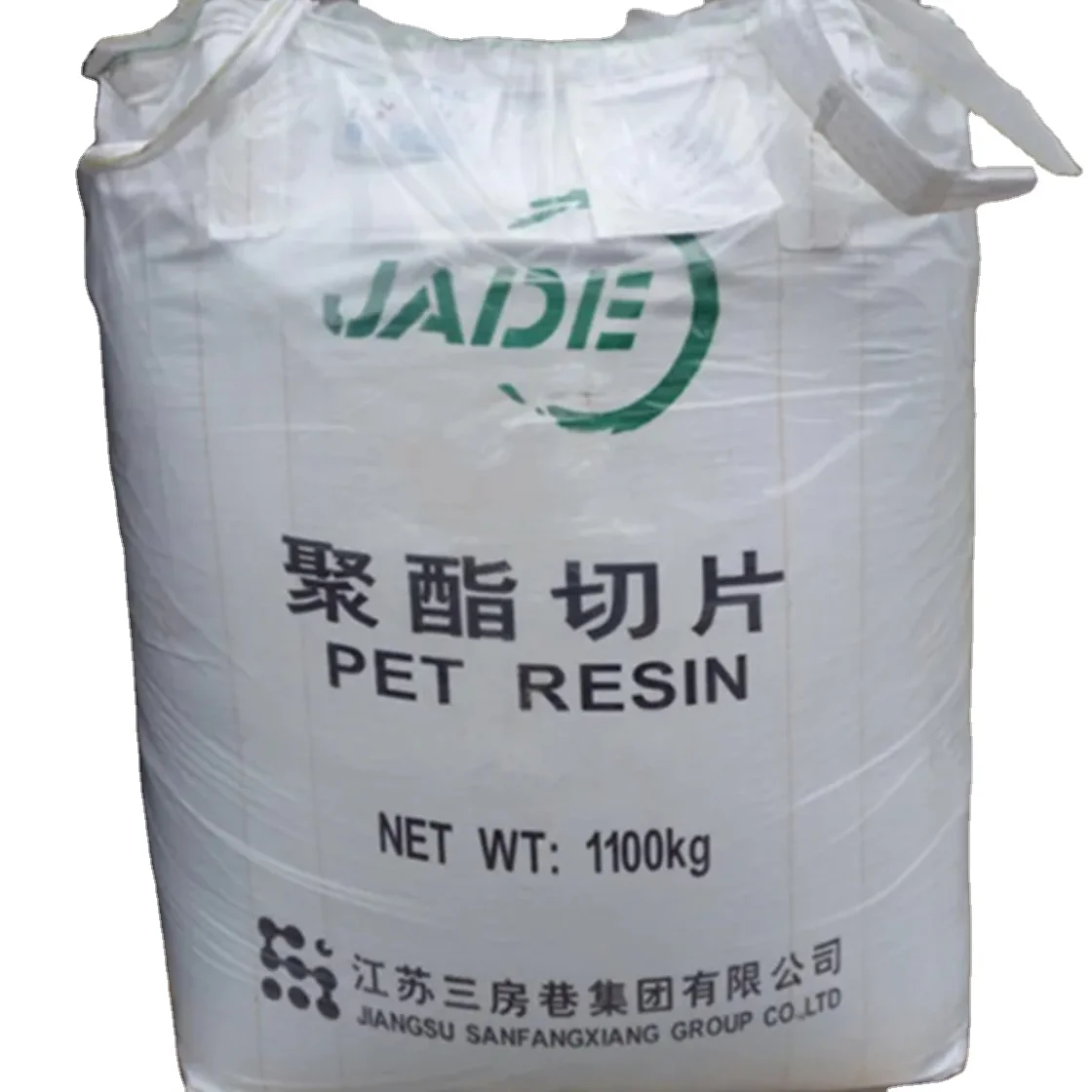
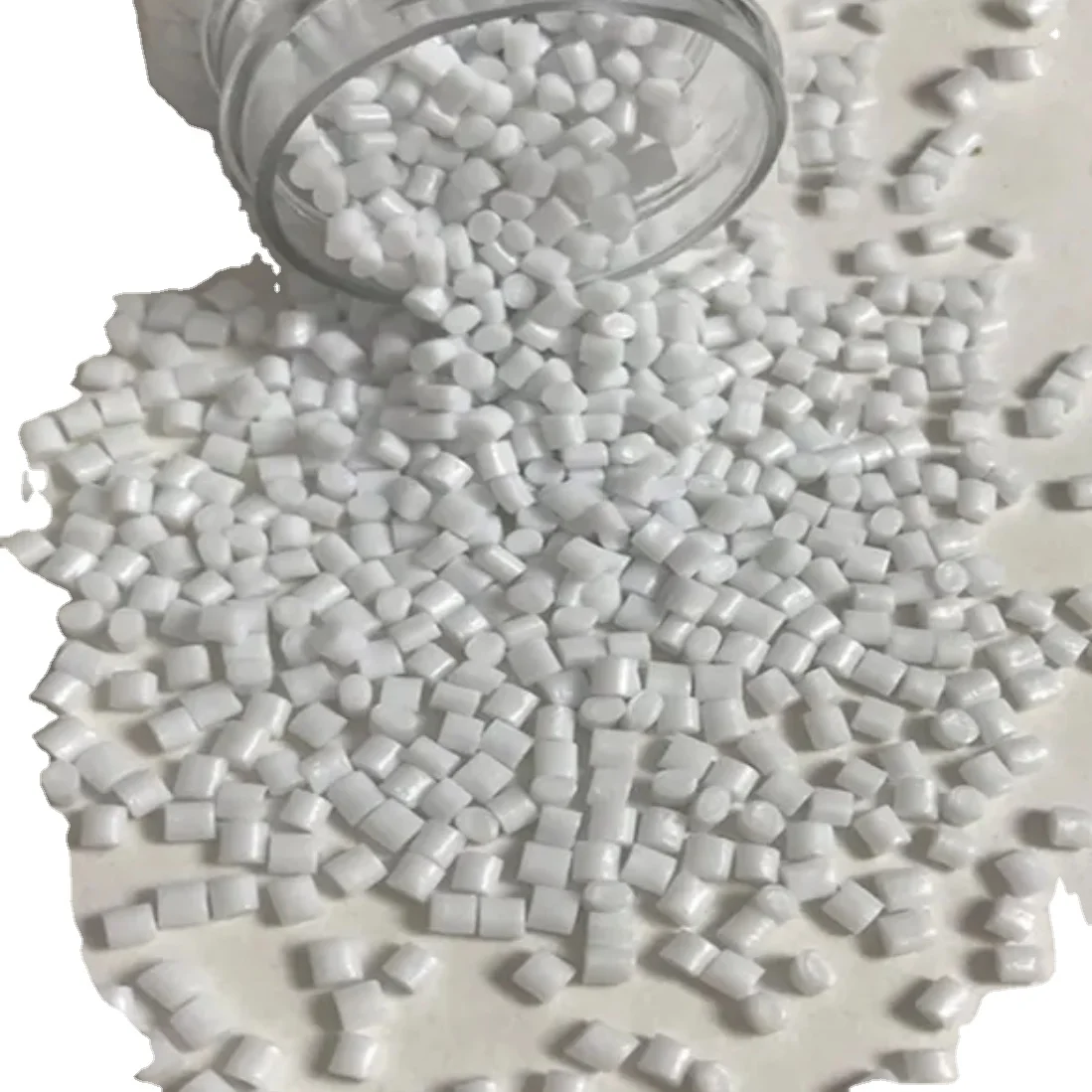
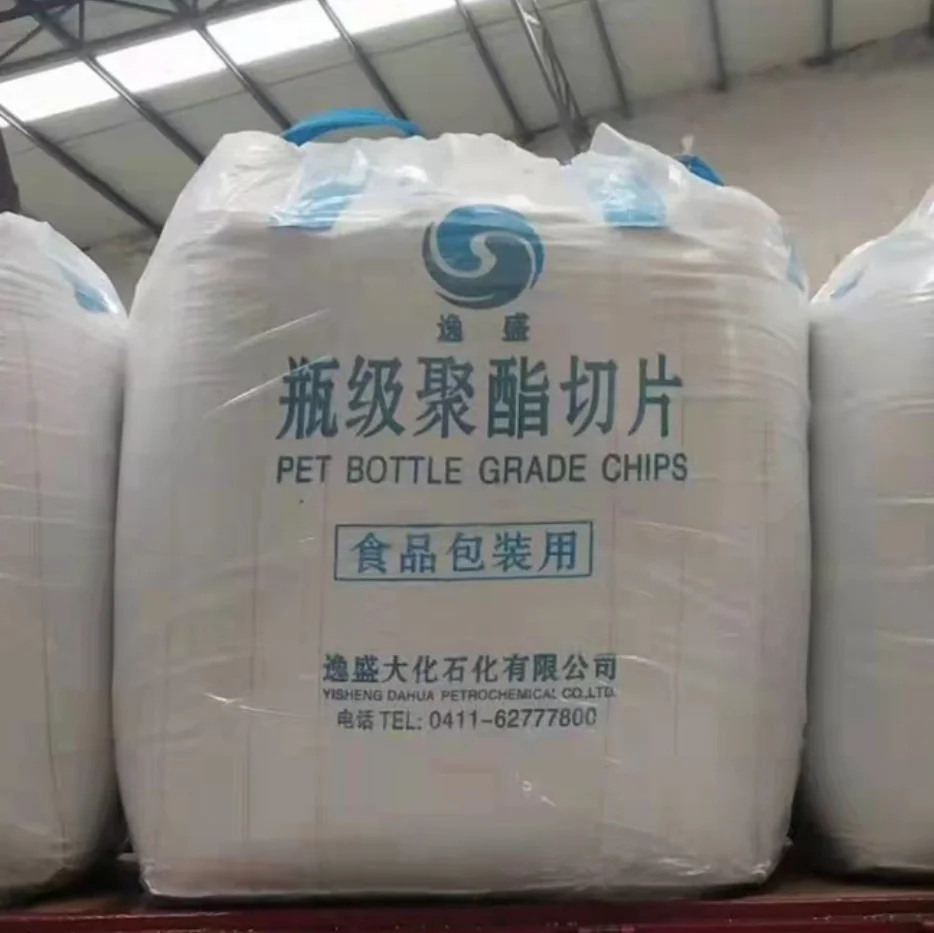
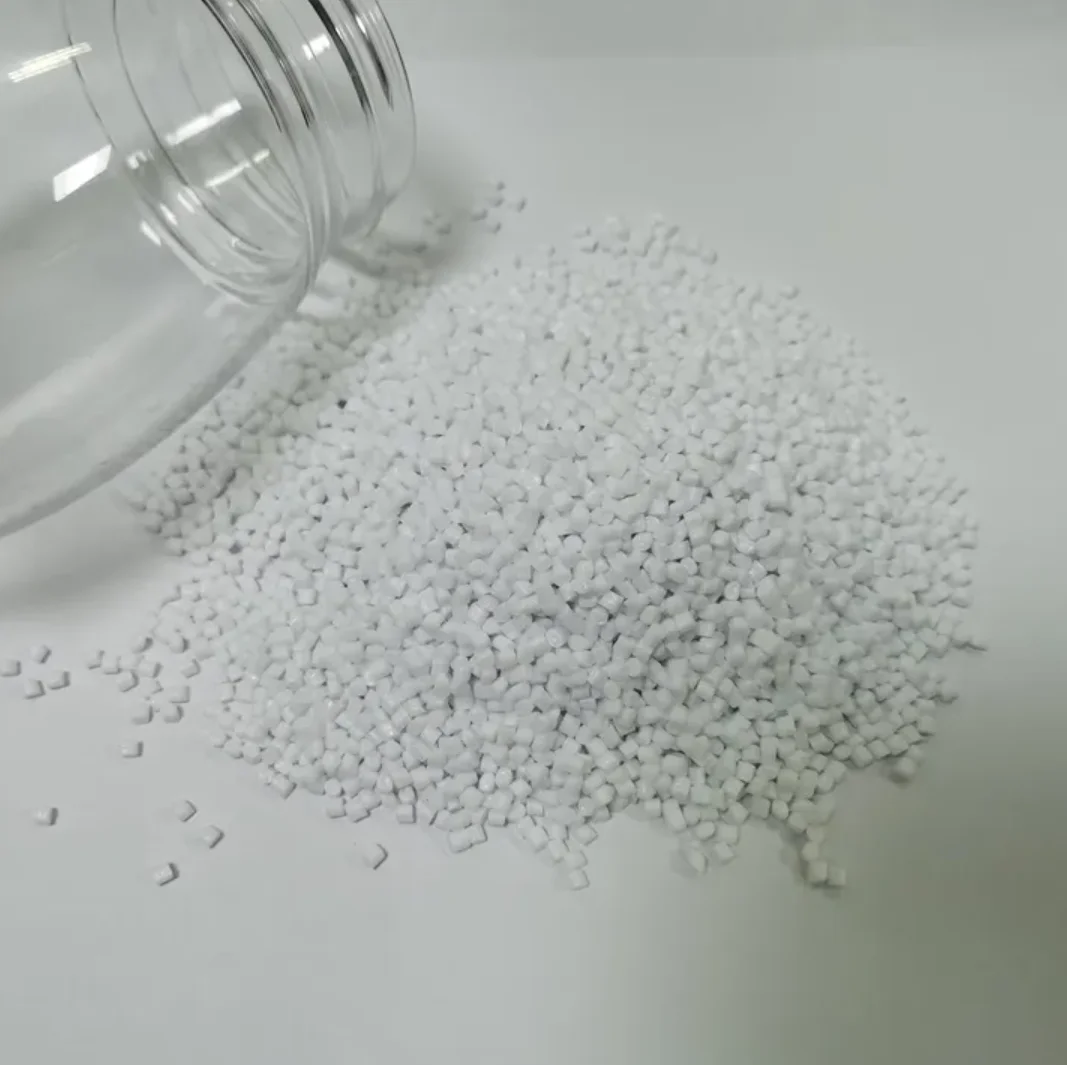
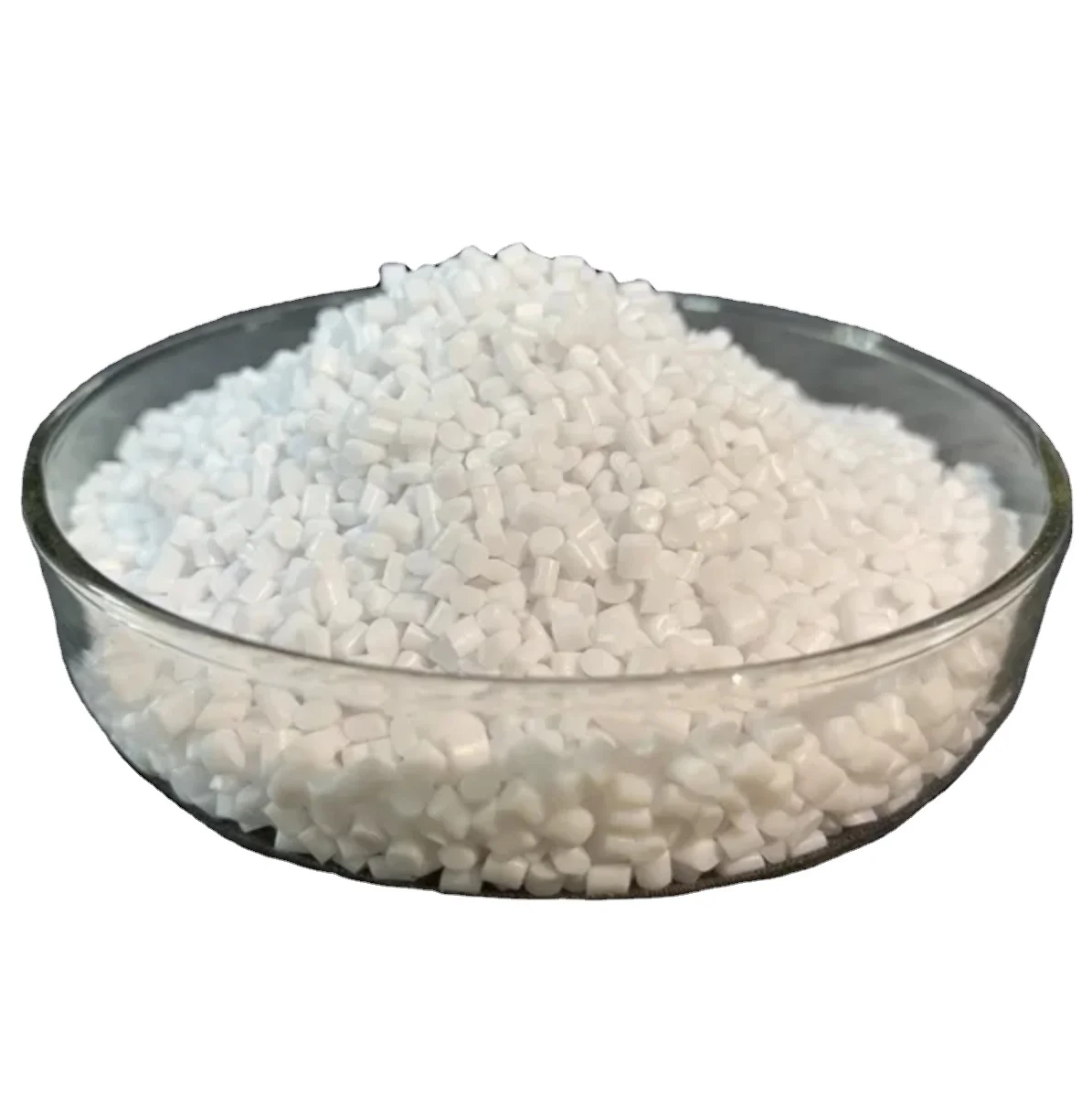
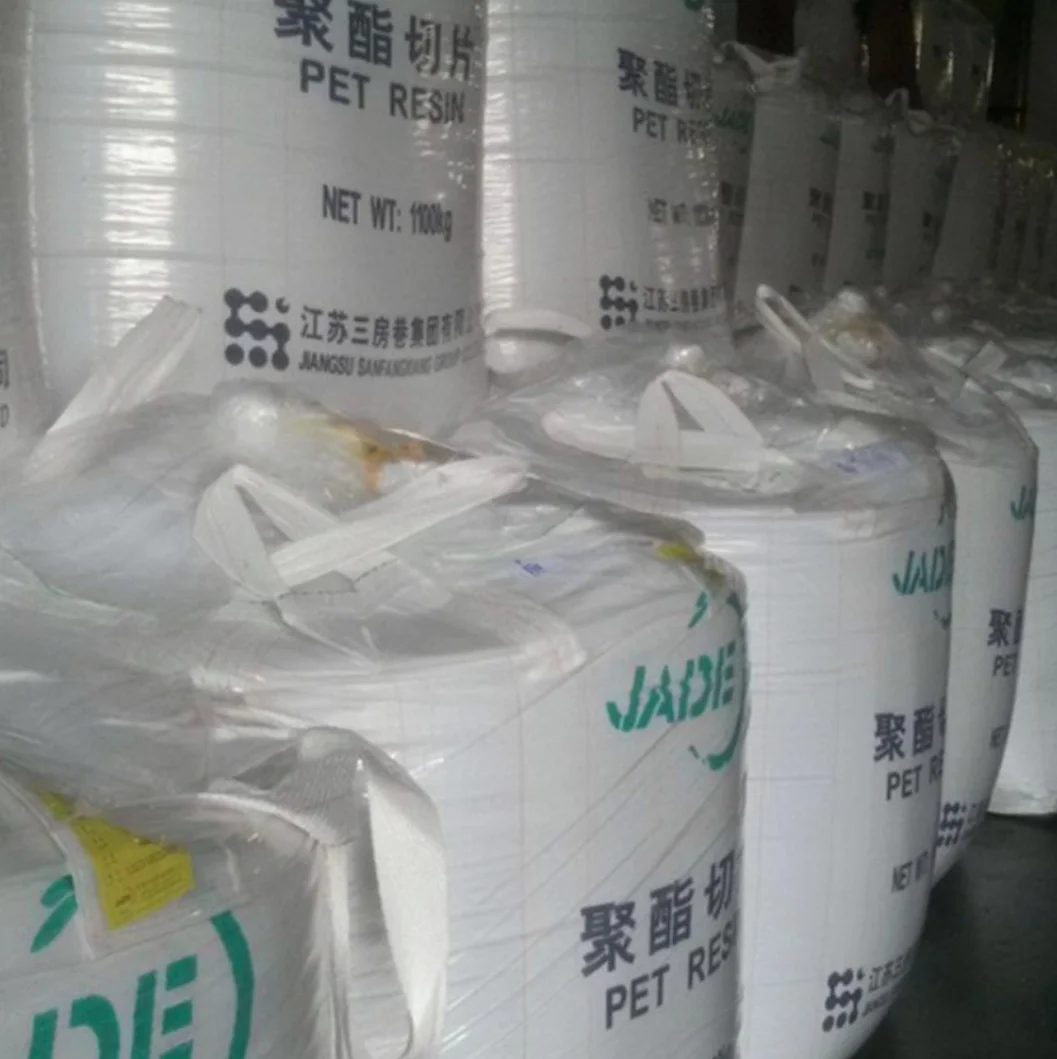
JADE CZ 328 Carbonated beverage bottle PET granules
- Category: PET >>>
- Supplier: Zibo Gem New Material Co. Ltd.
Share on (1600735841797):
Product Overview
Description
Products Description
Polyethylene terephthalate (PET), chemical formula (C10H8O4)n, is made from dimethyl terephthalate and glycol transesterification or esterification of terephthalate and glycol to synthesize dihydroxyethyl terephthalate, and then polycondensation reaction. It is a crystal type saturated polyester, which is a milky white or light yellow, highly crystalline polymer with smooth and glossy surface. It is a common resin in life, which can be divided into APET, RPET and PETG.
It has excellent physical and mechanical properties in a wide range of temperatures, up to 120℃, and excellent electrical insulation. Even at high temperature and high frequency, its electrical properties are still good, but it has poor corona resistance, creep resistance, fatigue resistance, friction resistance and dimensional stability.
It has excellent physical and mechanical properties in a wide range of temperatures, up to 120℃, and excellent electrical insulation. Even at high temperature and high frequency, its electrical properties are still good, but it has poor corona resistance, creep resistance, fatigue resistance, friction resistance and dimensional stability.


Specification
Item | Specification | Result |
IV(dL/g) | 0.810±0.015 | 0.821 |
AA(ug/g) | ≤1.0 | 0.5 |
Color b value | ≤1.0 | -1.4 |
Color L value | ≥80 | 84 |
DEG(%) | 1.3±0.2 | 1.3 |
-COOH(mmol/kg) | ≤35 | 18 |
Melting peak temperature (DSC method) Melting Point (℃) | 249±2 | 249 |
Powder(mg/kg) | ≤100 | 11 |
Moisture(%) | ≤0.2 | 0.02 |
Density(g/cm3) | 1.40±0.01 | 1.40 |
Ash(%) | ≤0.08 | 0.01 |
In the classification of plastics, PET is code-named number 1 and has a wide range of functions:
The main applications for electronic and electrical appliances include: electrical socket, electronic connector, rice cooker handle, TV skewer yoke, terminal station, breaker enclosure, switch, motor fan enclosure, instrument machinery parts, cash counting machine parts, electric iron, electromagnetic oven accessories; Flow control valve, carburetor cover, window controller, pedal transmission, switchboard cover in the automobile industry; Machinery industry gear, blades, pulley, pump parts, in addition to wheelchairs and wheels, lampshade shell, illuminator shell, drainpipe joint, zipper, watch parts, sprayer parts.
In addition:
Can be spun into polyester fiber, namely polyester.
Can be made into film for sound recording, video, film and other substrates, insulation film, product packaging.
As plastic can be blown into a variety of bottles, such as coke bottles, water bottles and so on.
Can be used as electrical parts, bearings, gears, etc.
The main applications for electronic and electrical appliances include: electrical socket, electronic connector, rice cooker handle, TV skewer yoke, terminal station, breaker enclosure, switch, motor fan enclosure, instrument machinery parts, cash counting machine parts, electric iron, electromagnetic oven accessories; Flow control valve, carburetor cover, window controller, pedal transmission, switchboard cover in the automobile industry; Machinery industry gear, blades, pulley, pump parts, in addition to wheelchairs and wheels, lampshade shell, illuminator shell, drainpipe joint, zipper, watch parts, sprayer parts.
In addition:
Can be spun into polyester fiber, namely polyester.
Can be made into film for sound recording, video, film and other substrates, insulation film, product packaging.
As plastic can be blown into a variety of bottles, such as coke bottles, water bottles and so on.
Can be used as electrical parts, bearings, gears, etc.

Manufacturing Technique
PET is a milky white or light yellow highly crystalline polymer with a smooth, glossy surface.
Good creep resistance, fatigue resistance, friction resistance and dimensional stability, small wear and high hardness, with the greatest toughness of thermoplastics: good electrical insulation performance, little affected by temperature, but poor corona resistance.
Non-toxic, weather resistance, good stability against chemicals, low water absorption, resistance to weak acids and organic solvents, but not heat resistant to water immersion, not alkali resistance.
PET resin has high glass transition temperature, slow crystallization rate, long molding cycle, long molding cycle, large molding shrinkage, poor dimensional stability, brittle crystallization molding, low heat resistance. In addition to the properties of PBT, PET has the following characteristics through nucleating agents as well as improvements in crystallizing agents and glass fiber reinforcement.
1. Thermal deformation temperature and long-term service temperature are the highest in thermoplastic general engineering plastics.
2. Because of its high heat resistance, the enhanced PET is impregnated for 10s in the solder bath at 250℃, almost without deformation or discoloration, which is especially suitable for the preparation of electronic and electrical parts for solder welding.
3. The bending strength is 200MPa, the elastic modulus is 4000MPa, the creep resistance and fatigue property are good, the surface hardness is high, and the mechanical property is similar to that of thermosetting plastics.
4. PET resin and reinforced PET are the lowest cost engineering plastics and have a high cost performance, because the price of ethylene glycol used in PET production is almost half that of butanediol used in PBT production.
To improve the performance of PET, PET can be formed with PC, elastomer, PBT, PS class, ABS, PA alloy.
PET (enhanced PET) mainly adopts injection molding processing, other methods are extrusion, blow molding, coating and welding, sealing, machining, vacuum coating and other secondary processing methods. Dry thoroughly before shaping. Polyethylene terephthalate is made from dimethyl terephthalate and ethylene glycol transesterification or esterification of terephthalate and ethylene glycol, and then polycondensation reaction. Crystal type saturated polyester, the average molecular weight (2-3)×104, weight average to number average molecular weight ratio of 1.5-1.8.
Glass transition temperature 80℃, Martin heat resistance 80℃, thermal deformation temperature 98℃ (1.82MPa), decomposition temperature 353℃. It has excellent mechanical properties, high rigidity, high hardness, low water absorption and good dimensional stability. Good toughness, impact resistance, friction resistance, creep resistance. Good chemical resistance, soluble in cresol, concentrated sulfuric acid, nitrobenzene, trichloroacetic acid, chlorophenol, insoluble in methanol, ethanol, acetone, alkane. Use temperature -100 ~ 120℃, bending strength 148-310MPa.
Water absorption: 0. 06%-0.129%
Impact strength: 641-128J /m
Rockwell hardness: M 90-95
Elongation: 1.8%-2.7%
Good creep resistance, fatigue resistance, friction resistance and dimensional stability, small wear and high hardness, with the greatest toughness of thermoplastics: good electrical insulation performance, little affected by temperature, but poor corona resistance.
Non-toxic, weather resistance, good stability against chemicals, low water absorption, resistance to weak acids and organic solvents, but not heat resistant to water immersion, not alkali resistance.
PET resin has high glass transition temperature, slow crystallization rate, long molding cycle, long molding cycle, large molding shrinkage, poor dimensional stability, brittle crystallization molding, low heat resistance. In addition to the properties of PBT, PET has the following characteristics through nucleating agents as well as improvements in crystallizing agents and glass fiber reinforcement.
1. Thermal deformation temperature and long-term service temperature are the highest in thermoplastic general engineering plastics.
2. Because of its high heat resistance, the enhanced PET is impregnated for 10s in the solder bath at 250℃, almost without deformation or discoloration, which is especially suitable for the preparation of electronic and electrical parts for solder welding.
3. The bending strength is 200MPa, the elastic modulus is 4000MPa, the creep resistance and fatigue property are good, the surface hardness is high, and the mechanical property is similar to that of thermosetting plastics.
4. PET resin and reinforced PET are the lowest cost engineering plastics and have a high cost performance, because the price of ethylene glycol used in PET production is almost half that of butanediol used in PBT production.
To improve the performance of PET, PET can be formed with PC, elastomer, PBT, PS class, ABS, PA alloy.
PET (enhanced PET) mainly adopts injection molding processing, other methods are extrusion, blow molding, coating and welding, sealing, machining, vacuum coating and other secondary processing methods. Dry thoroughly before shaping. Polyethylene terephthalate is made from dimethyl terephthalate and ethylene glycol transesterification or esterification of terephthalate and ethylene glycol, and then polycondensation reaction. Crystal type saturated polyester, the average molecular weight (2-3)×104, weight average to number average molecular weight ratio of 1.5-1.8.
Glass transition temperature 80℃, Martin heat resistance 80℃, thermal deformation temperature 98℃ (1.82MPa), decomposition temperature 353℃. It has excellent mechanical properties, high rigidity, high hardness, low water absorption and good dimensional stability. Good toughness, impact resistance, friction resistance, creep resistance. Good chemical resistance, soluble in cresol, concentrated sulfuric acid, nitrobenzene, trichloroacetic acid, chlorophenol, insoluble in methanol, ethanol, acetone, alkane. Use temperature -100 ~ 120℃, bending strength 148-310MPa.
Water absorption: 0. 06%-0.129%
Impact strength: 641-128J /m
Rockwell hardness: M 90-95
Elongation: 1.8%-2.7%


Application
In the classification of plastics, PET is code-named number 1 and has a wide range of functions:
The main applications for electronic and electrical appliances include: electrical socket, electronic connector, rice cooker handle, TV skewer yoke, terminal station, breaker enclosure, switch, motor fan enclosure, instrument machinery parts, cash counting machine parts, electric iron, electromagnetic oven accessories;
Flow control valve, carburetor cover, window controller, pedal transmission, switchboard cover in the automobile industry;
Machinery industry gear, blades, pulley, pump parts, in addition to wheelchairs and wheels, lampshade shell, illuminator shell, drainpipe joint, zipper, watch parts, sprayer parts.
In addition: can be spun into polyester fiber, namely polyester.
Can be made into film for sound recording, video, film and other substrates, insulation film, product packaging.
As plastic can be blown into a variety of bottles, such as coke bottles, water bottles and so on. Can be used as electrical parts, bearings, gears, etc.
The main applications for electronic and electrical appliances include: electrical socket, electronic connector, rice cooker handle, TV skewer yoke, terminal station, breaker enclosure, switch, motor fan enclosure, instrument machinery parts, cash counting machine parts, electric iron, electromagnetic oven accessories;
Flow control valve, carburetor cover, window controller, pedal transmission, switchboard cover in the automobile industry;
Machinery industry gear, blades, pulley, pump parts, in addition to wheelchairs and wheels, lampshade shell, illuminator shell, drainpipe joint, zipper, watch parts, sprayer parts.
In addition: can be spun into polyester fiber, namely polyester.
Can be made into film for sound recording, video, film and other substrates, insulation film, product packaging.
As plastic can be blown into a variety of bottles, such as coke bottles, water bottles and so on. Can be used as electrical parts, bearings, gears, etc.


Packing & Delivery


Company Profile
Our Advantage
1. Purity, Package, Mark, thiry party test (SGS,BV,Intertek,CIQ).
2. Sample order are acceptable.
3. reply you for your inquiry asap within 12 hours.
4. Cargoes photo before and after loading into container will be sent to you by email.
5. Guaranteed delivery time.
6. Full experience in this field.
7. Good cooperation with cargo agents and shipping companies.
8. professional sales and engineers will solve the problem you concern.
2. Sample order are acceptable.
3. reply you for your inquiry asap within 12 hours.
4. Cargoes photo before and after loading into container will be sent to you by email.
5. Guaranteed delivery time.
6. Full experience in this field.
7. Good cooperation with cargo agents and shipping companies.
8. professional sales and engineers will solve the problem you concern.


FAQ
Q1. Are you a factory or trading company?
A: Yes,we are factory, but not only factory, we also have sales team, own designers, own showroom, can help buyers to decide which products are their suitable choice, and all your inquiry will be replyed within 24 hours.
Q2. Could you send me all your catalogues and price list?
A: As we have more than thousands of items, even 1 item have different size and package, it is really hard to send you all our catalogue and price list for you. Please inform me the items, size and packages you are interested in, so we can offer you the price list you need for your reference .
Q3. Can I get some samples for testing?
A: we are honored to provide samples, the shipping cost should be paid by customers at first. And it will be returned to you in our first time cooperation.
Q4. How does your factory do regarding quality control?
A: Our factory has passed ISO9001 2008, REACH, FAMIQS Certificate.
Q5. What's your Delivery Time?
A: In generally, the delivery time is 5 days-15 days after receiving payment. For large quantity it will be checked with production dept. We will make the delivery as soon as possible with the guaranted quality.
Q6. What is payment terms?
A: L/C, T/T, Western Union, and Alibaba Trade Assurance are all accepted, and if you have better idea, please feel free to share with us.
Q7. Which documents can you supply?
A: We usually provide our customers with Commercial Invoice, Price List, Packing List, COA, Origin Certificate, Quality/Quantity Certificate, Beneficary's Certificate, MSDS, B/L and others as your request.
A: Yes,we are factory, but not only factory, we also have sales team, own designers, own showroom, can help buyers to decide which products are their suitable choice, and all your inquiry will be replyed within 24 hours.
Q2. Could you send me all your catalogues and price list?
A: As we have more than thousands of items, even 1 item have different size and package, it is really hard to send you all our catalogue and price list for you. Please inform me the items, size and packages you are interested in, so we can offer you the price list you need for your reference .
Q3. Can I get some samples for testing?
A: we are honored to provide samples, the shipping cost should be paid by customers at first. And it will be returned to you in our first time cooperation.
Q4. How does your factory do regarding quality control?
A: Our factory has passed ISO9001 2008, REACH, FAMIQS Certificate.
Q5. What's your Delivery Time?
A: In generally, the delivery time is 5 days-15 days after receiving payment. For large quantity it will be checked with production dept. We will make the delivery as soon as possible with the guaranted quality.
Q6. What is payment terms?
A: L/C, T/T, Western Union, and Alibaba Trade Assurance are all accepted, and if you have better idea, please feel free to share with us.
Q7. Which documents can you supply?
A: We usually provide our customers with Commercial Invoice, Price List, Packing List, COA, Origin Certificate, Quality/Quantity Certificate, Beneficary's Certificate, MSDS, B/L and others as your request.

We Recommend


New Arrivals
New products from manufacturers at wholesale prices