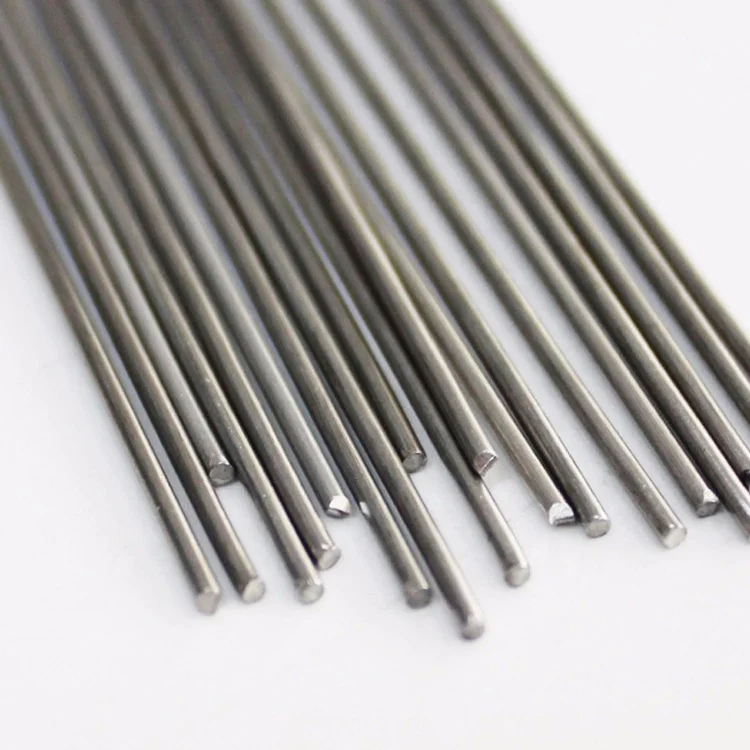
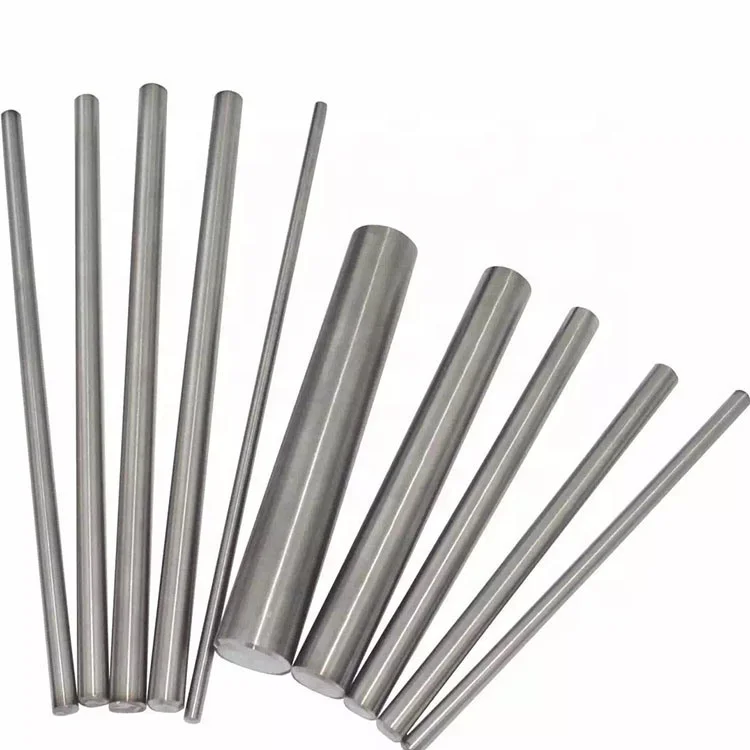
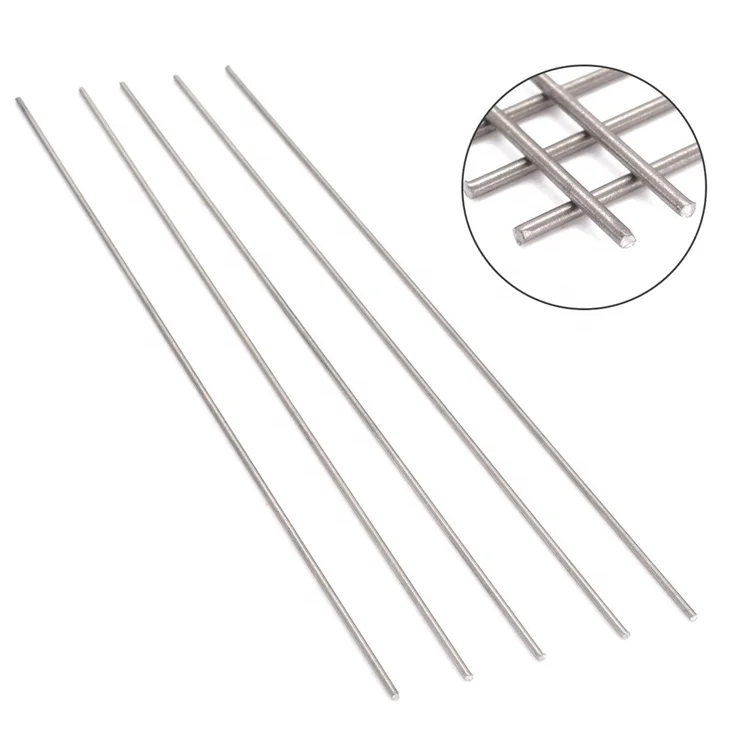
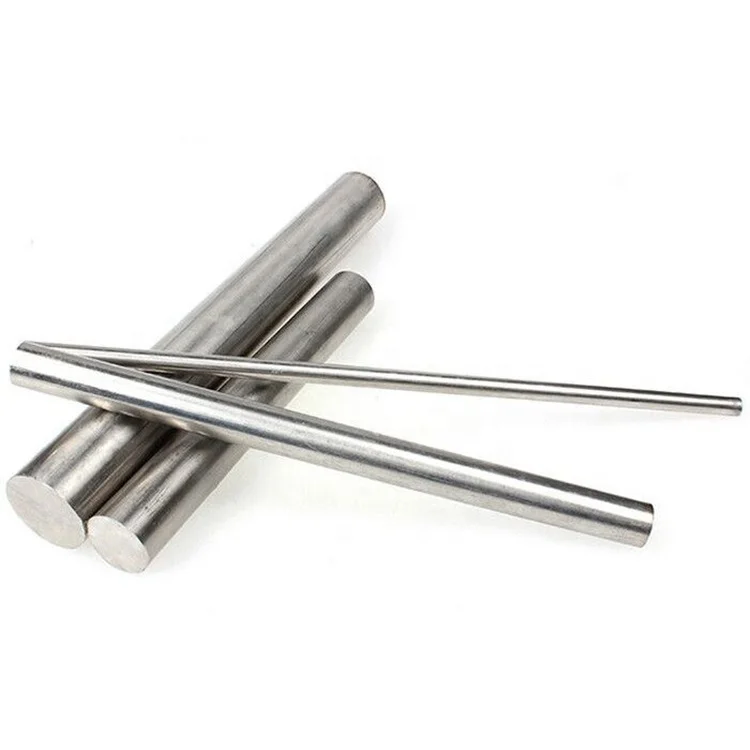
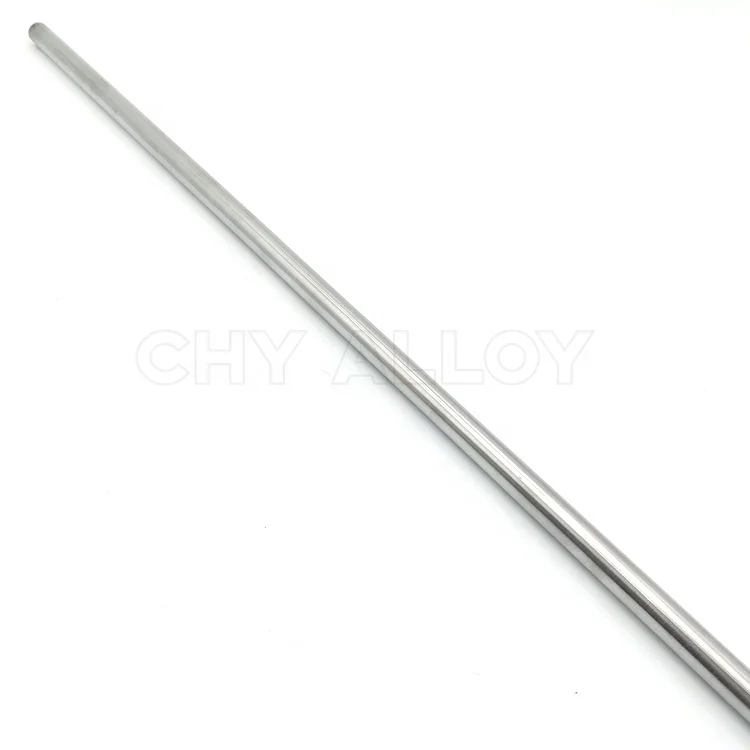
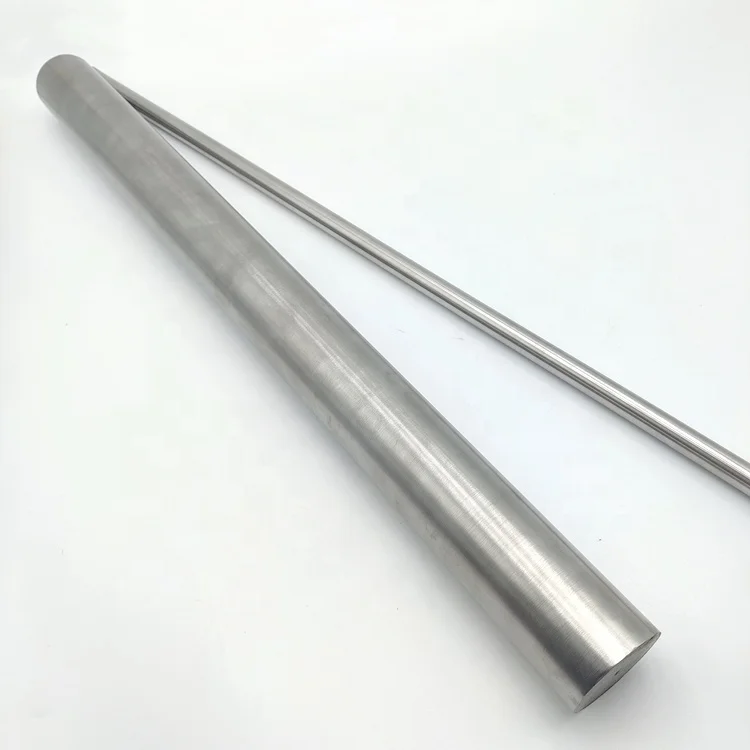
soft magnetic shielding 79HM permalloy rods bar mumetal permalloy 80
- Category: >>>
- Supplier: Shijiazhuang Chengyuan Alloy Material Co. Ltd.
Share on (1600740388194):
Product Overview
Description
Product Paramenters


79HM Chemical composition, %
Ni | 78.5~80.0 | Fe | Bal. | Mn | 0.6~1.1 |
Mo | 3.8~4.1 | Cu | ≤0.2 | Si | 0.3~0.5 |
C | ≤0.03 | P | ≤0.02 | S | ≤0.02 |
79HM Physical properties
Density (g/cm3) | Resistivity at 20℃(Ωmm2/m) | Linear expansion coefficient (20℃~200℃)X10-6/℃ | Saturation magnetostriction coefficient λθ/ 10-6 | Curie point Tc/ ℃ |
8.6 | 0.55 | 10.3~11.5 | 2.0 | 450 |
79HM Mechanical behavior
Yield strength | Tensile Strength | Elongation |
Mpa | Mpa | % |
980 | 1030 | 3~50 |
79HM Material magnetic properties
79HM | Initial permeability | Maximum permeability | Coercivity | Saturation magnetic induction | ||
Cold rolled strip/plate Thickness, mm | μ0.08/ (mH/m) | μm/ (mH/m) | Hc/ (A/m) | BS/ T | ||
≥ | ≤ | |||||
0.01 mm | 17.5 | 87.5 | 5.6 | 0.75 | ||
0.1~0.19 mm | 25.0 | 162.5 | 2.4 | |||
0.2~0.34 mm | 28.0 | 225.0 | 1.6 | |||
0.35~1.0 mm | 30.0 | 250.0 | 1.6 | |||
1.1~2.5 mm | 27.5 | 225.0 | 1.6 | |||
2.6~3.0 mm | 26.3 | 187.5 | 2.0 | |||
Cold drawn wire | ||||||
0.1 mm | 6.3 | 50 | 6.4 | |||
Bar | ||||||
8-100 mm | 25 | 100 | 3.2 | |||
Product Description


In addition to high permeability, its other magnetic properties are low coercivity, near zero magnetostriction, and significant anisotropic magnetoresistance. The low magnetostriction is critical for industrial applications, allowing it to be used in thin films where variable stresses would otherwise cause a ruinously large variation in magnetic properties. Permalloy's electrical resistivity can vary as much as 5% depending on the strength and the direction of an applied magnetic field. Permalloys typically have the face-centered cubic crystal structure with a lattice constant of approximately 0.355 nm in the vicinity of a nicke concentration of 80%. A disadvantage of permalloy is that it is not very ductile or workable, so applications requiring elaborate shapes, such as magnetic shields, are made of other high permeability alloys such as mu metal. Permalloy is used in transformer laminations and magnetic recording heads.
79HM refers to an iron-nickel alloy with a wide range of nickel content, ranging from 35% to 90%. The biggest feature of Permalloy is its high magnetic permeability in weak magnetic fields. Their saturation magnetic induction intensity is generally between 0.6-1.0T.
In 1913, American GWElmen discovered that Ni-Fe alloys with a nickel content of 30% to 90% have good soft magnetic properties under weak and medium magnetic fields. Among them, nickel-iron alloys containing 78% nickel The initial permeability μi was the highest, so it was named permalloy, which means magnetically permeable alloy. He also discovered a special heat treatment process to further increase the initial permeability of the Ni-Fe alloy by 50% to 90%, called "permalloy heat treatment". In 1921, 78% Ni-Fe alloy was used in telephone relays. In 1924, the British Smith (Smith) and others invented a 76% Ni-Fe alloy with copper and chromium, called "Mumetal" (produced by the British Telcon company). In 1931, American T.D. Yensen invented the process of vacuum melting and hydrogen high temperature annealing to purify the alloy, and developed the super nickel-iron alloy under the brand name Hipernik. In 1934, American G.A. Kelsall discovered that magnetic field heat treatment can significantly increase the maximum magnetic permeability of iron-nickel alloys. After 65% Ni-Fe (65 permalloy) heat treatment in a magnetic field, μmax is increased by about 10 times. In 1947, American R.M.Bozorth and others invented the alloy with the highest μi and μm, called superpermalloy. In the early 1960s, the China Iron and Steel Research Institute invented a method of treating with a transverse magnetic field and adding an appropriate amount of oxygen to obtain a 65% Ni-Fe alloy (Chinese brand 1J66) with Br and Hc close to zero and a very constant magnetic permeability. After the 1970s, in order to meet the needs of the development of high-frequency switching power supplies and magnetic recording technology, various elements such as niobium, tantalum, vanadium, tungsten, titanium, silicon and aluminum were added to nickel-iron alloys containing high nickel to obtain high hardness and high hardness. The resistivity, low loss, high permeability alloy has become the most representative alloy in soft magnetic alloys with the most types of properties, the widest variety and applications.
79HM alloy is smelted in a vacuum induction furnace, and is made into cold-rolled strip, cold-drawn wire or hot-rolled (forged) plate and bar after hot and cold plastic deformation. In the aviation industry and other electronic industries, it is used to produce electronic components with high sensitivity, precise size, small size, low high-frequency loss, good time and temperature stability, and special functions. It is widely used in communication, instrumentation, electronic computer, telemetry, remote control, wireless charging and other systems.
In 1913, American GWElmen discovered that Ni-Fe alloys with a nickel content of 30% to 90% have good soft magnetic properties under weak and medium magnetic fields. Among them, nickel-iron alloys containing 78% nickel The initial permeability μi was the highest, so it was named permalloy, which means magnetically permeable alloy. He also discovered a special heat treatment process to further increase the initial permeability of the Ni-Fe alloy by 50% to 90%, called "permalloy heat treatment". In 1921, 78% Ni-Fe alloy was used in telephone relays. In 1924, the British Smith (Smith) and others invented a 76% Ni-Fe alloy with copper and chromium, called "Mumetal" (produced by the British Telcon company). In 1931, American T.D. Yensen invented the process of vacuum melting and hydrogen high temperature annealing to purify the alloy, and developed the super nickel-iron alloy under the brand name Hipernik. In 1934, American G.A. Kelsall discovered that magnetic field heat treatment can significantly increase the maximum magnetic permeability of iron-nickel alloys. After 65% Ni-Fe (65 permalloy) heat treatment in a magnetic field, μmax is increased by about 10 times. In 1947, American R.M.Bozorth and others invented the alloy with the highest μi and μm, called superpermalloy. In the early 1960s, the China Iron and Steel Research Institute invented a method of treating with a transverse magnetic field and adding an appropriate amount of oxygen to obtain a 65% Ni-Fe alloy (Chinese brand 1J66) with Br and Hc close to zero and a very constant magnetic permeability. After the 1970s, in order to meet the needs of the development of high-frequency switching power supplies and magnetic recording technology, various elements such as niobium, tantalum, vanadium, tungsten, titanium, silicon and aluminum were added to nickel-iron alloys containing high nickel to obtain high hardness and high hardness. The resistivity, low loss, high permeability alloy has become the most representative alloy in soft magnetic alloys with the most types of properties, the widest variety and applications.
79HM alloy is smelted in a vacuum induction furnace, and is made into cold-rolled strip, cold-drawn wire or hot-rolled (forged) plate and bar after hot and cold plastic deformation. In the aviation industry and other electronic industries, it is used to produce electronic components with high sensitivity, precise size, small size, low high-frequency loss, good time and temperature stability, and special functions. It is widely used in communication, instrumentation, electronic computer, telemetry, remote control, wireless charging and other systems.
79HM refers to an iron-nickel alloy with a wide range of nickel content, ranging from 35% to 90%. The biggest feature of Permalloy is its high magnetic permeability in weak magnetic fields. Their saturation magnetic induction intensity is generally between 0.6-1.0T.
Heat treatment method
Annealing medium | Dry hydrogen (the dew point is not higher than -40℃) or vacuum, the residual pressure is not more than 0.1Pa |
Heating temperature and speed | 1100~1150℃ |
Holding time/h | 3~6 |
Cooling rate | Cool down to 600°C at a rate of 100 ~ 200°C/h, then quickly cool to 300°C and take it out |
Supply category
Type | Size | ||
Wire | D= 0.1~8mm | ||
Strip | W= 8~290mm | T= 0.3mm~2.5mm | |
Foil | W= 10~100mm | T= 0.01~0.1mm | |
Bar | Dia= 8~100mm | L= 50~1000mm | |
Recommend Products
Classification

Company Profile

Shijiazhuang Chengyuan Alloy Material Co., Ltd. is a high-tech enterprise specializing in the production of various alloy materials. It has an advanced and complete production line, including material smelting, surface cleaning, rolling, slitting, and a complete testing process. Meet the corresponding quality inspection of different products. The company focuses on the production and supply of various electric heating alloys, expansion alloys, soft magnetic alloys, elastic alloys, high temperature alloys and all kinds of pure metals. The product forms include wire, flat wire, strip, plate, bar, foil, Seamless pipe, wire mesh, powder, etc. can meet the application needs of different customers. The various performance indicators of the product are strictly in accordance with the national standards. If customers put forward non-standard requirements, they can also be implemented by reference.
Our products are widely used in heating equipment, machinery manufacturing, electric furnace production, instrumentation, household appliances, mineral mining, aerospace, petroleum and nuclear power and other industries, and have received good market feedback. Our products have stable delivery time, excellent quality, sophisticated packaging, and high repurchase rate. They are not only widely recognized in the domestic market, but also have a good reputation in the international market.
Our products are widely used in heating equipment, machinery manufacturing, electric furnace production, instrumentation, household appliances, mineral mining, aerospace, petroleum and nuclear power and other industries, and have received good market feedback. Our products have stable delivery time, excellent quality, sophisticated packaging, and high repurchase rate. They are not only widely recognized in the domestic market, but also have a good reputation in the international market.


Application area

Packing & Delivery


Our services
* OEM manufacturer
* We will deliver the goods to the warehouse of the customer's agent in any city in China.
* Terms of delivery: EXW, FCA, FOB, CIF, CPT, DAP
* Mode of transport: Sea, Auto, Railway, Air and Express
* Payment terms: Bank Transfer, Western Union, PayPal, Alipay
* Quality Certificate:
In order to improve the quality of products and services, with each order we provide a quality certificate for goods, which includes measured data - chemical composition, electrical resistivity, tensile strength, elongation, melting number, etc.
Cheng Yuan Alloy Material Co., Ltd
Email: alexey@chyalloy.com
Tel .: +86 13673186216
+86 311 8803 3197
* We will deliver the goods to the warehouse of the customer's agent in any city in China.
* Terms of delivery: EXW, FCA, FOB, CIF, CPT, DAP
* Mode of transport: Sea, Auto, Railway, Air and Express
* Payment terms: Bank Transfer, Western Union, PayPal, Alipay
* Quality Certificate:
In order to improve the quality of products and services, with each order we provide a quality certificate for goods, which includes measured data - chemical composition, electrical resistivity, tensile strength, elongation, melting number, etc.
Cheng Yuan Alloy Material Co., Ltd
Email: alexey@chyalloy.com
Tel .: +86 13673186216
+86 311 8803 3197

FAQ
Q: Does your company provide samples?
A: Yes, we provide samples for free, and buyers need to bear the corresponding shipping costs.
Q: How long is your company's delivery time?
A: If the goods are in stock, it is usually 5-10 days. Or if the goods are not in stock, it is 15-20 days, according to
quantity.
Q: What are the payment terms of your company?
A: Payment <=1000USD, 100% in advance. For payment>=1000 USD, pay 30% T/T in advance, and pay the balance before shipment.
Q: Do you test all goods before delivery?
A: Yes, we have a strict product inspection process, and 100% testing will be carried out before delivery.
Q: How does your company maintain long-term and stable business relationships with customers?
A: 1. We strictly control the quality of our products and the prices are reasonable to ensure that our customers benefit;
2.We do our best to do a good job in product packaging to ensure that the product is intact during transportation.
3.In order to meet the requirements of customers in different countries for product performance, we have a separate test furnace to debug product performance.
Q: How to get in touch with your company?
A: You can contact us at any time via email, phone, fax, Skype, Whatsapp or mobile phone,
Phone/Whatsapp/WeChat: +86-13673186216
Email: alexey@chyalloy.com
Q: What are your working hours?
A: Monday to Sunday: 24 hours, any time, as long as you need it, you can contact us. We will reply to you as soon as possible.
Q: What are the payment terms of your company?
A: T/T, L/C, D/A, D/P, Western Union, MoneyGram, Paypal.
A: Yes, we provide samples for free, and buyers need to bear the corresponding shipping costs.
Q: How long is your company's delivery time?
A: If the goods are in stock, it is usually 5-10 days. Or if the goods are not in stock, it is 15-20 days, according to
quantity.
Q: What are the payment terms of your company?
A: Payment <=1000USD, 100% in advance. For payment>=1000 USD, pay 30% T/T in advance, and pay the balance before shipment.
Q: Do you test all goods before delivery?
A: Yes, we have a strict product inspection process, and 100% testing will be carried out before delivery.
Q: How does your company maintain long-term and stable business relationships with customers?
A: 1. We strictly control the quality of our products and the prices are reasonable to ensure that our customers benefit;
2.We do our best to do a good job in product packaging to ensure that the product is intact during transportation.
3.In order to meet the requirements of customers in different countries for product performance, we have a separate test furnace to debug product performance.
Q: How to get in touch with your company?
A: You can contact us at any time via email, phone, fax, Skype, Whatsapp or mobile phone,
Phone/Whatsapp/WeChat: +86-13673186216
Email: alexey@chyalloy.com
Q: What are your working hours?
A: Monday to Sunday: 24 hours, any time, as long as you need it, you can contact us. We will reply to you as soon as possible.
Q: What are the payment terms of your company?
A: T/T, L/C, D/A, D/P, Western Union, MoneyGram, Paypal.

We Recommend
New Arrivals
New products from manufacturers at wholesale prices